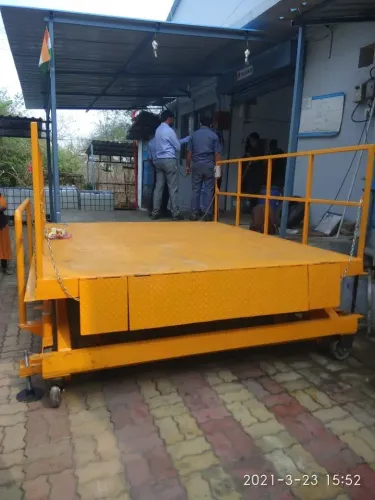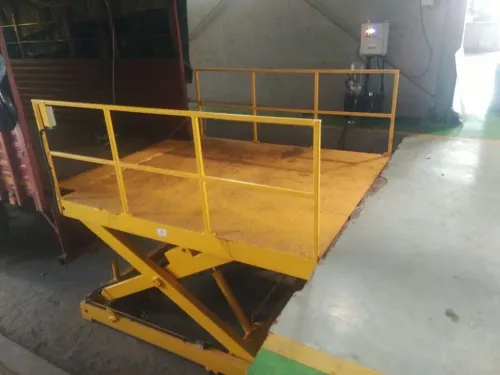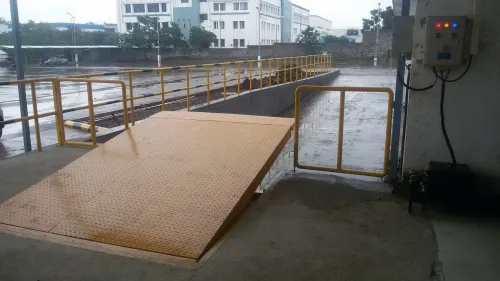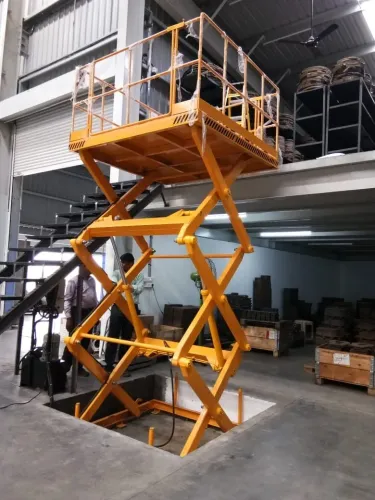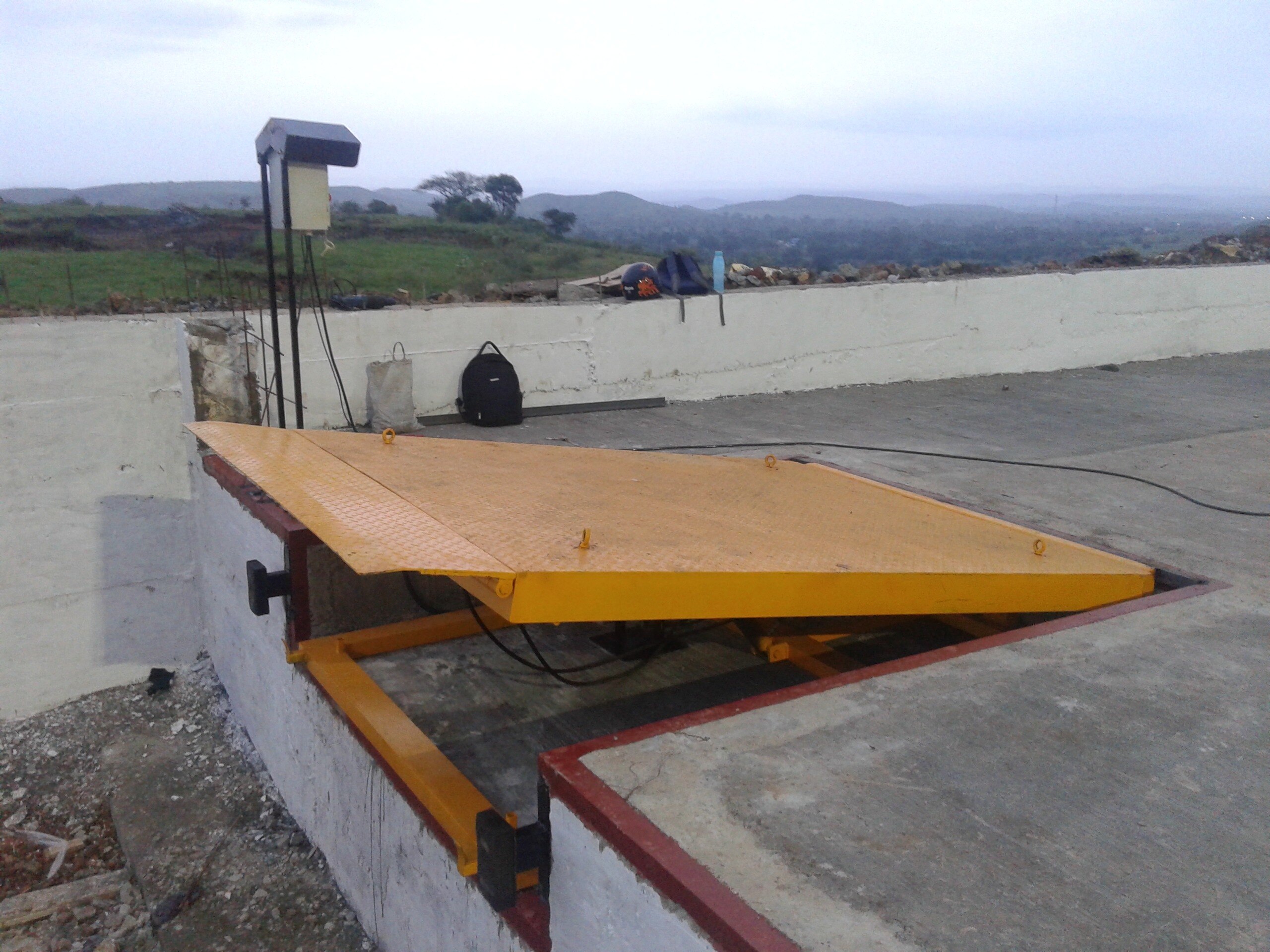
The right choice depends on whether you are connecting a permanent raised bay to changing truck floors or creating an access route from the yard into a vehicle or container. By comparing vehicle frequency, height variation, available space, load concentration, installation limits and monsoon conditions, you can select equipment that fits the site rather than the brochure.
Key takeaways
- Choose a dock leveler for repeated truck loading at a permanent raised dock.
- Choose a dock ramp for ground-level loading, changing positions or absent dock infrastructure.
- Calculate the level difference, forklift load, axle load and ramp slope before ordering.
- Check monsoon drainage, surface condition, turning space and service access during the site survey.
Start with the loading pattern: fixed dock or open yard?
Choose a dock leveler when trucks repeatedly back into a permanent raised dock; choose a dock ramp when loading happens at ground level, container positions change, or no usable dock exists.
This decision rule for dock leveler or dock ramp for warehouse loading in Vadodara weighs bay permanence, vehicle-height variation, yard space, forklift traffic, daily cycles and power availability—not purchase price alone.
| Option | Best fit | Main trade-off |
|---|---|---|
| Dock leveler | Fixed bay, frequent loading, truck-bed heights that vary | Faster repeatable transfers, but needs a pit, drainage and maintenance access |
| Portable yard ramp | Open yard, no raised dock, changing container positions | Flexible, but consumes circulation space and requires positioning, securing and inspection |
| Container ramp | Occasional container loading at ground level | Compact solution, but limited by its rated load, width and gradient |
| Fixed steel ramp | Permanent ground-to-vehicle route | Simple access, but less adaptable to vehicle-height changes |
For a permanent bay, make the dock leveler comparison on rated capacity, operating cycle, usable deck length, lip projection, clear opening and vehicle restraint. Confirm that it serves rear-loading trucks and lower light commercial vehicles.
A ramp that suits pallet jacks can still be unsafe for a counterbalance forklift because of gradient, break-over angle or insufficient ground clearance.
In the dock ramp comparison, check ramp width, approach and departure angles, wheel chocks or safety chains, and whether a forklift can move the ramp. Reject a mobile ramp if its slope blocks yard circulation or its position cannot be controlled during loading.
Monsoon water also matters: plan drainage at any pit or ramp surface before ordering.
Compare the operating sequence and safety controls
The critical difference is where the load path begins: a dock leveler bridges a raised dock to the vehicle bed, while a dock ramp creates a sloped route from the yard into a vehicle or container.
The dock leveler comparison favours repeatable, high-frequency loading; the dock ramp comparison favours changing positions and sites without a permanent dock.
| Stage | Dock leveler | Dock ramp |
|---|---|---|
| Before loading | Position the vehicle against the bumpers, apply the vehicle restraint or wheel chocks, confirm the trailer floor is within the leveler’s range, then lower the deck and seat the lip fully on the bed. | Park on firm, level ground, align the ramp centrally with the container or vehicle, apply the parking brake, chock the wheels, secure the ramp against movement, and inspect the approach, deck and lip. |
| During loading | Keep the restraint engaged, switch on dock lights, and move forklifts or pallet trucks only across the supported deck and lip. Stop if the vehicle moves, the lip loses contact, or the deck overloads. | Maintain a straight travel path, control forklift speed on the slope, keep pedestrians outside the ramp and landing zones, and stop if the ramp shifts, bottoms out or loses contact. |
| After loading | Remove people and equipment, raise and store the lip, release the restraint only after the vehicle is clear, and check the deck for damage. | Remove forklifts, clear the landing, retrieve the chocks only after the ramp is secured for removal, and relocate it before the vehicle departs. |
Use wheel guides, warning markings, edge protection, bumpers and pedestrian barriers with either option. For a fixed bay, request EN 1398 compliance and verify that the restraint, controls and maintenance access match your loading cycle.
Measure the transition and calculate the real working load
Measure the dock height from the finished warehouse floor to the vehicle floor at its lowest and highest expected positions. Record the dock-to-truck gap, clear opening, usable width, available pit depth, and the yard length available for a ramp.
Calculate the transition angle at both extremes; a longer deck or ramp and adequate lip projection often prevent a sharp forklift breakover.
Confirm these figures before requesting a quotation:
- Vehicle floor height: minimum, maximum and common values for every truck and light commercial vehicle.
- Gap: horizontal distance from dock face to the vehicle bed, including the largest expected gap.
- Working envelope: required deck or ramp length, approach angle, clear width and lip overlap.
- Equipment space: pit dimensions for a leveler, or turning, storage and escape space for a mobile ramp.
- Load: forklift or pallet-truck tare weight plus its maximum payload, concentrated wheel load, axle spacing and load position. Include the heaviest pallet, not the average one.
- Traffic: forklift wheel type, daily cycles and the number of vehicles sharing the bay.
In a dock leveler comparison, use the same figures for each option rather than comparing rated capacity alone.
| Option | Check | Ordering consequence |
|---|---|---|
| Fixed dock leveler | Dock height, gap, pit and vehicle-height range | Specify deck length, lip projection and capacity for the worst transition |
| Mobile dock ramp | Yard length, approach angle and storage area | Confirm ramp length, width, wheel load and safe ground bearing |
| Electro hydraulic dock leveler | Voltage, phase, protection, cycle time and duty cycle | Match the power pack and controls to site conditions and expected traffic |
Specify hydraulic pressure, emergency lowering or return-to-rest behaviour, and control-panel ingress protection. A rating that excludes dynamic forklift loads is not a real working rating.
Account for Vadodara conditions, alternatives and ownership effort
Vadodara’s monsoon exposure makes installation details part of the selection, not post-purchase housekeeping. A permanent bay needs a drained or protected pit, drainage paths, corrosion-resistant finishes and electrical components suited to damp, dusty conditions; standing water can seize hinges, contaminate hydraulic oil and create loading delays.
| Option | Installation and operating fit | Ownership trade-off |
|---|---|---|
| Dock leveler | Bridges a fixed raised dock to varying vehicle beds; suits frequent loading at one bay | Faster, repeatable cycles, but requires pit construction, power and planned maintenance |
| Mobile dock ramp | Creates a sloped route from ground to a truck or container where no raised dock exists | Portable and flexible, but consumes yard space and demands positioning, securing and traffic control |
| Edge-of-dock leveler | Mounts at a dock face with less civil work than a pit model | Reduces installation effort, but offers less vertical adjustment and usable deck length |
For warehouse loading equipment in Vadodara, compare downtime and inspection effort rather than purchase price alone. Include these ownership checks:
- Clean the deck, lip, hinges and ramp drainage paths; inspect welds, wheel chocks, restraints and hydraulic hoses on a scheduled routine.
- For an electro hydraulic dock leveler, specify supply voltage, phase, motor protection, hydraulic pressure, cycle time, emergency lowering, control-panel ingress protection and duty cycle—not motor horsepower alone.
- Choose a mobile ramp only when the yard provides its full approach length, turning clearance and safe separation from moving vehicles. A fixed leveler is usually more space-efficient at a high-frequency bay.
Use a site-survey checklist before requesting a quotation
A quotation is incomplete without a site-specific drawing and operating assumptions. For warehouse loading equipment in Vadodara, give the supplier dock height, vehicle floor-height range, dock-to-truck gap, clear opening, usable width, available pit or yard length, forklift type, wheel loads and daily cycles.
Ask for these proofs before comparing prices:
1. A general-arrangement drawing showing deck length, lip projection, approach angle, pit dimensions, clearances and the lowest and highest vehicle positions.
2. A load calculation covering the loaded forklift, pallet, axle or wheel loading, impact allowance and rated capacity—not only the truck’s gross weight.
3. For an electro hydraulic dock leveler, written values for supply voltage and phase, motor enclosure and protection, hydraulic working pressure, cycle time, duty cycle, operating-temperature range, emergency lowering and return-to-rest behaviour.
4. A safety sequence showing vehicle restraint or chocking, lip support, anti-slip surfaces, toe guards, interlocks and what prevents operation while the vehicle moves.
5. A Vadodara weather plan covering monsoon drainage, standing water in the pit, dust, corrosion-resistant finishes, sealed electrical parts and protected hydraulic components.
6. A commissioning and inspection plan that specifies acceptance tests, cleaning points, hose and seal checks, maintenance access and replacement intervals.
For a dock leveler or dock ramp for warehouse loading in Vadodara, ask Aguatech Engineers Pvt.ltd. to mark these details on the quotation rather than leaving them to verbal confirmation. If the supplier cannot show how the equipment fits your bay and loading sequence, do not treat the quoted capacity as proof of safe operation.
Related products
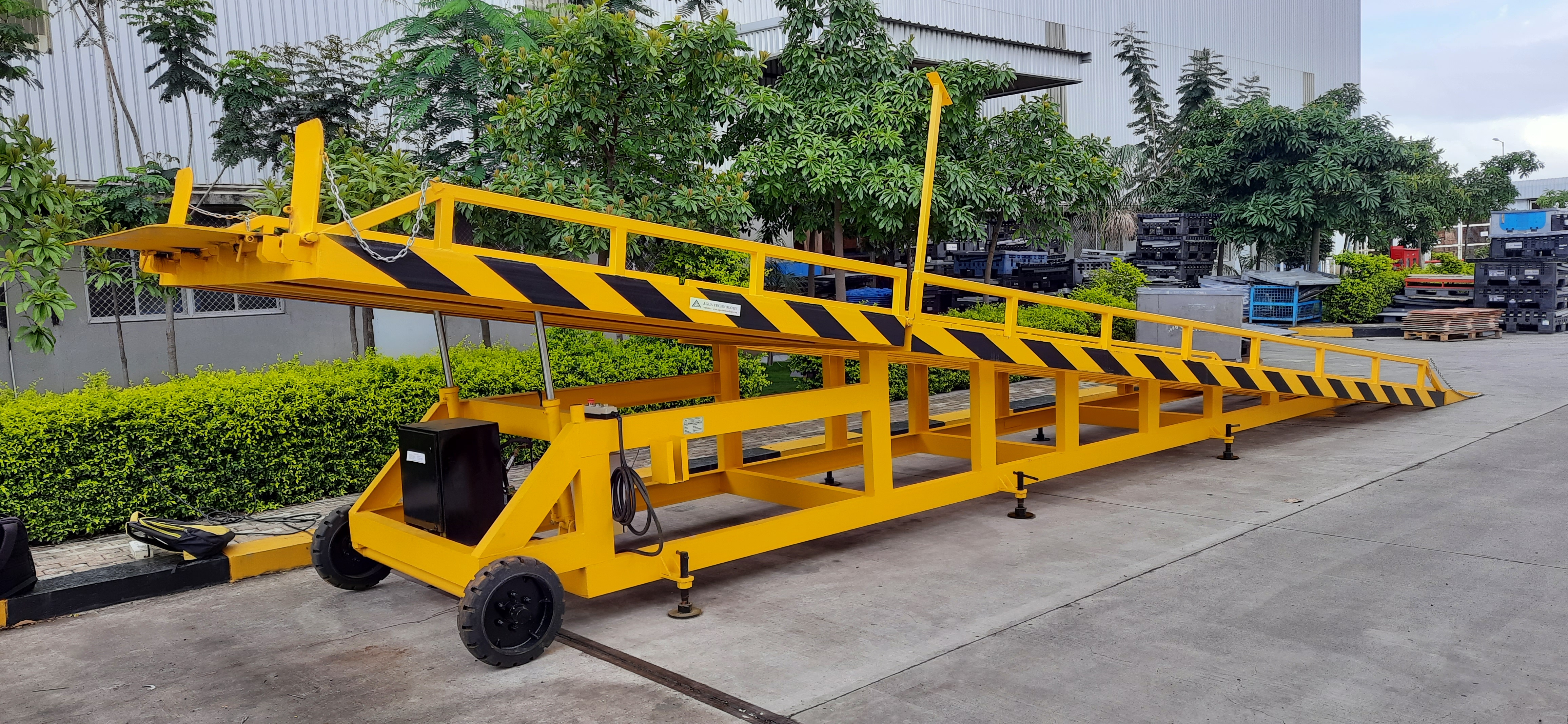 | LOADING/UNLOADING PLATFORMS OR DOCKS A loading/unloading dock is typically an elevated opening (or openings) in a building's sidewall where shipments are sorted and staged for loading... View product → |
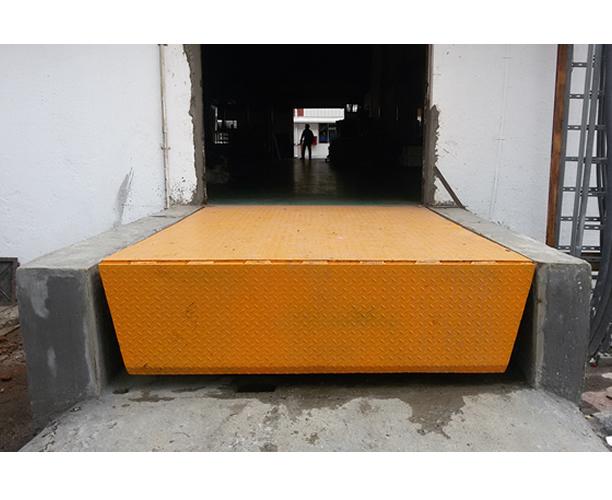 | LOADING/UNLOADING PLATFORMS OR DOCKS Electro-Hydraulic Dock Leveler A loading/unloading dock is typically an elevated opening (or openings) in a building's sidewall where shipments are sorted and staged for loading... View product → |
Frequently asked questions
When should you choose a dock leveler instead of a dock ramp?
Choose a dock leveler when trucks repeatedly reverse into a permanent raised dock. Choose a dock ramp for ground-level loading, changing container positions or sites without a usable dock.
What safety controls should you compare?
Compare lip engagement, vehicle restraint, dock bumpers, rated load capacity, wheel chocks, handrails, guardrails, non-slip surfaces and safe operating procedures.
How do you calculate the real working load?
Include the forklift or pallet truck, its maximum payload, battery or fuel, attachments and dynamic forces. Check both the equipment rating and the axle or wheel load.
What should a Vadodara site survey record before requesting a quotation?
Record dock height, truck-bed heights, gap and slope, floor condition, drainage, monsoon exposure, turning space, power supply, operating frequency and service access.