Movement through a factory depends on more than the lift’s platform height: aisle geometry, floor transitions, overhead clearance, load distribution and travel permissions all control whether the machine can reach its destination safely. By the end, you will be able to plan a route, recognise the operating sequence and specify the equipment details that determine whether a lift fits your plant.
Key takeaways
- Check doorway width, turning space, overhead clearance and floor strength first.
- Travel with the platform lowered unless elevation is required for the task.
- Compare rated capacity, side loads, slope limits and safety interlocks together.
- Choose power, tyres and charging support for the factory’s floor and traffic pattern.
Plan the Route Before the Lift Moves
A factory route is suitable only when its tightest passage, overhead clearance, floor strength and traffic risks have been checked on site. A self propelled lift for factories that fits through a doorway when stationary can still strike a rack during a turn or overload a weak trench cover with one wheel.
1. Measure the narrowest aisle, doorway and turning clearance. Record the machine’s outside turning radius, inside tail swing, steering path and rack clearance, not just platform dimensions.
2. Check clear height below beams, sprinklers, pipework, cranes and cable trays. Mark floor joints, drains, potholes, expansion gaps, dock edges, thresholds and ramps; lower the platform before crossing them unless the manual specifically permits elevated travel.
3. Confirm the destination’s bearing capacity from the lift’s maximum wheel loads, not only gross weight. A mezzanine, suspended floor, repaired slab or trench cover can fail under concentrated loading even when the surrounding concrete supports the total machine mass.
4. Remove loose packaging, cover openings and protect hoses and cables. Define pedestrian exclusion zones around the route and destination.
5. Use a spotter where racks, machinery or blind corners block the operator’s view. If visibility remains poor, change the route rather than drive faster.
6. Complete a site assessment for conflict points with forklifts, trucks and cranes. Set a stop-and-clear rule before the lift crosses each point, and stop nearby traffic whenever the assessment identifies a collision risk.
A route drawing with these measurements gives the operator and supplier something testable; a nominal platform width does not.
Follow the Mobile Scissor Lift Operation Sequence
Safe mobile scissor lift operation starts with a complete pre-use inspection and ends only when the machine is stable, controlled and ready for work.
1. Check the tyres and wheels for damage, loose parts or embedded debris. Inspect the guardrails, gate or chain, platform floor and hydraulic lines for leaks. Confirm the battery indicator, emergency stop, horn, travel and lift controls, alarms, pothole-protection devices and emergency manual-lowering system operate as described in the manual.
2. Clear people and loose materials from the platform. Confirm the load is empty or within the rated platform capacity, including occupants, tools and materials, before releasing the parking brake.
3. At the platform controller, select drive mode and sound the horn where site rules require it. Check forward, reverse and both steering directions, keep the route visible, and steer at walking speed through congested areas. Use a spotter or stop and revise the route where racks, machinery or blind corners block your view.
4. Stop fully before changing direction. Position the chassis on firm, level ground, apply the parking brake and confirm the platform is lowered or within the manufacturer’s permitted drive envelope.
5. Close the gate, secure tools inside the platform and raise or lower it from the platform controls. Use ground controls only for inspection, recovery or emergency operation unless the operator’s manual permits routine use.
6. Before anyone works aloft, demonstrate normal lowering and identify the manual emergency-lowering method, the trained ground operator and clear access to the chassis controls.
Travel Lowered, Elevated and Across Transitions
Lower the platform fully before crossing a doorway threshold, floor joint, drain, dock edge, ramp or uneven paving unless the operator manual specifically permits that movement. A smooth-looking floor does not prove that a transition is safe; a wheel drop or shock load can trigger a tilt, pothole or drive interlock.
| Travel condition | Operator decision | Main risk or control |
|---|---|---|
| Platform fully lowered | Use for transitions and normal route travel | Lowest centre of gravity and maximum route tolerance |
| Platform partly raised | Travel only within the manual’s stated height, slope and configuration limits | Controller-limited speed does not remove stability risk |
| Platform fully raised | Drive only when the manufacturer expressly permits it | A wheel drop, sudden stop or side slope can destabilise the machine |
Many machines permit limited elevated travel, but the controller reduces speed and the permitted height depends on platform height, slope and configuration. Never select an elevated-drive speed from a generic brochure.
Before movement, a self propelled lift for factories requires these checks:
- Confirm the platform is lowered or inside the permitted drive envelope.
- Test the slope alarm, tilt cutout and emergency stop.
- Inspect pothole guards or skids for deployment, damage and obstruction.
- Close the gate, keep guardrails secure and clear pedestrians from the route.
- Stop before any transition that exceeds the manual’s limit.
Deployed pothole protection reduces wheel-drop risk; it does not make a damaged drain cover or uneven paving safe. Respect the nameplate’s gradeability direction and condition, which usually apply with the platform stowed. Mobile scissor lift operation must follow the manual when raised travel conflicts with a route condition.
Read Capacity, Stability and Safety Controls Together
The rated platform capacity is the combined weight of every occupant, tool, cable, panel and material on the platform. Exceeding it can trigger an overload cutout or reduce stability; the cutout is not permission to keep adding weight.
1. Keep every load inside the platform and distribute it evenly. Prevent material overhang unless the manufacturer expressly permits it for that model and configuration.
2. Treat the lift as a vertical-access machine, not a substitute for a vehicle or crane. Do not push panels, pull cable or force objects sideways from a raised platform; horizontal force creates a tipping moment that the vertical load rating does not cover.
3. Read the load chart for the exact setup. Check the wind limit, grade limit, permitted platform height and any restriction on an extension deck. A grade rating for a lowered platform does not authorise travel on that slope while elevated.
4. Before operating a self propelled lift for factories, identify the emergency-stop button, horn, battery indicator, normal and emergency-lowering controls, tilt or slope alarm, guardrails, gate interlock and pothole-protection status. A missing alarm or damaged guardrail removes a safeguard from the decision.
5. Confirm that a trained person can reach the chassis controls and perform manual emergency lowering with someone aloft. Keep those controls clear of stored material; blocked access can turn a power failure into a rescue delay.
Use the machine only where its chart and safeguards agree: the load fits the capacity, the surface and slope meet the limits, and each protective device works.
Match Power, Tyres and Site Support to the Factory
Choose the powertrain, tyres and battery around the plant’s actual conditions, not the lift’s advertised height. Electric traction is usually the practical indoor choice: it avoids combustion exhaust and reduces noise, but the battery becomes part of your production plan.
| Power or tyre choice | What it means | When it applies |
|---|---|---|
| Electric traction | Low-noise travel without engine exhaust; specify charger voltage, charging location, ventilation, battery-change access and shift runtime | Enclosed factories and clean production areas |
| Diesel traction | Exhaust-control equipment and effective ventilation are essential | Outdoor work or sites where electric duty cannot cover the shift |
| Non-marking tyres | Reduce visible floor marks, but do not guarantee grip | Clean floors where marking matters; verify traction on ramps |
| Treaded or hard-surface tyres | More suitable for dust, oil, water or chemical contamination | Rougher routes, wet areas and ramps; check floor damage and wear |
Allow for battery capacity loss in hot, heavily cycled or damaged batteries. Hydraulic elevation still requires leak inspection, whatever drive system moves the chassis.
Put these details in the supplier request:
- Working height and platform height, platform capacity, width, stowed height and turning radius
- Maximum wheel loads, gradeability, indoor or outdoor rating and wind rating
- Battery duty cycle, charger arrangement, conformity requirements and maintenance access
The query how self propelled scissor lifts for work in vadodara should lead to a route drawing and site survey, not a city-only specification. For a self propelled scissor lift in vadodara, ask Aguatech Engineers Pvt.ltd. or another supplier to confirm operator training, emergency support and access for servicing at your plant.
Related product
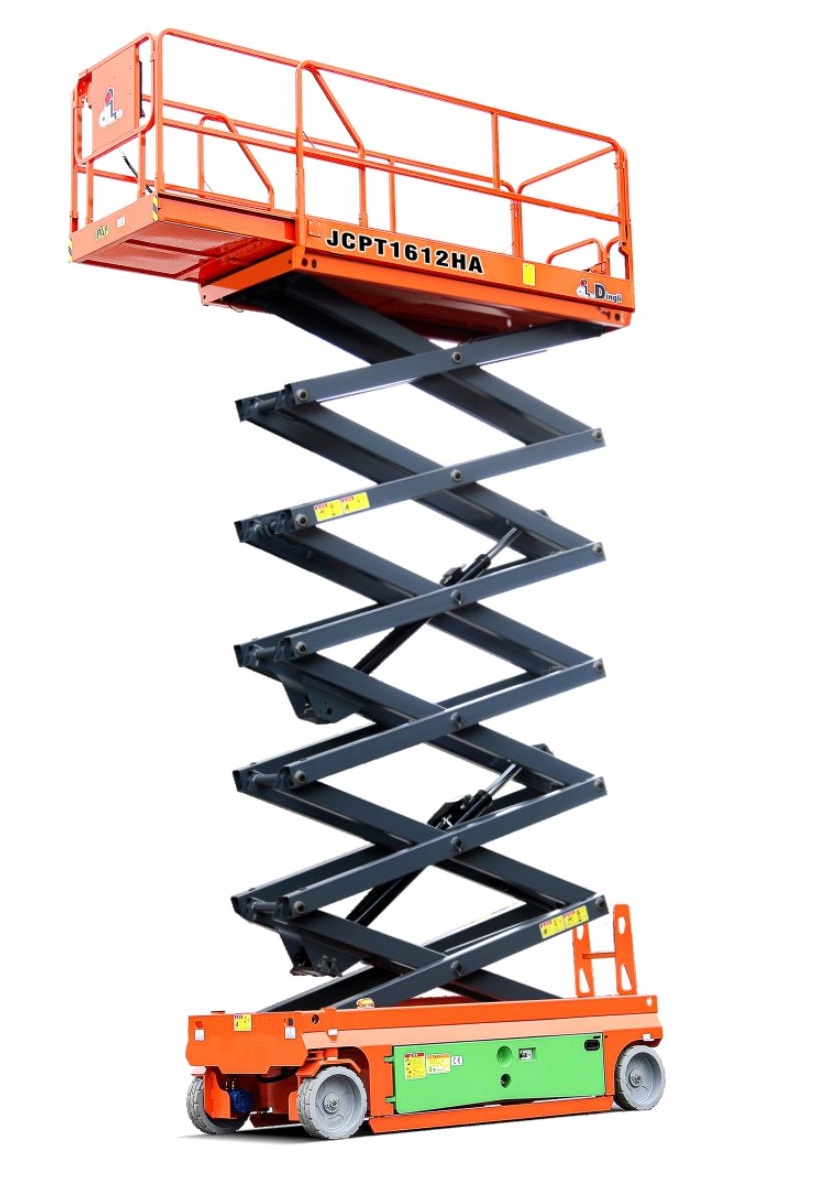 | Self-Propelled Scissor Lift A self-propelled scissor lift is a motorized aerial work platform used for vertical lifting, allowing operators to drive, steer, and elevate the... View product → |
Frequently asked questions
What should you check before moving a self-propelled scissor lift through a factory?
Check the tightest passage, turning radius, overhead clearance, floor strength, trench covers, slopes, traffic and pedestrian risks.
What is the correct mobile scissor lift operation sequence?
Inspect the lift, confirm the route, enter the platform correctly, test controls at low speed, and travel only when the area is clear.
Can a self-propelled scissor lift travel while elevated?
Travel elevated only when the manufacturer permits it and the surface, slope, load and surrounding clearance meet the operating limits.
How do capacity and stability affect factory lift operation?
Keep people, tools and materials within the rated platform capacity, respect slope and side-load limits, and use the safety interlocks.