A lift that will not rise, creeps downward, trips the electrical supply or cannot clear a pallet-truck approach needs a structured diagnosis, not repeated control-panel resets. By the end, you will know which checks operators can perform, which faults require isolation and a technician, how to verify fit in an existing plant, and when to arrange specialist service.
Key takeaways
- Isolate power and keep people away from an unsupported platform.
- Check hydraulic leaks, trapped air, worn pins and damaged rollers.
- Confirm floor clearance, rated load and centred positioning before use.
- Record recurring faults, inspections and repairs in a service log.
Start with safe isolation and identify the fault pattern
For low profile scissor lift troubleshooting in Vadodara, start by clearing people from the platform and scissor mechanism. Stop using the lift, lower it only through its designed controls, and isolate the electrical supply before inspection. Never place hands, feet or tools beneath an unsupported platform.
1. Record whether the fault affects lifting, lowering, driving or every function. If the platform will not rise, check the emergency stop, key switch, platform/ground selector, isolator and pendant connection. Confirm that no overload, tilt, gate, pothole or elevation interlock is active.
2. From a safe position, check for anything trapped beneath the platform or between scissor members, visible hose damage and the hydraulic-oil level. Do not reach into the mechanism. A low oil level does not explain every lifting fault.
3. If the platform rises slowly, measure battery voltage under load, check charger output and inspect terminals for corrosion before condemning the pump. Low charge, voltage drop, high rolling resistance and excess load can reduce motor and pump speed on a battery-electric lift.
4. Separate a travel fault from a lift fault by testing travel only with the platform lowered. Never bypass a limit switch, tilt sensor or interlock. If the electrical supply trips repeatedly, isolate the machine and have a qualified technician test insulation, terminals, motor current and control circuits.
Diagnose descent, uneven movement, noise and hydraulic leaks
A platform that stops partway may have reached an elevation limit, detected overload or tilt, met an obstruction, or lost hydraulic pressure.
For low profile scissor lift troubleshooting in Vadodara, separate a lift fault from a travel fault: confirm whether the machine drives only when lowered and whether a gate, pothole or tilt sensor is active.
1. If the platform stops or drifts, stop use and isolate it. A platform that descends with controls neutral needs pressure-safe diagnosis, not simply more oil. Check for internal cylinder leakage, a leaking load-holding or directional valve, contaminated valve seats, damaged fittings and external leaks.
2. Treat wet hoses, blistering, exposed reinforcement, abrasion, pinched routing and fluid at fittings as stop-and-repair findings. Never search for a pinhole jet with your hand; pressurised hydraulic fluid can penetrate skin.
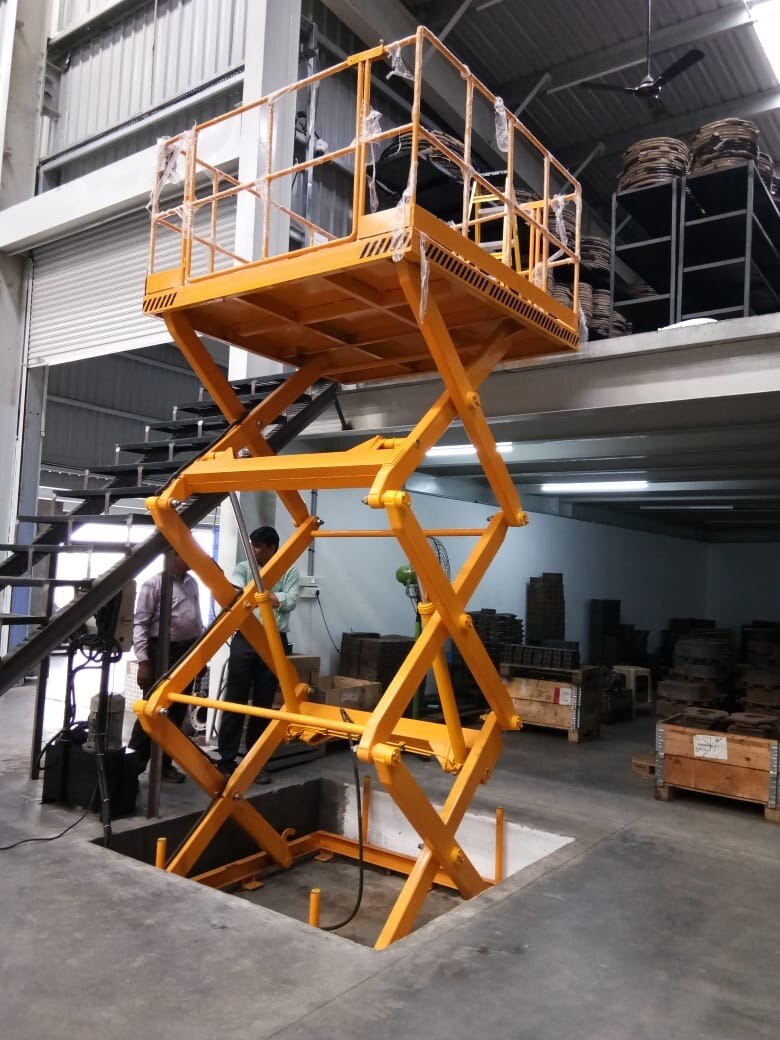
3. If movement is uneven or the pump is noisy, inspect pivot pins, bushings, retaining hardware, rollers and specified lubrication points. Dry or seized pivots create side play, noise and extra pump load; lubrication cannot restore a worn pin or damaged bore.
4. For pump noise or intermittent faults, check oil level, suction-side air leaks, filter blockage, contaminated fluid and battery voltage under load. Inspect the breather, filler cap, reservoir, hose ends, battery drainage and control connectors after monsoon water, wash-down, metal dust or chemical exposure.
Do not mix fluids by colour. Use the manufacturer’s specified grade and cleanliness requirement. Low profile scissor lift service in Vadodara should document the defect before replacing hydraulic parts.
Find the real cause of scissor lift low clearance problems
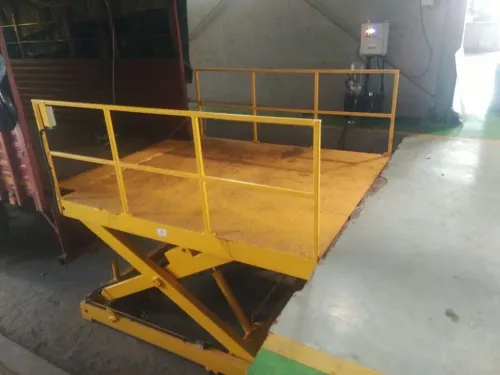
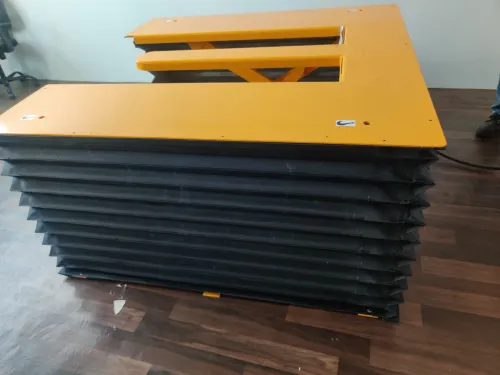
Measure the machine and route before changing either. Scissor lift low clearance problems usually fall into three categories: insufficient height, a bad approach or poor installation. “Low profile” is not a dimensional standard, and a lift that passes beneath equipment while stowed can become unusable when its platform, guardrails, toe boards or gate rises.
| Symptom | What it indicates | What to verify |
|---|---|---|
| Insufficient height | The lift itself does not fit | Stowed height, minimum under-clearance, folded or fixed guarding and protruding hydraulic or electrical parts |
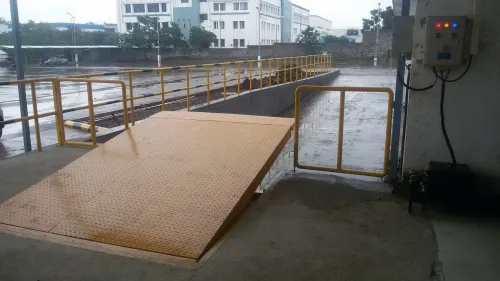
| Bad approach | The route prevents entry or turning | Pallet-truck fork and wheel geometry, ramp width and slope, threshold height, aisle width and turning radius |
| Poor installation | The site activates safeguards or damages equipment | Floor flatness, potholes, transitions, debris, wheel loads and outrigger loads |
Record the complete envelope:
- Platform length and width, wheelbase, turning radius and raised height.
- Entry clearance against the pallet truck’s fork thickness, wheel diameter and wheel spacing.
- Floor capacity at each wheel and outrigger, not only the combined load rating. Concentrated loads can damage trench covers, dock plates, mezzanines and recently repaired concrete.
- Whether the ramp changes the load angle or unloads a wheel.
A pit-free installation still needs approach space. An uneven surface can activate a tilt or elevation interlock; bypassing it is not troubleshooting. Inspect bent scissor members, damaged rollers, seized pivots and narrowing clearances. Compare every measurement with the machine manual and installation drawing before altering the ramp, floor or lift.
Verify the lift, load and operating method before production use
Before production use, verify that the existing lift fits the actual job, floor and power supply. For a low profile scissor lift, problems in Vadodara manufacturing plants often begin with a fit mismatch rather than a failed pump.
1. Measure minimum collapsed height, raised height, platform envelope, aisle width, ramp width and slope, pallet dimensions, and pallet-truck wheel and fork geometry. Check floor flatness, allowable wheel and outrigger loads, and available electrical supply. Total floor capacity alone does not protect trench covers, dock plates, mezzanines or repaired concrete from concentrated wheels.
2. Confirm the rated capacity for its stated load-centre position and platform condition. Count people, tools, fixtures and material on personnel-approved equipment; assess concentrated, off-centre, rolling, impact and overhanging loads. Keep every load centred and inside the platform envelope.
3. Do not enter or leave while the platform moves, exceed the rating, use an incompatible pallet truck, transfer material through a gate or add a counterweight to stop overload trips. These actions change stability and structural loading.
4. Confirm the category. A materials-only hydraulic table is not a personnel platform; personnel access requires specified guarding, emergency lowering, load control and operating safeguards. Keep the ground-level emergency-lowering control accessible, train operators to find it, and clear its descent path.
5. Never wash hydraulic or electrical components or bypass interlocks. Remove a lift from service if it raises but cannot lower safely. These checks also expose scissor lift low clearance problems before an apparently suitable machine reaches production.
Build a service plan that catches recurring faults
Arrange low profile scissor lift service in Vadodara when a fault repeats, a safety function fails, or site conditions change—not only after a breakdown. Use this inspection rhythm:
- Every day before use, document the emergency stop, controls, isolator, visible leaks, hoses, platform stops, guards, toe protection, rollers, pins, battery condition, abnormal noise and emergency lowering.
- Every week, clean the lift and remove debris from the scissor mechanism. Keep everyone clear of an unsupported platform; never reach beneath it during cleaning.
- Lubricate pins, bushings, rollers and other points only where the equipment manual identifies a lubrication point.
Follow the manual for hydraulic-fluid grade, filter inspection or replacement, electrical-terminal checks, fastener torque and functional-test intervals. Do not apply one fluid or calendar interval to every lift.
After monsoon exposure, wash-down, chemical contact, heavy dust, frequent ramp use or high cycle counts, increase inspection attention according to the manufacturer’s risk assessment. A technician must investigate drift, repeated overload trips, uneven travel, electrical-supply trips, suspected internal leakage, damaged structural members and failed interlocks.
Record the date, hour-meter reading, load condition, fault code, measurements, parts changed and test results. Aguatech Engineers Pvt.ltd. can use that evidence for a site assessment or repair recommendation. Give the provider the manual, serial plate, photographs, fault history, floor measurements and intended load so the diagnosis covers the installation, not just the symptom.
Related product
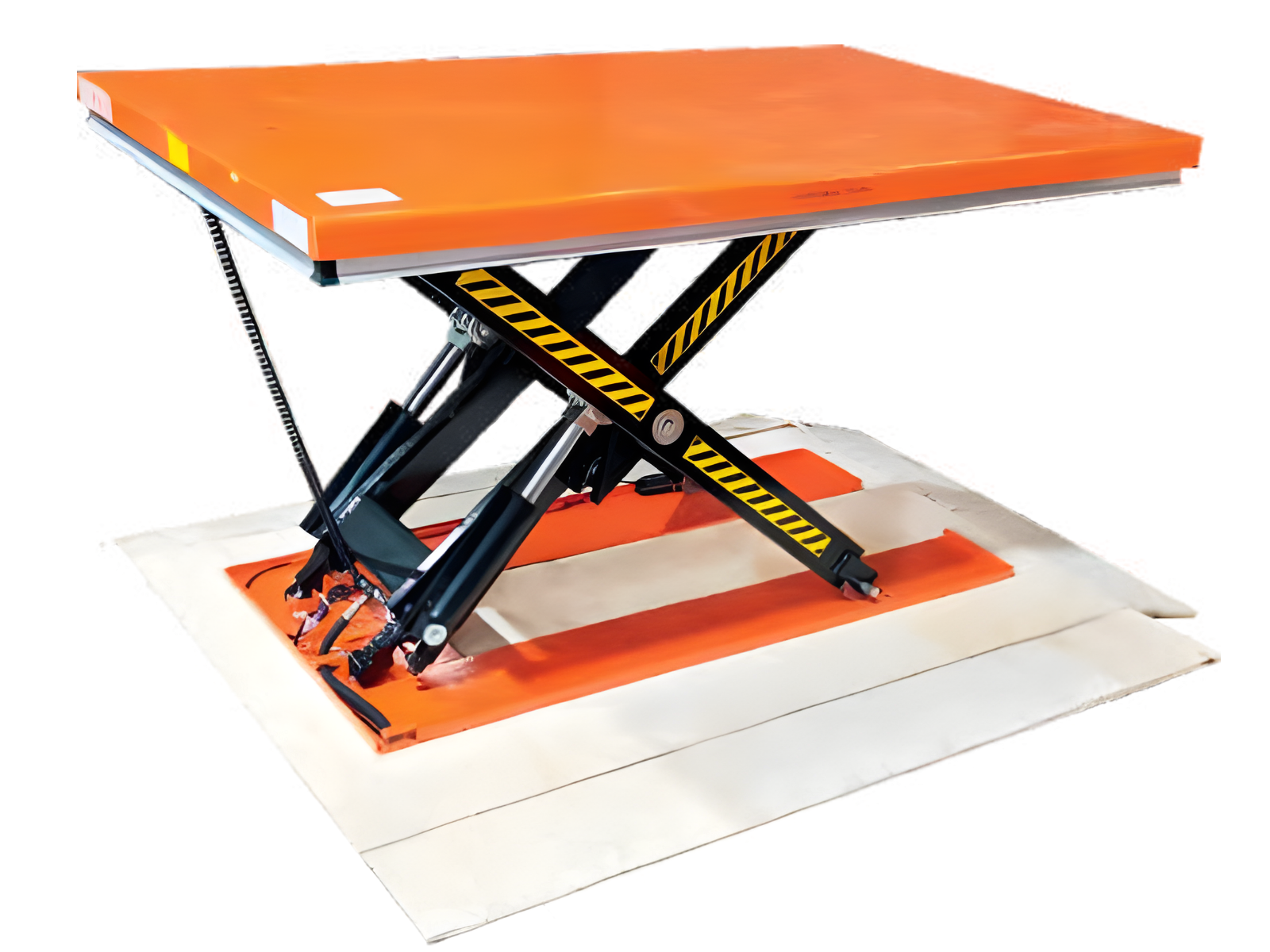 | Low Profile Scissor Lift The low-profile electric/hydraulic scissor lift table loads and unloads skids with a pallet truck without the need for a pit when using the optional... View product → |
Frequently asked questions
How do you safely begin low profile scissor lift troubleshooting in Vadodara?
Clear people from the platform and scissor mechanism, stop operation, lower the platform only with its designed controls, isolate electrical power and never work beneath an unsupported platform.
What causes a scissor lift to descend unevenly or make unusual noise?
Inspect for low or contaminated hydraulic oil, trapped air, restricted hoses, synchronisation faults, worn pivot pins, damaged rollers and loose or damaged components.
What causes scissor lift low clearance problems?
Check for incorrect installation height, floor irregularities, debris beneath the base, bent structural parts, damaged rollers and a load or operating method outside the lift design.
What should you verify before returning a low profile scissor lift to production?
Verify the lift's rated load, platform position, floor condition, clearance, controls, emergency stop, guarding, hydraulic condition and safe operation under a controlled test.
What should a low profile scissor lift service plan record?
Record inspection dates, fault patterns, oil condition, leaks, pin and roller wear, electrical checks, repairs, replacement parts and the technician's release decision.