A dock leveler that moves slowly, leaks oil or stops with a trailer in position is a safety problem before it is a production problem. You will be able to set an inspection schedule, isolate the equipment correctly, distinguish electrical faults from hydraulic faults and decide when recovery requires trained service personnel.
Key takeaways
- Shorten service intervals when dust, heat, moisture, leaks, or noise increase.
- Inspect the lip, deck, hinges, hydraulic lines, controls, and safety barriers before each shift.
- Isolate power and traffic before recovering a stuck dock leveler.
- Record the fault, repairs, tests, and approval before reopening the dock.
Build a maintenance schedule around use, not a calendar alone
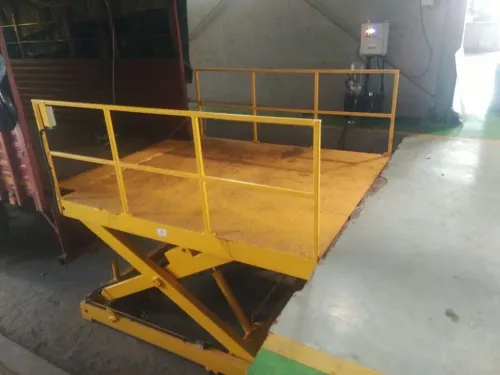
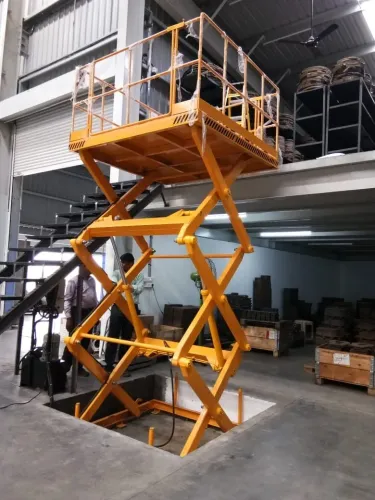
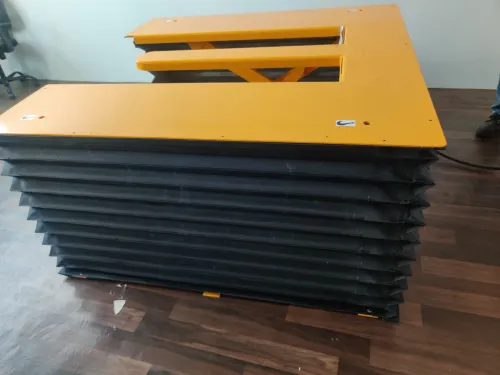
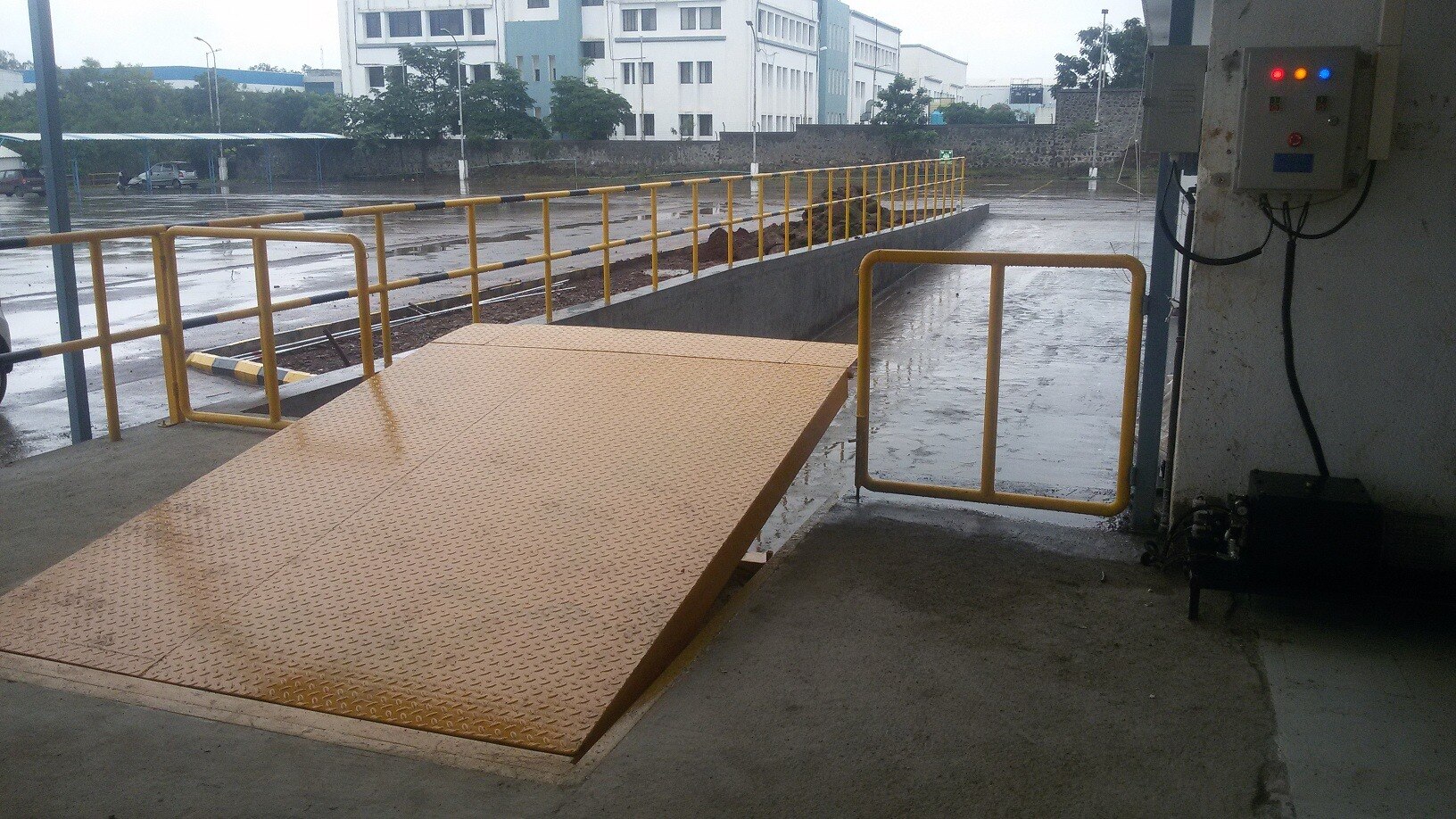
Base electro-hydraulic dock leveler care on loading cycles and exposure, then use the calendar as a backstop. For dock leveler maintenance in Vadodara, shorten intervals when dust, heat, monsoon moisture, wash-down water, oil leakage, or increasing noise appears.
- Before every shift, confirm the area is clear, the trailer is restrained, and the leveler completes a controlled unloaded cycle. Do not enter the pit or work beneath a raised deck without electrical isolation, pressure release, and positive mechanical support.
- Clean the pit and deck weekly; inspect hinges, lip edges, rear frame, welds, bumpers, hoses, fittings, cylinder seals, wiring and guards. Remove debris before it obstructs movement.
- At the manufacturer’s cycle or monthly interval, check reservoir level using the specified hydraulic oil, inspect contamination and leaks, and examine the motor, pump, contactor, overload, isolator, emergency stop, earthing and limit switches.
- At the manufacturer’s periodic service interval, measure structural alignment, hinge-pin wear, elongated holes and anchorage condition. Grease only the points specified in the manual; lubrication will not repair cracks or worn pins.
Record cycle count, findings, oil added, parts replaced and test results. A leveler needing frequent adjustment or showing hydraulic drift needs investigation, not repeated lubrication. Use the nameplate rating and permitted deck, axle and wheel-load conditions for any test load.
Use a physical inspection checklist before every shift
Do not allow loading to continue until the operator has checked the visible structure, controls and loading position, and a technician has isolated and examined any defect. Keep the trailer restrained and confirm the planned axle and wheel loads do not exceed the nameplate rating for the permitted deck and lip position.
| Inspection role | Check before release | Stop condition |
|---|---|---|
| Operator | Deck, lip, lip-extension movement, rear frame, hinge areas, welds, guard edges, bumpers, pit entrance and visible damage | Crack, bent metal, loose part, obstruction, abnormal alignment or damaged bumper |
| Operator | Push buttons, emergency stop, indicator lights, vehicle restraint and smooth deck movement | Control fails, leveler moves unexpectedly, lip does not extend or the deck drops |
| Technician | Electrical isolator, earthing, motor, control panel, wiring, limit switches, hydraulic hoses, fittings, cylinder seals and oil level | Exposed wire, failed interlock, motor noise, oil leak, low oil or hydraulic drift |
| Technician | Hinges, pins, welds, anchorage, pit frame and manufacturer-specified safety device | Elongated hole, cracked weld, loose anchor, worn pin or support that will not engage |
Record the defect, equipment identification, inspection time and decision. Do not enter the pit or work beneath a raised deck until electrical and control circuits are isolated, vehicle movement is prevented, and the maintenance strut or safety leg is fully engaged; the stopped pump does not remove stored hydraulic pressure or gravity risk.
Good dock leveler maintenance in Vadodara treats repeated adjustment as a wear or alignment warning, not as a lubrication task.
Trace movement problems through the hydraulic and electrical systems
Switch off and lock out the electrical isolator before tracing a fault. Prevent trailer movement, stop loading, and positively support any raised deck or lip; a stopped pump does not remove hydraulic pressure or gravity load.
- Slow lifting: verify supply voltage, overload status, motor rotation, oil level and suction blockage before condemning the pump. A bent hinge or obstruction points to the structure.
- Uneven lowering: inspect unequal cylinder movement, trapped air, contaminated oil, restricted hoses and hinge damage. A clean hydraulic response with visible deck twist indicates structural distortion.
- Lip failure: check the pendant, emergency-stop circuit, limit or proximity switch, solenoid and wiring first. If the valve operates but the lip remains still, inspect oil pressure, cylinder seals, hinge pins and debris in the pit.
- Motor humming or tripping: test for phase loss, low voltage, an overloaded pump, seized bearings, blocked suction or low oil. Do not keep resetting the overload.
- Hydraulic drift: a deck that sinks with controls released indicates a leaking check or lowering valve, cylinder seal bypass or hose failure. Mark the deck position and keep people out of the pit.
- Unresponsive controls: trace the isolator, protective device, control voltage, emergency stop, pendant, contactor and limit switches in that order.
For electro hydraulic dock leveler care, clean silt and standing water from the pit because corrosion and moisture can create both mechanical and electrical faults. Record the failed component and test the complete unloaded sequence, then conduct a controlled loaded test within the nameplate rating.
A qualified electro hydraulic dock leveler for maintenance in Vadodara should verify smooth movement, lip seating, leakage, noise and control response before release.
Recover a stuck leveler without creating a second hazard
Stop loading immediately. Keep the trailer coupled, apply its parking brake, deploy the vehicle restraint, and place wheel chocks where required. Do not move a vehicle while the deck or lip is engaged; a trapped trailer can shift suddenly and pull the leveler from its hinges.
Follow this recovery sequence:
- Isolate and lock out the electrical supply and control circuit, then confirm that the controls cannot start the motor.
- Cordon off the dock face and pit. Keep people, forklifts and pedestrians away from a raised deck, extended lip or suspended load.
- Support a raised deck or lip with the manufacturer’s rated mechanical support before anyone works near or beneath it. A stopped pump does not remove hydraulic pressure or gravity load.
- Stabilize any load that could fall or shift. Do not use the leveler to unload a vehicle until the fault is cleared.
- Check for a visible obstruction, bent lip, hinge damage, oil leak or damaged wiring without reaching into moving parts.
- Do not repeatedly cycle the controls, push the lip with a forklift, or release hydraulic pressure unless the manufacturer’s procedure authorizes it.
- Call a dock leveler recovery service when the vehicle remains trapped, power is unavailable, the deck will not hold support, or the fault is not immediately identifiable.
For an electro hydraulic dock leveler for maintenance in vadodara, use the nameplate capacity and manufacturer’s recovery procedure, not assumptions based on motor size or deck thickness. Restore power only after guards and supports are removed by an authorized technician; then test the complete sequence unloaded before any controlled, rated-capacity loading.
Restore the leveler to service with documented evidence
A repaired leveler is safe to use only when the repair has a written closeout record and the equipment passes a controlled functional test. Record the fault, isolation steps, parts replaced, hydraulic oil used, measurements, technician’s name, date, and the equipment nameplate capacity.
Test deck travel, lip extension and retraction, controls, limit switches, emergency stop, electrical isolator, leaks, abnormal noise, and alignment from a safe position.
Keep the leveler out of service until you have confirmed:
- The trailer is secured, loading has stopped, and no person remains in the pit or danger zone.
- A raised deck or lip has positive mechanical support; a stopped pump is not support.
- The test follows the manufacturer’s recovery procedure and stays within the rated axle and wheel loads.
- The final report includes photographs or recorded readings for structural damage, hinges, welds, hoses, cylinders, wiring, and safety devices.
Call a qualified service provider for dock leveler recovery service if the deck is trapped, the lip will not move, hydraulic pressure is lost, a cylinder or hose leaks, electrical interlocks fail, or the structure is bent, cracked, or misaligned. Do not release hydraulic pressure through a fitting or keep cycling the controls.
For dock leveler maintenance in Vadodara, require the provider to identify the cause, not just reset the equipment. Aguatech Engineers Pvt.ltd. can be one source for a repair record that links the inspection findings to the corrective work.
Related product
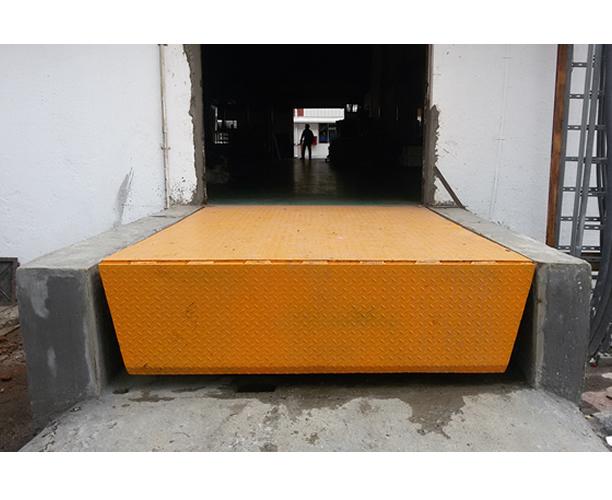 | LOADING/UNLOADING PLATFORMS OR DOCKS Electro-Hydraulic Dock Leveler A loading/unloading dock is typically an elevated opening (or openings) in a building's sidewall where shipments are sorted and staged for loading... View product → |
Frequently asked questions
How often should you maintain an electric hydraulic dock leveler in Vadodara?
Set inspection and servicing intervals by loading cycles and exposure, then use the calendar as a backstop. Shorten intervals when dust, heat, monsoon moisture, wash-down water, oil leakage, or increasing noise appears.
What should you inspect before every shift?
Check the deck, lip, hinges, cylinders, hydraulic hoses, oil leaks, control buttons, electrical enclosure, safety barriers, wheel chocks, and the area below and around the dock leveler.
How do you trace an electric hydraulic dock leveler movement problem?
Start with isolation and visual checks, then trace the fault from the control station through the electrical supply, motor, pump, hydraulic oil, valves, hoses, cylinders, hinges, and mechanical obstructions.
How do you recover a stuck dock leveler safely?
Stop vehicle and pedestrian access, isolate the equipment, secure the deck and lip against movement, and use trained personnel to identify the failure. Do not enter beneath an unsupported deck or bypass safety controls.
What evidence is needed before returning a dock leveler to service?
Document the fault, isolation, parts and fluids used, adjustments, test results, photographs or readings, and the person who approved operation after functional and safety checks.