A low-profile lift can remain operational while developing a dangerous load-holding, structural or control fault. By the end, you will have a practical inspection calendar, a safe isolation sequence, specific hydraulic and electrical checks, and a checklist for selecting and accepting repair work.
Key takeaways
- Use shift, weekly, monthly, and annual inspection layers.
- Follow the manufacturer’s scissor lift maintenance guide over a generic calendar.
- Verify isolation and every safety function before servicing.
- Choose Vadodara service providers that show documented evidence of competence.
Set the inspection schedule before faults stop production
Use four inspection layers: every shift, weekly, monthly planned preventive maintenance, and an annual examination by a competent person. Make the scissor lift maintenance guide the controlling document; do not replace its intervals with a generic calendar.
1. Before every shift, the operator records abnormal noise, jerky or uneven travel, leaks, damaged guards, platform and ramp condition, emergency-stop operation, lowering control, visible structural damage and missing or damaged warning labels. Stop and quarantine the lift when a safety function fails.
2. Each week, inspect rollers, pivot-pin retainers, hose abrasion, cable routing, fasteners and limit-switch alignment. Check the floor and base frame for pallet-truck impact damage.
3. Each month, planned maintenance checks hydraulic-oil level and contamination under the manufacturer’s specified condition, filter condition, battery terminals, charger operation, pendant controls, earthing and lubrication points. Test every safety device and record the result.
4. Once a year, a competent person examines the load-bearing structure, hydraulic and electrical systems, overload protection, travel stops and emergency lowering, then completes the manufacturer’s required tests. This examination is not a substitute for shift checks or planned servicing.
Confirm the rating before setting the schedule. A load-only lift for pallets or dies follows its manufacturer’s instructions; a personnel-rated lift also needs guardrails, platform controls, emergency lowering, fall-protection provisions and trained operators.
Complete a pre-use inspection in a fixed sequence
Before energising a low profile scissor lift for maintenance in vadodara, complete the same walkaround and function test every time:
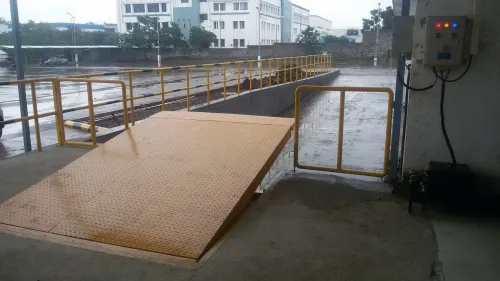
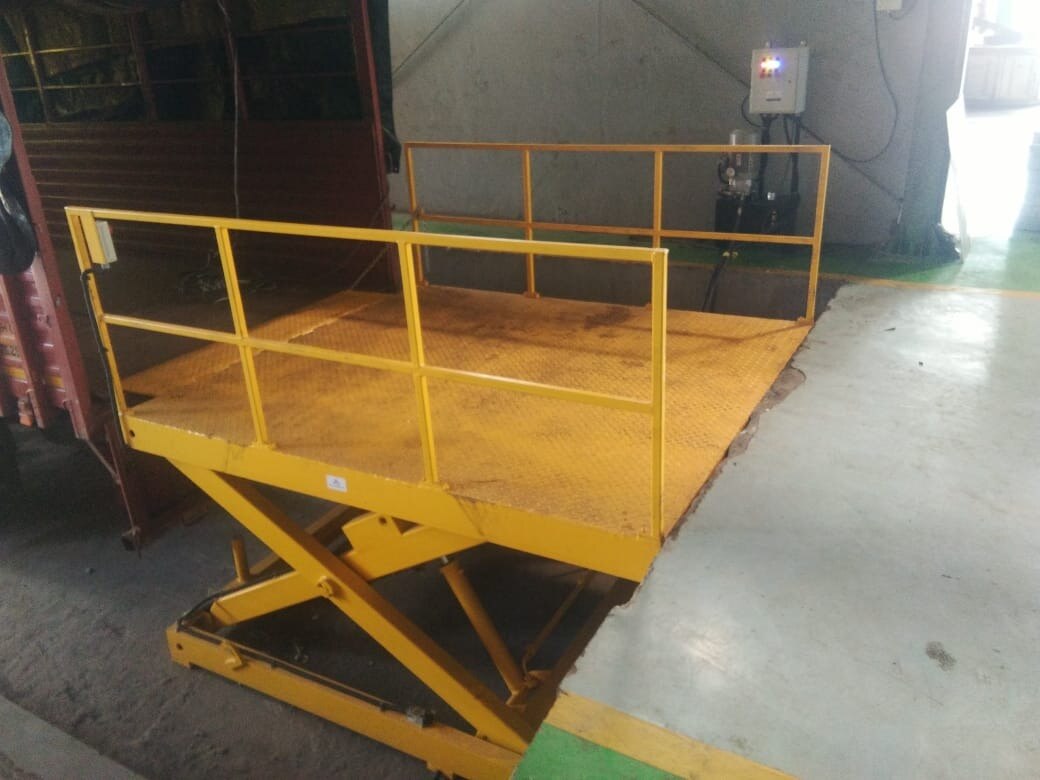
1. Start at the platform and approach ramp. Check deck plates, edges, guards, pinch-point protection, warning labels and the maintenance prop. Inspect the base frame for distortion, loose fasteners, contact marks and pallet-truck impact damage.
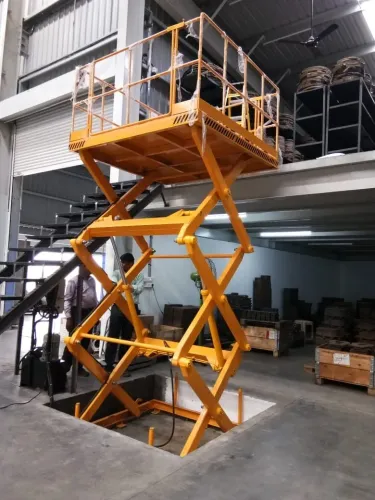
2. Examine every scissor arm, weld, pivot pin, bushing and roller. Reject cracked welds, bent arms, elongated pin holes, missing retaining hardware, seized or uneven rollers and excessive side play. Do not straighten, drill or weld an arm without approved engineering instructions.
3. Inspect hydraulic hoses, crimps, fittings, cylinder rod, valve manifold, reservoir and the floor beneath the lift. Never use your hand to find a leak: use cardboard or wood, depressurise before loosening a fitting, and treat injection injury as a medical emergency.
4. Check the power unit, battery or electrical isolator, cables, connectors, pendant, charger, earth connection and isolation switch. Confirm that the emergency-stop, lowering control, upper travel limit, lower stop, overload protection and anti-crush device, where fitted, are intact and labelled.
5. Energise only after the area is clear. Test normal raising and lowering, smooth level travel, stopping at both limits, emergency lowering under controlled conditions and the maintenance prop. Do not bypass a nuisance-tripping limit switch or overload device; investigate misalignment, contamination, damaged wiring or an uneven load.
Record defects and quarantine the lift if any safety function fails.
Service the hydraulic and electric systems without creating new faults
Overfilling the reservoir can create foaming, leaks and erratic movement. Check the oil only in the position and temperature specified by the OEM, often with the platform fully lowered and the oil at operating temperature; cylinder position and heat change the reading.
Before adding fluid, inspect the floor, cylinder rod, hose crimps, fittings, valve manifold and reservoir breather for leaks. Use the specified oil and filter, clean containers, and capped hoses. Do not mix oils because their viscosity looks similar.
If the manual specifies an ISO 4406 cleanliness target, record that code instead of judging oil by colour. Change contaminated oil and filters at the stated interval.
| Symptom | Possible fault | Correct response |
|---|---|---|
| Drifts down at rest | Cylinder seal, check valve or hose leak | Isolate load-holding components before condemning the pump |
| Rises unevenly | Air, directional valve, cylinder or uneven load | Inspect and bleed only by the OEM procedure |
| Needs repeated pump cycles | Air, restricted filter, valve fault or pump fault | Diagnose the circuit before replacing the pump |
For a low profile scissor lift service in Vadodara, protect the electrical system as carefully as the hydraulics:
- Inspect cable insulation, connectors, pendant buttons, battery terminals, charger settings and earthing.
- Match charger voltage and battery chemistry. Ventilate serviceable lead-acid batteries, clean terminals, and add distilled or de-ionised water after charging; never open sealed batteries.
- Isolate electrical power before service, then test emergency lowering under controlled conditions rather than assuming pendant operation proves it will work.
Isolate stored energy and verify every safety function
Anyone entering the scissor mechanism must first remove every source of movement, not trust hydraulic pressure to hold the platform.
1. Remove the load and lower the platform fully onto its normal stops. Remove the key and keep it under the technician’s control.
2. Isolate the electrical supply, disconnect the battery where fitted, and apply lockout/tagout. Prevent another person from reconnecting the charger, isolator or controls.
3. If the platform must remain raised, install the manufacturer-provided maintenance prop or another approved positive mechanical support before entry. A cylinder, check valve or trapped hydraulic pressure is not a substitute.
4. Depressurise the hydraulic circuit before loosening any hose or fitting. Restrain arms, rollers and other moving components, and control gravitational energy so a released part cannot shift.
5. Keep loads centred and confirm the rated capacity before any test. An uneven or point load concentrates force in the platform and scissor pack; an approach ramp provides access, not extra capacity or stability.
6. After maintenance, test the emergency stop, normal and emergency lowering, upper travel limit, lower stop, overload protection, anti-crush protection where fitted and every mechanical interlock. Cycle through full travel and check level movement, drift, leaks, guards and retaining hardware.
Use the scissor lift maintenance guide for the acceptance test. Never straighten, weld or drill a scissor arm without approved engineering instructions; changing its load path can invalidate the rating.
Choose and accept local service by evidence, not a promised response time
Require evidence before booking low profile lift repair in Vadodara: the provider must identify your lift by serial number and match the job to its drawings, instruments and parts, not merely promise a fast arrival.
Ask the provider to bring:
- The correct hydraulic schematic and electrical drawings
- Diagnostic equipment and calibrated pressure, voltage and continuity test instruments
- Rated lifting or propping equipment
- Genuine or technically approved replacement parts
Describe the working conditions in writing. Include fabrication dust, wash-down or monsoon moisture, indoor or outdoor exposure, ambient temperature, floor flatness, daily cycles, load distribution and available electrical supply. These conditions affect seals, rollers, batteries, controls and corrosion.
| Evidence to require | What it proves | Warning sign |
|---|---|---|
| Service record with serial number, operating hours and battery condition | The technician worked on the identified lift | “Serviced” with no machine identity |
| Defect list, parts changed, hydraulic oil and filter details | You can trace what changed and what remains | Parts or oil described only as “replaced” |
| Safety-device results and return status | The lift was released, restricted or quarantined deliberately | No acceptance status recorded |
After work on cylinders, valves, scissor arms, pins, brakes or safety controls, require a repair-scope acceptance test. Cycle the lift, check level movement, drift, leaks, guards and retaining hardware, then complete the manufacturer-specified no-load or rated-load test. A visual check alone is insufficient.
Evaluate Aguatech Engineers Pvt.ltd. against this evidence checklist, rather than selecting local support for location or response time.
Related product
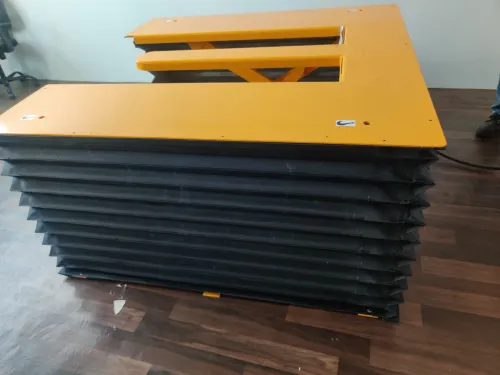
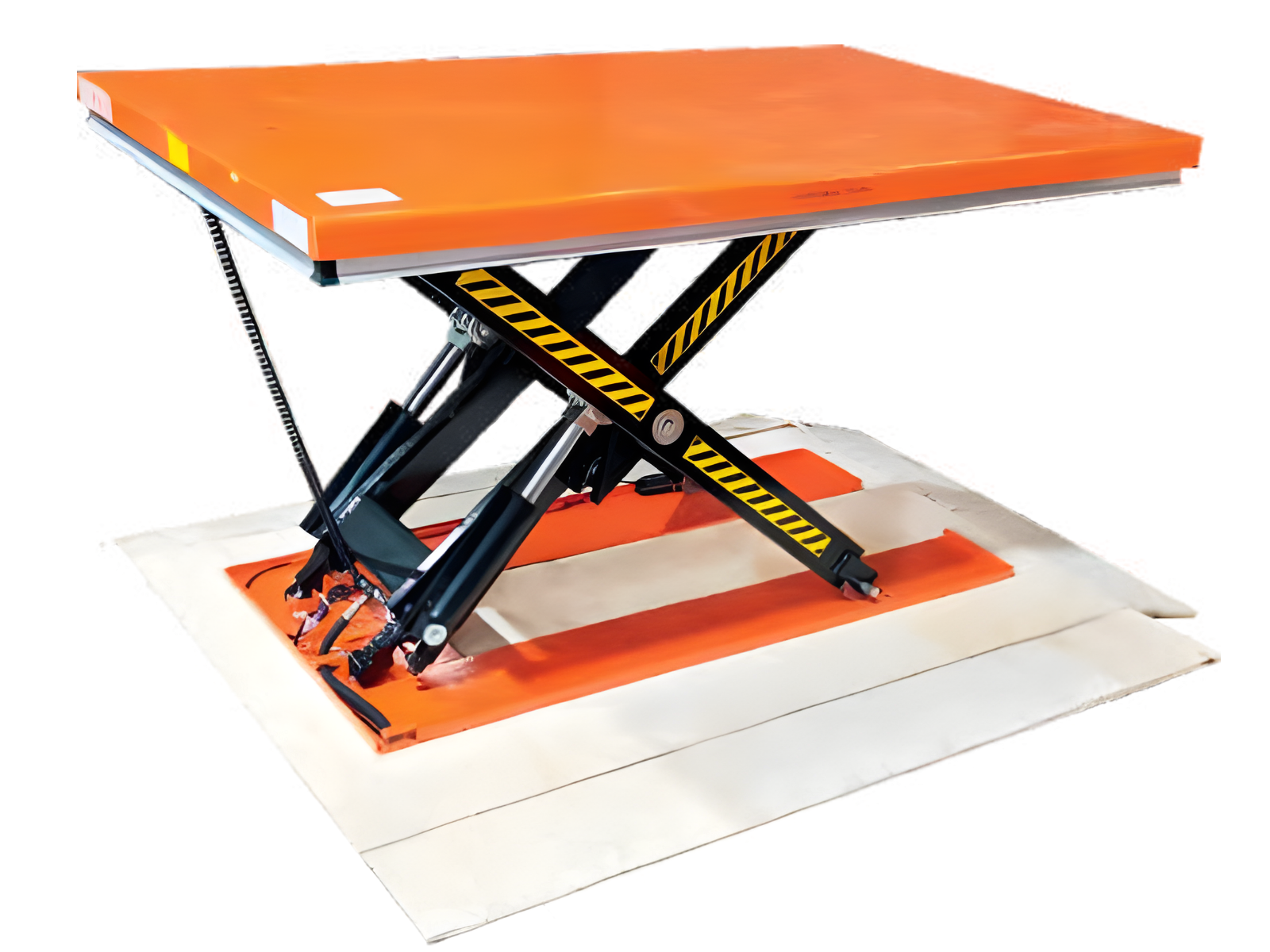 | Low Profile Scissor Lift The low-profile electric/hydraulic scissor lift table loads and unloads skids with a pallet truck without the need for a pit when using the optional... View product → |
Frequently asked questions
How often should you inspect a low profile scissor lift?
Inspect it every shift, weekly, and during monthly planned preventive maintenance. Arrange an annual examination by a competent person, and follow the intervals in the scissor lift maintenance guide.
What should a pre-use inspection cover?
Complete the inspection in a fixed sequence, checking the lift’s visible condition, hydraulic and electric systems, controls, and safety functions before operation.
How do you service a scissor lift without creating new faults?
Follow the maintenance guide, isolate stored energy before work, and verify the hydraulic, electric, control, and safety systems after servicing.
How should you choose scissor lift service in Vadodara?
Ask local providers for documented evidence of competence, completed service work, inspection findings, and clear acceptance checks instead of relying on a promised response time.