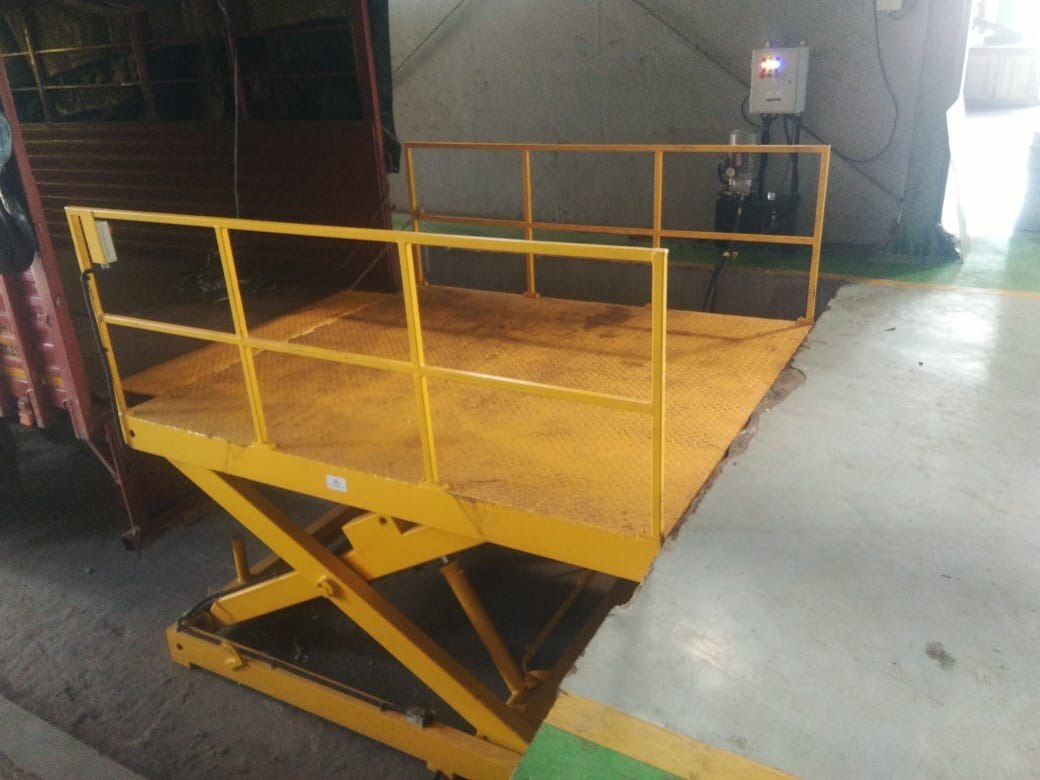
A logistics hub loses time when pallets, cages, conveyors, and vehicle beds sit at different heights, forcing workers to improvise with ramps, forklifts, or manual handling. By the end, you will be able to identify where an electro-hydraulic scissor lift fits, compare it with other equipment, and specify the platform, controls, safety devices, and operating limits a Surat site actually needs.
Key takeaways
- Match lift travel to the full floor-to-truck height difference.
- Specify rated load, platform dimensions and pallet approach clearance.
- Use dock levellers for short gaps and scissor lifts for vertical transfer.
- Protect the truck interface with stops, gates and interlocked controls.
Why vertical height control matters in Surat logistics operations
A truck bed, dock edge, conveyor, and warehouse floor rarely align perfectly. An electro-hydraulic scissor lift closes that vertical gap, bringing a pallet, cage, or stillage to the correct transfer height without asking workers to bridge the difference manually.
That matters in Surat’s fast-moving logistics network, where incoming vehicles, distribution schedules, and port-linked transfers create repeated loading cycles. The practical electro hydraulic scissor lift benefits for logistics in Surat include controlled vertical travel, reduced pallet rehandling, and safer transfers between vehicle decks and fixed dock levels.
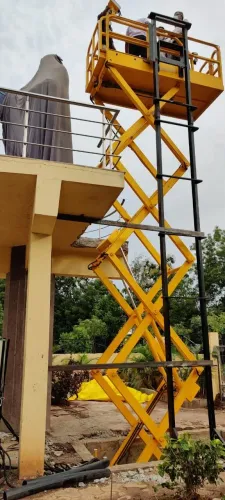
The hydraulic scissor lift advantages come from high lifting force within a compact floor footprint. An electric motor drives a hydraulic pump, while cylinders and crossed arms raise the platform; push-button controls can set a consistent height and controlled lowering speed.
A protected power pack also keeps the motor and controls away from much of the moving load area.
For a warehouse, distribution centre, or port-linked hub, judge productivity by the complete cycle rather than maximum lift speed. Count pallet approach, loading, raising, transfer, lowering, and platform clearance; interlocks, dock restraints, gates, or manual alignment can erase the gain from a faster pump.
Electro hydraulic scissor lift benefits in Surat depend on the interface as much as the lifting force. Specify platform-up and platform-down confirmation, gate and dock-door interlocks, emergency-stop behaviour, and a defined fault state. The equipment is not automatically a personnel lift: people need a platform, guarding, controls, and certification designed for personnel access.
How a scissor lift moves a pallet through the loading cycle
Park the vehicle, lock out movement, and inspect the travel path before positioning the scissor lift. Confirm that the pallet weight and load centre fit the rated capacity, then align the platform squarely with the dock, truck bed, conveyor, or warehouse floor.
1. Set the platform at its lowest safe level and drive or roll the pallet onto the centre of the deck. Keep forks, pallet wheels, and cage edges inside the usable platform area.
2. Apply the platform restraint or dock interlock, close the gate if fitted, and check that no person, loose wrapping, or equipment remains in the lift’s operating zone.
3. Use the pendant, push-button, or remote control to raise the deck to the receiving height. Stop at the level mark; do not use a raised platform to correct a badly positioned vehicle.
4. Release the pallet with a pallet truck or forklift only after the level and interface are stable. Move the load fully onto the receiving surface before retracting handling equipment.
5. Lower the empty platform to its travel position, remove restraints only when the deck is clear, and inspect for debris, damaged pallets, or fluid leaks before the next cycle.
This sequence makes a scissor lift for logistics hubs a controlled vertical-transfer tool rather than a faster substitute for every loading device. Record the complete cycle: approach, loading, raising, transfer, lowering, and clearing. That figure matters in industrial scissor lift applications because waiting at an interlock or dock restraint can outweigh hydraulic lifting speed.
Which equipment should bridge the height difference?
Choose a scissor lift for logistics hubs when the task is a controlled vertical transfer between a truck bed, warehouse floor, mezzanine, or conveyor. Its electro-hydraulic platform moves the load up and down; it does not travel through the building or replace a vehicle.
| Option | What it bridges or moves | When it is the wrong choice |
|---|---|---|
| Scissor lift | Fixed vertical height differences for pallets, cages, drums, or conveyor transfers | Continuous high-speed flow, long-distance movement, personnel access without people-rated design, or a site that cannot provide guarding and a safe transition |
| Dock leveler | The small gap and height variation between a dock and truck bed | A large vertical rise, repeated lifting between warehouse levels, or transfer without a dock |
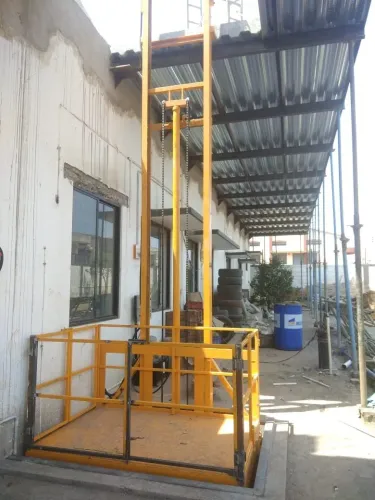
| Goods lift | Loads between floors through a dedicated shaft or enclosure | Simple dock-to-floor transfer where civil work and a shaft add unnecessary cost |
| Freight elevator | Goods between multiple floors with enclosed travel | Open, rapid loading-bay transfers or sites lacking elevator construction |
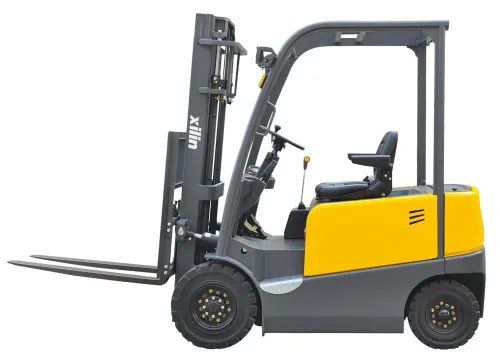
| Forklift | Picks, carries, and stacks loads across an area | A fixed height difference where traffic, emissions, or turning space create problems |
| Pallet truck | Moves pallets horizontally over short distances | Raising a pallet to a truck bed or mezzanine |
| Mobile ramp | Provides a sloped route between levels | Heavy loads, limited approach space, or a need for a level platform |
The hydraulic scissor lift advantages include precise positioning and reduced manual ramp handling, but only when the platform, dock edge, truck restraint, and bridge plate align. A surface-mounted unit consumes approach space; a pit-mounted unit needs excavation, drainage, and maintenance access.
Choose another solution when the load pattern, duty cycle, or interface exceeds the lift’s rated design.
How to size the platform and secure the truck interface
A lift rated for 2,000 kg is not automatically suitable for a 2,000 kg pallet. Verify the heaviest load, pallet-truck impact, load-centre distance, and whether weight is evenly distributed or concentrated at the edges. Omitted duty cycle is a common failure point: occasional pallet transfer differs from continuous industrial scissor lift applications.
| Check | Record before selection | Failure prevented |
|---|---|---|
| Rated load | Maximum load, load centre, impact allowance, cycles per hour | Overload, fatigue, slow operation |
| Platform | Usable length and width, pallet overhang, side clearance | Wheels or cages catching the edge |
| Travel | Lowest level, highest level, dock and truck-bed elevations | Incomplete transfer or excessive ramp angle |
| Interface | Vehicle types, bed variation, bridge plate, dock edge, restraint system | Gaps, movement, or an abrupt transition |
A scissor lift for logistics hubs must match the complete vertical envelope, not just the advertised raised height. Measure the lowest deck, highest deck, dock lip, truck-bed range, and the clearance needed for a pallet truck, cage, or forklift.
Specify a flush platform and a rated dockboard or bridge plate where the lift cannot meet the vehicle directly.
Secure the vehicle before transfer with the site’s wheel restraint or dock-lock system, then interlock lift movement with the restraint, dock door, gates, and platform-up/down position. Include non-slip drainage, guarded edges, emergency stops, safe restart after power loss, and a defined fault state.
If people will ride or access the deck, require a personnel-rated design with guarding and certification; a material lift is not automatically a personnel lift.
What to specify for reliable operation in a Surat hub
Specify the full operating envelope, not just a 1,000 kg capacity. The electro hydraulic scissor lift benefits in Surat depend on matching the installation to the site: a pit-mounted unit suits a permanent dock, while a surface-mounted lift with a ramp avoids civil work but consumes approach space.
The electro hydraulic scissor lift benefits for logistics in Surat disappear if the platform slows the next truck.
| Decision | Compare | Specify before purchase |
|---|---|---|
| Installation | Pit, surface-mounted, or mobile | Finished floor, ramp clearance, drainage, and highest level |
| Duty cycle | Occasional use versus repeated pallet transfers | Cycles per hour, peak shift duration, load centre, and full cycle time |
| Controls | Pendant, wall station, or guarded remote control | Operator sightline, two-hand control, emergency stop, interlocks, and dead-man descent |
| Exposure | Indoor, rain-exposed, or washdown area | Non-slip deck, drainage, cable routing, corrosion-resistant finish, and IP rating |
| Maintenance | Local service versus distant support | Response time, spare seals and hoses, inspection intervals, and trained technicians |
| Documentation | Basic quotation versus engineered package | Drawings, load test record, hydraulic schematic, risk assessment, manuals, and training record |
Ask the supplier to state whether the lift is goods-only; personnel use requires a platform, guarding, controls, and certification designed for people. Require load-holding check valves, hose-burst protection, controlled descent, emergency lowering, and mechanical maintenance supports. Aguatech Engineers Pvt.ltd. can be assessed against these same documents and service criteria rather than headline capacity alone.
Related products
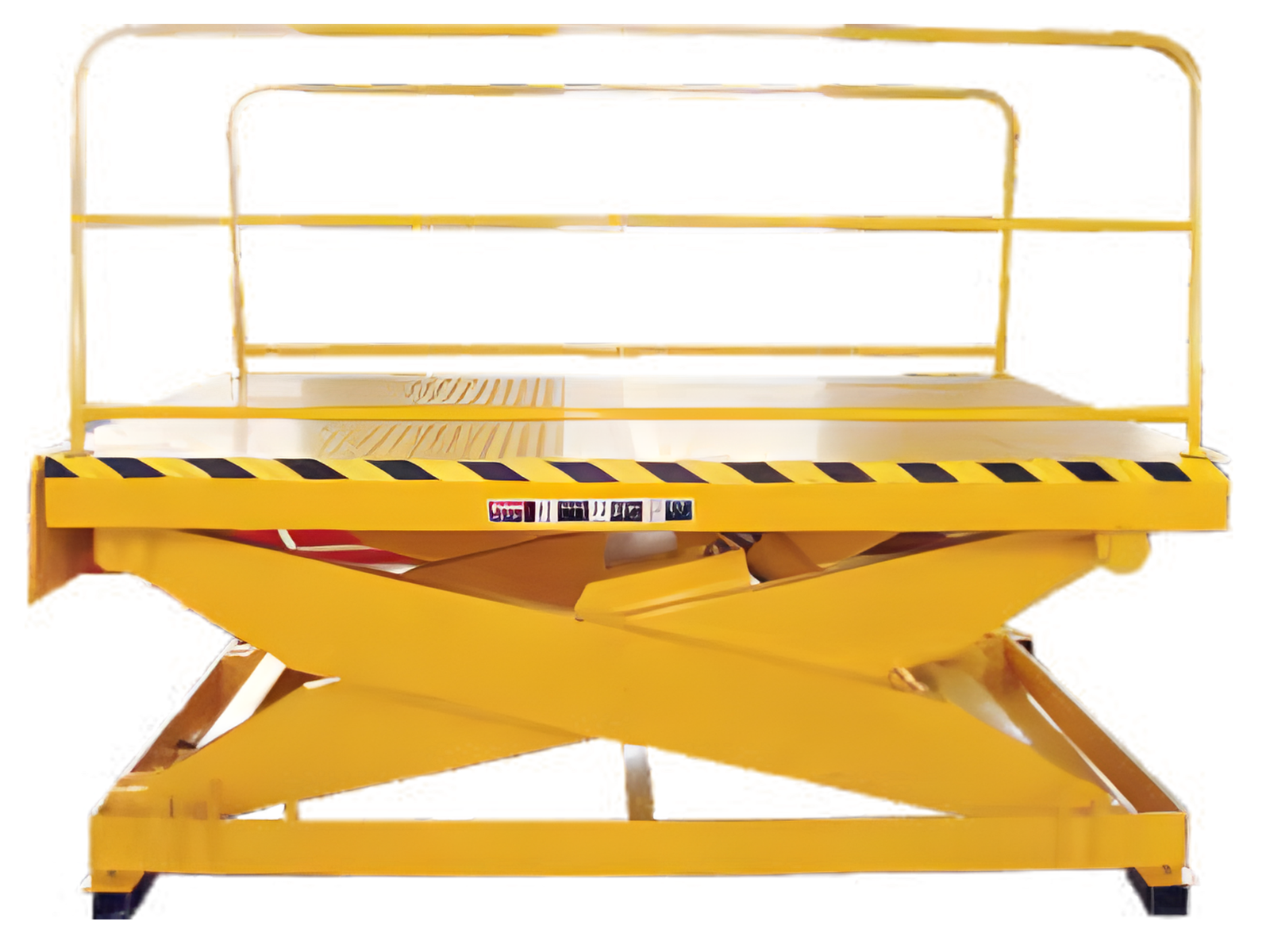 | LOADING/UNLOADING PLATFORMS OR DOCKS Electro-Hydraulic Scissor Lifts A loading/unloading dock is typically an elevated opening (or openings) in a building's sidewall where shipments are sorted and staged for loading... View product → |
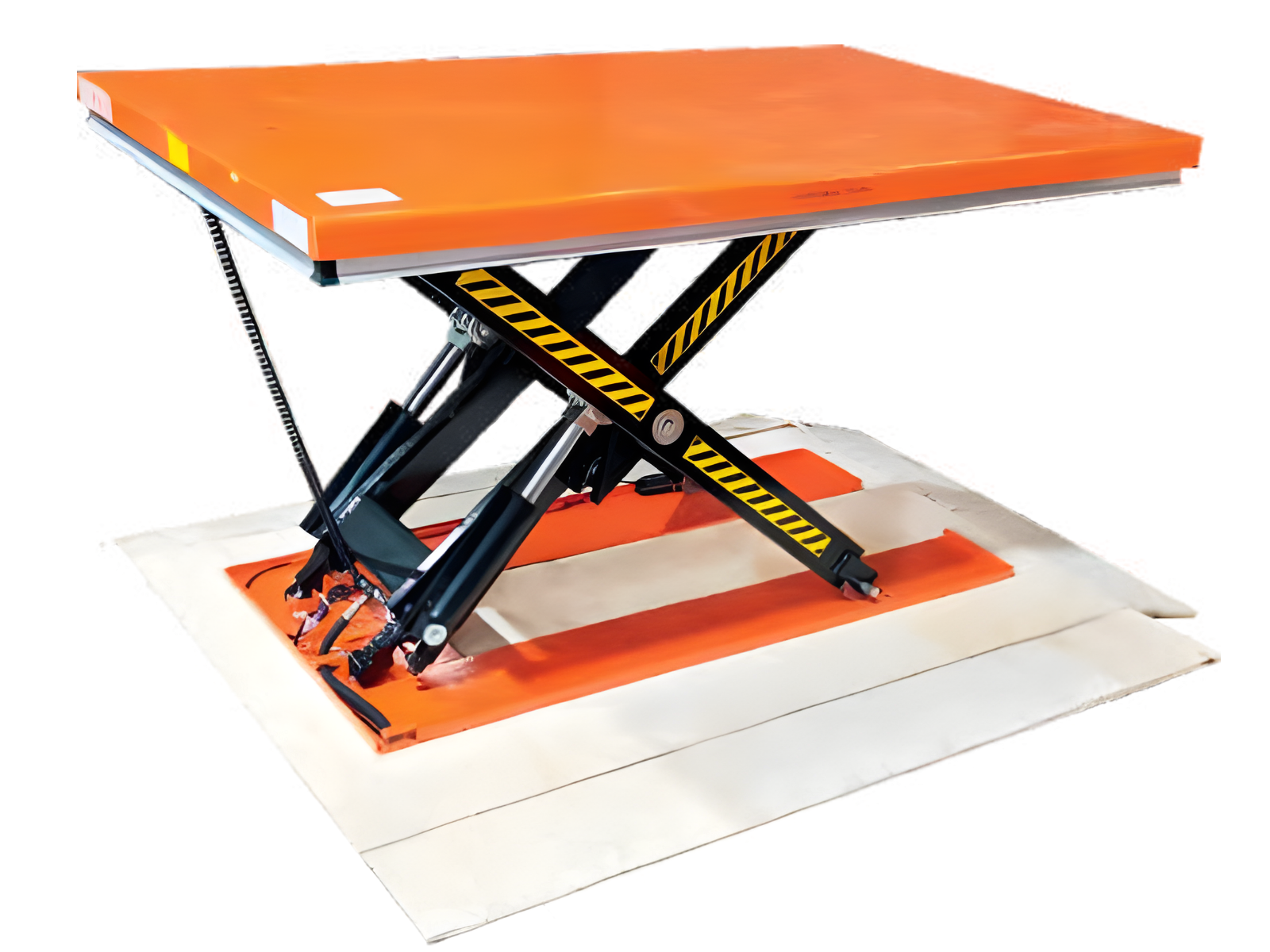 | Low Profile Scissor Lift The low-profile electric/hydraulic scissor lift table loads and unloads skids with a pallet truck without the need for a pit when using the optional... View product → |
Frequently asked questions
Why does vertical height control matter in Surat logistics operations?
A controlled lift aligns warehouse floors, dock edges, truck beds and conveyors, reducing manual bridging and unstable pallet transfers.
How does a scissor lift move a pallet through the loading cycle?
An electric motor drives a hydraulic pump, which extends cylinders and raises the platform; lowering returns the platform to the required transfer height.
Which equipment should bridge the height difference?
Use a scissor lift for substantial vertical movement, a dock leveller for a short dock-to-truck gap, and a conveyor when the load needs continuous movement.
How do you size the platform and secure the truck interface?
Confirm the maximum load, pallet dimensions, lift travel, approach direction and clearance, then add stops, gates, non-slip surfaces and controls that prevent unsafe movement.
Related products
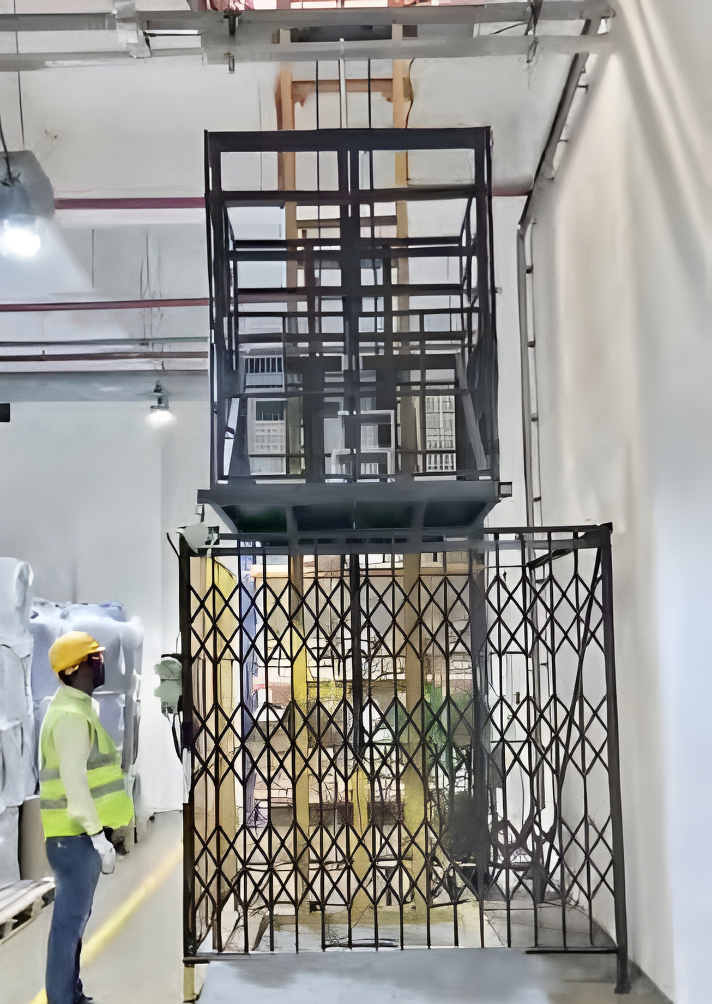 | GOODS LIFTS Goods or Cargo or Luggage lifts are basically used in industry shop floors for safe, secure, convenient and fast methods to transport loads from... View product → |
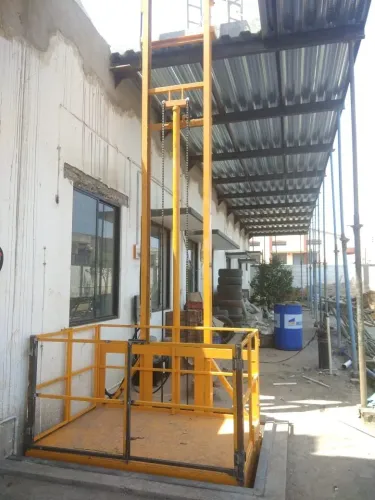
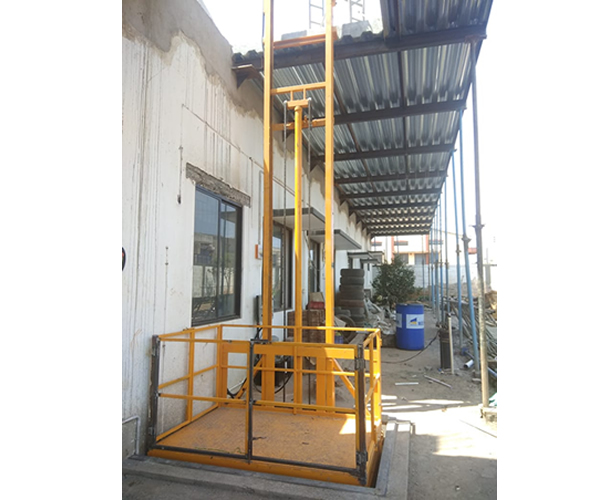 | GOODS LIFTS Goods or Cargo or Luggage lifts are basically used in industry shop floors for safe, secure, convenient and fast methods to transport loads from... View product → |
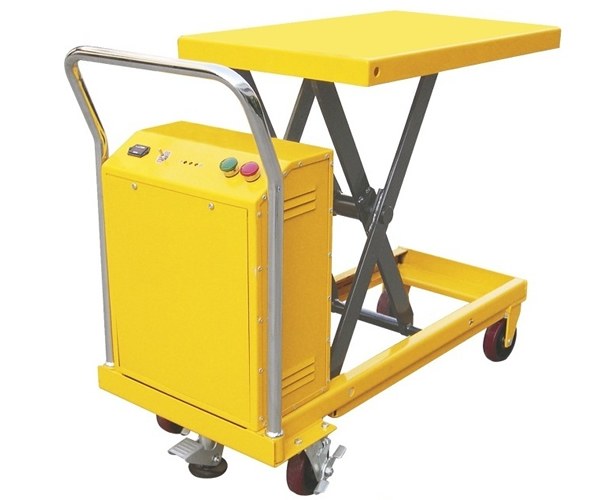 | LIFT TABLES AEPL Scissor Lift Tables (ADG) reduce employee injuries by positioning work at a comfortable and ergonomic height to eliminate unnecessary bending,... View product → |
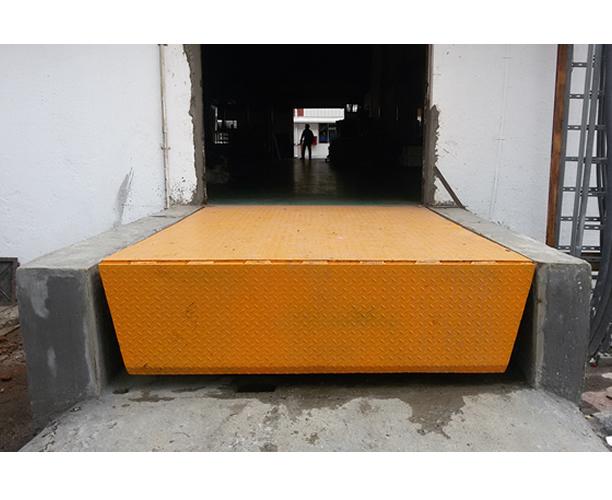 | LOADING/UNLOADING PLATFORMS OR DOCKS Electro-Hydraulic Dock Leveler A loading/unloading dock is typically an elevated opening (or openings) in a building's sidewall where shipments are sorted and staged for loading... View product → |