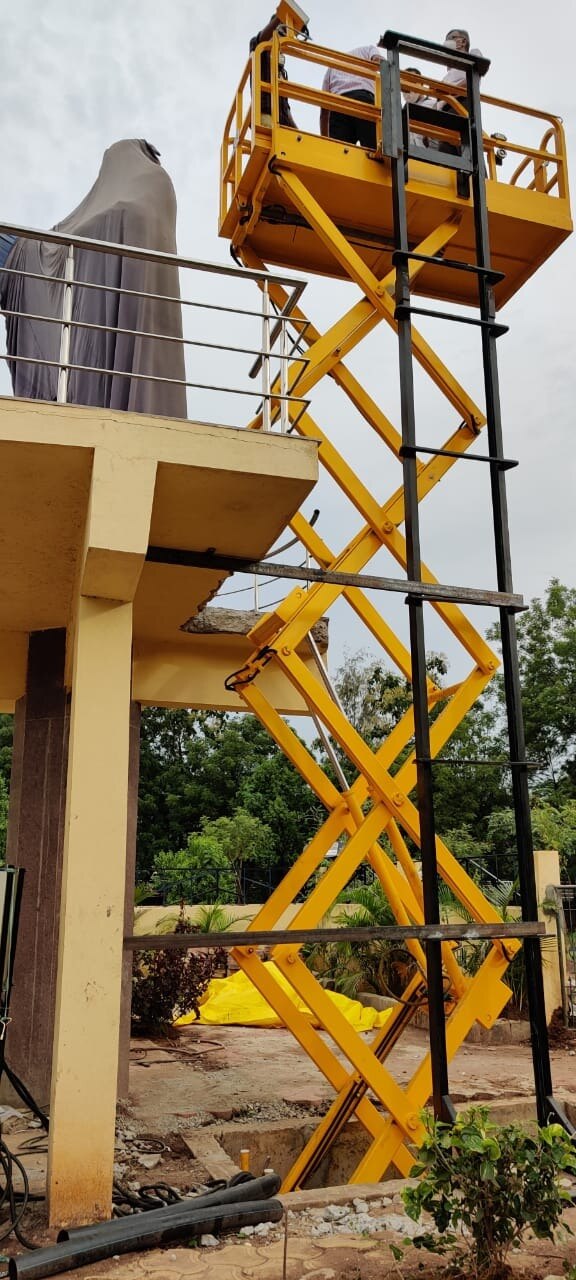
A compact lift can still fail because of a damaged hose, weak battery, defeated interlock, overloaded platform or unsuitable floor. You will be able to inspect the machine before each shift, schedule model-specific servicing, isolate faults safely and recover a failed lift without turning a tight work area into a larger hazard.
Key takeaways
- Check capacity, clearances, floor loading, grade and overhead hazards before every shift.
- Separate operator inspections from scheduled hydraulic, electrical and structural servicing.
- Isolate power and support the raised platform before diagnosing faults underneath.
- Test emergency stops, limit switches, alarms and lowering functions before releasing the lift.
Inspect the lift and the work area before every shift
Do not start the lift until both the machine and its travel path pass a pre-use inspection. A low profile scissor lift is not automatically safe in a confined area: check the rated capacity, platform height, stowed height, width, turning space, floor loading, doorway clearance, overhead obstructions and grade against the manufacturer’s limits.
1. Walk around the machine. Check the platform floor, approach ramp, guardrails, guard edges, entry gate, locking hardware, wheels or casters and chassis for damage, looseness or missing parts. Confirm that capacity plates, warning decals and operating instructions are readable.
2. Inspect the hydraulic and structural parts. Look for oil beneath the lift, wet hose fittings, hose abrasion, damaged cylinders, cracked welds, bent scissor arms and loose pins. Do not operate a lift with a leak or structural damage.
3. Test the controls from the operator position. Check lift and lower functions, steering or drive controls, the emergency stop, audible alarm, emergency-lowering control and any limit-switch indication. Stop immediately if a control sticks, a safety device fails or movement is unexpected.
4. Examine the work area. Remove debris, identify potholes, wet or weak flooring, vehicle traffic, ramps, drop-offs and overhead pipes, doors or beams. Keep the required clearance around the platform and confirm the floor can support concentrated wheel loads.
5. Record defects, isolate and tag out the lift, then report them before use. For a low profile scissor lift for maintenance in Surat, specify floor condition and exposure to water, corrosion and traffic rather than choosing by platform height alone.
Build a maintenance schedule that separates operator checks from service work
Separate operator checks from service work: a pre-use check confirms readiness for that shift, while industrial scissor lift maintenance prevents wear from becoming a failure. Assign each task to a named role and stop the lift when a safety defect appears.
| Frequency | Responsible person | Required work |
|---|---|---|
| Daily | Operator | Record controls, emergency stop, emergency lowering, guardrails, gates, wheels, alarms, leaks, damage and decals before use. |
| Weekly | Trained maintainer | Check pins, fasteners, tyres or casters, hoses, fittings, cables, battery terminals and abnormal scissor-pack play; lubricate only where the manual permits. |
| Monthly | Competent technician | Inspect cylinders, welds, wiring, brakes, safety devices and hydraulic oil condition; test limits, alarms and emergency functions; record machine hours. |
| Annual | Manufacturer-trained technician or qualified inspector | Complete the manufacturer’s scheduled inspection, service replacements and documented safety-function tests before authorising return to work. |
Keep a machine-specific log containing the asset number, inspection date, hour-meter reading, inspector’s name, defect description, corrective action, parts or fluids used, test results and release-to-service authorisation. Mark each entry as inspection, preventive replacement or corrective repair.
Retain these records for the period required by local law and your company’s equipment-control procedure:
- Daily operator check sheets and refused-use reports
- Weekly, monthly and annual inspection reports
- Hydraulic, electrical and battery service records
- Fault reports, photographs, invoices and test certificates
- Written approval confirming that repaired safety functions were tested
A verbal repair leaves no evidence that the lift was safe to release.
Service the hydraulic, electrical and battery systems without creating new faults
Use the exact model and serial number before low profile lift servicing. Similar-looking machines can use different hose routes, limit switches, controller settings, emergency-lowering devices, batteries and service intervals; a generic hose, oil, battery or control board can create new low profile scissor lift problems.
- Park on a firm, level surface, lower the platform fully, remove the key and isolate the battery or approved disconnect. Block the structure with the manufacturer’s service supports before anyone enters beneath it; never rely on hydraulics alone.
- Depressurise the hydraulic circuit using the specified procedure. Check oil level and condition, hose abrasion, fittings, cylinders and filter condition; install only the specified fluid and parts. After hose or cylinder work, bleed trapped air and inspect for leaks at operating pressure.
- Keep electrical power isolated while examining cables, terminals, pendant controls, limit switches, contactors, fuses and the charger. Do not reset a fuse repeatedly: find the short, damaged wire or failed component first.
- For lead-acid batteries, check electrolyte level, terminal corrosion, ventilation and charge performance; control ignition sources and acid exposure in the charging area. Use the approved charger and battery-management system for lithium packs.
An emergency descent is a recovery function, not a service clearance. Tag out the lift after unintended movement or emergency lowering until you identify the cause, such as a failed solenoid, valve, limit switch, wiring fault, low pressure or structural interference. Aguatech Engineers Pvt.ltd.
can provide the model-specific records needed to match replacement parts and settings to the serial number.
Related product
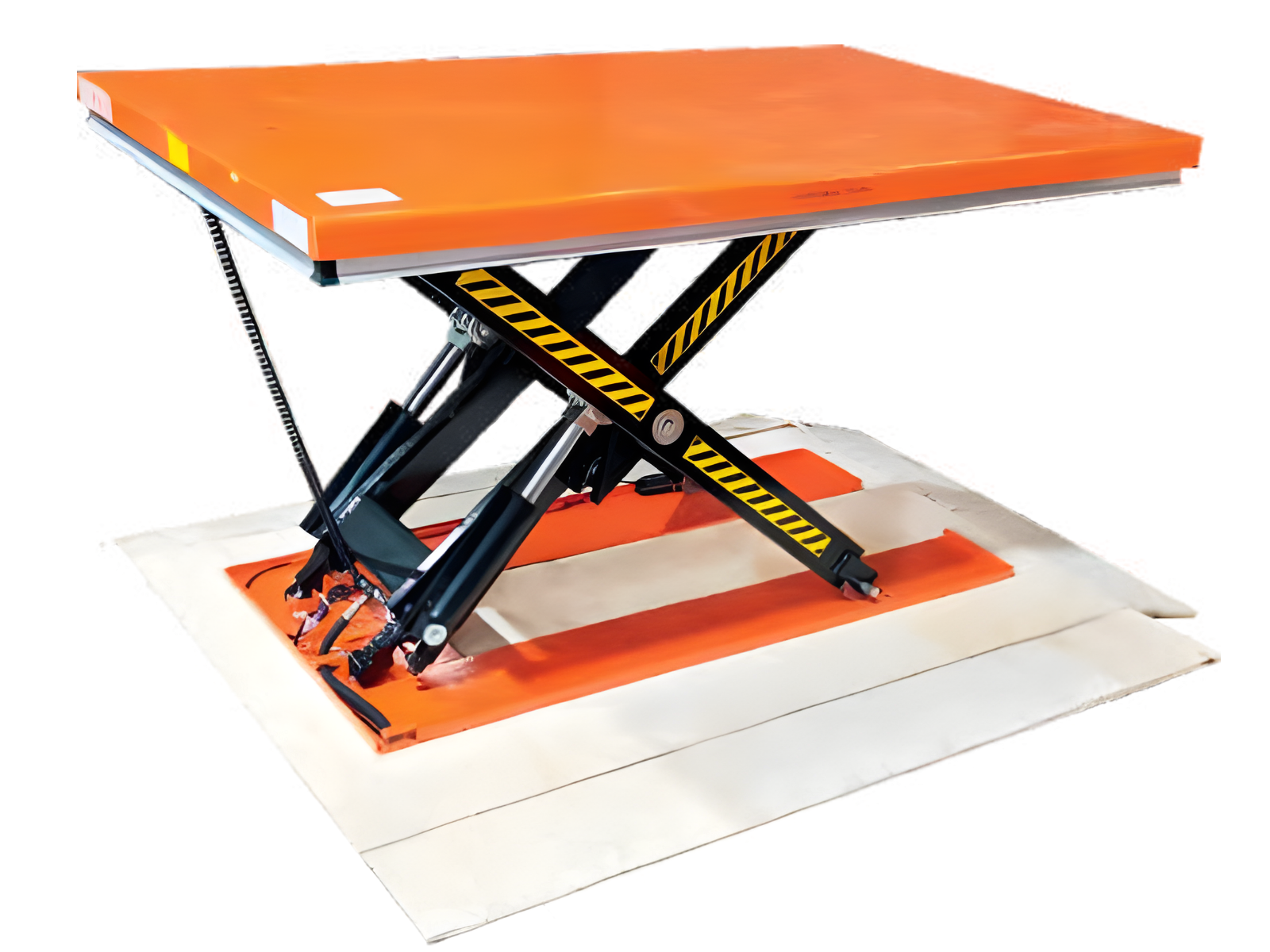 | Low Profile Scissor Lift The low-profile electric/hydraulic scissor lift table loads and unloads skids with a pallet truck without the need for a pit when using the optional... View product → |
Diagnose movement, control and stability faults before anyone works underneath
Do not put anyone underneath a platform until the lift is isolated, the platform is mechanically supported as specified by the manufacturer, and the fault is identified. Record whether the symptom occurs while raising, lowering, driving or stationary; many low profile scissor lift problems are control or stability failures, not hydraulic failures.
- Failure to raise points to low battery voltage, an emergency stop, open gate or limit switch, low oil, a blocked suction filter, or a failed pump. Check the fault display and voltage before replacing parts.
- Slow or uneven lifting indicates low fluid, air in the circuit, restricted flow, a leaking cylinder or unequal loading. Stop if the platform tilts.
- Platform drift while controls are released indicates a leaking valve, cylinder seal or hose. Isolate the lift immediately.
- Jerking during movement points to air, contaminated oil, a sticking valve or damaged guides. Do not continue cycling it.
- Pump noise suggests aeration, low oil, a blocked inlet or a loose suction connection; cavitation can destroy the pump.
- A motor trip indicates overload, overheating, a seized pump or battery voltage collapse. Allow cooling, then test current and battery condition.
- Failure to lower requires checking the lowering valve, solenoid, obstruction and emergency-lowering circuit; never force the platform down.
- Control failure or unexpected stopping requires testing the pendant, wiring, emergency stop, interlocks, key switch and controller for loose or damaged connections.
If the lift leans, sits on a slope, exceeds capacity, loses pothole protection or approaches an overhead hazard, barricade it. A pallet truck that strikes the ramp, chassis or platform signals inadequate clearance, floor condition or machine selection—not a reason to force entry.
Recover a failed lift, test the safety functions and release it properly
Do not reset the emergency stop, replace a fuse or drive the lift away and call it recovered. Isolate and tag out the machine until the failure is diagnosed, repaired and signed off by an authorised person.
1. Secure the area. Check whether the platform is occupied, the chassis blocks traffic, the lift is on a slope, or overhead hazards exist. Keep people clear and record the machine model, serial number, hours and failure symptoms.
2. Recover the platform only with the manufacturer’s emergency-lowering or auxiliary-power procedure. A trained person must operate it from the safe position. Do not push, tow, bypass an interlock or climb out of the platform.
3. Repair the cause, not only the symptom. Trace loss of power, a failed solenoid or valve, damaged wiring, low hydraulic pressure, a failed limit switch and structural interference. Use parts, fluids, hose routing and controller settings specified for that exact model.
4. Test the repaired lift in a controlled area. Check normal raising and lowering, drive, steering, brakes, emergency stop, emergency lowering, alarms, platform gate, limit switches and every fitted tilt, overload or load-protection function. Test rated-condition performance where the manufacturer requires it; a no-load lift proves little.
5. Complete any statutory inspection or thorough examination required in your jurisdiction after the repair. Attach the report or certificate, defect list, corrective action and test results to the maintenance record.
6. Release the lift only after an authorised person signs the release-to-service entry. This record is part of industrial scissor lift maintenance and closes the scissor lift recovery after failure process.
Frequently asked questions
What must you inspect before operating a low profile scissor lift?
Check the rated capacity, platform and stowed heights, width, turning space, floor loading, doorways, overhead obstructions, travel path and grade against the manufacturer’s limits.
How should operator checks differ from service work?
Operators perform pre-use checks, while trained service personnel handle hydraulic, electrical, battery, structural and safety-system maintenance on the planned schedule.
What should you do before working underneath a raised scissor lift?
Remove the lift from service, isolate stored energy, lower the platform where possible and install the manufacturer’s mechanical safety props before entry.
How do you recover a scissor lift after failure?
Secure the area, prevent unauthorised operation, follow the manufacturer’s emergency-lowering and recovery procedure, then test every safety function before returning the lift to service.