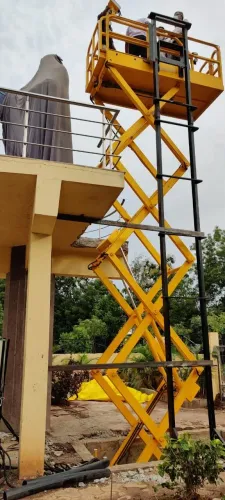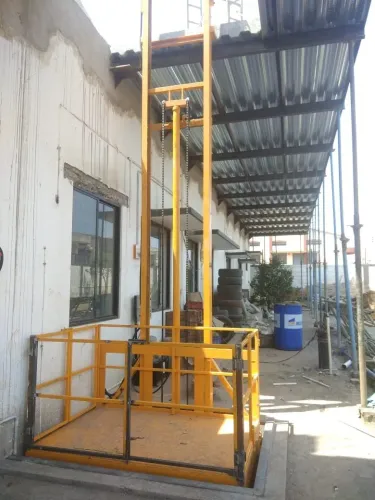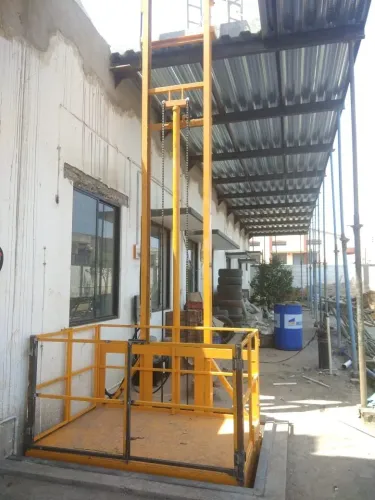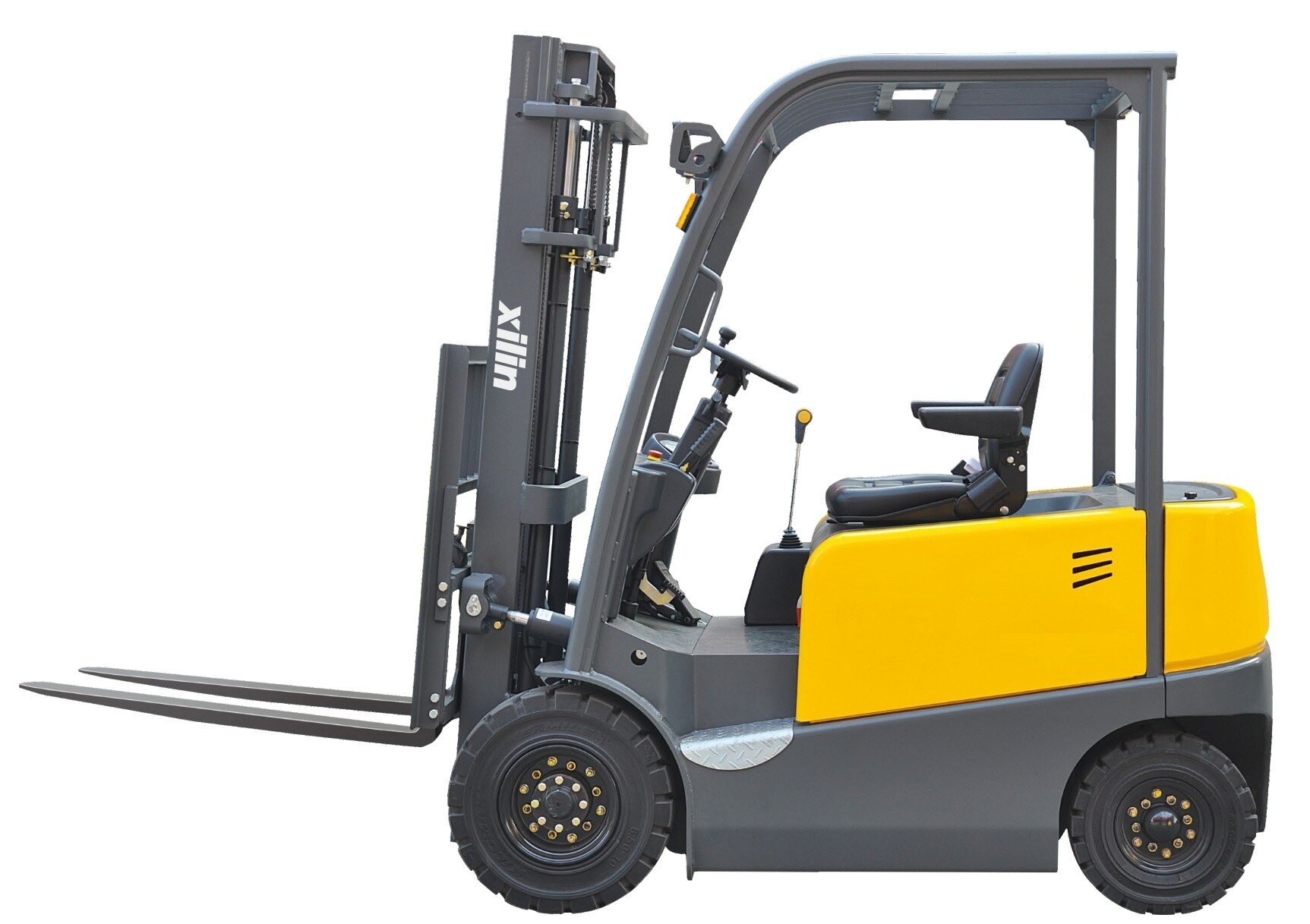
Construction loads rarely behave like uniform warehouse pallets: cement bags, steel sections, blocks, formwork, pipes and machinery create changing load centres, uneven travel routes and demanding lift cycles. Use the actual load geometry, ground conditions, duty cycle, battery system and charging arrangement to decide whether an electric truck fits the job—and to specify the support that keeps it productive.
Key takeaways
- Choose for the roughest route, not the smoothest loading area.
- Calculate capacity from load weight, centre of gravity and lift height.
- Match battery capacity and charging time to the full work shift.
- Require commissioning, operator training, safety checks and local support.
Match the Machine to the Construction Route
Choose the machine by the worst part of the route, not the smoothest loading point. Cement bags, steel sections, blocks, formwork, pipes and machinery need different combinations of tyre, ground clearance, turning radius, reach and load stability.
| Machine | Route and surface | Suitable construction use |
|---|---|---|
| Electric counterbalance forklift | Paved floors, compacted yards and short ramps | Pallets, blocks and machinery near a finished building |
| Reach truck | Level indoor slabs and narrow aisles | High-rack storage; not broken ground or outdoor mud |
| Pallet truck or stacker | Smooth, level floors with short travel distances | Pallets inside stores; unsuitable for ramps, loose soil and long routes |
| Rough-terrain forklift | Uneven yards, compacted soil, ramps and outdoor weather | Blocks, steel and pallets across unfinished areas |
| Telehandler | Uneven ground where forward reach or height is essential | Pipes, roof materials and loads placed beyond the truck’s wheelbase |
A conventional warehouse truck is not an electric forklift for construction merely because it has battery power. Confirm the manufacturer’s limits for surface condition, gradient, tyres, rain and dust; choose a rough-terrain or diesel machine for deep mud, standing water, steep or lengthy outdoor routes.
The load also decides the truck. A 2,000 kg rating at a 500 mm load centre does not make 2,000 kg safe at 700 mm. Check the capacity plate for lift height, mast, attachment, pallet dimensions and offset loads, especially with long steel or off-centre concrete products.
For construction companies in Surat, an electric for lift for construction companies in Surat installation also needs protected charging, earthing and cable routing away from rain and vehicle impact.
Calculate Capacity from the Actual Load
A 2,000 kg forklift rating applies only at the load centre, lift height, mast configuration and attachment shown on its capacity plate. A truck rated for 2,000 kg at 500 mm is not automatically safe at 700 mm; the longer load centre creates greater overturning force, so the plate may show a lower allowable load.
Base electric forklift selection on the heaviest, most difficult load rather than the average pallet. For an electric forklift for heavy materials, measure the load and record:
- Total weight, including the pallet, forks, clamps or other attachment
- Load-centre distance from the fork face to the load’s centre of gravity
- Load width, length and any offset, such as steel sections projecting forward or sideways
- Required lift height and the mast position at that height
Then ask the supplier to confirm the permitted capacity for that exact combination on the truck’s data plate. Do not calculate capacity from the headline tonne figure alone.
A simple load-moment check, multiplying weight by load-centre distance, shows why a 1,500 kg load at 700 mm can challenge a truck more than a 2,000 kg load at 500 mm; the manufacturer’s plate remains the controlling value.
Use the worst case: long pipes, bundled steel, concrete products, formwork and off-centre loads can shift the centre of gravity during travel. Require a witnessed test with the actual load before acceptance, especially after adding an attachment.
Check Site Conditions Before Choosing Electric
Use an electric forklift for construction when the route is firm, level and prepared, the work is within the truck’s approved outdoor limits, and charging can be kept dry and protected.
Paved slabs, compacted hardstandings and finished floors suit electric counterbalance trucks; loose soil, deep mud, standing water and severe surface breaks point to another machine.
| Site condition | Suitable choice | Why |
|---|---|---|
| Paved indoor or finished outdoor surface | Electric counterbalance forklift | Handles pallets, blocks, cement bags and machinery without tailpipe emissions at the work point |
| Narrow, level warehouse aisle | Reach truck or electric stacker | Provides tighter manoeuvring and vertical storage |
| Unpaved yard, mud, long ramps or deeply uneven ground | Rough-terrain forklift or telehandler | Designed for traction, clearance and outdoor stability |
| High placement with forward reach or suspended load | Telehandler | A telescopic boom reaches beyond a conventional mast |
For electric forklift selection, confirm the manufacturer’s limits for tyre type, gradient, surface, rain, dust and ambient temperature. An “outdoor” label does not make the charger suitable for rain; check charger input, earthing, cable protection and impact barriers at the actual site.
Reach and height can disqualify an otherwise suitable truck. Request the capacity chart for the exact mast, fork length and attachment, then check load centre, lift height, offset load and overhead clearance; a 2,000 kg rating at 500 mm does not authorise 2,000 kg at 700 mm.
Do not use the truck in a classified hazardous area until required protection and ignition controls are confirmed.
Size the Battery and Charging System for the Shift
Calculate runtime from the complete duty cycle, not the battery’s nominal ampere-hour figure. Use:
Working runtime = usable battery energy (volts × ampere-hours ÷ 1,000 × permitted depth of discharge) ÷ average power demand in kilowatts.
Base average demand on the planned shift, with these inputs:
- Operating hours and available charging time
- Travel distance, ramps and surface resistance
- Load weight, lift frequency and lifting height
- Ambient temperature and attachment energy demand
- Expected idle time and traffic delays
Size the battery for the shift’s measured demand plus a site-defined operating reserve. An apparently adequate battery can still trigger low-voltage cut-out before handover if travel, ramp work or frequent lifting is underestimated. This calculation belongs in electric forklift selection, especially for an electric forklift for heavy materials.
Place the charger in a marked, level area protected from rain, dust, falling materials and vehicle impact. Confirm the site supply voltage, charger input current, earthing, isolator, cable routing and overcurrent protection with a qualified electrician; an outdoor-rated forklift does not make its charger suitable for exposed conditions.
Lead-acid batteries need ventilation, no-smoking controls, ignition-source separation, suitable fire protection and spill equipment for electrolyte. Do not charge beside fuel storage or a temporary distribution board without assessing the hazard. Check the area classification before purchase: an electric truck is not automatically approved for flammable vapour, gas or dust zones.
Specify Commissioning, Safety and Local Support
Require a witnessed acceptance test before the truck enters the construction route. Use the buyer’s actual loads, pallets, attachments, lift height and load-centre distance; the capacity plate must confirm that exact configuration, not merely a headline “2,000 kg” rating.
1. Make the supplier demonstrate travel, braking, steering, lifting and reversing on the site’s actual surface, ramp and route. Record the load, mast height, attachment and test result.
2. Obtain the capacity/data plate, operator manual, battery and charger manuals, inspection checklist, load-test certificate, warranty terms and preventive-maintenance schedule.
3. Verify the charger against the site supply: input voltage, phase, earthing, isolator, overload protection, cable routing, rain cover and protection from vehicle impact. Keep charging outside dusty, wet or fuel-storage areas.
4. Require operator and supervisor training covering load-centre limits, attachment use, pedestrian separation, ramps, parking, battery damage, charging and emergency isolation. Keep attendance records.
5. Put local support in writing: response time, technician coverage, charger repairs, battery testing, spare battery availability, tyre availability and escalation contacts. Ask an electric forklift supplier in Surat to identify the nearest service and parts arrangements.
6. Confirm the manufacturer’s limits for broken ground, gradients, dust, rain, tyres and outdoor operation. An electric for lift for construction companies in Surat is not automatically suitable for mud, standing water or unfinished ground.
Aguatech Engineers Pvt.ltd. should be assessed against these same acceptance records and support commitments, rather than quoted capacity and purchase price alone. Reject the truck if the supplier cannot document the test or leaves site electrical and hazardous-area questions unanswered.
Related products
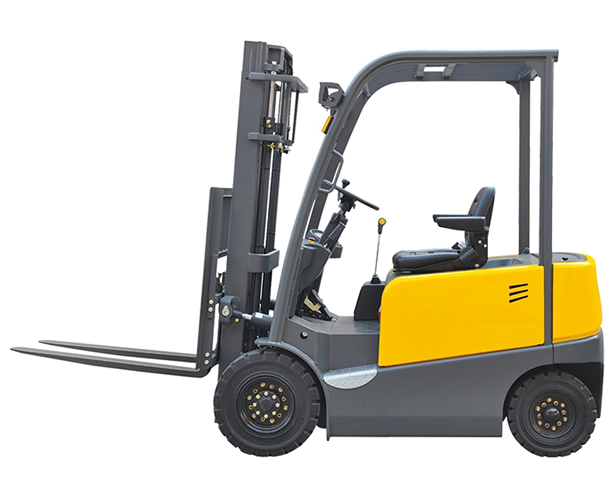 | ELECTRIC FORKLIFT TRUCK Electric Forklift Trucks are used where Stackers and Reach Trucks cannot be used i.e. View product → |
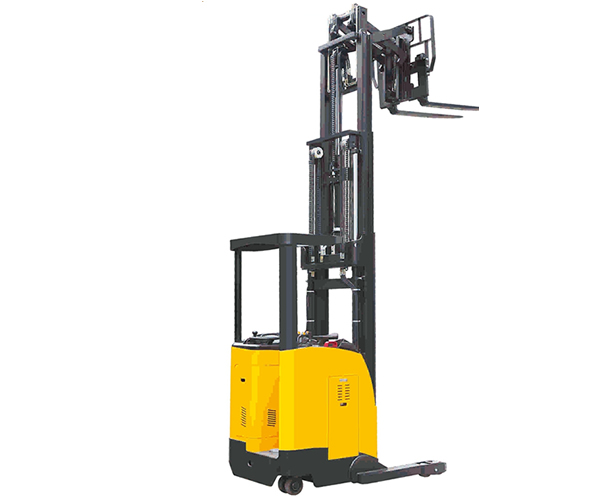 | REACH TRUCK be used i.e. for lifting, lowering, transporting of generally heavy palletized loads for primarily indoor use in factories and warehouses. View product → |
Frequently asked questions
How do you match an electric forklift to a construction route?
Assess the roughest surface, gradients, turning points, ground clearance, travel distance and required reach before selecting tyres, drive configuration and mast height.
How do you calculate the capacity needed for construction materials?
Use the heaviest actual load, its load-centre distance, lifting height, attachment weight and any uneven load distribution; check the forklift capacity plate for the resulting rating.
What site conditions must you check before choosing an electric forklift?
Check floor strength, ramps, potholes, mud, dust, water exposure, aisle width, overhead clearance, ventilation and charging access.
How do you size an electric forklift battery for a construction shift?
Compare the shift's travel, lifting frequency, load weight, idle time and charging windows with usable battery capacity, charger output and the planned charging location.
What should commissioning and local support include?
Require delivery inspection, load and brake tests, operator training, maintenance schedules, spare-parts access, emergency response and documented handover records.