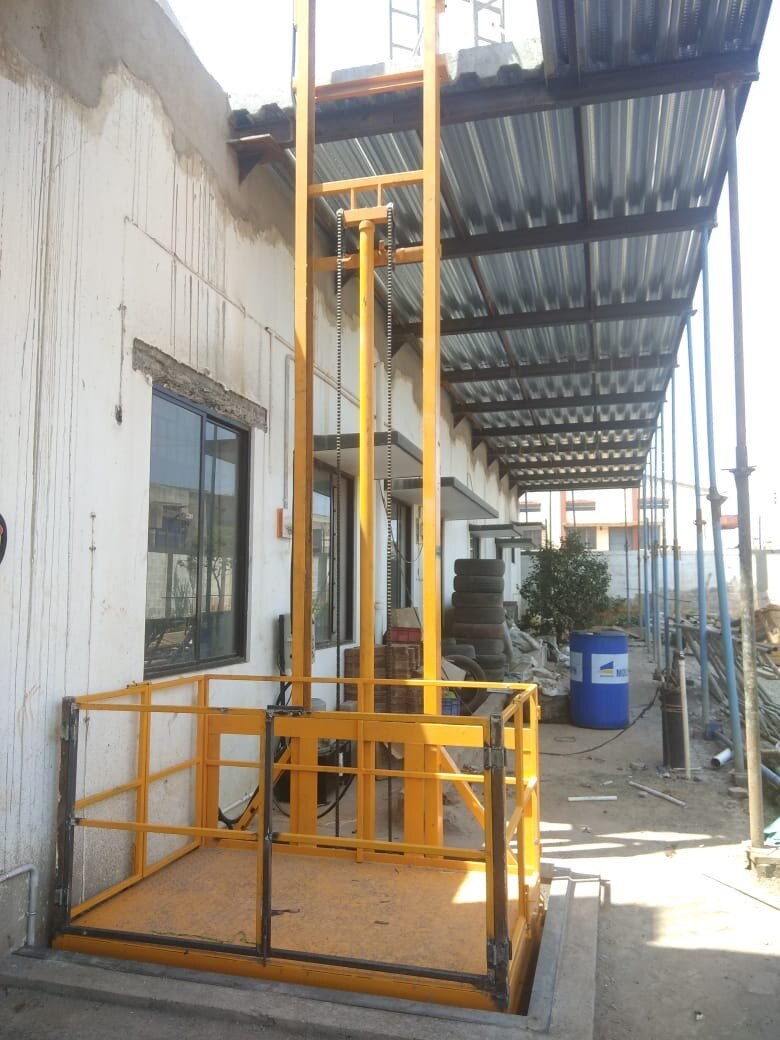
A goods lift becomes reliable only when the building, equipment, controls and operating routine are designed together. You will be able to check the information needed for a quotation, follow the goods lift installation process, verify commissioning tests and run a safe daily workflow.
Key takeaways
- Survey pallet size, travel height, shaft dimensions and floor loading before ordering.
- Keep the shaft clear and verify power, anchorage and access before installation day.
- Release the lift only after load, safety-device and emergency tests are documented.
- Train operators to centre loads, respect capacity and record faults before each shift.
What must be checked before a goods lift is ordered?
A site survey must precede the quote and delivery. It is the first control point in what happens during goods lift installation and use in surat: equipment selected from load rating alone can fail to accept the pallet or reach the building.
1. Give the supplier the number of floors and stops, travel height, rated load, lift speed, operating cycles, required level accuracy, platform clear width and depth, pallet, cage and trolley dimensions, loading method, door arrangement and whether a pallet truck enters.
2. Confirm the building constraints: shaft or tower dimensions, landing alignment, approach space, pit condition, headroom, slab strength, floor loading and guide-rail fixing points. A 2,000 kg rating does not allow concentrated edge loading or an oversized pallet.
3. Record the available electrical supply, earthing, drainage and unloading access, including the route for bringing frames, platforms and machinery into the building. In Surat, inspect monsoon water risk, humidity, dust, heat and corrosion; specify pit drainage, water detection and protection for exposed components.
4. Select the drive only after these findings. A hydraulic lift needs pit depth, cylinder and hose space, oil containment and emergency lowering provisions. A traction lift needs headroom, machine space, counterweight clearance, ropes, sheaves, brakes and maintenance access.
The survey must also verify slab and rail anchors before equipment is selected. Missing these checks can leave a lift that fits its rating but not its building, load path or daily traffic.
What happens on the day a goods lift is installed?
The goods lift installation process starts with a civil-readiness inspection, not with unloading. The team confirms shaft or tower dimensions, pit drainage, headroom, landing alignment, slab strength, guide-rail fixing points, openings and approach space.
Any unfinished shaft or slab preparation, grouting, drainage, power cabling or fire stopping remains with the building owner unless the contract assigns it otherwise.
1. Confirm the delivery plan: truck route, unloading area, lifting equipment, temporary exclusion zone and floor-protection method.
2. Unload the frame, platform and drive components, then position them without damaging finished floors, doors or nearby equipment.
3. Install the guide rails and anchor them only to verified structural points. Weak or unapproved fixing points can leave the platform misaligned or unsafe.
4. Fit landing doors, gates, guards and bumpers, checking that each opening matches the platform approach.
5. For a hydraulic lift, install the power unit, cylinder, hoses and oil containment. For a traction lift, install the ropes, sheaves, counterweight and brake equipment.
6. Place the control panel, complete electrical wiring and safety circuits, and arrange electrical isolation and lockout before connections or testing begin.
7. Install earthing, guarding and capacity, warning and operating signage, then align the platform, rails, doors and landings.
8. Remove packing, debris and temporary protection, leaving the area clean for alignment checks, testing and handover. A moving empty platform is not acceptance; load tests and documents follow.
Which tests, documents and approvals allow the lift to enter service?
A moving empty platform is not acceptance. Commissioning must prove that the complete safety chain works with the actual pallet, cage or trolley, and that defects are corrected and recorded rather than concealed by repeated controller resets.
Test and record:
- Empty-car and rated-load runs, including starting, stopping, lowering and platform levelling at every landing.
- Emergency-stop operation, upper, lower and final limit switches, landing-door and gate interlocks, gate alignment, brake holding and overload protection where fitted.
- Emergency lowering or manual recovery, hydraulic leakage, hose and cylinder condition, or rope, sheave and guard condition on traction equipment.
- Earthing, phase protection and unintended-movement protection where the design requires it.
| Acceptance evidence | What to verify | What blocks service |
|---|---|---|
| Unloaded demonstration | Platform moves and stops | Proves movement only, not rated-load safety |
| Complete test record | Loads, set points, levelling, limits, brakes and safety circuits are recorded | Correct defects and retest before release |
| Legal and site review | Confirm the applicable Gujarat authority or inspector, registration or examination record, CEA (Measures Relating to Safety and Electric Supply) Regulations, 2023, machine guarding, emergency access, NBC 2016 Part 4 fire provisions and factory rules | Missing approval, examination evidence or guarding |
The handover file must contain approved general-arrangement and foundation drawings, electrical schematics, load and safety-test results, operating limits, rescue instructions, maintenance schedule, logbook, warranty, spare-parts information and training records. Do not place the lift into service until the responsible authority, examination duty and site owner’s sign-off are clear.
How should a warehouse goods lift be operated each day?
1. Each shift begins with a pre-start inspection: confirm the platform and floor are sound, guards and gates are undamaged, the landing area is clear, the emergency stop works, and the posted capacity is visible.
Check for abnormal noise, vibration, jerky movement, poor levelling, cable damage, damaged ropes or chains where used, and hydraulic oil leaks.
2. The warehouse goods lift workflow starts in a marked staging zone. Queue pallets or cages there while the receiving landing is made ready; call the lift only when the route is clear and the empty platform is available.
3. Keep every load within the rated capacity and platform dimensions. Distribute weight across the platform footprint, secure unstable goods, and prevent anything projecting into the shaft or traffic route. Do not drag loads across the floor or let pallet trucks and cages strike doors, guards or enclosures.
4. Close and latch every gate before selecting the destination. Keep workers outside the platform and shaft during loading, travel and unloading unless the approved design specifically permits passenger or attendant use; a goods lift is not automatically a passenger lift.
Open a gate only after the platform has stopped completely and the interlock permits access.
5. At shutdown, return the empty platform as required, close the gates and leave the landing clear. Isolate any lift with a movement, levelling, gate, brake or leakage defect, attach a prominent do-not-use notice, and record the fault for authorised repair.
Never bypass an interlock or repeatedly reset the controller to continue goods lift daily operation.
How do you compare a goods lift supplier and protect long-term uptime?
A low quote does not protect uptime; judge a goods lift supplier in Surat by what happens after handover. Compare evidence, service capacity and declared engineering assumptions, not only tonnes and price.
| Supplier evidence | What to demand | Why it matters |
|---|---|---|
| Comparable installations | Visit similar lifts and speak to users | Reveals performance under real warehouse duty |
| Engineering file | Load calculations, general-arrangement and foundation drawings | Confirms structure, point loads and clearances |
| After-sales plan | Named local coverage, breakdown response time and stocked parts | Avoids extended stoppages |
Ask for these items in writing:
- Rated load, pallet dimensions, point loading, cycle frequency, holding time at landings and environmental assumptions.
- Stock of door locks, seals, valves, sensors, controllers, hydraulic parts, hoses and other failure-prone components.
- Operator training, preventive-maintenance tasks and intervals, warranty exclusions, and the party responsible for statutory inspection.
High cycling, pallet-truck impacts, abrasive dust, washdown or outdoor exposure can change the required brakes, doors, seals, guides, bumpers, motors and service intervals. A lift holding a load at a landing needs different checks from one making occasional trips.
Require records that name the lift, date, technician, work completed, replaced parts, test results and open defects. Require a demonstration with the actual pallet, cage or trolley; acceptance depends on the complete handover dossier, not an unloaded run. Aguatech Engineers Pvt.ltd.
can be compared with other local suppliers only against these criteria and the declared duty.
Related products
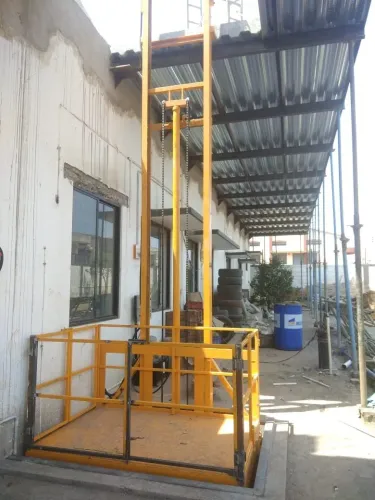
 | GOODS LIFTS Goods or Cargo or Luggage lifts are basically used in industry shop floors for safe, secure, convenient and fast methods to transport loads from... View product → |
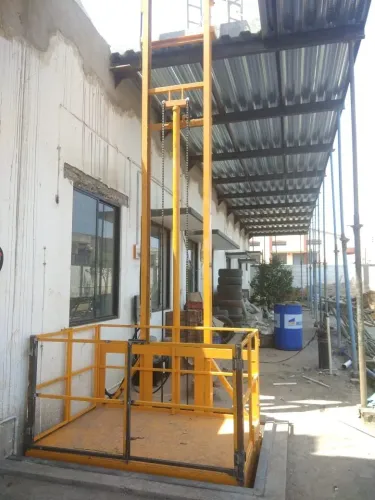
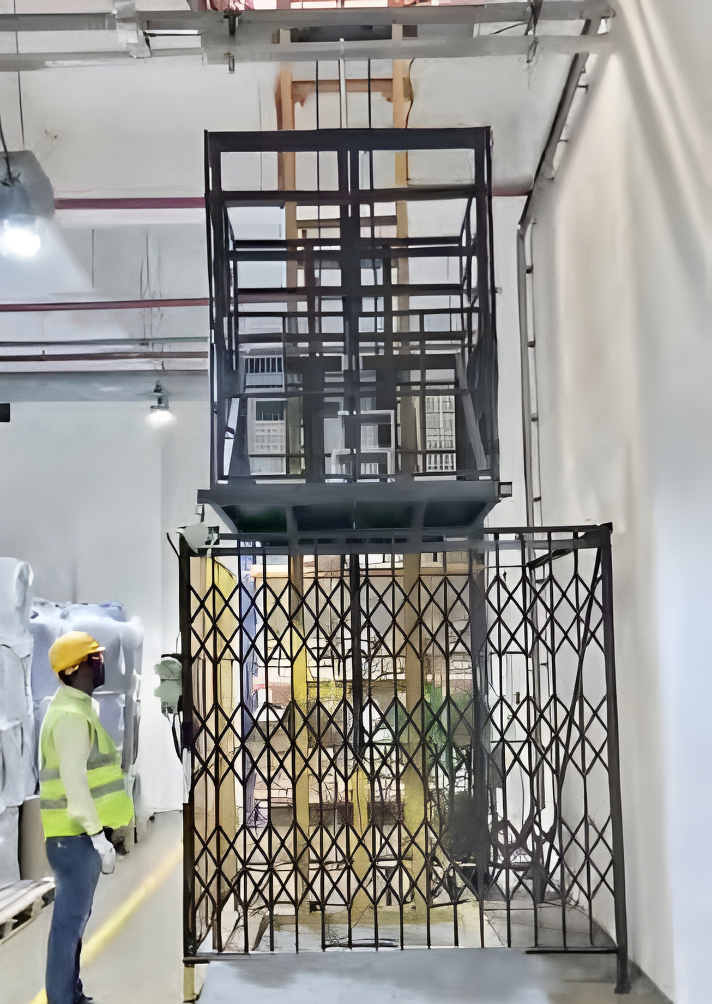 | GOODS LIFTS Goods or Cargo or Luggage lifts are basically used in industry shop floors for safe, secure, convenient and fast methods to transport loads from... View product → |
Frequently asked questions
What must be checked before a goods lift is ordered?
Check pallet and load dimensions, rated capacity, travel height, shaft or opening dimensions, floor loading, landing access, power supply, environmental conditions and the intended loading workflow before accepting a quote.
What happens on the day a goods lift is installed?
The installation team prepares the work area, verifies dimensions and anchor points, positions the structure and platform, connects controls and safety devices, and checks alignment, doors, landings and electrical connections.
Which tests, documents and approvals allow the lift to enter service?
The lift must pass documented checks such as rated-load operation, emergency stop, interlocks, limit switches, brakes, guarding and landing-door operation. Keep the test report, drawings, manuals, maintenance schedule and any inspection or approval records required by the local authority.
How should a warehouse goods lift be operated each day?
Inspect the platform, doors, guards, controls, alarms and landing area before use. Centre and secure the load, stay within rated capacity, keep people out unless the lift is designed and approved for passengers, and stop operation when you find a fault.
How do you compare a goods lift supplier and protect long-term uptime?
Compare site-survey quality, load and duty calculations, safety documentation, installation scope, spare-parts access, response times, preventive-maintenance plans, operator training and the supplier’s process for recording and correcting faults.