The right truck depends on the load’s shape, centre of gravity, route, and loading interface—not simply its total weight. By comparing reel support, deck design, aisle clearance, operator effort, and supplier evidence, you can choose equipment that moves your actual load safely through a Surat factory or warehouse.
Key takeaways
- Use a reel carrier for cylindrical loads that can roll or shift.
- Choose a platform truck when cartons sit securely on a flat deck.
- Match rated capacity, deck size, turning space, and unloading method.
- Ask Surat suppliers for load ratings, drawings, service terms, and demonstrations.
Which truck matches the shape and geometry of your load?
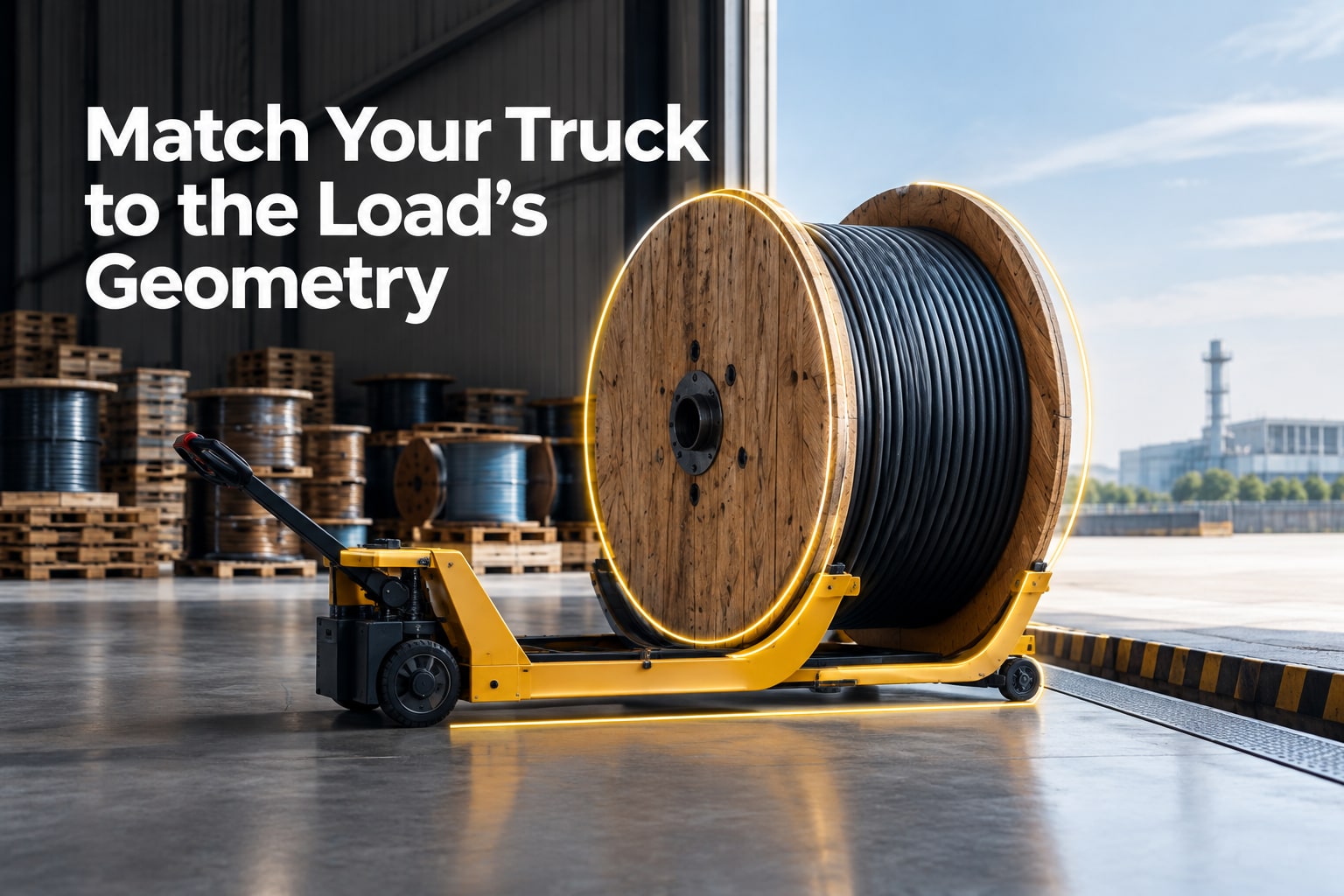
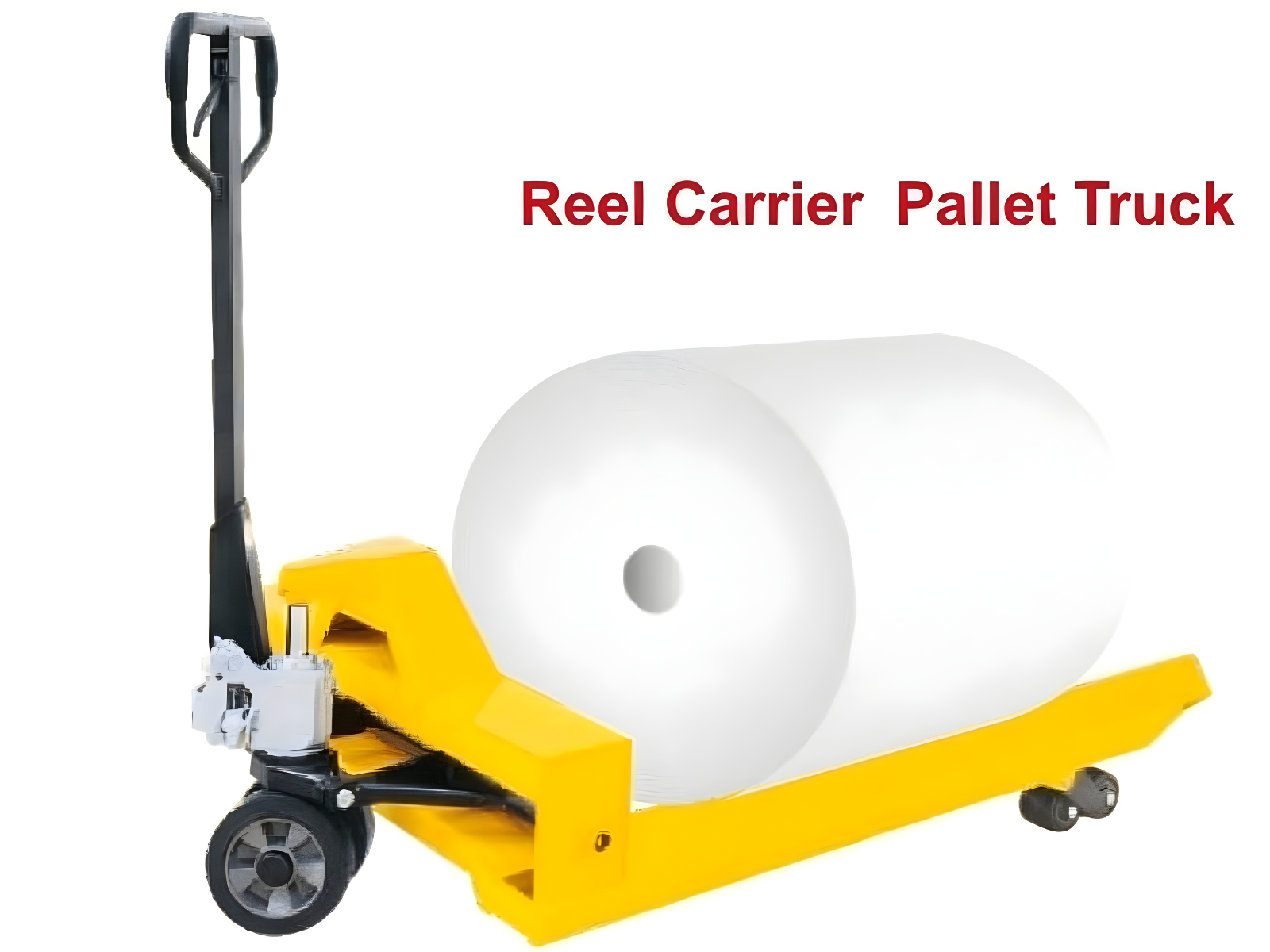
Choose a reel carrier pallet truck for a cylindrical load that must stay controlled; choose a platform truck for items that can sit securely on a flat deck. The reel carrier pallet truck uses a cradle, V-support, rollers, axle, or mandrel arrangement to prevent rolling and control the reel during movement.
| Truck type | Load geometry | What to verify |
|---|---|---|
| Reel carrier pallet truck | Cable reels, wire reels, paper rolls, film rolls, and fabric rolls | Flange support, reel width, outside diameter, core diameter, and winding stability |
| Platform truck | Cartons, crates, bins, machine parts, bags, and irregular items | Deck footprint, weight distribution, edge clearance, and restraint |
| Pallet truck | Standard pallets | Fork-entry openings, fork length, load centre, and pallet condition |
Drums need a purpose-built cradle or drum attachment. An ordinary pallet is not automatically safe on a reel carrier; it belongs on a pallet truck unless the deck and loading process were specifically designed for it.
A reel without a usable core opening, with damaged flanges, an oversized diameter, or an unstable winding pattern needs another handling method.
A platform truck does not enter pallet openings, lift loads to rack height, or provide controlled fork engagement. Record these route dimensions before selecting a reel carrier pallet truck in Surat:
- Doorway and lift height
- Dock edges and plate gaps
- Rack clearance
- Aisle width and turning space
The reel must clear every overhead structure and remain stable at each transition.
How do you carry and unload a reel without losing control?
A reel stays under control only when its geometry matches the truck, not merely its weight. Before ordering a reel handling pallet truck, measure reel mass, outside diameter, usable width, flange diameter and condition, core diameter, axial movement, and the distance from the reel’s centre of gravity to the load-bearing point.
| Check before approval | Why it matters | What to request |
|---|---|---|
| Rated capacity and load centre | A reel below the nameplate weight can overload the truck when its centre of gravity sits farther forward than specified | Capacity-versus-load-centre table |
| Reel dimensions | An oversized reel can strike the frame, wheels, doorway, or dock edge | Minimum and maximum diameter, usable width, core or mandrel range |
| Fit and clearance | Unsupported flanges or insufficient length allow tipping and contact damage | Dimensional drawing showing cradle, mandrel, flange, and floor clearances |
Load in this order:
- Inspect the cradle or mandrel for damage, then centre the truck with the reel.
- Keep both flanges supported; engage the core only where the equipment is designed for core engagement.
- Apply positive restraint against rolling and axial movement. Friction between a reel and forks is not a restraint.
- Do not lift by the flanges, exceed the marked rating, or carry an unsecured reel.
For unloading, stop on level ground, secure the receiving position, lower the reel fully, and keep hands away from pinch points. Release restraints only after the reel is stable; move clear before withdrawing the truck. Do not travel over slopes, thresholds, debris, or damaged flooring.
What platform-truck specifications matter for cartons and irregular loads?
Select the platform truck for industrial loads from the largest carton or machine-part footprint, not the average package size. Specify deck length and width, then check whether the load sits evenly; total mass alone can hide overloads at one corner.
Ask for these figures:
- Uniformly distributed load rating and point-load limits at the deck edge, caster, weld, and frame
- Deck height measured against the actual conveyor, dock, or pallet interface
- Fixed and swivel wheel layout, wheel diameter, and bearing type
- Polyurethane or rubber wheels for quieter, less-marking travel; steel or cast iron only where harsh floors justify greater shock transmission
- Handle height, single- or two-handle control, turning radius, parking brakes, and carton restraint such as a lip, strap, or side rail
A low deck reduces lifting effort but can strike dock transitions. A high deck aligns with conveyors and docks but increases loading effort and raises the centre of gravity.
| Route factor | Platform truck | Reel carrier |
|---|---|---|
| Aisle and turning clearance | Usually easier with a compact deck | Needs clearance for the reel diameter and carrier |
| Travel distance and operator effort | Efficient for repeated carton movement | Efficient when the reel is properly cradled |
| Loading speed and stability | Fast for loose, irregular loads | Stable for cylindrical reels, poor for unsuitable shapes |
| Floor protection | Rubber or polyurethane limits marking | Wheel and cradle choice must protect the route |
Record floor joints, ramps, dock plates, contamination, wash-down water, rain exposure, doorway dimensions, and lift capacity before comparing either truck on the actual route.
When are manual, electric, or heavier lifting machines the safer choice?
A 500 kg payload does not prove one operator can move a truck safely. Starting force, rolling resistance, gradient, wheel condition, floor quality, and repeated handling determine push and pull demand. Measure force with the actual loaded truck on the real route, including starts, stops, turns, joints, and dock plates.
| Option | Safer choice when | Plan for |
|---|---|---|
| Manual | Short, level, intermittent movements that the operator can start and stop | Operator force and fatigue |
| Electric | Long travel, repeated cycles, ramps, or high duty cycles | Charging space and time, battery replacement, electrical safety |
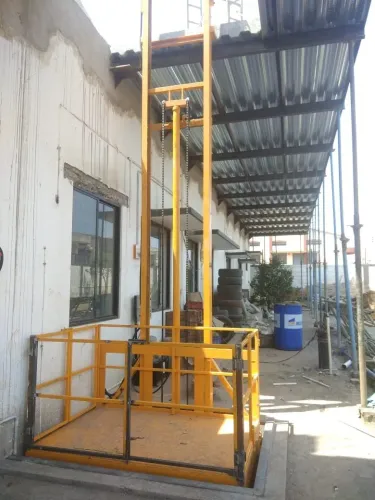
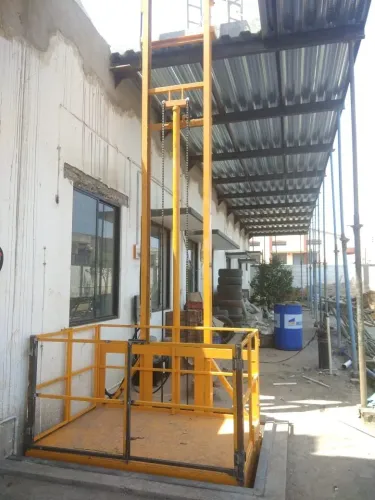
| Heavier lifting machine | The load needs controlled lifting or vertical placement | Crane, reel lifter, forklift attachment, or dedicated coil-handling machine |
Do not push a loaded truck on a slope unless the equipment and site procedure specifically control that movement.
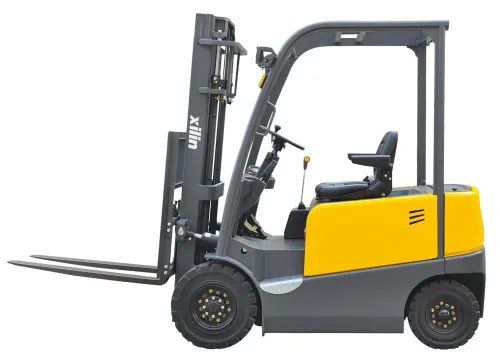
A reel carrier pallet truck or platform truck for industrial loads is the wrong choice when the reel must be lifted by crane, placed vertically by a reel lifter, handled with a forklift attachment, or moved by other engineered equipment.
Use this decision checklist:
- Identify load shape; record mass and dimensions.
- Calculate the actual load centre and confirm capacity at that centre.
- Verify restraint, then measure aisle and turning clearance.
- Check slopes and floor defects; test loading and unloading.
- Calculate daily cycles and operator time.
- Compare purchase, rental, maintenance, hydraulic-service, battery, wheel, and downtime costs.
The measured force and daily cycle count often justify electric drive before payload alone does. They also expose a manual truck that looks economical but consumes operator time and creates loss-of-control risk.
What should you ask a Surat supplier before buying or renting?
Ask a pallet truck manufacturer in Surat to prove site fit before you compare prices. Request a site assessment and a demonstration with your actual reel, pallet, carton, or machine part—not a catalogue photograph.
1. Put these details in the quotation: rated capacity and load-centre table; fork or deck dimensions; reel diameter and width range; core or mandrel range; wheel material and diameter; brakes; turning dimensions; restraint method; nameplate; inspection records; warranty; spare wheels and hydraulic seals; service response time; operator training; and replacement or rental terms.
2. Ask who controls the design, prepares the load-rating calculation, issues the nameplate, supplies drawings, and supports parts and inspections. Those answers distinguish a manufacturer from a reseller or fabricator. For a reel carrier pallet truck in Surat, require the dimensional drawing and capacity at the actual reel load centre.
3. Test the route over the actual dock plate, floor joints, ramps, doorways, and turning areas. Ask what response time applies to a hydraulic leak or battery fault, and who trains operators and records pre-use inspections.
Aguatech Engineers Pvt.ltd. can answer these verification questions and arrange a site-specific comparison between a reel carrier pallet truck and platform truck.
Approve the truck only after the load, route, operator task, and after-sales plan are documented.
Related product
 | Pallet Trucks A pallet truck (also known as a pump truck or pallet jack) is a wheeled trolley designed to lift and transport pallets. View product → |
Frequently asked questions
Which truck matches the shape and geometry of your load?
Choose a reel carrier pallet truck for cylindrical reels that need a cradle, V-support, rollers, axle, or mandrel to prevent rolling. Choose a platform truck for cartons, crates, and irregular items that can sit securely on a flat deck.
How do you carry and unload a reel without losing control?
Centre the reel in the carrier, secure it against lateral movement, keep the route clear, and control speed at turns and ramps. During unloading, align the carrier with the receiving surface and release the reel only after it is supported.
What platform-truck specifications matter for cartons and irregular loads?
Compare rated capacity, deck length and width, deck height, wheel size, handle design, turning radius, braking, load restraint points, and compatibility with your floor and aisle conditions.
When are manual, electric, or heavier lifting machines the safer choice?
Use a manual truck for short, level routes and manageable loads. Choose an electric model for frequent travel, longer distances, or reduced pushing effort. Use a forklift, crane, or other lifting machine when the load exceeds truck capacity, must be stacked, or requires powered lifting.
What should you ask a Surat supplier before buying or renting?
Ask for the rated capacity, load-centre limits, reel dimensions, drawings, wheel and brake specifications, inspection records, spare-parts support, operator guidance, delivery terms, rental conditions, and an on-site demonstration.