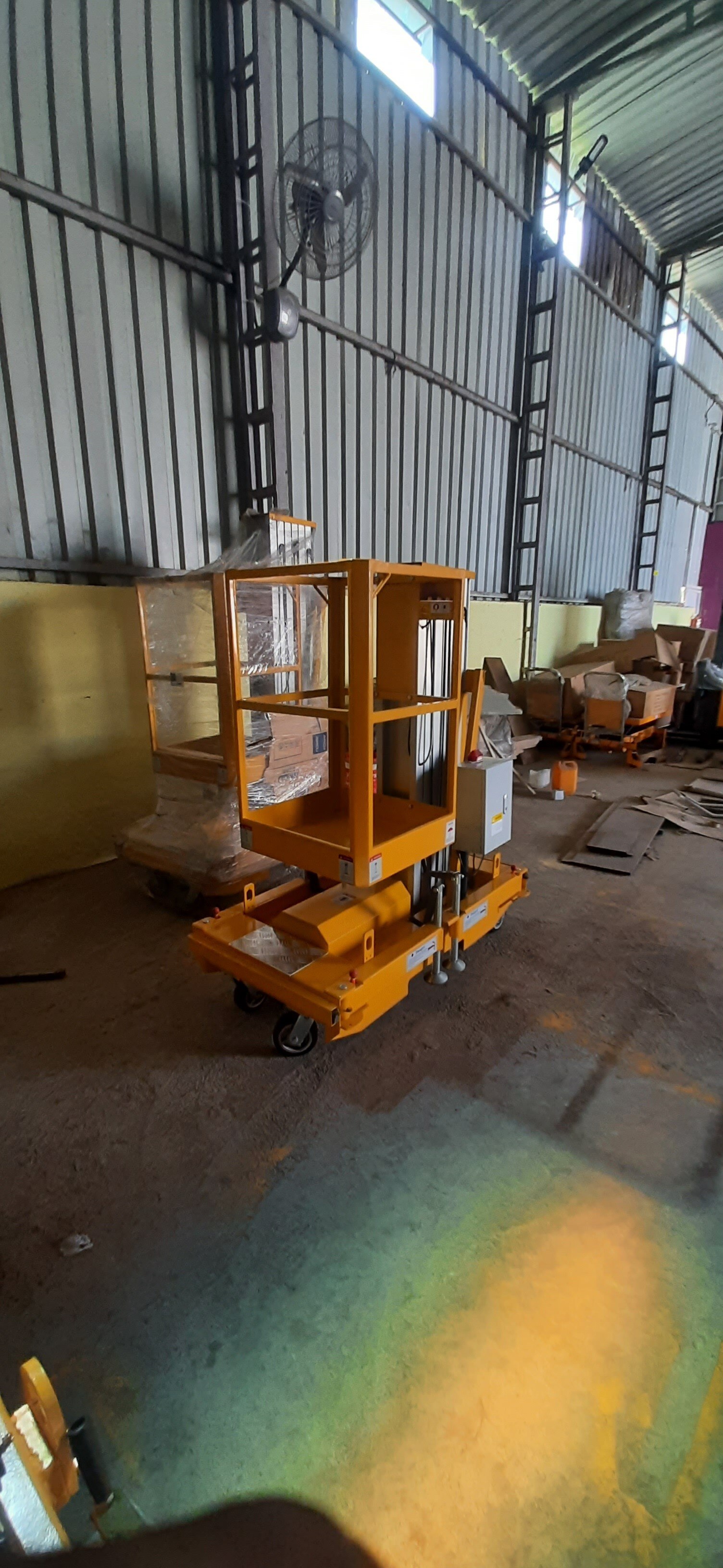
Die-loader access involves more than reaching a machine’s upper surface: you may need to change dies, inspect sensors, lubricate components, clean chips, troubleshoot faults, or replace overhead parts. By measuring the work position, separating personnel access from material lifting, and testing the machine beside the press, you can choose equipment that fits the aisle, carries the right load, and remains stable under real operating conditions.
Key takeaways
- Specify people access separately from die movement.
- Measure the highest work point and platform entry route.
- Choose a single mast for compact access or double mast for reach.
- Compare site-trial results and five-year ownership cost.
Define the Die-Loader Access Work Before Choosing a Platform
Specify the platform for people-access tasks at the die loader, not for moving the die itself. Die-loader access equipment must let the operator reach the work position, carry hand tools and approved accessories within rated capacity, and enter or leave safely.
Define the required tasks before requesting a quotation:
- Die changing support and visual inspection
- Lubrication and sensor adjustment
- Cleaning and troubleshooting
- Overhead component replacement
An aerial work platform is not a substitute for a die hoist or die loader. Never place a die, die shoe, or tooling component on the platform unless the manufacturer has approved that exact load and location. OSHA prohibits using aerial lifts as cranes or hoists.
| Task | Platform must support | It must never do |
|---|---|---|
| Die-loader access | Stable standing position, machine-side positioning, tool capacity, and safe entry | Carry the die or act as a lifting point |
| Press inspection | Clear view of guards, sensors, connections, and overhead parts | Reach beyond its rated position or overextend from the rails |
| Routine operation | Repeated travel through the actual aisle and door route | Operate where a failed interlock or emergency system has been accepted |
Require a documented pre-use inspection covering controls, emergency stop and lowering, guardrails, gate, tyres or casters, leaks, batteries, alarms, and structural damage. Remove a platform from service after an interlock or emergency-system failure; reduced speed is not a safe workaround.
A site trial must reproduce the press-side position, carried tools, floor transitions, emergency descent, and access frequency.
Measure the Press Area and Specify the Required Working Height
A quotation needs the press-side measurements, not just the die-loader model. Measure the highest hand position while the operator stands inside the guarded platform, then specify the required platform deck height separately from working height. Suppliers use different working-height conventions, often adding an assumed operator reach.
1. Record the highest access point, the furthest horizontal reach, and the operator’s standing position. If the worker must reach across a die or around a press frame, state that clearly; a vertical mast lift provides little horizontal outreach.
2. Measure the required deck height, platform entry height, press and die clearances, and the height of beams, cranes, pipes, cable trays, and other overhead obstructions.
3. Measure the narrowest aisle, doorway width and height, threshold or floor-transition height, available positioning space beside the press, and the machine’s permitted turning area.
4. Ask suppliers to quote against stowed width, overall length, guardrail height, platform size, floor loading, and the clearance required to open the entry gate. A narrow chassis alone does not prove access.
5. State the operator load, tooling weight, access frequency, indoor or outdoor location, floor slope, and any outrigger requirement. Keep the platform unobstructed; never plan to gain height by standing on rails or leaning over them.
When comparing an aerial work platform for die loader access in Surat, request a site trial at the actual press. Reproduce the aisle route, thresholds, carried tools, working position, and emergency descent before accepting the quoted dimensions.
Choose Between Single-Mast and Double-Mast Access
A single mast aerial work platform suits one-person, indoor access when the operator works close to the die-loader centerline. Choose it for inspection, lubrication, sensor adjustment, cleaning, or light troubleshooting where a narrow stowed footprint, low floor loading, and easy movement through doors matter more than lateral reach.
Its weakness appears when the operator must reach substantially sideways. Side loading, leaning over the guardrail, or reaching across press guarding can reduce stability and put the task outside the platform’s intended use.
Never use the platform as a die hoist or place a die, die shoe, or tooling component on it unless the manufacturer has approved that load and position.
| Option | What it means | When it applies |
|---|---|---|
| Single mast | Narrower platform with one mast and limited lateral reach | One operator, straight-on access, tight aisles, modest hand tools, indoor floors |
| Double mast | Wider platform with greater working area and improved lateral stability | Side access, wider die-loader interfaces, a second worker, bulky approved tools, or repeated repositioning |
| Wider stable platform | More deck space and tolerance for controlled movement, not permission to exceed capacity | The task requires two-person coordination or work beyond a single mast’s comfortable centerline |
A double-mast platform is justified when the die-loader position demands side reach, when a second worker must assist, or when approved tools occupy the deck. Confirm the choice in a site trial using the real press-side position, tooling, aisle route, thresholds, and emergency descent. A narrow chassis alone does not prove the machine will fit.
Check Loads, Side Forces, Floor Conditions and Emergency Safety
A die loader, die shoe or tooling component must not ride on the platform unless the manufacturer has approved that exact load and its position. Count the operator, hand tools and approved accessories against the rated capacity; an aerial lift is not a crane or hoist.
Side force is the other critical limit. Pulling a stuck component, leaning beyond the guardrail or reaching over press guarding can destabilise a narrow single-mast machine, even when the weight remains below its capacity. Choose a wider platform or different access method when work extends substantially beyond the mast centreline.
Before approving an aerial work platform in Surat, check these site-specific points:
- Request maximum wheel loads or outrigger point loads for the proposed configuration. Compare them with the press-room slab, trench covers, dock plates, mezzanines and raised floors; average floor capacity can hide a local failure.
- Confirm the platform’s maximum slope, surface limits and outrigger requirements. A threshold, damaged concrete joint or steel plate can stop a machine that fits on paper.
- Measure stowed width, length, turning radius, guardrail height, mast obstruction, door clearance and threshold-crossing ability. A narrow chassis alone does not prove it fits beside the press.
- Make the quotation state indoor-only use or the outdoor wind rating. An indoor machine is not suitable for an open dock or yard merely because its lift height is adequate.
- Test emergency stop and descent from the platform and ground controls. Provide a trained rescue method if the operator becomes unable to lower the machine.
Compare the Quote Through a Site Trial and Five-Year Cost
A site trial is the quickest way to test a proposed machine before you accept its quoted price. Recreate the press-side position, carry the operator’s hand tools and approved accessories, and repeat the normal access frequency.
- Drive the machine through every aisle, doorway, threshold and floor transition; record stowed width, overall length, turning radius and clearance under guardrails or masts.
- Position it beside the press and confirm the deck reaches the required standing height without leaning outside the guardrails.
- Test the actual floor slope and surface, emergency descent, battery run time and repositioning effort.
- Reject any proposal that treats a die, die shoe or tooling component as platform cargo. Personnel, tools and approved accessories must stay within the rated capacity; an aerial lift is not a hoist.
Ask the supplier to state indoor-only use, outdoor wind rating, maximum slope, outrigger requirements, working-height convention and every excluded charge. That detail matters more than a headline aerial work platform cost in Surat. Aguatech Engineers Pvt.ltd.
can support a comparison only when the machine is assessed against your measured route and press position, not a brochure photograph.
| Purchase or rental | Five-year cost to calculate | Check before signing |
|---|---|---|
| Purchase | Price, freight, commissioning, battery replacement, inspections, maintenance and downtime support | Confirm warranty exclusions and replacement-battery date |
| Rental | Five years of rent, delivery, collection, damage charges, servicing and downtime cover | Confirm availability, service response and renewal increases |
Compare the totals for the same usable working height and capacity. A low rental rate can lose its advantage when repeated transport and unavailable equipment stop die-loader work.
Related products
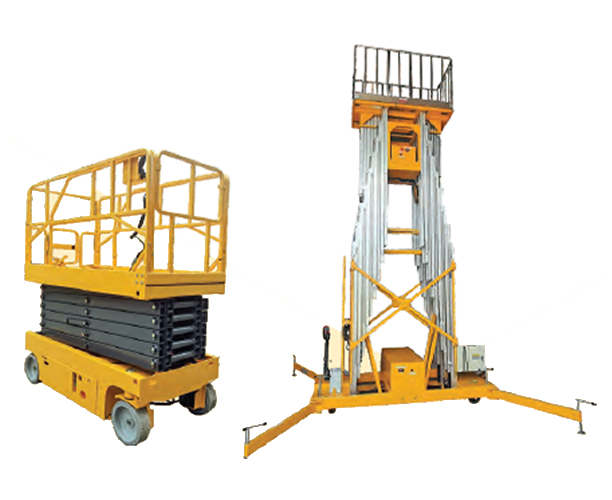 | HIGHLIFT MAINTAINANCE PLATFORM HIGHLIFT MAINTAINANCE PLATFORM These are perhaps a revolutionary kind of equipment to be designed which almost replaced the conventional ladders which have their own limitations... View product → |
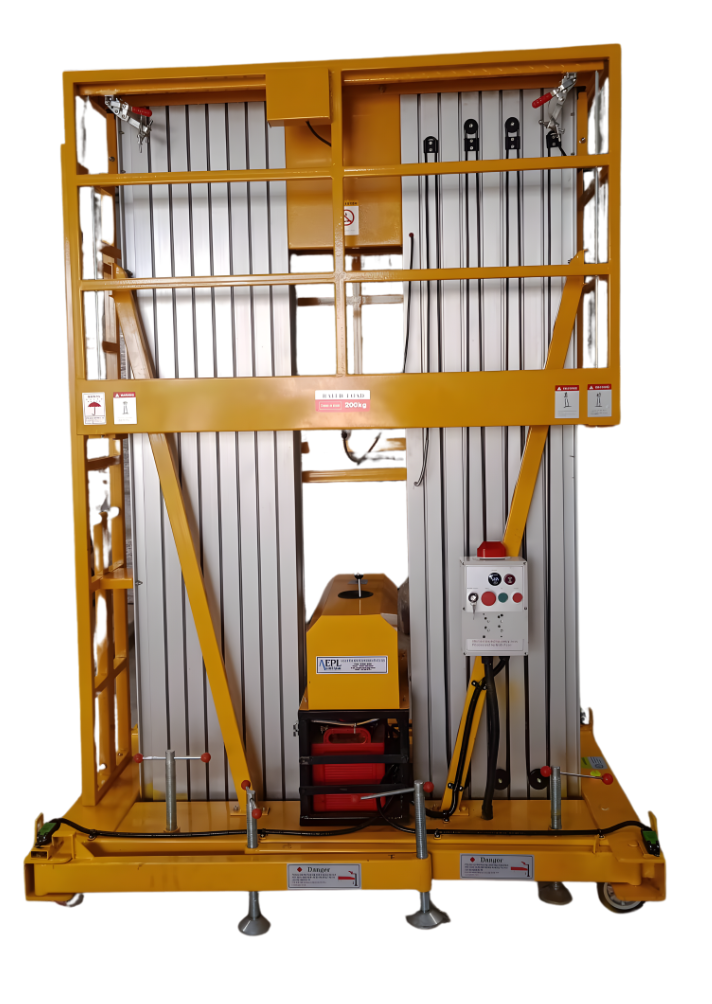 | Aerial Work Platform – Double Mast Aerial Work Platform – Double Mast A double mast aerial work platform is a high-stability, vertical lifting device utilizing two parallel aluminum or steel masts to elevate personnel... View product → |
Frequently asked questions
What work should an aerial work platform perform at a die loader?
Specify access for people, hand tools and approved accessories. Do not use the platform to move the die itself.
How do you determine the required working height?
Measure the highest point the operator must reach, then check the platform’s working height, entry route and clearance around the press.
When should you choose a single-mast aerial work platform?
Choose a single-mast aerial work platform when the die-loader area needs a compact access solution and the required reach fits its rated configuration.
What safety checks matter before selecting die-loader access equipment?
Check rated load, allowable side forces, floor condition, travel and setup space, emergency lowering, and safe entry and exit.
How should you compare aerial work platform cost in Surat?
Compare quotations after a site trial, then include installation, training, inspections, maintenance, downtime and other five-year ownership costs.
Related products
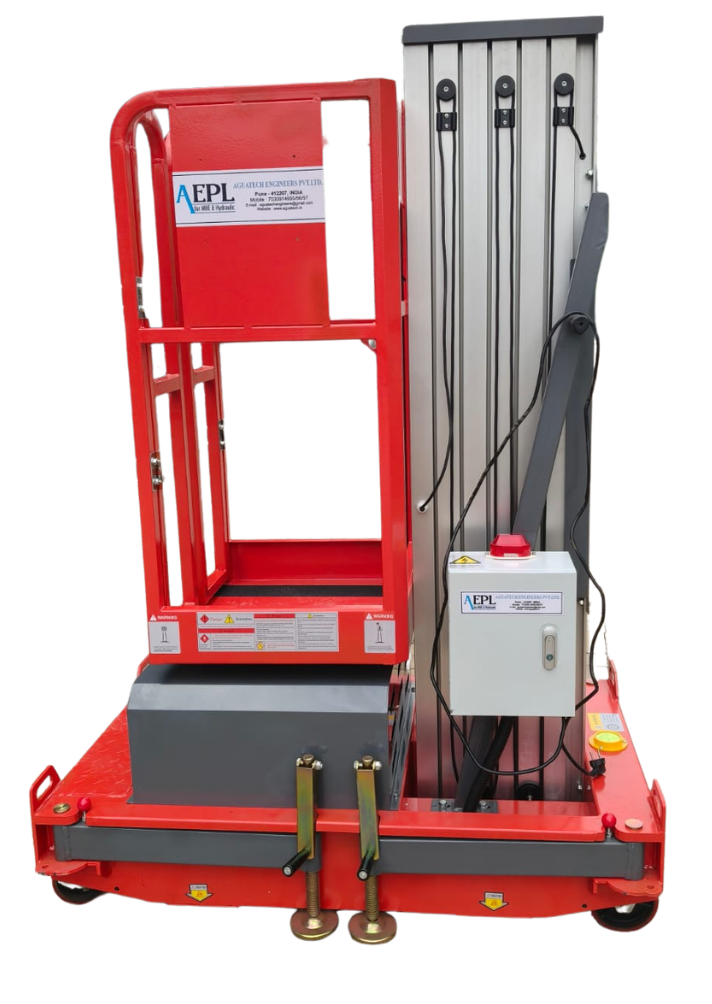 | Aerial Work Platform – Single Mast Aerial Work Platform – Single Mast A Single Mast Aerial Work Platform (AWP) is a compact, vertical-lifting device designed for safe, single-person access to high places. View product → |
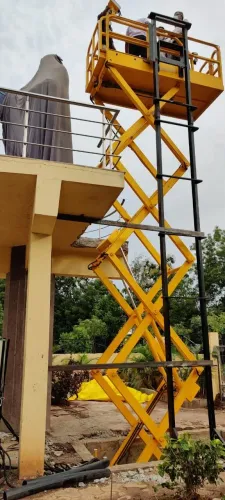
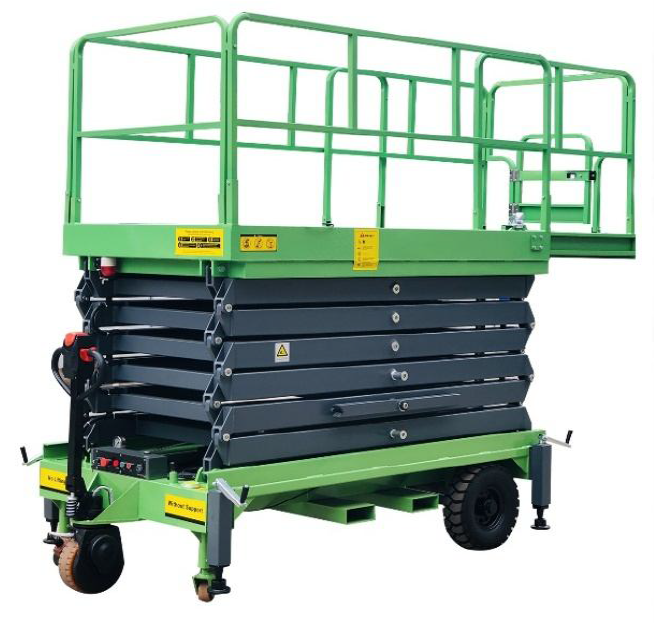 | HIGHLIFT MAINTAINANCE PLATFORM High Raised Scissor - Traction These are perhaps a revolutionary kind of equipment to be designed which almost replaced the conventional ladders which have their own limitations... View product → |
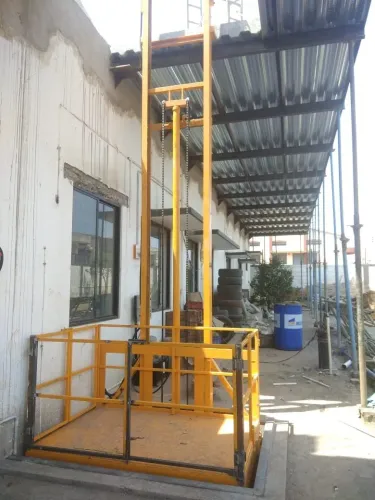
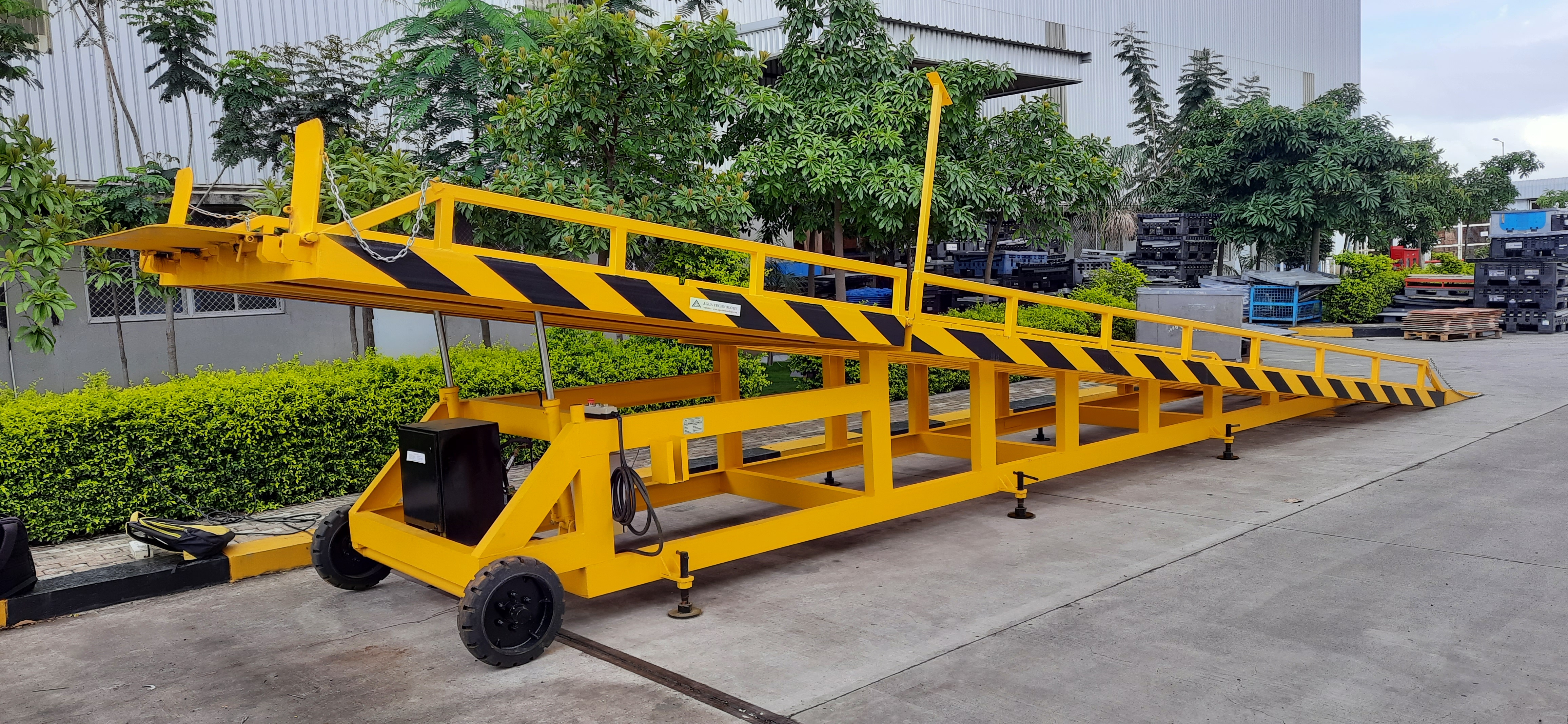 | LOADING/UNLOADING PLATFORMS OR DOCKS A loading/unloading dock is typically an elevated opening (or openings) in a building's sidewall where shipments are sorted and staged for loading... View product → |