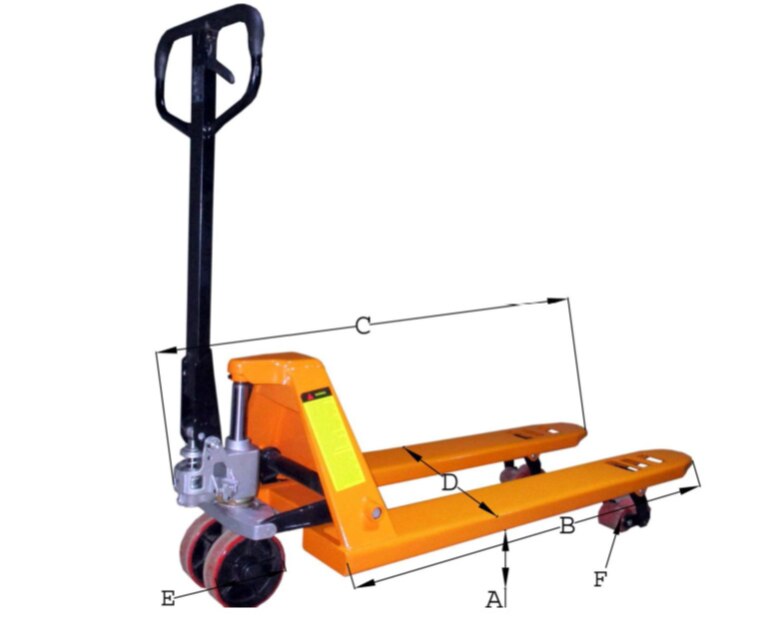
The right choice starts with the load, not the truck’s advertised capacity: standard pallets call for pallet access, while cartons, sacks, drums, and irregular packages often need a stable flat deck. By the end, you will be able to compare dimensions, capacity, wheels, route conditions, and operator effort before specifying equipment for a Surat hub.
Key takeaways
- Choose a hand pallet truck for compatible pallets with open fork entry.
- Choose a platform truck when cartons or loose goods sit directly on a deck.
- Verify fork length, pallet entry, load centre, and rated capacity before buying.
- Test turning space, dock transitions, floor condition, and loaded pushing effort.
Match the truck to the load format
Start with the load format: choose a hand pallet truck for a compatible pallet, and a platform truck for goods that must be placed directly on a deck.
| Load format | Better choice | Reason |
|---|---|---|
| Standard pallet with open fork entry | Hand pallet truck | Forks enter the pallet and lift it just clear of the floor. |
| Cartons, totes, or loose packages | Platform truck | Items can be loaded and unloaded by hand without pallet support. |
| Sacks or unevenly shaped goods | Platform truck | The flat deck supports shapes that forks cannot hold securely. |
| Drums or irregular items | Platform truck with suitable restraint | Edge protection or straps reduce rolling and falling. |
| Roll cage or wheeled container | Neither by default | Check ramp access, wheel clearance, and whether the cage can be safely towed or pushed. |
A platform truck for warehouses suits mixed picking work where operators build loads one carton or tote at a time. Select its usable deck length and width around the largest stable footprint; an oversized deck consumes turning space, while an undersized one causes overhang and falling packages.
For a hand pallet truck, confirm that the pallet is sound, the forks fit its entry openings, and the rated capacity covers the goods, pallet, and uneven weight distribution together. Treat both options as a manual material handling truck: observe breakaway force, sustained pushing, steering, stopping, dock plates, floor joints, slopes, and wet surfaces.
A smooth-floor payload demonstration does not prove safe operation in a Surat distribution hub.
Check pallet fit, fork dimensions, and real capacity
A 1,200 × 1,000 mm pallet and a 1,200 × 800 mm pallet do not present the same fork-entry problem. ISO 6780 identifies both as preferred pallet dimensions, so specify the footprint and entry direction before choosing a hand pallet truck in Surat.
1. Measure the pallet length, width, underside clearance, and the opening between the bottom boards. Confirm whether the forks enter from the 800 mm or 1,000 mm side. A truck matched to one orientation can be awkward or unusable in the other.
2. Record fork length, individual fork width, fork outside spacing, and the usable adjustment range. The forks must enter fully without striking blocks, while their spacing must support the pallet’s load-bearing boards rather than bridge a weak section.
3. Weigh the complete unit: goods, pallet, wrapping, and any attachments. Do not select capacity from product weight alone. Ask for the rated load centre and residual capacity, then check derating for an eccentric, overhanging, or uneven load.
4. Measure the narrowest aisle, turning point, dockboard width, and doorway height. Check the truck’s overall length, fork-tip radius, lowered height, and raised height against those limits; a nominally suitable pallet truck for distribution centers can still fail at a turn or dock transition.
5. Test the handle, neutral and travel positions, and release valve. Require controlled lowering without reaching into the wheel or linkage zone. A 2,500 kg rating does not make an overloaded or badly positioned pallet safe.
Compare deck size, wheels, and manoeuvrability
Deck size and wheel specification determine whether a platform truck moves cartons securely or creates a handling problem. A platform truck for warehouses should match the largest mixed package footprint, the floor condition, and the tightest turn in the route—not just the rated payload.
| Specification | What to check | Why it matters |
|---|---|---|
| Deck length and width | Measure the largest carton or tote grouping; avoid overhang | An undersized deck lets packages slide or fall. An oversized deck increases turning clearance and collision exposure. |
| Usable deck height | Record the deck height from the floor | A high deck raises loading effort and makes unstable stacks harder to control. |
| Edge restraint | Specify a raised lip, side rail, or removable guard | Restraint stops cartons moving during starts, stops, and turns without blocking hand loading. |
| Wheel diameter | State the diameter in millimetres | Larger wheels cross thresholds and floor joints more smoothly, but increase deck height and turning envelope. |
| Tread material | Specify rubber, polyurethane, or another tread and the floor condition | Small hard wheels transmit shocks through damaged concrete and can snag at joints. |
| Swivel arrangement | State fixed and swivel wheel positions, plus braking | The arrangement controls tracking, pivoting, and whether the loaded truck stays still during loading. |
| Handle height and aisle space | Specify handle height and the minimum turning space | An unsuitable handle strains the operator; insufficient clearance causes rack and carton impacts. |
For Surat hubs, test the fully loaded truck over the actual route, including dock thresholds and broken paving. Choose a smaller deck only when every package fits within its restraints; choose larger wheels when floor joints dominate, then confirm the added height still permits safe loading.
Test the route, floor, dock, and operator effort
Measure the first shove, not only the rated load. A manual material handling truck that rolls easily after movement starts can still strain an operator if its breakaway force is excessive.
Run the candidate through the actual Surat route with a representative load, including the dock approach and return journey. Record or observe:
- Initial breakaway force and sustained pushing force
- Steering effort, stopping distance, and turning space
- Slopes, dock plates, thresholds, floor joints, and damaged concrete
- Wheel traction and rolling resistance on wet or wash-down floors
- Operator posture, handle reach, and visibility around the load
A smooth, level-floor demonstration proves very little. Small hard wheels transmit shocks through joints; larger wheels cross thresholds more easily but raise the deck and widen the turning envelope. Specify wheel diameter, tread material, swivel arrangement, and the worst floor condition the truck will face.
For a pallet truck for distribution centers, test the handle and release valve while wearing normal work gloves. The operator must lower the load in a controlled manner, select neutral or travel position without confusion, and steer without reaching into the wheel or linkage zone. These controls prevent pinch injuries and load-control errors.
Wet monsoon exposure does not automatically justify stainless steel. Identify standing-water points, then require corrosion protection for the forks, frame, pins, and pump components and confirm that the chosen wheels retain traction on those surfaces. Keep dock edges and pedestrian crossings separated from the test route.
Turn the comparison into a procurement decision
Write the brief around the work process, not a catalogue model. For a hand pallet truck versus platform truck in Surat, state the load format, route, shift volume, floor condition, dock arrangement, and operator limits before naming equipment.
| Option | Choose it when | Reject it when |
|---|---|---|
| Hand pallet truck | Goods arrive on compatible pallets and travel short, level internal routes | Loads are loose, mixed, unstable, or frequently hand-loaded |
| Platform truck | Cartons, totes, sacks, drums, or irregular packages need loading from the side or top | The load needs pallet lifting, fork entry, or secure pallet support |
Include these figures and acceptance checks:
- Record the pallet footprint, fork length, fork spacing, and combined weight of goods plus pallet. Check uneven load distribution; a 1,000-kilogram rating does not make a badly balanced load safe.
- Measure the narrowest aisle, turning point, dockboard, ramp, threshold, and floor gap. Confirm the dockboard’s rated capacity includes the truck, load, and operator.
- Specify deck length and width, wheel material, handle height, braking or parking control, and side containment for a platform truck.
- Require controlled lowering, a usable neutral or travel position, and protection from pinch points around the handle and linkage.
- Set a route trial: the loaded truck must complete the full journey without excessive pushing force, striking racks, or exposing pedestrians to the dock edge.
A hand pallet truck in Surat is the practical choice for repetitive pallet flow; choose a platform truck for mixed-package picking. Aguatech Engineers Pvt.ltd. can help convert those measurements into a fork configuration rather than leaving the buyer to guess from rated capacity.
Related products
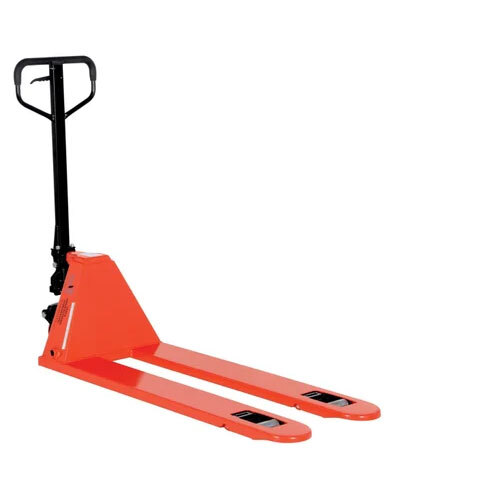 | Pallet Trucks A pallet truck (also known as a pump truck or pallet jack) is a wheeled trolley designed to lift and transport pallets. View product → |
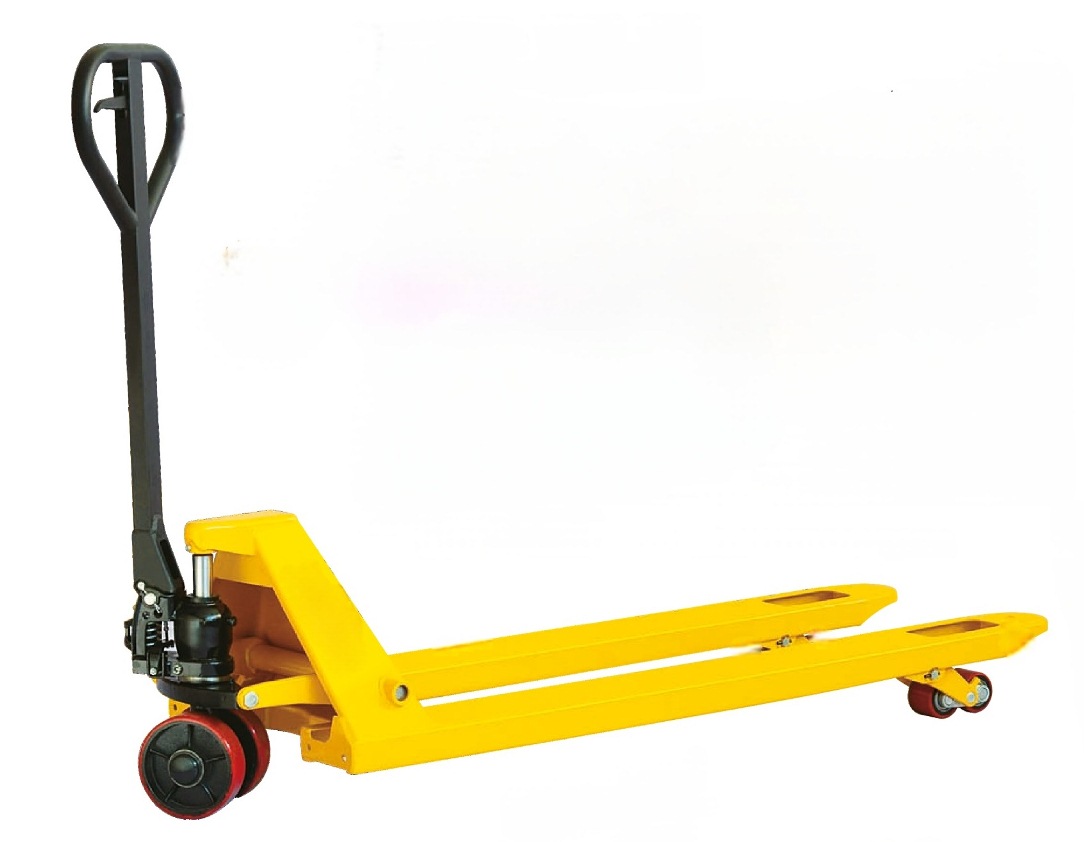 | Pallet Trucks A pallet truck (also known as a pump truck or pallet jack) is a wheeled trolley designed to lift and transport pallets. View product → |
Frequently asked questions
When should you choose a hand pallet truck over a platform truck?
Choose a hand pallet truck when goods are secured on compatible pallets and the forks can enter them safely. Choose a platform truck when cartons, crates, or loose items must sit directly on a deck.
What pallet details must you check before buying a hand pallet truck?
Check pallet entry openings, fork length, fork width, outside fork dimension, load-centre distance, and the truck’s rated capacity against your actual load.
Why do deck size and wheels matter on a platform truck?
The deck must support the load without overhang that affects stability. Wheel diameter, tread, swivel arrangement, and turning space determine how easily you can manoeuvre the truck.
How should you test a truck route before procurement?
Move a representative loaded truck across the warehouse floor, door thresholds, ramps, dock approach, aisles, and turning points. Record pushing effort, clearance, stopping control, and operator posture.
Related product
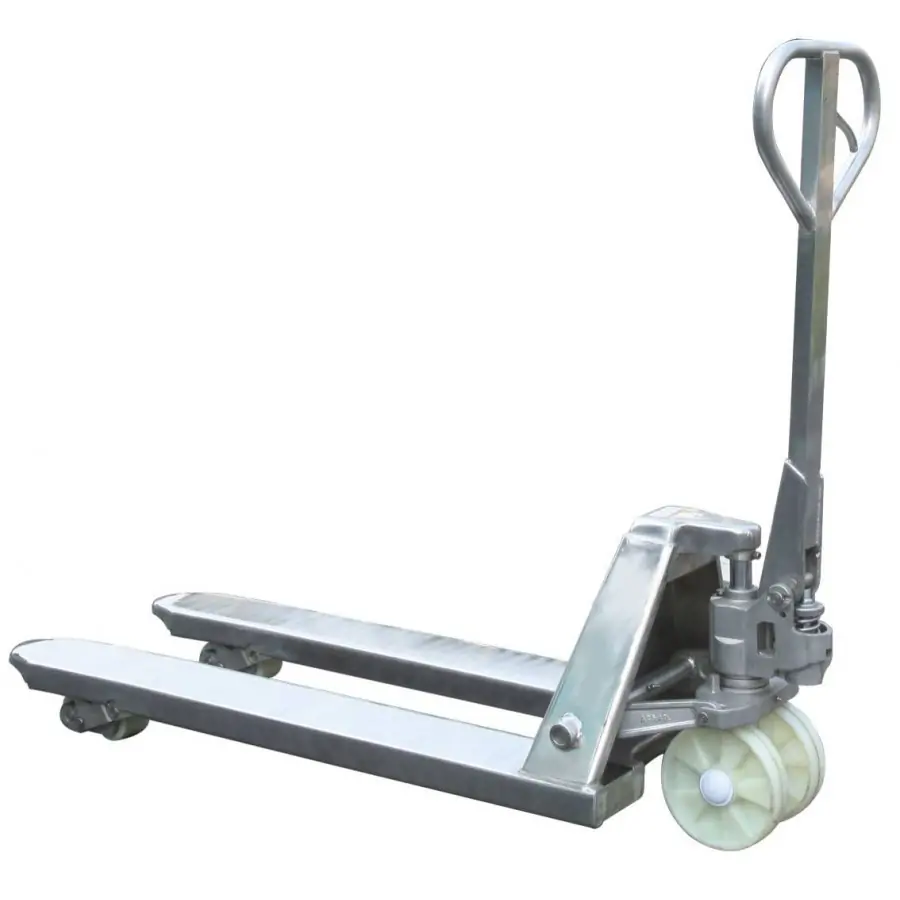 | Pallet Trucks A pallet truck (also known as a pump truck or pallet jack) is a wheeled trolley designed to lift and transport pallets. View product → |