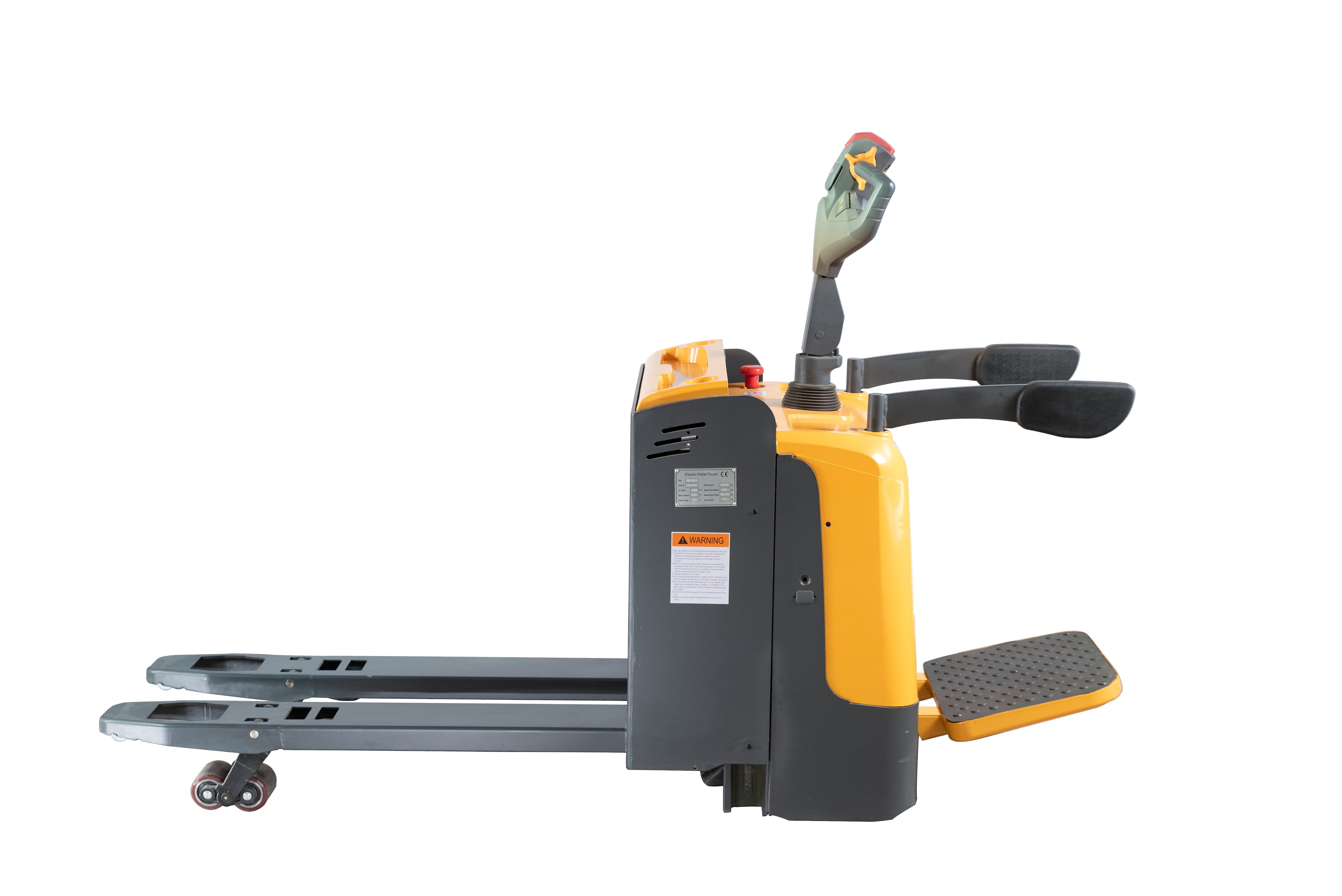
A battery-powered shop-floor crane can lift a die without being suitable for loading that die into a press. You will be able to define the required die-loader function, calculate capacity and stability, specify the battery and controls, compare alternative equipment, and test a supplier’s proposal before purchase.
Key takeaways
- Specify horizontal die travel, not lifting capacity alone.
- Calculate rated load, outreach and floor loading before choosing a crane.
- Match battery capacity and charging time to the full operating shift.
- Require load tests, maintenance records and service support from the supplier.
Is a battery shop-floor crane actually a die loader?
A battery shop floor crane die loader in Surat is not automatically a die loader. Lifting raises a die clear of its supports; transferring moves it horizontally into or out of the press and aligns it with the bolster plate or die shoes.
| Task | Lifting crane | Die loader |
|---|---|---|
| Raise and position die | Yes | Yes |
| Controlled horizontal push or pull | Not necessarily | Required |
| Reach into press opening | Not necessarily | Required |
| Align with bolster or die shoes | Limited by attachment | Required |
A battery shop-floor crane may handle the first task but fail at the second because it lacks press reach, clearance over the bolster, or a guided push/pull attachment. A die loader in Surat must therefore be specified around the press, not its headline lifting capacity.
Document these dimensions before requesting a quote:
- Press opening, bolster height, die width and length
- Approach direction and distance from the crane’s steering axis to the press
- Hook height at minimum and maximum outreach
- Under-boom clearance and required transfer height
Use this workflow: approach with the boom retracted where possible; centre the crane; attach rated lifting points or a die cradle; lift only enough to clear the supports; travel at creep speed; align without side-pulling; use a push/pull attachment for powered transfer when required; then secure the die before withdrawing.
State whether the operator will move the die manually after lifting or whether powered die transfer is part of the machine. That distinction changes the attachment, controls, stability check and acceptance test.
How do you size capacity, outreach and floor stability?
A 2-tonne rating close to the column does not prove 2-tonne capacity at the press. Require a load chart showing safe working load at every boom position, outreach, boom angle and attachment configuration.
Size the lift from die mass plus die cradle or spreader, slings, shackles and other lifting accessories; include horizontal load-centre distance and any eccentric centre of gravity. The basic overturning check is load moment, approximately lifted load multiplied by horizontal distance from the tipping axis. Longer reach changes the answer.
Ask for the permitted centre-of-gravity offset and an attachment that keeps an offset die level without side-loading the boom, hook or clamp. For a battery shop floor crane in surat, demand maximum individual wheel or caster load, not only total capacity.
Check those loads against the plant’s slab, joints, ramps, dock plates, thresholds, floor flatness and turning path. Apply the same scrutiny to a battery shop floor crane die loader in surat.
- Put hook and fork dimensions, wheelbase, turning radius, overall footprint, lowered height, maximum lift height and outreach in the purchase specification.
- Check the crane rating separately from the working-load limit of hooks, shackles, clamps, spreader beams and pull bars.
- Reject a configuration if its load chart, centre-of-gravity limit or wheel-load data does not cover the actual press position and attachment.
What battery, hydraulic and control details support a full shift?
Size the battery from the duty cycle, not motor power: lifted mass, lift height, travel distance, cycles per hour, acceleration, waiting time and charging opportunities.
For a battery shop floor crane in Surat, require the quote to state voltage, chemistry, amp-hour capacity, usable energy, operating hours per charge, peak-load voltage drop, charger rating, recharge time, replacement method, and whether a spare battery or opportunity charging is needed.
| Battery type | Operating trade-off | Required provision |
|---|---|---|
| Lead-acid | Longer charging, watering and battery changes | Ventilated charging area, ignition-source control and a safe battery-change arrangement |
| Lithium-ion | Opportunity charging with higher usable energy | Compatible charger, battery-management system, thermal protection and a defined replacement plan |
Specify the hydraulic and control package, not only the lifting capacity:
- Name the pump type, lifting speed, controlled-lowering method, relief-valve protection and hose routing. After battery power loss, the boom and load must stop and hold without uncontrolled descent.
- Require hold-to-run or dead-man travel controls, hoist and travel limits, overload protection, horn, warning light, parking brake, anti-rollback protection and a transfer lock, wheel chocks or equivalent method to prevent movement during die transfer.
- Treat charging as a separate safety system. Ventilate lead-acid charging areas and control sparks, flames and other ignition sources; protect lithium-ion charging against over-temperature, over-current and incompatible chargers.
Which machine fits the pressroom and traffic pattern?
Choose the machine by how the die enters the press, not by its lifting capacity alone. A battery operated shop crane suits occasional changes when slow hydraulic positioning is acceptable; a die loader in Surat suits repeated changes requiring powered push/pull and guided bolster transfer.
| Option | Pressroom fit | Traffic and limitation |
|---|---|---|
| Manual hydraulic crane | Lifts and positions a die for occasional changes | Slow movement; no powered transfer |
| Dedicated die cart | Supports a die at bolster height | Needs a separate lifting method |
| Powered die loader | Pushes, pulls and retains the die during transfer | Best for frequent press changes |
| Overhead crane | Provides vertical access over a defined bay | Needs suitable structure, coverage and load path |
| Jib crane | Serves a fixed press with limited floor traffic | Reach and swing are restricted |
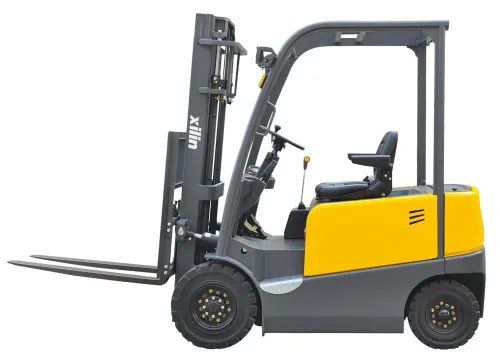
| Forklift | Moves dies and pallets | Often lacks press access, fine positioning and die-retention interface |
| Reach truck | Handles racking and longer pallet travel | Mast geometry and aisle needs hinder press extraction |
| Pallet truck | Moves supported pallets | Not a substitute for controlled die lifting |
Compare loaded travel speed, creep speed, acceleration, braking, stopping distance, floor impact and steering with the boom extended. Empty travel speed can conceal dangerous swing and poor control.
A mobile crane becomes the wrong choice for very high dies, long travel, uneven floors, narrow aisles, frequent high-throughput changes, overhead obstructions, or loads that must remain guided rather than swing beneath a boom or hook. Choose fixed lifting when structure, coverage and load path support it.
What should you require from an industrial crane supplier in Surat?
Turn the quotation into a pass-or-fail specification, not a brochure comparison. For a battery shop floor crane die loader in Surat, require these documents and demonstrations before placing the order:
1. Submit a dimensioned drawing showing overall footprint, wheelbase, turning radius, lowered height, maximum lift height, outreach, hook and fork dimensions, press opening, bolster height and approach path. Include the load chart at every outreach, boom angle and attachment configuration, plus maximum individual wheel loads.
2. Provide the battery and charger schedule: voltage, chemistry, amp-hour capacity, usable energy, charge time, operating hours per charge, replacement method and charger rating. Add a hydraulic schematic, control description, inspection points and preventive-maintenance schedule covering controlled lowering, relief protection and power-loss behaviour.
3. Include drawings for the die cradle, forks, clamps, spreader or push/pull attachment. State each rated below-the-hook limit, die-retention method and centre-of-gravity range. Identify local sources and lead times for batteries, chargers, contactors, pendant or radio controls, wheels, brakes, chains or ropes, limit switches and die attachments.
4. Demonstrate approach to the press, die extraction, lift-clearance, horizontal transfer, controlled insertion, parking and securing. Acceptance testing must use the maximum die mass, stated centre of gravity, maximum outreach, highest lift and actual floor, including stopping and final positioning; test powered push/pull when specified.
Aguatech Engineers Pvt.ltd. is one industrial crane supplier in Surat to question against this checklist. Make payment conditional on recorded results, rated attachments, and operator and maintenance training.
Related products
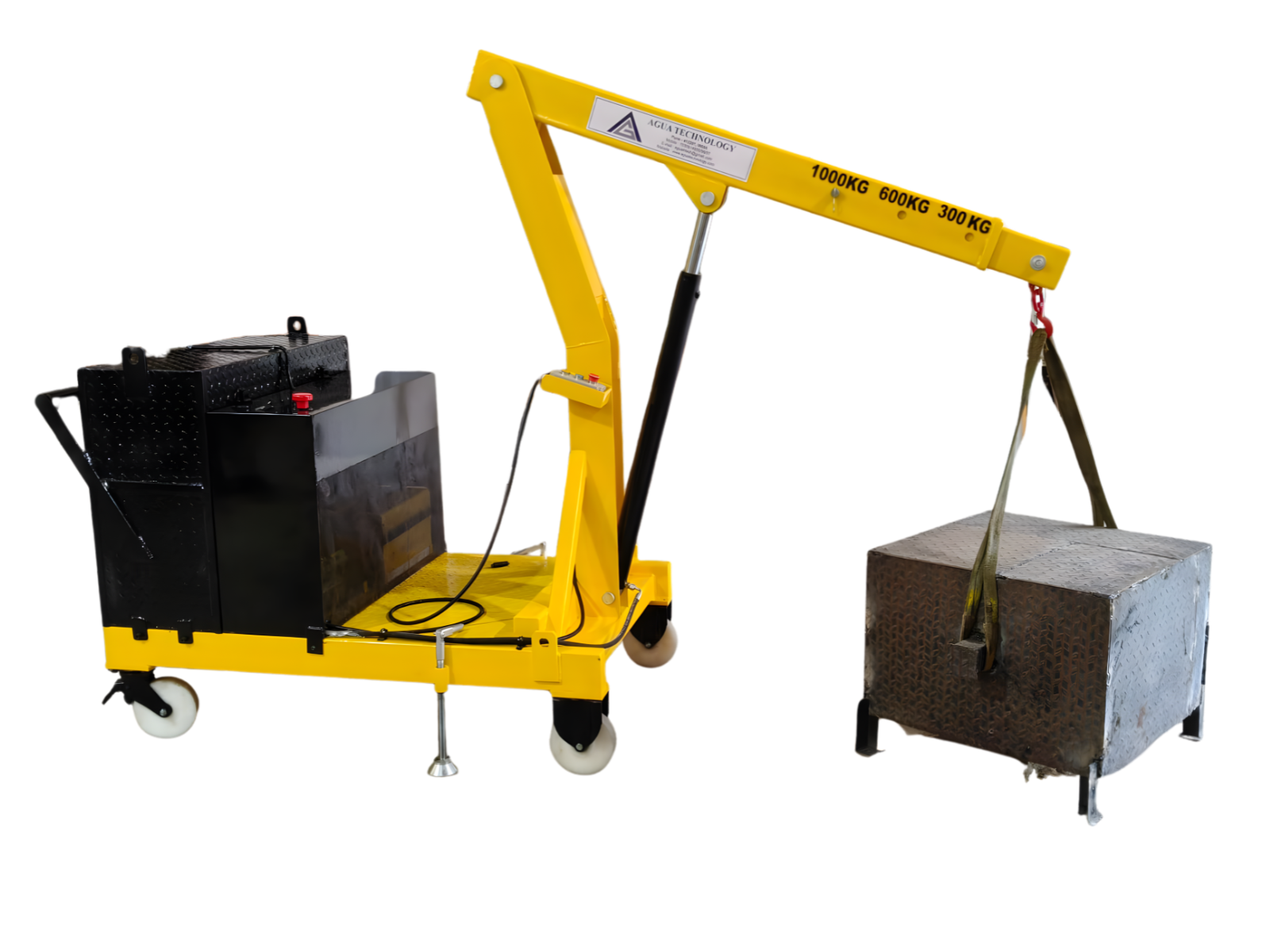 | Cranes Shop Floor Crane – Battery Operated A hydraulic floor crane, also known as a shop crane or engine hoist, is a powerful lifting device designed to handle heavy loads in a wide range of... View product → |
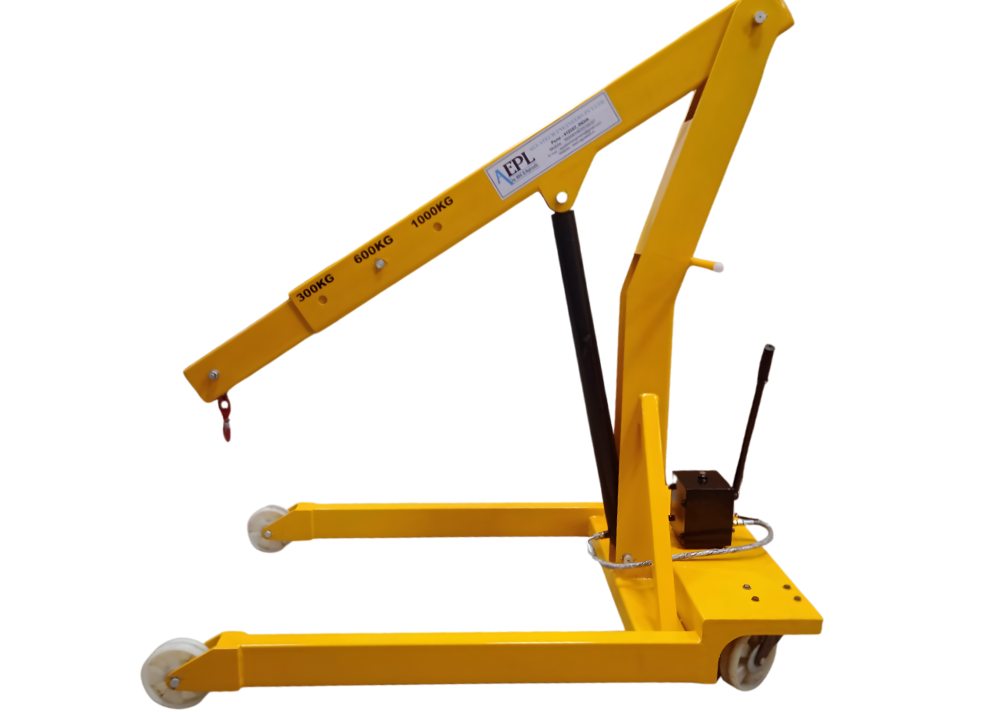 | Cranes A hydraulic floor crane, also known as a shop crane or engine hoist, is a powerful lifting device designed to handle heavy loads in a wide range of... View product → |
Frequently asked questions
Is a battery shop-floor crane actually a die loader?
Not automatically. A crane lifts the die, while a die loader must also transfer it horizontally into or out of the press and align it with the bolster plate or die shoes.
How do you size capacity, outreach and floor stability?
Use the die’s maximum weight, centre of gravity, required reach and lift height. Check the rated capacity at the furthest outreach, floor load rating, wheel loads and stability during transfer.
What battery, hydraulic and control details support a full shift?
Compare battery voltage and amp-hour capacity with the shift duty cycle, charging time, hydraulic cylinder performance, emergency stopping, travel controls and battery or fault indicators.
Which machine fits the pressroom and traffic pattern?
Choose a compact mobile crane when aisles and press access change. Choose a guided or dedicated die loader when repeatable horizontal transfer, alignment and fixed press locations matter most.
What should you require from an industrial crane supplier in Surat?
Request a load chart, dimensional drawing, floor-load data, battery and charger specifications, safety features, inspection documents, operator instructions, warranty terms and local service arrangements.