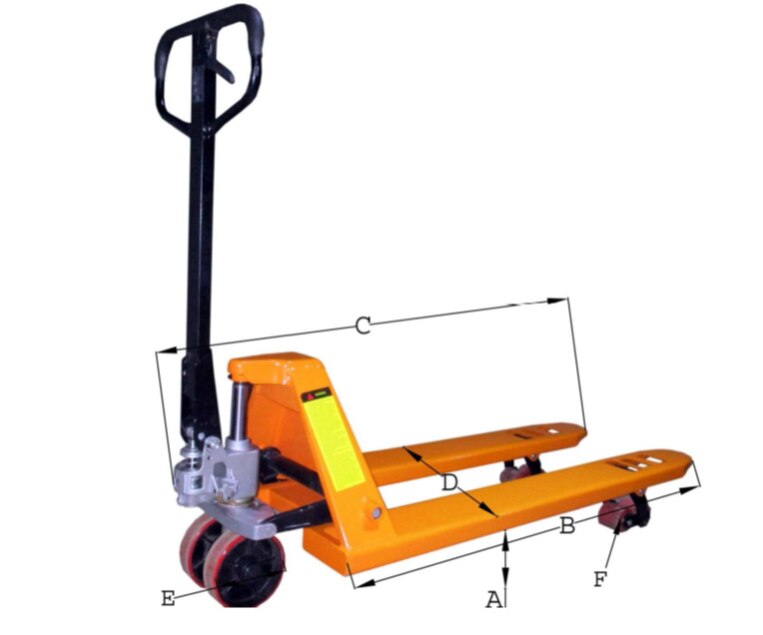
The important distinction is lift height: some machines raise a pallet to reduce bending, while others provide limited stacking capability. By comparing working height, rated capacity, pallet compatibility, floor conditions, and travel needs, you can decide whether this equipment fits your operation or whether a stacker, forklift, or another solution is safer.
Key takeaways
- High lift trucks raise pallets to a comfortable working height.
- Do not use a raised pallet as a work platform without safety controls.
- Check load weight, pallet entry, floor condition, and aisle width first.
- Choose a stacker or forklift when you need greater height or reach.
What makes a high lift pallet truck different from a standard pallet truck?
A high lift pallet truck is defined by how high its forks rise, not by its name. Unlike a standard hand pallet truck, which keeps a pallet close to the floor for transport, it raises the load substantially above the normal travel position.
If you are asking “what is a high lift pallet truck?”, check the specified raised fork height first: scissor-lift models commonly reach about 800 mm, while mast-type versions reach higher for limited stacking or shelf access.
| Standard hand pallet truck | Keeps forks low for moving pallets across the floor | Transport between nearby locations |
|---|---|---|
| High-lift pallet truck | Raises a pallet to a working height, with capacity tied to lift height and load centre | Packing, picking, or short vertical transfers |
| Mast-type high-lift truck | Uses a mast for greater lift and limited stacking | Raising loads to low shelves or storage positions |
The label alone is insufficient because “high lift” is not one universal equipment class. Compare the manufacturer’s load chart, rated capacity at the required height, fork length and spacing, pallet-entry clearance, and permitted travel with the forks raised. A scissor mechanism can also obstruct closed-bottom or perimeter-base pallets.
Treat the selected model’s nameplate and operating instructions as the authority, not the product category.
What can it lift, and can you use the raised pallet as a work surface?
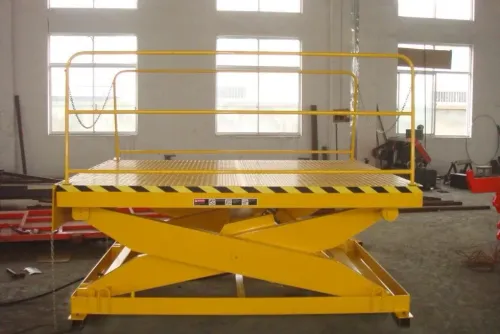
An approximately 800 mm scissor-lift model raises the pallet to a comfortable packing or picking height. The pallet becomes a raised work surface for cartons, not a storage position or a platform for people.
| Model | Main use | Boundary |
|---|---|---|
| Scissor-lift, about 800 mm | Positioning a pallet for picking, packing, or decanting | Lift height suits work at the pallet; scissor legs can restrict entry to closed-bottom or perimeter-base pallets |
| Mast-type, taller lift | Raising loads for limited stacking or shelf access | Check capacity at the intended height, stability, and whether the manufacturer permits travel with forks raised |
Mast-type trucks reach higher, but lift height does not make them forklifts. Their rated capacity can fall as the load rises, and raised-load travel can be prohibited for a particular model. Read the load chart and operating instructions.
The practical high lift pallet truck benefits are less stooping, faster positioning, and one machine for short horizontal moves and height adjustment. They do not remove manual-handling hazards: heavy push forces, awkward reaches, unstable cartons, and pinch points remain.
Work beside a raised pallet only from a stable standing position, with hands and feet clear of the forks, wheels, scissor mechanism, and pallet edges. Never place any part of your body beneath a raised load, and never climb onto the pallet or use it as an elevated work platform.
Lower the load before clearing a jam, entering beneath it, or leaving the truck unattended.
Which jobs suit a high lift pallet truck, and which machine fits better?
Common high lift pallet truck uses include order picking, packing, pallet decanting, ergonomic positioning for assembly, and short vertical transfers between a pallet and a workstation. Choose one when you need to move a pallet and raise it to a comfortable working height, not when you need a general-purpose forklift.
Use the job to select the machine:
- Manual pumping suits occasional pallet raising and low-throughput work.
- Electric lift suits repeated height changes during a shift or loads that make pumping tiring.
- A mast-type version suits limited shelf access; confirm its rated capacity at the required height.
- A scissor-lift model suits work-height positioning, but its stabilisers or under-fork legs can block closed-bottom or perimeter-base pallets.
| Option | Better fit | Why a high lift pallet truck is not the first choice |
|---|---|---|
| Manual stacker | Occasional stacking and short-distance lifting | Better reach for stacking, but slower and more physically demanding |
| Electric stacker | Repeated stacking and shelf access | Designed for vertical storage, with mast height and aisle demands |
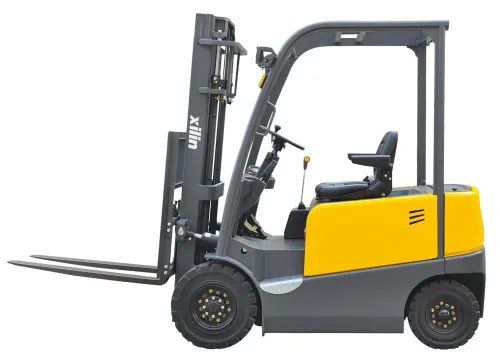
| Forklift | Vehicle loading, outdoor work, and heavier loads | Needs trained operation, counterbalance space, and formal traffic control |
| Scissor-lift truck | Raising a pallet as a stable work surface | Geometry can restrict pallet entry and manoeuvrability |
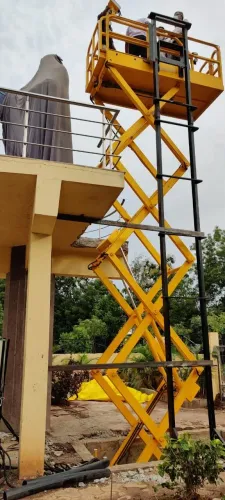
| Elevated maintenance platform | Work on people at height | It is designed for personnel, not pallet handling |
A high lift pallet truck is the wrong choice for high-bay storage, long travel, loading vehicles, or lifting people. For those tasks, use the machine designed for the load, height, travel distance, and occupant protection involved.
What load, pallet, floor, and aisle checks must you make before buying?
Nominal capacity is not enough. Select warehouse pallet lifting equipment against the load chart for the required lift height and load centre; a truck rated for 1,000 kg at low height may carry less when the pallet is raised or positioned farther from the fork heel.
1. Record the gross load, pallet dimensions, entry type, required fork height, and travel distance. Check fork length and adjustable fork spacing against the pallet openings; a fork that is too short or badly spaced can leave the load unstable.
2. Measure the pallet’s base clearance and confirm the forks can enter fully without striking blocks, boards, or the floor. Check both two-way and four-way entry pallets before choosing a truck.
3. Inspect the route. The floor must be firm, reasonably level, dry, and free of potholes, broken concrete, oil, and wash-water. Mark every ramp, dock plate, threshold, joint, and slope; these increase pushing force and can reduce stability.
4. Measure the narrowest aisle and turning area with the actual truck and loaded pallet, then compare them with the truck’s turning radius. Include clearance beside racks, walls, doors, and dock edges.
5. Ask whether the model permits travel with raised forks. Follow its load chart and operating manual: many trucks are for positioning only, and moving a raised load can trigger braking, automatic lowering, or instability if the route is uneven.
Test the truck on your real floor and route before ordering, not only in an empty showroom.
Do you need one, and how should you choose a supplier in Surat?
Buy one when lifting to a comfortable working height happens repeatedly; choose another solution when lifting is occasional and a standard pallet truck plus a separate table meets the job.
Repetitive bending, pallet decanting, or packing at a fixed height justifies the equipment only if the lift cycle, load weight, and travel distance match its rated capacity.
Use this decision test:
| Option | What you observe | Buying implication |
|---|---|---|
| Intermittent lifting | A few lifts per shift, varied pallets, short movements | Compare purchase cost with a manual stacker or adjustable worktable |
| Repetitive lifting | The same lift-and-position cycle runs throughout the shift | Prioritise powered lifting, battery capacity, ergonomics, and service uptime |
| Mixed duties | Lifting, stacking, and longer travel share one route | A high-lift truck may be the wrong compromise; assess an electric stacker or forklift |
For a high lift pallet truck in Surat, judge the supplier by response time, not catalogue height. Ask for a written service contact, common spare-parts availability, operator training, battery-charging instructions, and a plan for wet floors, wash-down areas, and monsoon corrosion.
- Require a pre-use checklist covering forks, wheels, hydraulics, lowering control, brakes, and warning devices. Remove the truck from service after hydraulic leakage or uncontrolled lowering.
- Confirm pedestrian separation, dock-edge protection, load stability, and charging controls.
- Ask how the proposed model meets ISO 3691-5 and which Gujarat workplace, electrical, lifting-equipment, and inspection rules apply.
- When comparing Aguatech Engineers Pvt.ltd. with another supplier, request these answers in writing and check who responds after installation.
Related product
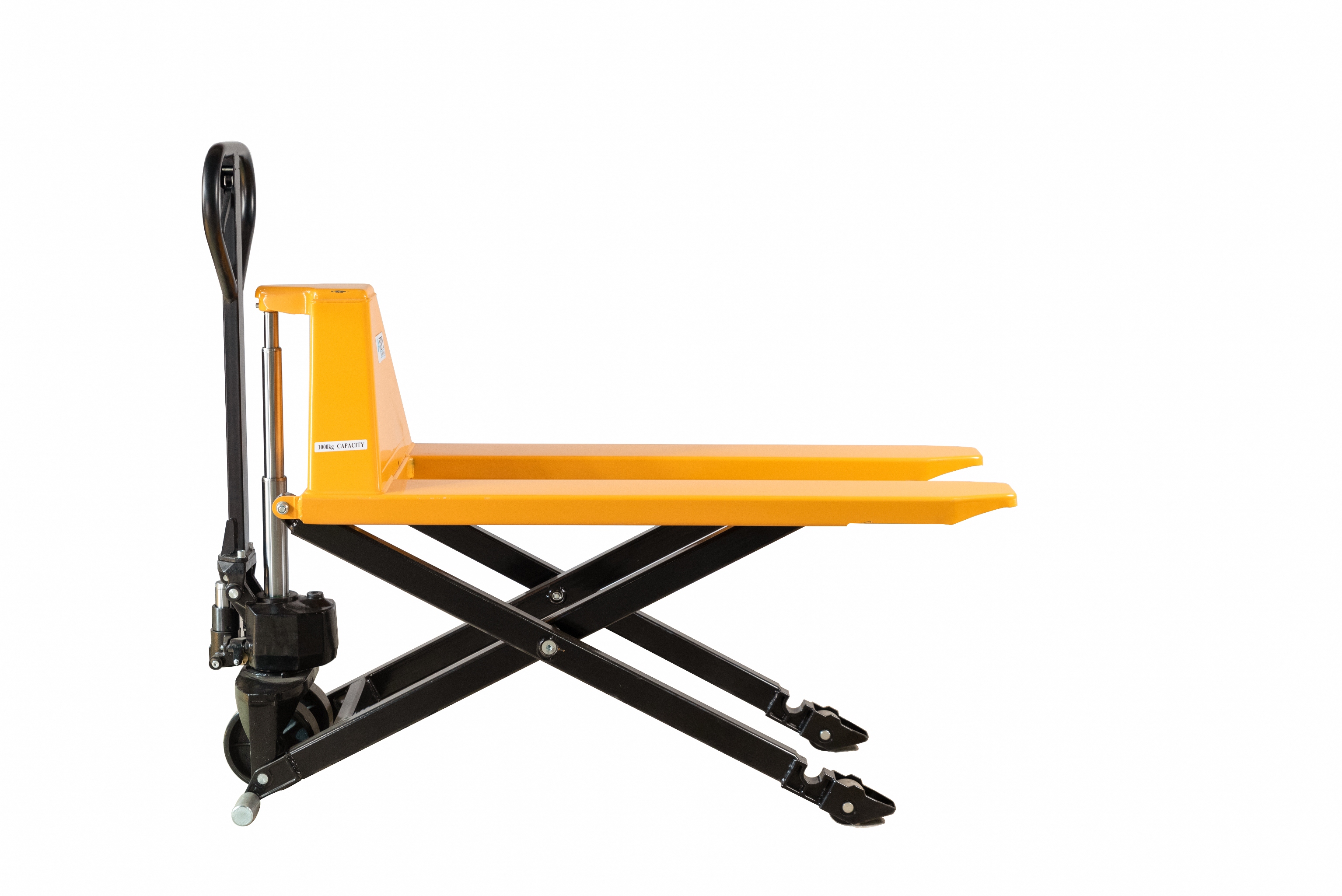 | Pallet Trucks A pallet truck (also known as a pump truck or pallet jack) is a wheeled trolley designed to lift and transport pallets. View product → |
Frequently asked questions
What is a high lift pallet truck?
It is a pallet truck with forks that raise a load above normal transport height, allowing positioning or work at a raised level rather than only floor-level movement.
Can you use the raised pallet as a work surface?
Use it only when the truck is designed for that task and your procedure controls stability, movement, access, and pinch-point risks. Never treat a raised pallet as an improvised personnel platform.
Which jobs suit a high lift pallet truck?
It suits short-distance pallet movement, low-level order picking, ergonomic loading and unloading, and positioning materials at a workbench. Choose a stacker for higher storage and a forklift for heavier loads, longer reach, or uneven outdoor surfaces.
What should you check before buying a high lift pallet truck in Surat?
Confirm rated capacity at the required lift height, pallet entry dimensions, minimum turning and aisle space, floor condition, lift range, brake design, service support, spare parts, and the supplier’s inspection and warranty documents.