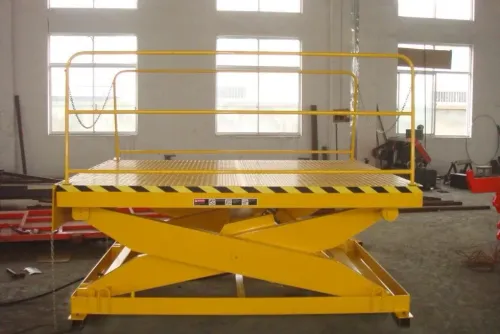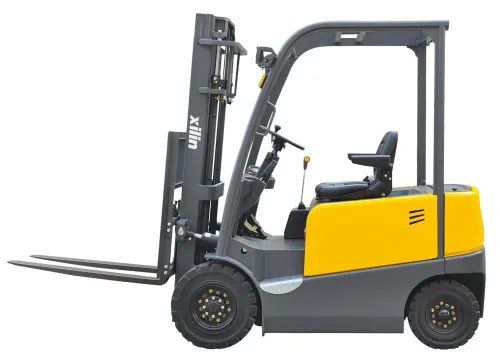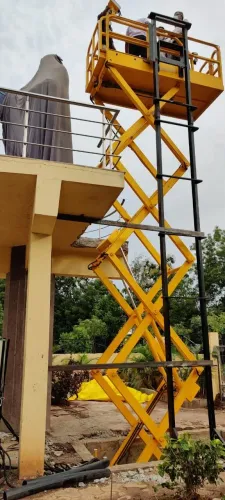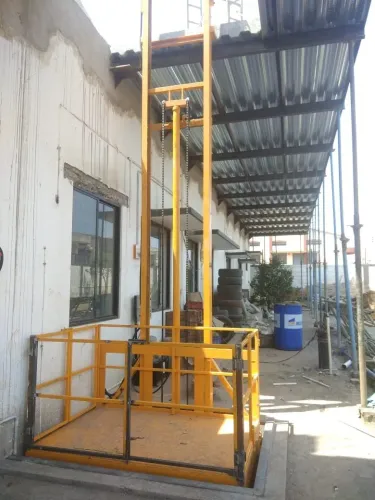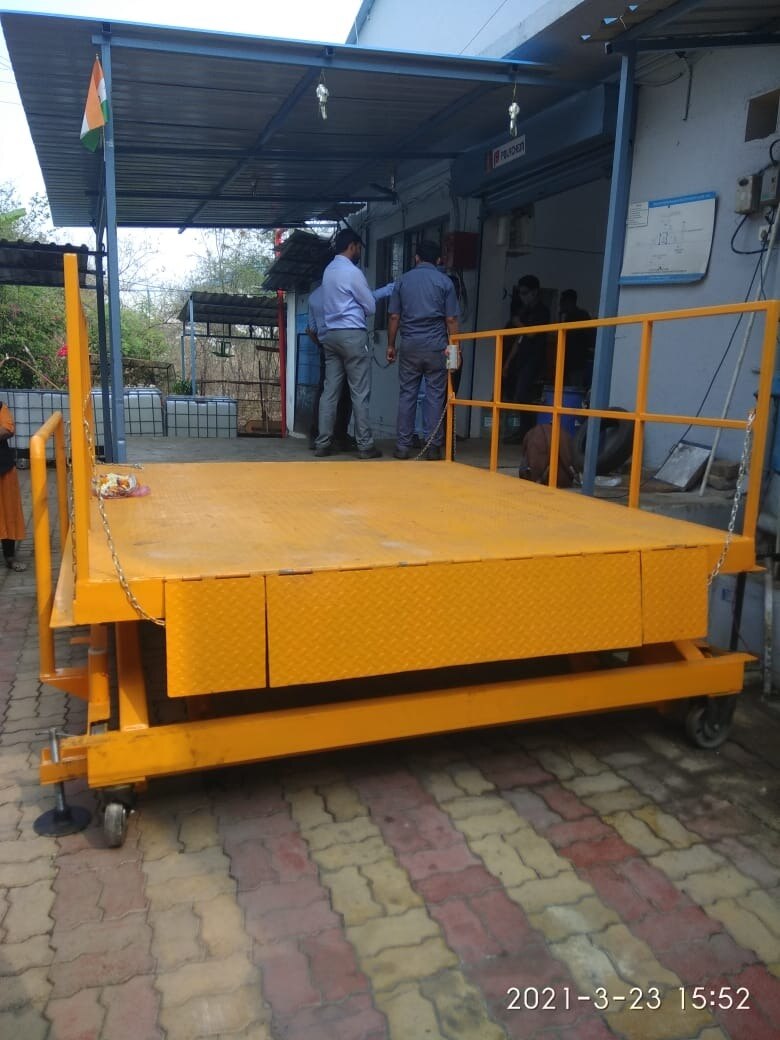
A distribution hub needs different equipment for raising people, moving pallets, and transferring heavy dies into a press. By separating those tasks and checking capacity, dimensions, travel paths, power, and safety documentation, you can choose equipment that fits the operation instead of selecting by lift height alone.
Key takeaways
- Use a scissor lift for elevated personnel access.
- Use a die loader to position stamping dies at a press.
- Check platform height, rated load, aisle width, and floor capacity.
- Demand manuals, inspection records, test certificates, and service commitments.
Which machine matches the job: a scissor lift or a die loader?
Choose a self-propelled scissor lift for elevated personnel access; choose a die loader for moving a stamping die from storage or a die cart to the press bolster.
A self-propelled scissor lift travels under its own power, but its main function is raising people, tools, and light materials on a guarded platform. A die loader performs a controlled horizontal transfer on a bed, using a push-pull mechanism or positive retention system to prevent the die shifting during travel and press entry.
A flat platform with a load rating is not a die-transfer system.
| Option | Best match | Main limitation |
|---|---|---|
| Self-propelled scissor lift | Platform access, overhead maintenance, inventory checks, and loading-bay work at height | Not a freight lift, pallet mover, or press-side die-transfer machine |
| Mobile die loader or die truck | Moving dies through aisles between storage, a die cart, and the press area | Requires bed height, turning space, and floor capacity matched to the route |
| Press-side transfer unit | Aligning and pushing a die into or out of the press bolster | Does not replace a mobile carrier for longer-distance movement |
The operator stands on the scissor-lift platform and controls vertical access; the die-loader operator controls travel and transfer from a cab, pendant, or ground station. A die loader in Surat may mean either a mobile die truck or a press-side transfer unit, so the quotation must name the required function.
State whether you need “self-propelled scissor lift or die loader in Surat” for people, pallets, dies, or a defined combination.
How do you size the equipment for the hub and its load?
Required working height equals platform height plus the operator’s required reach above the platform. A 6 m platform does not provide a 6 m working height if the operator must reach 1.5 m above it; the required working height is 7.5 m.
Check the complete fit before selecting distribution hub lifting equipment:
- Platform or deck height and required lift or transfer range
- Rated capacity, including operators, tools, pallet, die, and product together
- Deck dimensions against the pallet, die length, width, and centre of gravity
- Aisle width, turning radius, rack-end clearance, and door or trailer clearance
- Ramp gradient, floor load rating, floor condition, joints, thresholds, and dock geometry
People, goods, and both require different equipment decisions.
| Duty | Suitable basis | Do not substitute |
|---|---|---|
| People | Personnel lift with guardrails, platform controls, and the required capacity | Do not use it as a freight lift |
| Goods | Freight or die-transfer equipment matched to deck height and load path | Do not lift people on an unapproved deck |
| People and goods | Equipment specifically rated for both, with combined load limits | Do not assume a personnel lift handles pallets or dies |
Treat a die as an off-centre load when its centre of gravity is not central. Verify distributed and point-load limits, wheel and axle loads, and the concentrated reaction where the die transfers onto the press bolster; the press, loader, and floor form one load path.
For industrial lifting equipment in surat, obtain slab and dock checks before relying on headline capacity. A personnel lift is not a dock lift or die-transfer system.
Can the machine travel safely through every part of the distribution hub?
A machine that fits the aisle can still fail at the work point. Measure the route from charging area to destination, including aisle width, turning radius, rack-end clearances, door and trailer openings, thresholds, floor joints, dock plates, ramps, and pedestrian crossings. Record the narrowest point and the floor load limit.
- Compare steering type, travel speed, traction, ground clearance, and tyre type against smooth indoor concrete, damaged floors, yards, and outdoor weather.
- Record the manufacturer’s travel restriction when the platform is raised, and its maximum slope for both travelling and parking. Gradeability does not permit elevated travel on every ramp.
- Specify a self propelled scissor lift in surat only after checking its complete travel envelope, not its headline platform height.
| Power option | Operating fit | Costs and controls |
|---|---|---|
| Electric | Quiet, zero tailpipe emissions; best for enclosed hubs | Confirm charging-point availability, battery charging time, duty cycle, ventilation, and maintenance access |
| Diesel | Longer duty cycle and outdoor traction | Requires exhaust ventilation, creates noise and emissions, and needs engine and fuel maintenance |
| Hydraulic | High force for specialised lifting or transfer | Check power-pack access, leak control, noise, duty cycle, and whether the drive suits indoor travel |
For distribution hub lifting equipment, treat lead-acid charging as infrastructure. Provide forced ventilation, prohibit flames and sparks, control ignition sources, post a designated charging procedure, and protect the charger and battery area from vehicle traffic. A personnel lift must not become a freight solution because its deck happens to fit a pallet.
What safety and compliance evidence should you demand before purchase?
A high headline capacity proves little without evidence of how the machine behaves under real loads. Demand documents that match the hub’s floor, load path, people-versus-goods task, and operating conditions.
| Self-propelled scissor lift | Die loader |
|---|---|
| Vertical personnel access | Horizontal die transfer to a press bolster |
| Guardrails, platform controls and access system | Positive die retention and push-pull or transfer system |
| Travel restrictions while raised | Defined bed height, travel range and stroke |
Require these records and controls before signing:
- A rated-capacity chart showing platform or bed height, load distribution, off-centre limits, deck dimensions, and any reduced capacity while travelling.
- Emergency-lowering instructions, clearly marked controls, and evidence that the system has been tested.
- Pre-use inspection forms, completed maintenance records, defect reporting, and scheduled inspection intervals.
- Operator training requirements covering controls, charging, load placement, slope limits, isolation, rescue, and shutdown.
- A written risk plan for falls, tip-overs, struck-by hazards, and entrapment, with controls assigned to named work activities.
- For a die loader, positive die retention, die centre-of-gravity limits, bolster alignment, and a defined push-pull stroke or transfer method.
- For a self-propelled scissor lift, guardrails, safe access, platform controls, alarms, emergency stop, and travel restrictions when raised or on a slope.
Ask which design and safety basis applies, such as ISO 16368 or the ANSI/SAIA A92 series. For industrial lifting equipment in surat, confirm the applicable Gujarat and Indian statutory inspection, certification, workplace, and operator-training requirements. A quotation that supplies capacity but omits this evidence is incomplete.
How should you compare quotations and local support?
Do not compare prices until the specification fixes the job. Write the task, load path, dimensions, duty cycle, operating surface, people-versus-goods requirement, and required documents before requesting quotations.
- Record platform or bed height, travel range, deck size, aisle width, door clearance, gradients, floor condition, and dock geometry.
- State the combined load: operators, tools, pallet, die, and product.
- For dies, provide length, width, weight, centre of gravity, bolster height, and transfer direction.
- Require rated-capacity charts, inspection forms, maintenance records, emergency-lowering instructions, training requirements, and service response times.
| Option | What the quotation must prove | Reject it when |
|---|---|---|
| Self-propelled scissor lift | Elevated personnel access, guardrails, platform controls, travel restrictions, and safe working height | It is priced as a freight or die-transfer machine |
| Die loader | Press-side transfer with bed height, travel range, die dimensions, centre-of-gravity assumptions, and push-pull stroke or method | Any of those details is missing |
| Dock or goods equipment | Pallet or load movement, deck capacity, floor loading, and dock alignment | The offer only states maximum lift height |
A quotation for a self propelled scissor lift or die loader in Surat must identify the function, not just the model. A die loader in Surat that carries the die but cannot align with the bolster is unusable; a self propelled scissor lift in Surat is unsuitable when the task requires freight transfer.
Compare ownership cost: battery and charging infrastructure, tyre replacement, floor repairs, training, statutory inspections, emergency response, and downtime during charging or maintenance. Aguatech Engineers Pvt.ltd. can add value by converting your hub layout and load path into this documented specification, rather than recommending the machine with the greatest lift height.
Related products
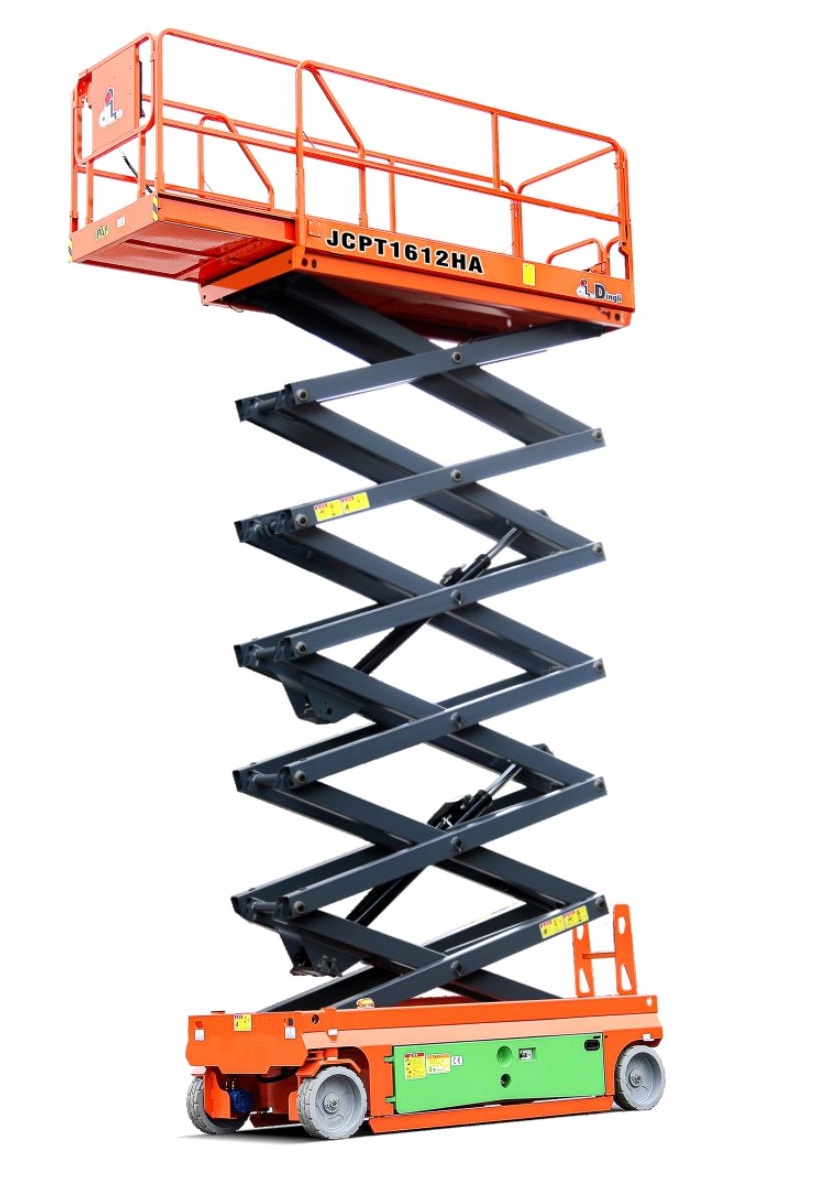 | Self-Propelled Scissor Lift A self-propelled scissor lift is a motorized aerial work platform used for vertical lifting, allowing operators to drive, steer, and elevate the... View product → |
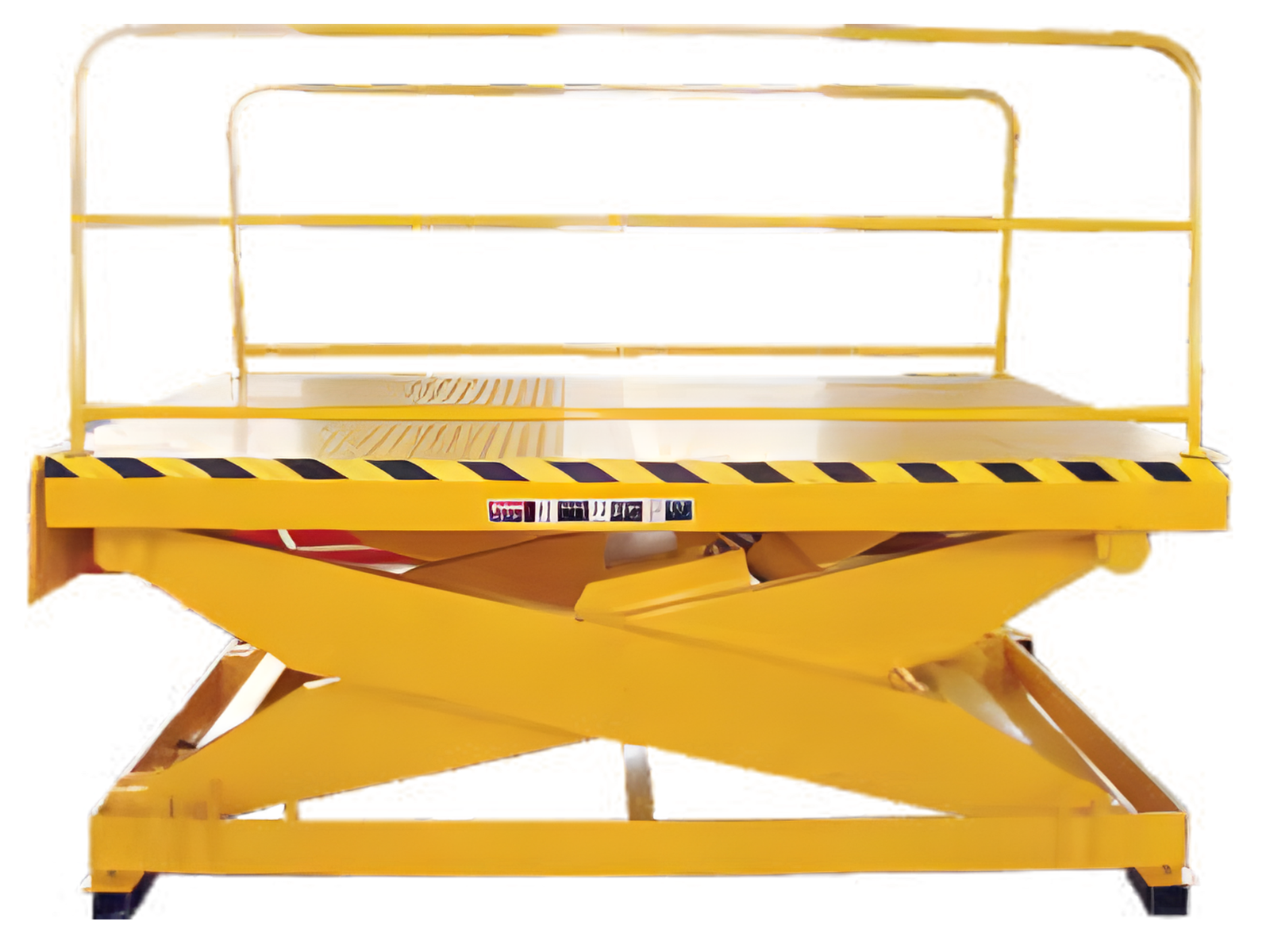 | LOADING/UNLOADING PLATFORMS OR DOCKS Electro-Hydraulic Scissor Lifts A loading/unloading dock is typically an elevated opening (or openings) in a building's sidewall where shipments are sorted and staged for loading... View product → |
Frequently asked questions
Which machine matches the job: a scissor lift or a die loader?
Choose a self-propelled scissor lift for raising personnel and tools to an elevated work position. Choose a die loader for moving, aligning, and loading stamping dies between storage, a die cart, and a press bolster.
How do you size lifting equipment for a distribution hub?
Confirm the required working height, platform or die load, machine dimensions, turning radius, aisle width, door clearances, floor capacity, and charging or power arrangements before selecting equipment.
Can the machine travel safely through every part of the hub?
Map the complete route, including aisles, ramps, dock edges, doors, floor joints, pedestrian crossings, and congested areas. Compare each clearance, gradient, surface condition, and turning point with the machine specifications.
What safety and compliance evidence should you request?
Request the operating and maintenance manuals, rated-capacity information, inspection and test records, emergency-stop details, battery or power documentation, guarding information, and evidence of required local statutory compliance.
How should you compare quotations and local support?
Compare the supplied configuration, rated capacity, dimensions, delivery scope, installation, operator training, warranty exclusions, spare-parts availability, response times, preventive maintenance, and total operating cost—not only the purchase price.
Related products
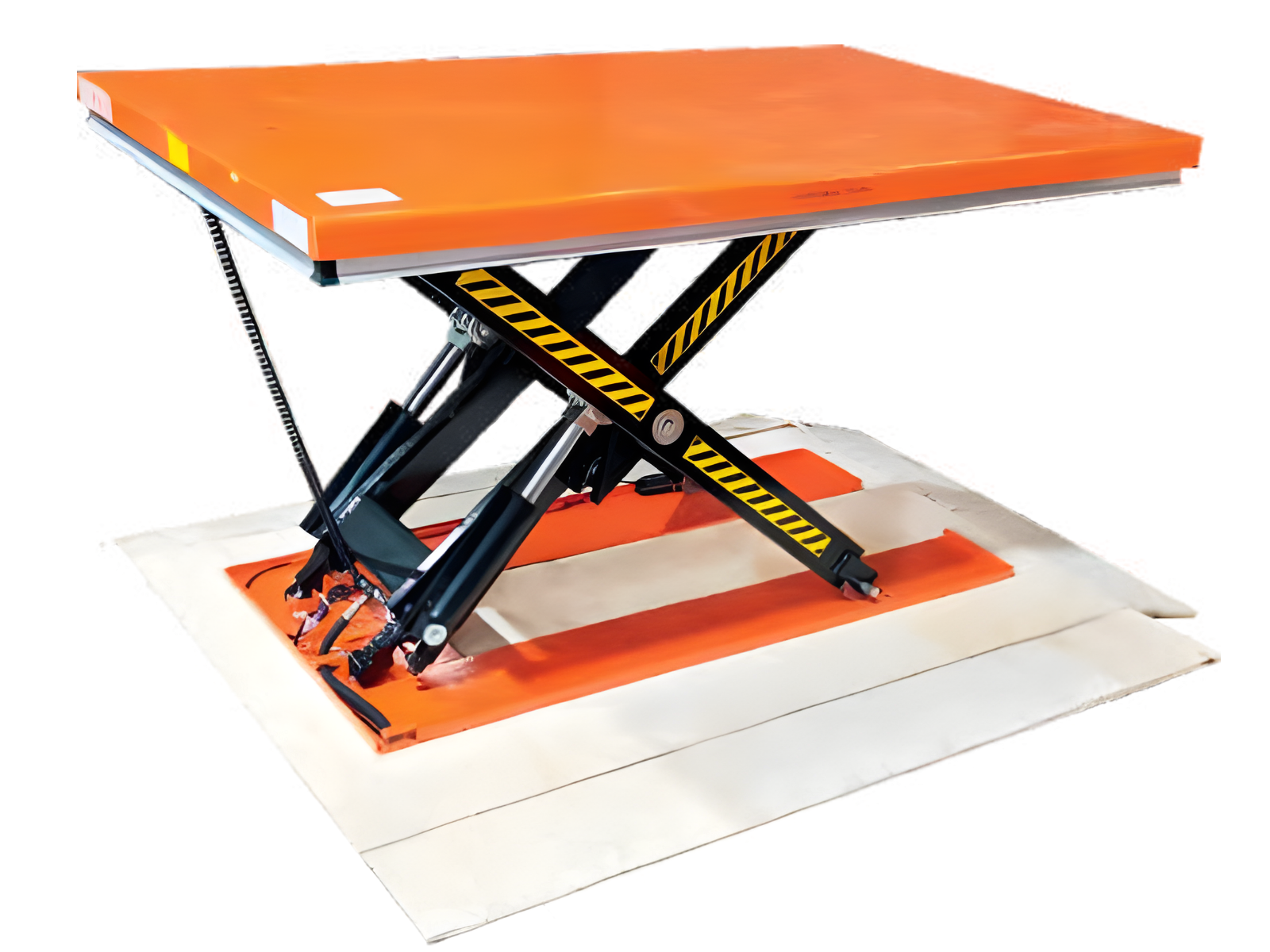 | Low Profile Scissor Lift The low-profile electric/hydraulic scissor lift table loads and unloads skids with a pallet truck without the need for a pit when using the optional... View product → |
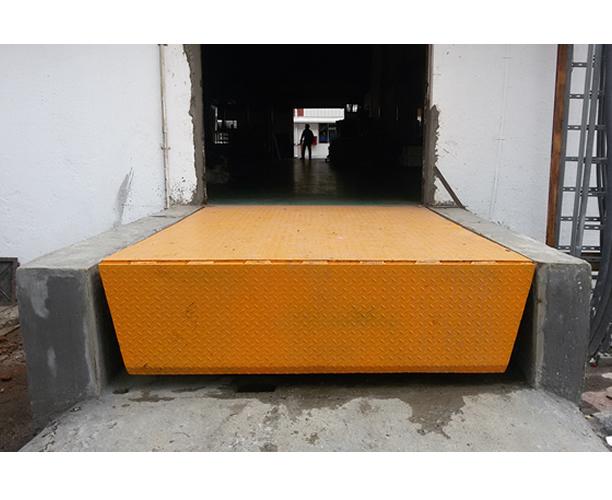 | LOADING/UNLOADING PLATFORMS OR DOCKS Electro-Hydraulic Dock Leveler A loading/unloading dock is typically an elevated opening (or openings) in a building's sidewall where shipments are sorted and staged for loading... View product → |
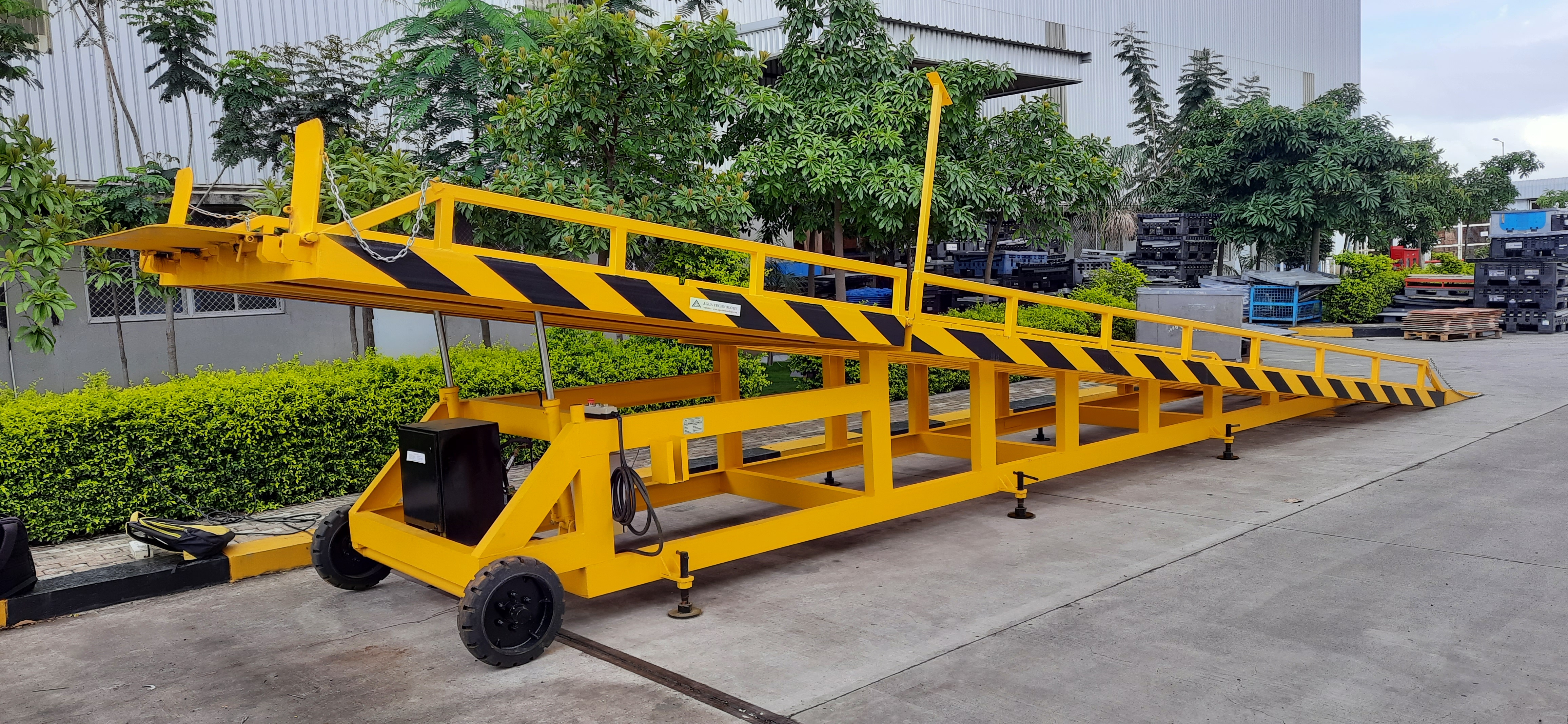 | LOADING/UNLOADING PLATFORMS OR DOCKS A loading/unloading dock is typically an elevated opening (or openings) in a building's sidewall where shipments are sorted and staged for loading... View product → |
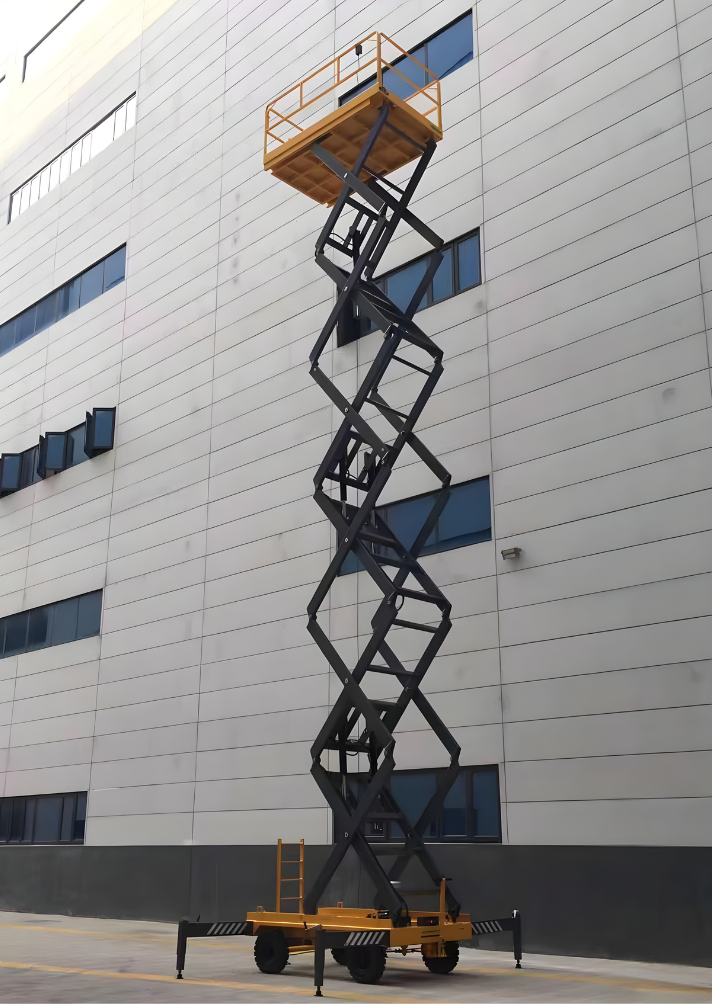 | HIGHLIFT MAINTAINANCE PLATFORM These are perhaps a revolutionary kind of equipment to be designed which almost replaced the conventional ladders which have their own limitations... View product → |