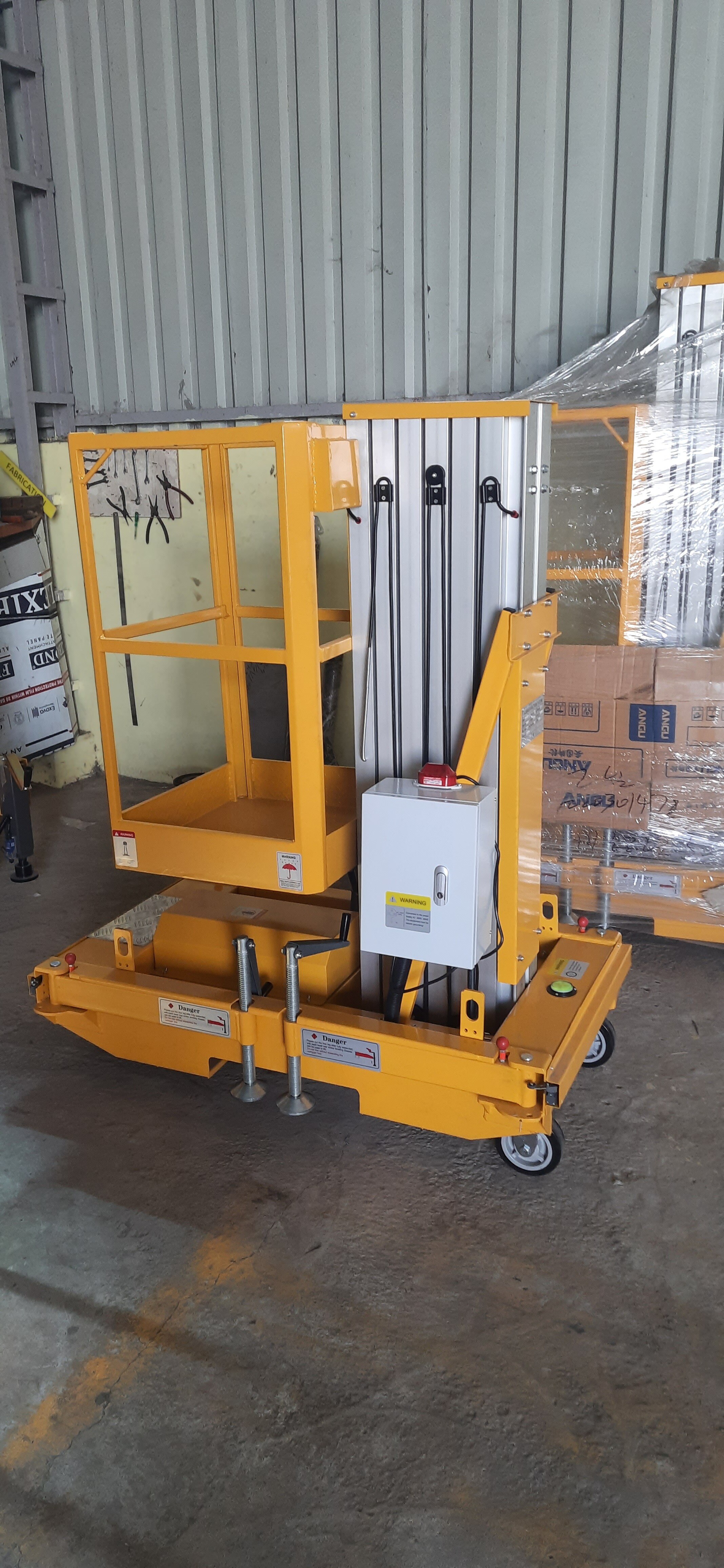
The right access machine depends on more than the height of the job. Match the equipment to the work pattern, load, floor, travel route and site conditions, then compare the total setup effort with the alternatives before you buy or hire.
Key takeaways
- Choose it for short, repeated vertical tasks above a clear floor.
- Confirm platform height, working height, basket load and safe horizontal reach.
- Measure doors, aisles, floor conditions and the complete travel route.
- Specify rescue access, operator training, service support and spare parts before ordering.
Start with the work pattern, not the machine
A single mast AWP earns its place when one technician repeatedly works straight above the machine for short periods. Changing luminaires, inspecting overhead services, servicing sensors or ducts, and accessing warehouse racking suit its narrow footprint and direct vertical access.
These are the main single mast AWP benefits, especially for AWP for factory maintenance where aisles and production equipment restrict movement.
Choose this pattern when the technician carries only hand tools, works at one point, and can lower the platform before moving to the next location. Reject it when the job needs:
- Horizontal outreach around machinery, across a conveyor or over an obstruction
- Two workers, heavy components, welding equipment or bulky materials
- Long work at one elevation, frequent relocation across many bays, or outdoor operation in wind and rain
- Uneven slabs, open grating, ramps, pits or floor transitions that exceed the manufacturer’s limits
A ladder suits brief, light tasks with three-point contact; a scaffold tower suits longer stationary work; powered alternatives reduce repeated repositioning or add reach.
| Option | What it provides | Choose it when |
|---|---|---|
| Single mast AWP | Vertical access above a small footprint | One worker needs short, repeated overhead access |
| Double mast AWP | Greater platform height and working area | The load or height exceeds a single mast’s rating |
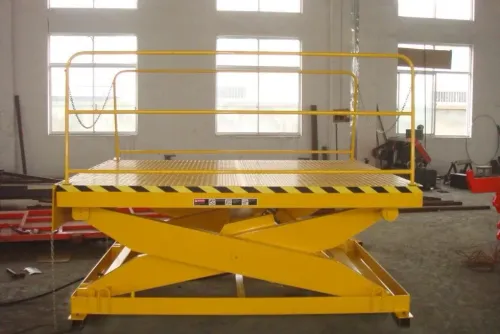
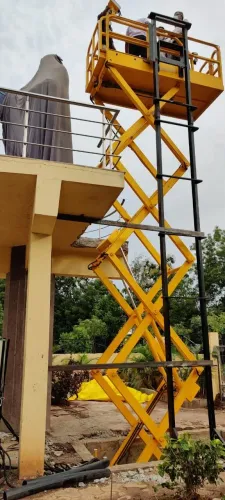
| Vertical mast or scissor lift | Faster powered travel or a larger deck | Maintenance spans many bays or needs more tools |
| Boom lift | Outreach and articulation | The work point is beyond the machine’s footprint |
Before deciding, measure doorways, lift cars, aisles, turning spaces, floor transitions and charging access. Include stowed height, transport weight and floor loading, not just working height.
Calculate height, load and safe working reach
Specify the platform height from the highest point the technician must reach, not from the building’s ceiling. Record that task height, then confirm how the supplier defines working height; it may mean platform height plus the operator’s reach.
Choose a platform elevation that lets the technician work without standing on rails or leaning outside the guardrails.
Calculate the heaviest realistic platform load before comparing models:
- Technician, including clothing and personal protective equipment
- Hand tools, battery tools and test instruments
- Replacement lamps, sensors, fittings or other parts carried upward
- Any material permitted by the manufacturer
Add those weights and compare the total with the rated platform capacity. Do not use the machine’s empty weight or the heaviest worker alone. Ask whether the rating applies with stabilizers deployed, at the required platform position, with a platform extension fitted and on your specified floor condition.
Safe working reach is directly above the machine’s footprint. A single mast AWP does not make leaning, climbing the rails or reaching around machinery safe; if the task needs lateral outreach, specify a different machine.
Check the platform dimensions as well as maximum height, because a cramped platform can force unsafe body position even when the load rating is adequate.
Good single mast AWP buying advice also requires the quotation to state platform height, working height, capacity, platform dimensions and the exact test configuration. Get those figures in writing before comparing prices.
Test the machine against your factory and route
Measure the route before you compare models. A site survey for a single mast AWP for maintenance in Surat must record the narrowest doorway, lift-car dimensions and capacity, aisle width, turning space, stowed height and transport weight. Include every point where the machine must pass through production areas while loaded.
- Check floor transitions, door thresholds, ramps, grating, pits and raised floors. Request total machine mass, wheel or outrigger point loads, maximum permitted slope and prohibited surfaces.
- Confirm the machine fits the narrowest route with stabilizers, guardrails and platform controls in their travel positions.
- Ask whether the rated capacity includes the operator, tools and parts, and whether that rating applies with stabilizers deployed and at the required platform height.
- Compare usable battery operating time and recharge time under your lift cycles, travel distance and expected load. Nominal voltage alone does not predict a full shift.
- Identify a charging point with the manufacturer’s required electrical supply. For multiple shifts, price a spare battery or define an opportunity-charging plan.
- Get written limits for wind speed and rain exposure, and confirm whether “indoor use” excludes open-sided sheds. Check corrosion protection, tyre marking and dry monsoon storage.
A concrete slab can still conceal a dangerous weak point. Have facilities staff approve the route, floor loading and charging location before the quotation becomes a purchase order.
Run the route test with a loaded machine, not a tape measure alone. A machine that reaches the platform but cannot turn at a fire door is not reliable access equipment.
Compare footprint and productivity with other access equipment
A single mast aerial work platform in Surat suits short, repeated jobs directly above the machine’s footprint: changing luminaires, inspecting overhead services, servicing ducts, checking sensors and accessing racking with hand tools. Its weakness is repositioning; a manually propelled unit must be lowered, moved, re-levelled and redeployed between work points.
| Option | Footprint | Productivity and best use |
|---|---|---|
| Single mast AWP | Narrow and compact; little floor spread | Fast for vertical, one-person tasks. Slow when many bays require repeated setup. |
| Double mast AWP | Wider and heavier | Higher platform capacity and more working space, but needs wider routes and takes longer to position. |
| Ladder | Smallest storage footprint | Quick for brief, low-risk access, but offers less stability, working space and hands-free productivity. |
| Scaffold tower | Larger floor area and assembly space | Efficient for long work at one elevation; slow to build, move and dismantle. |
| Vertical mast lift | Compact, with powered travel on many models | Costs more, but reduces repeated repositioning across a facility. |
| Scissor lift | Wider and heavier, with a larger deck | Better for two workers, materials and longer tasks; needs stronger floors and wider aisles. |
| Boom lift | Largest reach envelope and turning demand | The right choice for horizontal outreach around machinery; excessive for straight-up access. |
Choose a vertical mast lift or compact scissor lift when travel between bays dominates labour time. Choose a boom lift when an obstruction blocks the point directly below. A ladder or tower remains practical when the job is brief and setup controls are acceptable.
Specify support, rescue and ownership requirements before ordering
Put after-sales support into the quotation, not into a conversation after delivery. The cheapest machine becomes expensive when its battery, charger, control pendant or mast components cannot be sourced.
1. Require a written operating specification covering indoor or outdoor use, permitted wind speed, rain exposure, corrosion protection, tyre marking, charging supply and monsoon storage. “Indoor use” must match the manufacturer’s definition.
2. Ask for the inspection schedule, pre-use checklist, periodic examination procedure and load-test requirements. The supplier must identify who is qualified to perform each inspection and provide signed records, manuals, wiring diagrams and fault-code guidance.
3. Specify the rescue method. Confirm emergency lowering from the platform and ground controls, battery-failure recovery, entrapment response and the training required for a person who is not the operator. A lift that has no practiced rescue procedure is not ready for production use.
4. Write warranty terms in measurable language: coverage period for the battery and charger, excluded damage, response time for breakdowns, repair completion target, and who pays travel or freight. Request a local service contact and escalation route.
5. List critical spare parts and their promised availability, including wheels, batteries, charger, mast sections, limit switches, emergency-stop components and control parts. Record serial number, delivery weight, stowed height and acceptance-test results in your asset register.
For single mast AWP buying advice, compare usable battery runtime and recharge time rather than voltage alone; specify a spare battery or charging plan for multiple shifts. These single mast AWP benefits disappear if charging interrupts work or inspections lapse. Aguatech Engineers Pvt.ltd.
should be evaluated against the same documented service, rescue and parts criteria as every other supplier.
Related products
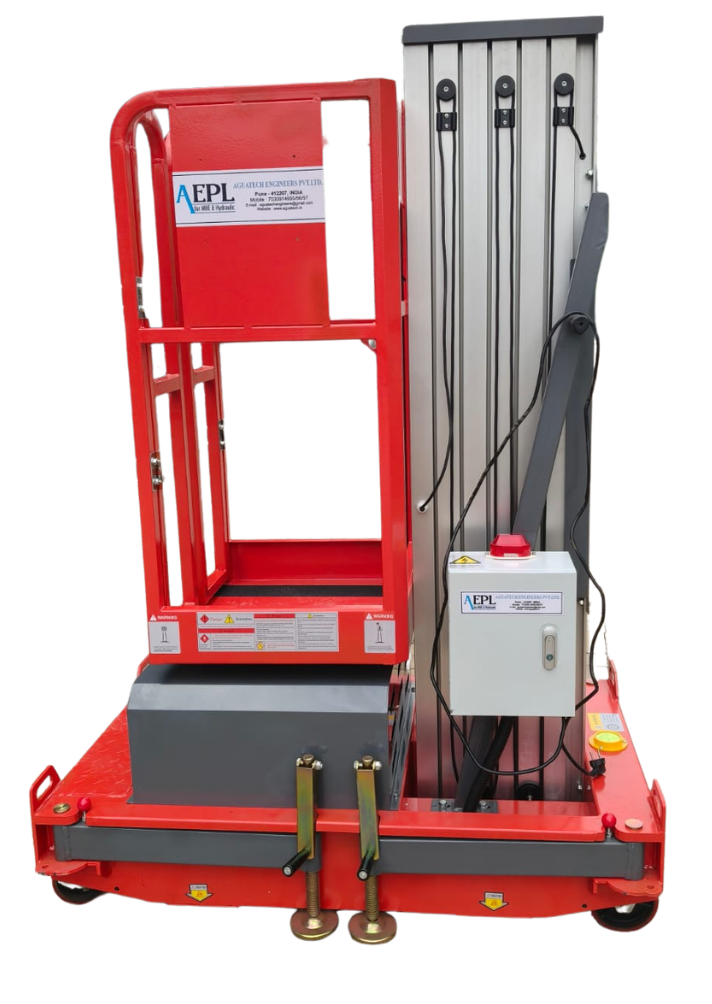 | Aerial Work Platform – Single Mast Aerial Work Platform – Single Mast A Single Mast Aerial Work Platform (AWP) is a compact, vertical-lifting device designed for safe, single-person access to high places. View product → |
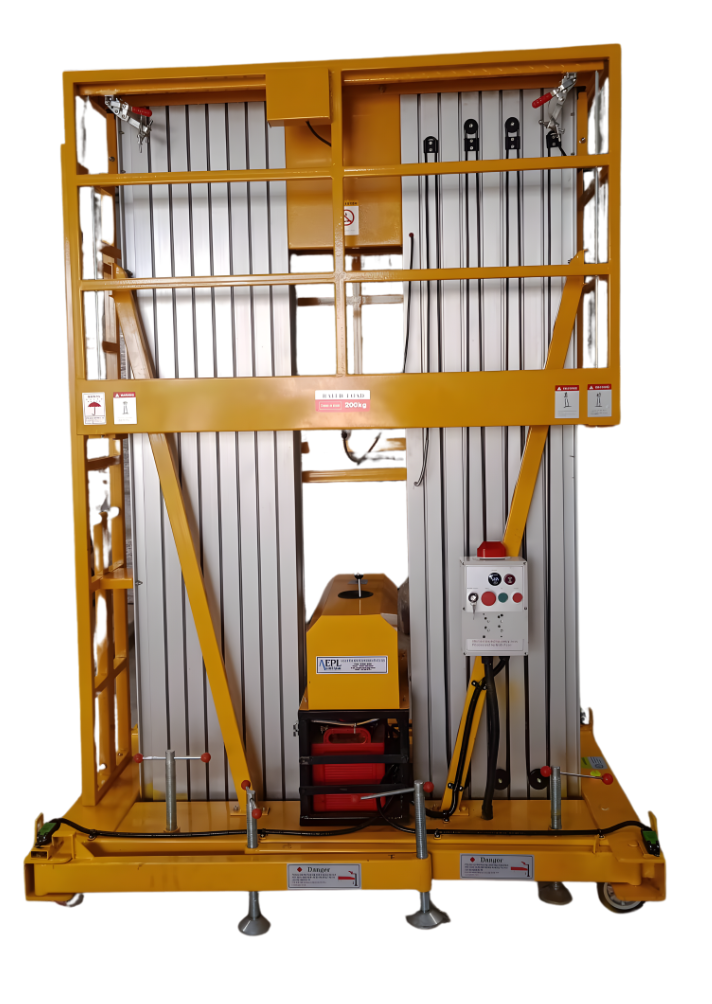 | Aerial Work Platform – Double Mast Aerial Work Platform – Double Mast A double mast aerial work platform is a high-stability, vertical lifting device utilizing two parallel aluminum or steel masts to elevate personnel... View product → |
Frequently asked questions
When is a single mast AWP suitable for factory maintenance?
It suits short-duration tasks performed directly above the machine, such as changing luminaires, inspecting services, servicing sensors or accessing racking.
What should you calculate before selecting a single mast AWP?
Check platform height, working height, total basket load, operator and tool weight, and whether the required task stays within the machine’s safe working reach.
What should you test on your factory route?
Measure doorways, aisles, lift entrances, turning areas, floor transitions and the work surface, then test the machine through the complete route.
How does a single mast AWP compare with other access equipment?
Compare its narrow footprint and direct vertical access with ladders, scaffolds, scissor lifts and boom lifts, considering setup time, reach, productivity and floor space.
What support requirements belong in a single mast AWP purchase specification?
Define operator training, inspection records, emergency lowering, rescue procedures, preventive maintenance, response times, spare parts and service coverage before ordering.