
A truck rated for 2,000 kg can still be the wrong choice if its forks cannot enter your pallets, its turning envelope blocks an aisle, or its wheels struggle at a dock threshold. By measuring the load, pallet, floor and route first, you can narrow the choice to a truck that works safely in your actual Pune warehouse rather than on a catalogue floor.
Key takeaways
- Measure aisle width, turning space and dock clearances before comparing trucks.
- Use load-centre capacity, not only the truck’s headline lifting rating.
- Match fork length and width to your pallet dimensions and entry openings.
- Request a loaded site trial from a Pune supplier before purchase.
Measure the route before comparing capacity
Record the route before comparing a truck’s capacity.
The answer to which hand pallet truck suits my warehouse in pune starts with the heaviest normal load, occasional peak load, pallet length and width, entry direction, daily travel distance, aisle width at racking ends and columns, turning areas, truck-body clearance, and whether the truck enters a container or delivery vehicle.
- Measure dock-plate gaps, ramp gradients, floor joints, and every obstruction. Measure overall truck width and the complete turning envelope with the pallet attached, not just nominal fork width.
- Check that lowered forks clear the pallet entry and that raised forks lift the load over dock plates or floor obstructions.
- Record operator workload, indoor or outdoor use, monsoon exposure, and the narrowest route.
| Site check | Why it decides suitability |
|---|---|
| Pallet entry and fork height | A low pallet can block entry |
| Turning envelope and aisle width | Fork width alone misses steering clearance |
| Ramp, joints and dock plates | Small wheels can jam or lose traction |
| Container or vehicle access | Body clearance can prevent entry |
Choose the model that fits every route constraint before considering its rated capacity. A technically strong truck that cannot turn, enter, or cross the route is the wrong truck.
Use the load-centre capacity guide, not the headline rating
Treat 1,500 kg as a starting figure, not permission to place that weight anywhere on the forks. A standard rating is tied to a specified load-centre distance, commonly 600 mm. Ask for the manufacturer’s capacity-versus-load-centre table when the load is long, overhanging or concentrated near the fork tips.
Compare:
- Total mass
- Load-centre distance
- Pallet support points
- Centre of gravity
| Load condition | What changes | What to check |
|---|---|---|
| Evenly distributed pallet | Lower fork bending and steadier steering | Rated capacity at the stated load centre |
| Front-concentrated load | Higher bending demand and steering instability | Reduced capacity at the actual load centre |
| Long or overhanging load | Centre of gravity moves forward | Manufacturer’s capacity table |
A useful hand pallet truck capacity guide separates structural capacity from safe usable capacity. Ramps, uneven floors and dock plates can reduce practical control before the frame reaches its structural limit.
Keep a margin for occasional peak loads, but do not fix a poor fit by buying the highest-rated truck. Confirm how long forks, scales and special attachments change the rating, and specify safe capacity for each configuration.
Match fork geometry to the pallet you actually use
Measure the pallet before choosing fork length or width. Record the outside length and width, clear fork-entry height, distance between entry openings, stringer or block positions, and bottom-board construction.
Check each measurement from both entry directions:
- Outside length and width, including any load overhang
- Clear opening height beneath the pallet
- Distance between fork-entry openings
- Stringer or block locations
- Solid bottom deck, perimeter base or individual boards
| Pallet feature | What to verify | Selection consequence |
|---|---|---|
| Outside length | Fork support under the load | Choose forks long enough without excessive front overhang |
| Entry openings | Fork width and outside-fork width | Reject a truck that cannot enter without forcing the boards |
| Bottom clearance | Lowered fork height versus the opening | Closed-bottom and perimeter-base pallets may need low-entry forks |
| Dock transition | Raised fork height over plates or thresholds | Confirm the truck lifts high enough before steering across |
| Warehouse space | Turning radius and overall width | Compare the complete envelope with the narrowest aisle, staging bay and truck body |
Too little clearance lets conventional forks strike the bottom deck during entry or steering. A capacity-compliant truck is still unsuitable if it enters only from the wrong side.
Choose the truck type for the operating condition
Use a standard manual truck for ordinary indoor movement on sound, level floors. The main hand pallet truck types in Pune differ by operating condition, not just capacity.
| Option | Best fit | Check before choosing |
|---|---|---|
| Standard manual | Indoor floors and routine loads | Floor joints, ramps and dock thresholds |
| Low-profile | Pallets needing reduced fork-entry height | Low clearance creates problems at broken concrete, thresholds, ramps and debris |
| Long forks | Long loads or two compatible pallets | Turning space, visibility, load balance and pallet-board impact |
| Short forks | Confined aisles and staging areas | Long forks create striking and handling risks |
| Reel carrier | Reels | Diameter, width, core size, core support and centre of gravity |
| Stainless or protected | Wet, corrosive or washdown areas | Protection for frame, pump, fasteners and bearings |
A standard truck can let a reel roll, shift forward or fall because its forks do not support the core. Do not substitute a reel carrier with a general-purpose model.
Choose long forks only after confirming that two pallets are compatible and properly balanced. Check the turning envelope and visibility; fork tips can strike pallet boards, racking or people.
For monsoon-exposed loading bays, specify whether protection covers intermittent wet exposure or continuous washdown. A painted frame alone does not protect the pump, fasteners or wheel bearings. Choose a low-profile model only when entry clearance requires it; its reduced ground clearance becomes a liability elsewhere.
Match wheels, power and weighing features to the floor
Choose wheel material from the actual floor, power from the route, and a scale from the weighing task. The wrong wheel can turn a rated truck into a threshold problem.
| Wheel option | Strengths | Limitations |
|---|---|---|
| Nylon | Rolls easily on smooth floors; tolerates moisture | Transmits noise and impact |
| Polyurethane | Quieter; kinder to finished floors | Cuts, embedded debris and sustained heavy loads shorten service life |
| Rubber | Good grip; low noise | Higher rolling resistance |
Test the truck with a loaded pallet across the dock plate, expansion joints, ramp and damaged floor. Small hard wheels can jam at a joint or lose traction on a ramp, so a catalogue comparison is not enough.
A scale-equipped truck removes a separate weighing step, but uneven floors, vibration and off-centre loads affect readings. Specify the weighing tolerance and verification procedure; do not treat the scale as legal for trade without confirming that status.
Use a manual truck for short, occasional horizontal movement. For long, frequent journeys, ramps or continuous throughput, compare a battery-operated or fully electric walkie truck. Include charging space, battery maintenance, operator training, traffic control and service access; the extra productivity is not free.
Validate the purchase with a Pune supplier and site trial
A showroom run with an empty pallet proves little. Before you buy hand pallet truck in Pune, ask a manual pallet truck supplier in Pune for a written specification covering:
- Rated capacity and load centre
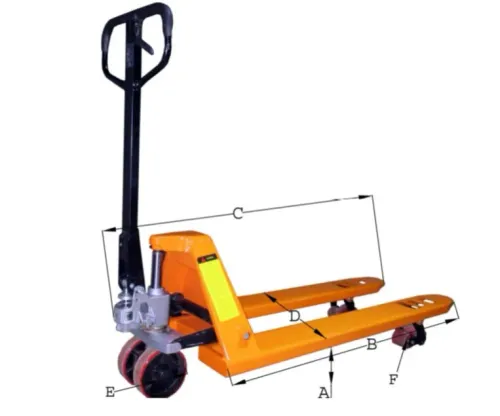
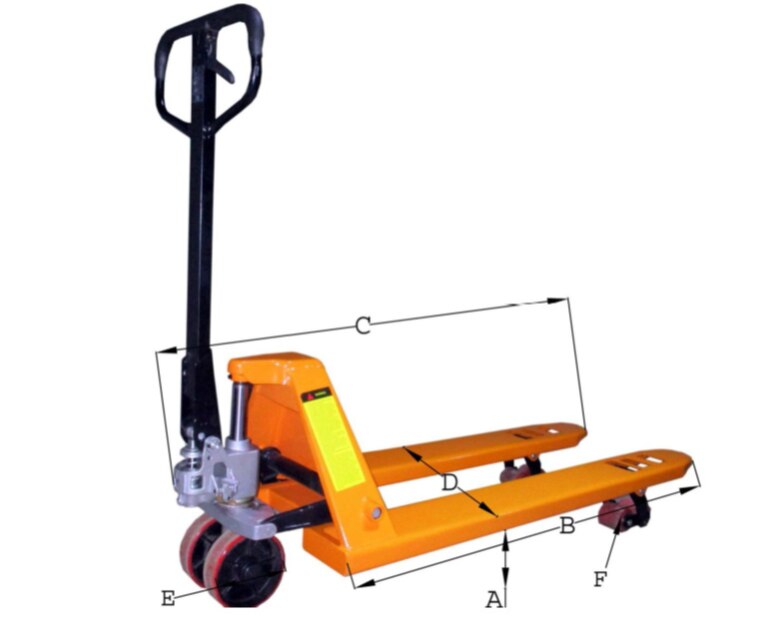
- Fork dimensions, lowered height and turning radius
- Wheel material, pump type and hydraulic-seal service
- Warranty exclusions, spare-wheel availability, pump service and delivery lead time
| Evidence | Showroom demonstration | Site trial |
|---|---|---|
| Pallet and load | Empty or supplier-provided pallet | Your pallet with a representative load |
| Movement | Smooth, level floor | Start, stop, steer and turn at the narrowest point |
| Obstacles | No thresholds or joints | Cross the actual threshold and dock plate |
| Vehicle access | No truck-body entry | Enter the dock or truck body and park |
| Load stability | Evenly distributed load | Uneven or off-centre load when normal |
For monsoon-exposed operations, ask whether the finish protects against intermittent wet exposure or continuous washdown; check the frame, pump, fasteners and wheel bearings. Consider Aguatech Engineers Pvt.ltd. alongside other suppliers only when it provides the specification, site demonstration and access to wear parts. Choose proven operational fit, not the lowest price.
Related products
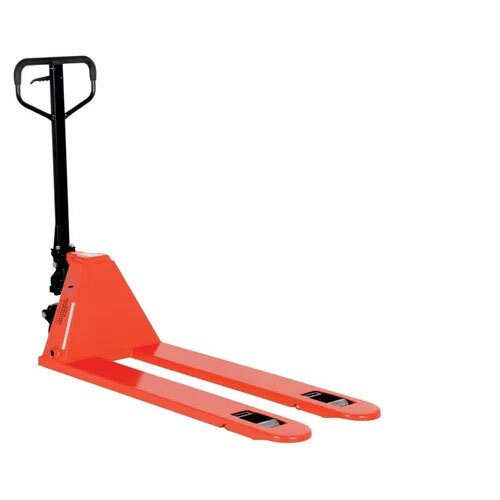 | Pallet Trucks A pallet truck (also known as a pump truck or pallet jack) is a wheeled trolley designed to lift and transport pallets. View product → |
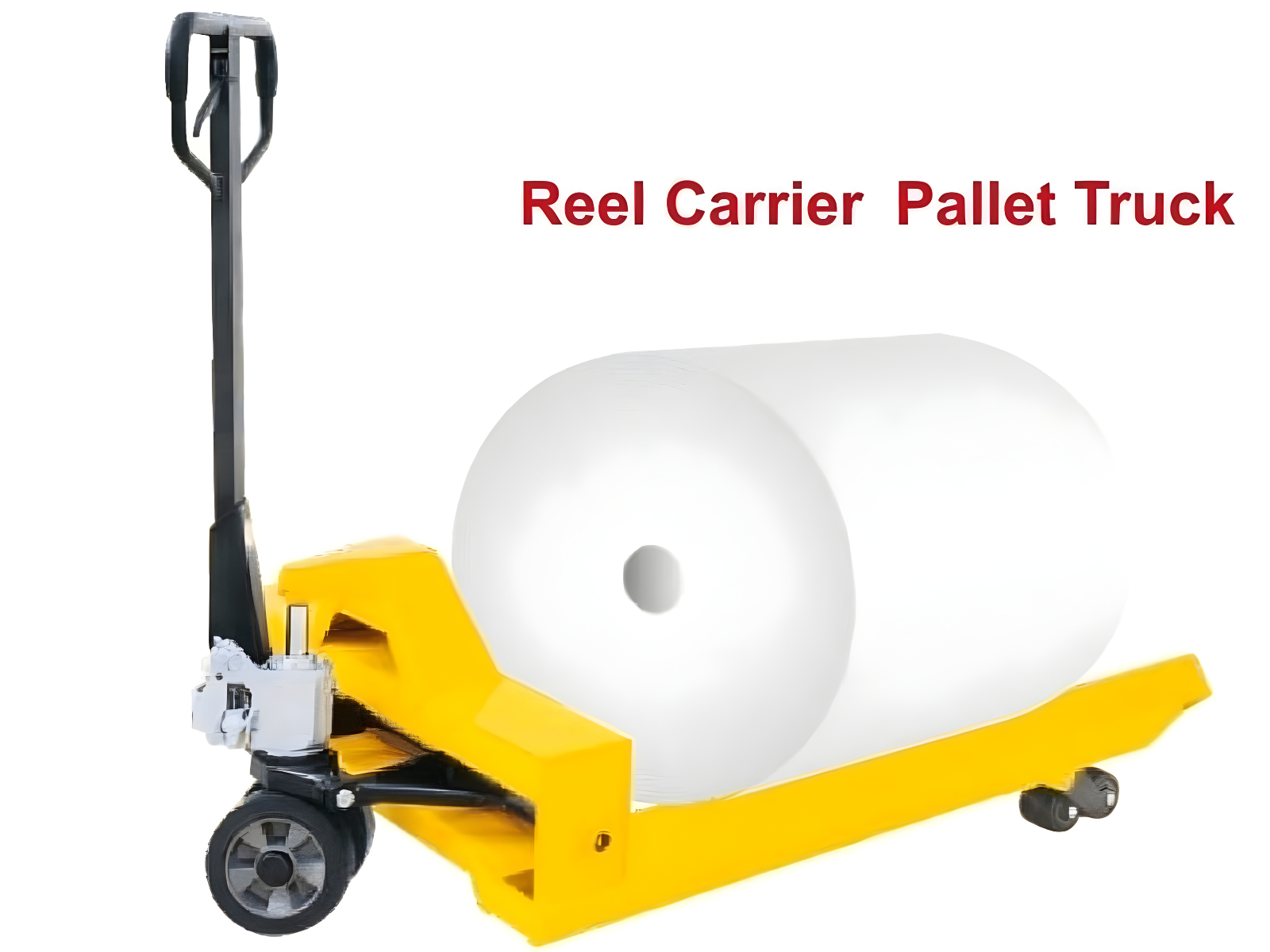 | Pallet Trucks A pallet truck (also known as a pump truck or pallet jack) is a wheeled trolley designed to lift and transport pallets. View product → |
Frequently asked questions
How do I decide which hand pallet truck suits my warehouse in Pune?
Measure the travel route, aisle width, turning areas, ramps and dock clearances. Then match the truck’s load-centre capacity, fork geometry, wheels and power source to those conditions.
How should I use a hand pallet truck capacity guide?
Check the rated capacity at the specified load centre, not just the headline rating. A load positioned farther from the fork heel reduces the safe lifting capacity.
What hand pallet truck types are available for different operating conditions in Pune?
Choose among standard manual, low-profile, stainless-steel, rough-floor, high-lift and powered-assist designs according to hygiene needs, pallet clearance, floor quality, travel distance and lifting frequency.
What should I check before buying from a manual pallet truck supplier in Pune?
Give the supplier your pallet dimensions, load weights, route measurements and floor conditions. Ask for specifications, service support and a loaded site trial using your actual pallets.
Related products
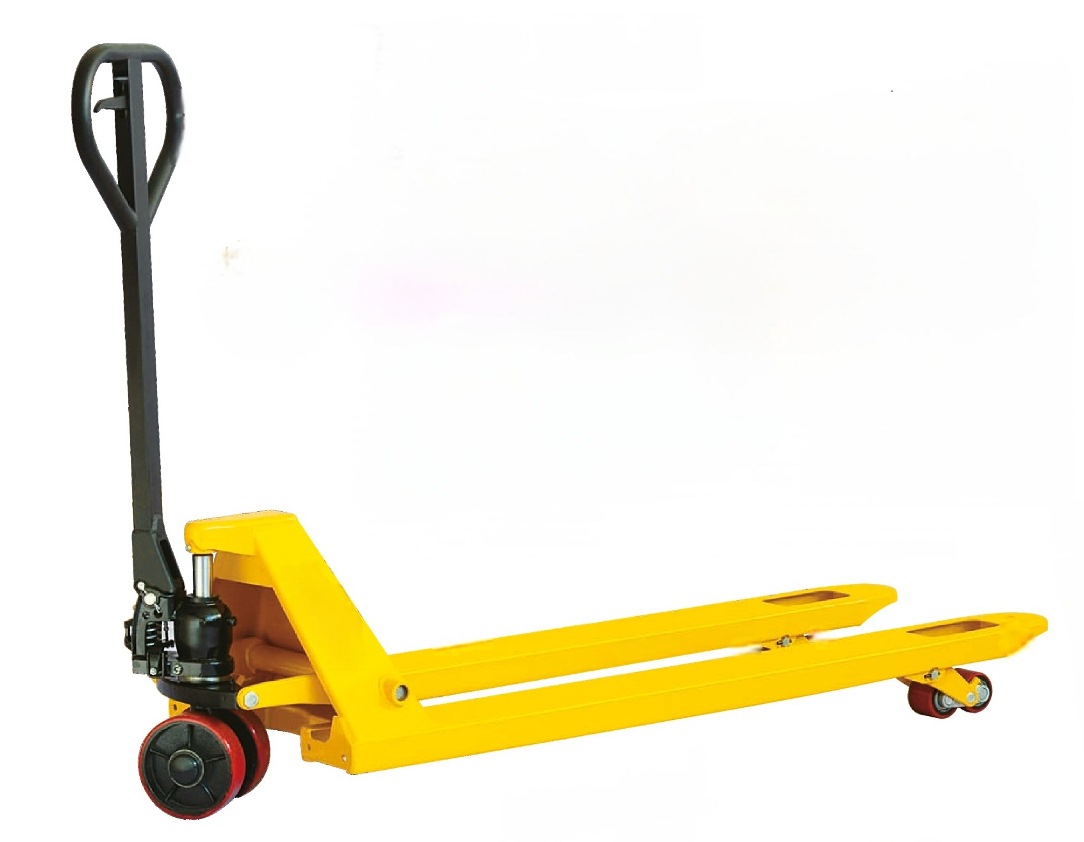 | Pallet Trucks A pallet truck (also known as a pump truck or pallet jack) is a wheeled trolley designed to lift and transport pallets. View product → |
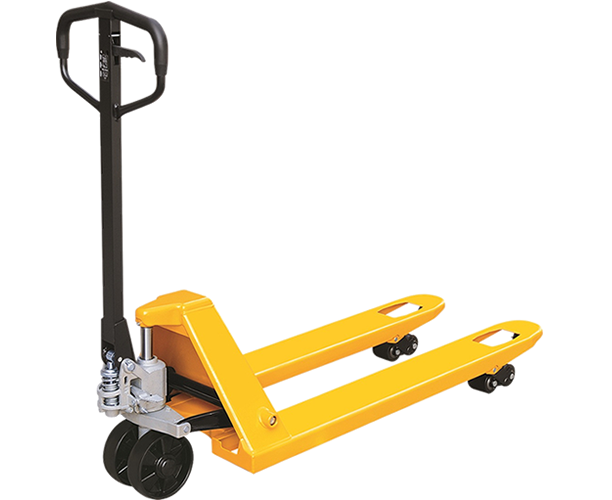 | Pallet Trucks Basic models using integrated hydraulics to manually pump and lift the forks (load) and manually transport (push/pull) the pallet truck. View product → |
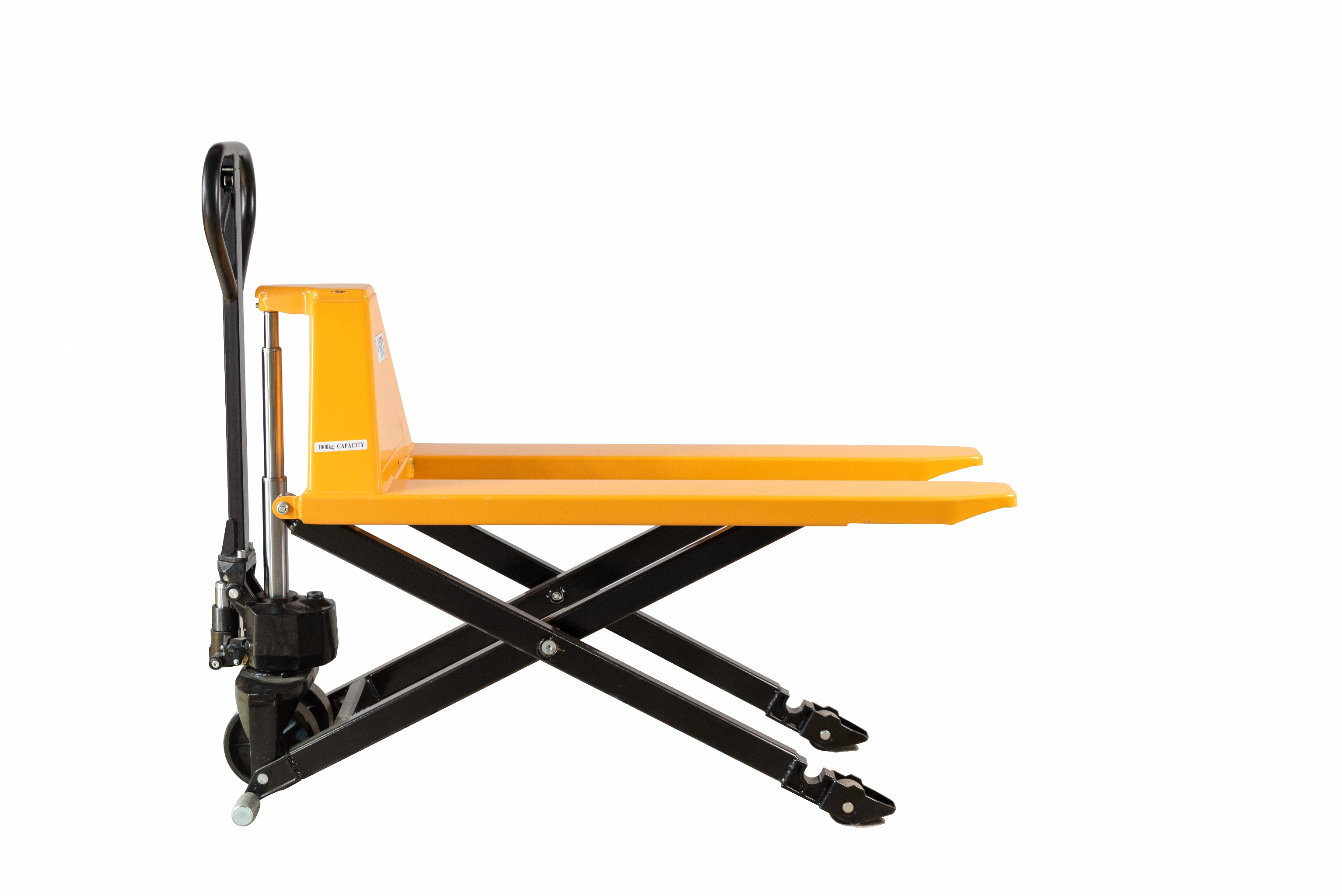 | Pallet Trucks A pallet truck (also known as a pump truck or pallet jack) is a wheeled trolley designed to lift and transport pallets. View product → |
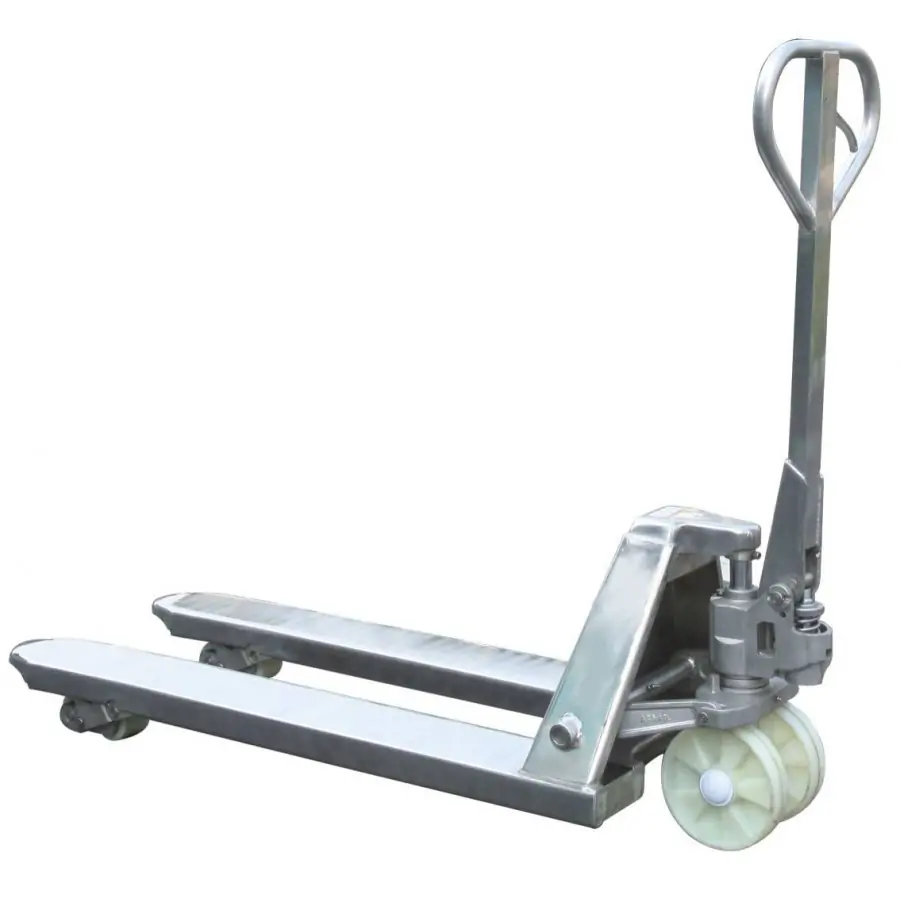 | Pallet Trucks A pallet truck (also known as a pump truck or pallet jack) is a wheeled trolley designed to lift and transport pallets. View product → |