
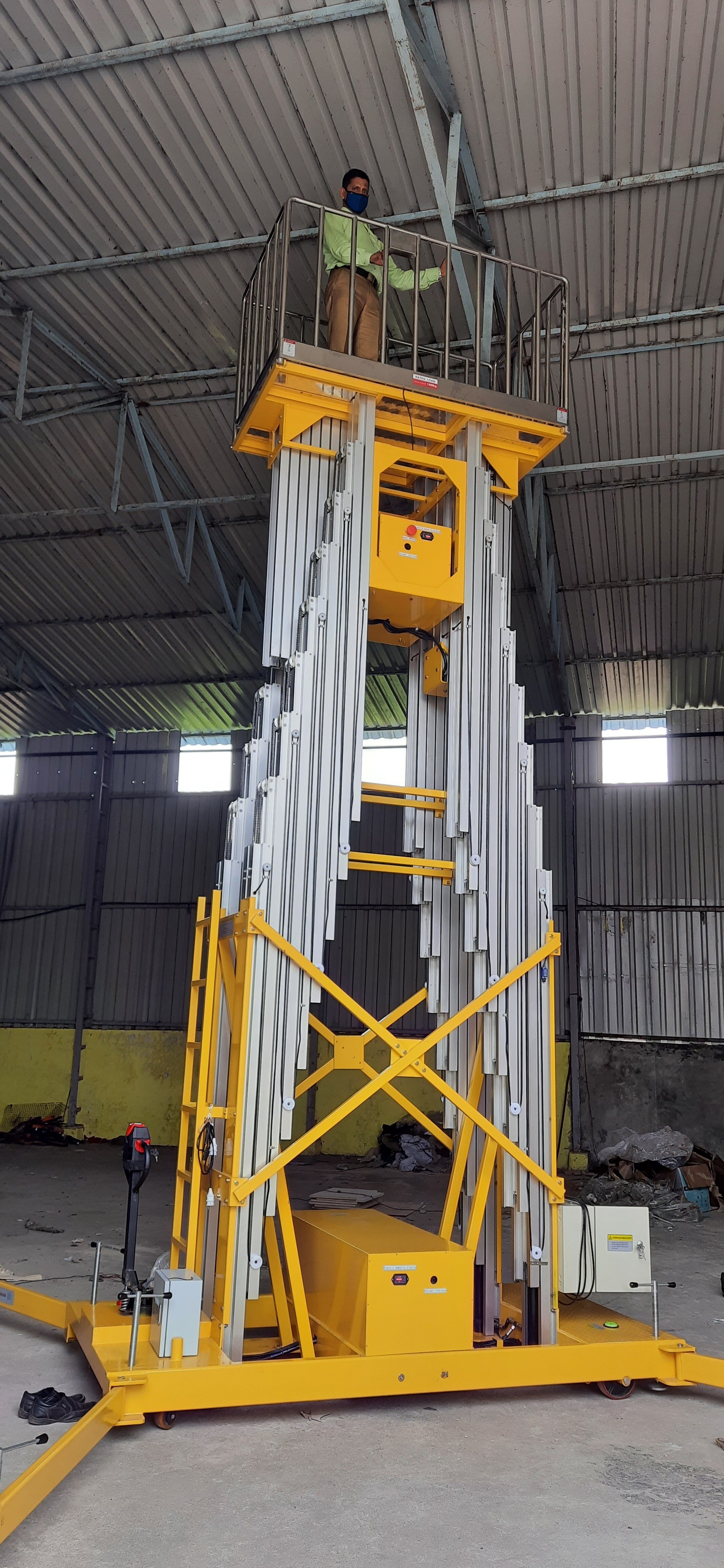
A single mast platform can give a technician access beside a press, but access height alone does not make it a die-changing machine. You will be able to distinguish personnel access from die transfer, define the measurements a safe purchase requires, and test whether the equipment matches your press and changeover method.
Key takeaways
- Use a worker-access platform for access, not die lifting, unless material handling is rated.
- Follow a staged sequence: isolate, support, transfer, align, secure, and test.
- Match platform capacity, height, reach, deck size, and controls to the press.
- Complete a documented inspection and supervised trial before production use.
Is a single mast platform suitable for die loading?
A single mast aerial work platform is suitable for worker access beside a press, not automatically for carrying or inserting a die. Treat a “single mast aerial work platform die loader” as two different machines unless the manufacturer explicitly rates it for material handling.
1. Identify what the machine carries. A personnel platform carries one operator, tools, clamps, and consumables to the die area. Its rated working load includes those items and is not automatically a die capacity.
2. Check the actual load, not only its mass. A die can fall within the stated limit yet create an unsafe eccentric or side load through overhang, a high centre of gravity, or concentrated contact points. Obtain the load chart, permitted load-centre distance, point-load limits, platform height limits, and any side-loading prohibition.
3. Confirm the required motion. Elevation does not insert a die into a press. An aerial work platform for die loading provides worker access, while a true die loader needs a rigid load bed and controlled horizontal transfer through rollers, a chain, a push-pull mechanism, or hydraulics.
Use the single mast platform when the die is handled separately and the operator must inspect clamps, connect sensors, or reach an elevated point beside the press.
Carry or transfer the die on that platform only when its structure, attachment, load chart, and written transfer procedure specifically cover the die’s dimensions, centre of gravity, contact points, and horizontal forces.
What does a controlled die-loading sequence look like?
A controlled sequence separates worker access from die movement. A die loader aerial work platform carries a person only unless its manufacturer rates it for die handling; an aerial work platform for die loading does not insert a die by raising its deck.
1. Stop the press and apply the site’s lockout/tagout procedure. Isolate electrical, pneumatic, hydraulic, mechanical, and stored-gravity energy, then verify zero hazardous motion at the point of operation.
2. Remove the existing die with the approved die cart, bolster transfer system, crane, forklift attachment, or machine-specific transfer bed. Keep personnel clear of the die path.
3. Move the replacement die to the press with the die restrained during travel. Do not rely on the access platform’s guardrails or deck to retain a shifting die.
4. Set the transfer equipment to the actual bolster, die-rail, or cart height. Maximum lift height is not the controlling measurement; an incorrect transfer height creates a step, gap, or binding point.
5. Check die orientation, guide alignment, centreline, and insertion direction before applying force. Use the push-pull or roller system to insert the die while keeping hands and personnel outside its path.
6. Confirm that the die is fully seated, supported, clamped, and secured under the press and die manufacturer’s procedure.
7. Use the platform for clamp inspection, sensor connection, or elevated access only after press energy is isolated. Its emergency stop does not replace isolation, and it must not bypass interlocked guards, light curtains, presence-sensing devices, or two-hand controls.
Which specifications prove the platform fits the press?
A general capacity claim does not prove press compatibility. Require a signed specification sheet for the actual load centre, overhang, height, and approach direction.
- For the single mast aerial platform, record rated working load; maximum permitted load-centre distance; die overhang; point-load limits; platform dimensions and usable deck area; maximum platform height; minimum or stowed height; outreach; mast deflection; and any prohibition on side loading. State whether the rating includes the operator, tools, consumables, clamps, fixture, and die-handling attachment. Add allowable floor slope, wheel or outrigger reactions, floor point loading, turning radius, aisle width, and travel condition.
- For a die loader aerial work platform or transfer machine, add die mass, dimensions, centre of gravity, usable bed dimensions, minimum and maximum transfer height, surface flatness, transition gap, allowable height mismatch, and the restraint method during travel.
| Access platform | Transfer machine | Evidence required |
|---|---|---|
| Operator and tools only | Die, fixture, or attachment | Load chart identifies the permitted duty |
| Worker reaches the press | Die moves onto rails or bolster | Transfer height matches the press interface |
| No horizontal die force | Controlled rollers, chain, push-pull, or hydraulics | Side-load and horizontal-force limits are stated |
Measure the route from storage to press, including doorways, columns, rack ends, joints, drains, ramps, and turning areas. Check interference with the frame, guarding, light curtains, cabinets, overhead services, operators, crane hooks, forklifts, die carts, and fixed fixtures.
Use a scaled drawing or a witnessed approach test with the actual machine and load, not a universal clearance figure.
Which machine matches your die-change problem?
Match the machine to the motion, not the search term. Record die weight and dimensions, centre of gravity, bolster height, insertion direction, aisle width, floor condition, travel distance, positioning accuracy, and changeover frequency before choosing.
| Option | Best match | Check before selection |
|---|---|---|
| Vertical mast lift | Compact, precise technician access while the die is handled separately | Deck clearance and operator position outside the die path |
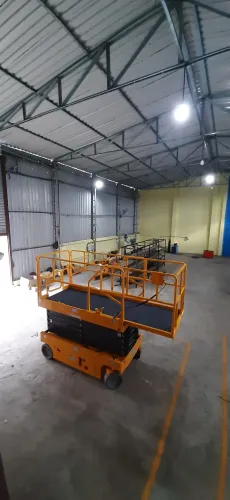
| Scissor lift | Larger work deck for elevated work | Footprint, route width, floor capacity, and turning space |
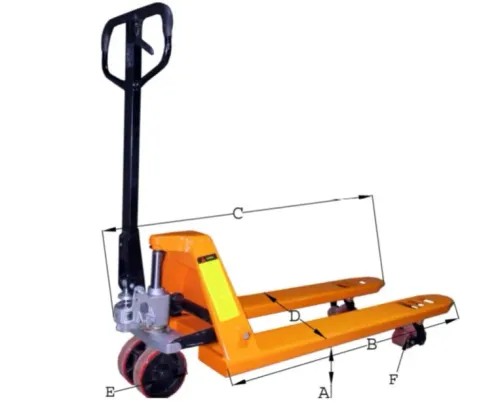
| Die cart or lift-table die cart | Moving and raising the die at floor level | Lift height, load centre, rollers, and floor transitions |
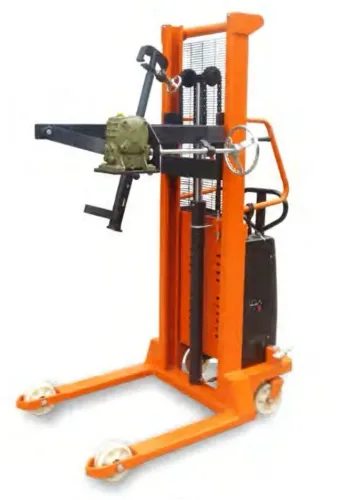
| Bolster transfer system | Repeated horizontal die insertion and extraction | Transfer height, alignment, restraint, and press interface |
| Forklift with die attachment | Transporting dies across a controlled route | Attachment approval, load centre, visibility, aisle control, and floor capacity |
A combined personnel-and-die machine needs an engineered interface. Pushing from an elevated deck creates horizontal forces that a vertical load rating does not cover. Treat “single mast aerial work platform die loader” as two different machines unless the manufacturer’s load chart and procedure explicitly cover die handling.
When comparing die loader equipment in Pune, send suppliers the complete application data rather than the search phrase alone. Aguatech Engineers Pvt.ltd. belongs in that comparison when its team assesses the press interface, handling route, and whether you need access, transfer, or both.
Related product
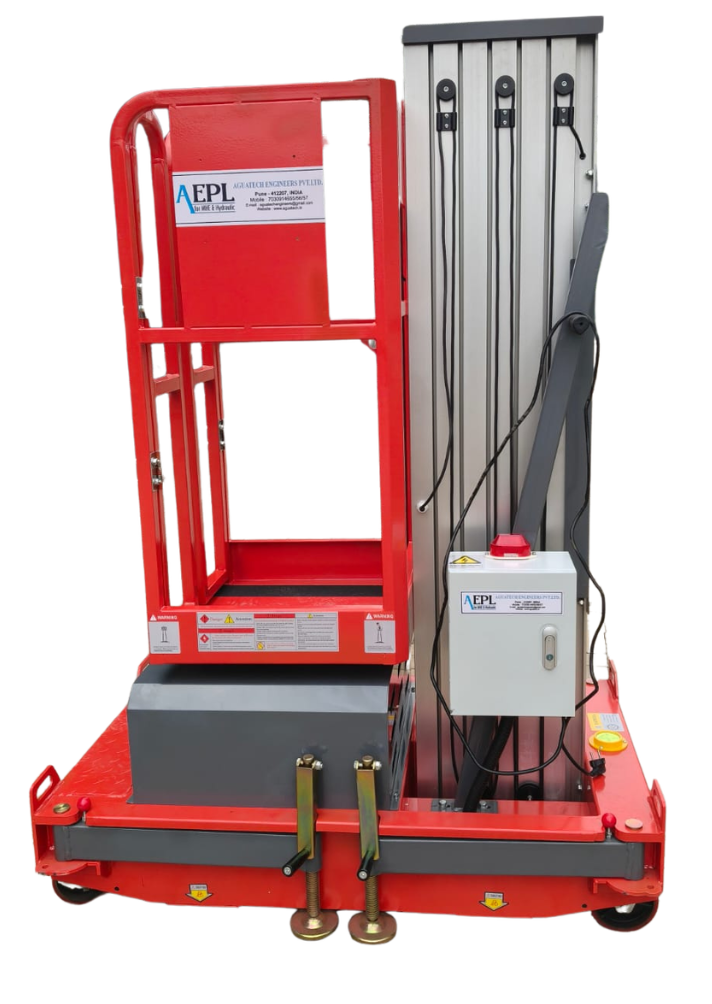 | Aerial Work Platform – Single Mast Aerial Work Platform – Single Mast A Single Mast Aerial Work Platform (AWP) is a compact, vertical-lifting device designed for safe, single-person access to high places. View product → |
How should you verify safety before production use?
An unloaded demonstration proves almost nothing about production safety. Acceptance testing must reproduce the duty of the die loader aerial work platform, including the rated load at the stated load centre, permitted eccentricity, and every attachment.
1. Record rated-load results with the platform level and measure mast deflection. Check travel and parking brakes, wheel or outrigger reactions, upper and lower limits, guardrails, toe-boards, the self-closing access gate, gate interlocks, emergency stop, and independent emergency lowering.
2. Simulate battery and hydraulic faults, then verify a controlled safe response. Confirm that inspectors can reach structural, electrical, hydraulic, and attachment components without dismantling essential guards.
3. If the machine transfers dies, perform controlled insertion and extraction with a representative die or approved test load. The test load must reproduce the die’s centre of gravity, contact points, overhang, and horizontal resistance. Approach the press and confirm clearance from guards, light curtains, cabinets, overhead services, and adjacent workers.
Document the site’s lockout/tagout sequence and press-safeguarding checks separately from single mast aerial platform controls. Before release, train operators on the machine-specific load chart, load-centre limits, pre-use inspection, floor and overhead hazards, charging or hydraulic hazards, emergency lowering, and die-loading procedure.
General forklift or work-at-height training does not qualify anyone to operate a combined die-handling and elevated-access machine.
Frequently asked questions
Is a single mast platform suitable for die loading?
It is suitable for worker access beside a press. Use it to carry or insert a die only when the manufacturer explicitly rates the machine for material handling and the load fits its capacity and geometry.
What does a controlled die-loading sequence look like?
Isolate the press, verify die support, position the equipment, transfer the die without exceeding capacity, align it with the bolsters, secure it, and perform a supervised functional check before production.
Which specifications prove the platform fits the press?
Check rated load, platform height, horizontal reach, deck dimensions, entry clearance, lowered height, approach space, controls, and the die's weight, dimensions, centre of gravity, and required insertion path.
Which machine matches your die-change problem?
Choose a worker-access platform for elevated operator access, a dedicated die loader for die transfer, or a combined machine only when its documentation covers both tasks and the actual press layout.
How should you verify safety before production use?
Review the operating manual and load chart, inspect guards and controls, confirm floor and press clearances, isolate energy sources, train operators, record the inspection, and run a supervised trial.