The choice is not settled by the words goods lift or freight elevator. You need to match the equipment to the load case, travel pattern, landing layout, personnel rules, hydraulic conditions and Maharashtra approval process. By the end, you can turn those factors into a specification and compare quotations without accepting an unsuitable platform, shaft or duty cycle.
Key takeaways
- Specify the lift from your heaviest load, largest dimensions and loading method.
- Restrict people access unless the equipment is designed and approved for passengers.
- Choose electro-hydraulic lifting when the duty cycle and building layout suit it.
- Demand drawings, safety documents, approvals and a detailed service plan in the quotation.
Goods lift versus freight elevator: what difference matters?
Specify a goods lift or freight elevator according to the load, people-access policy and duty cycle—not the label used by a supplier. “Goods lift” is a broad commercial term; “freight elevator” usually signals an enclosed, heavy-duty lift built for repeated material transport. The distinction is not automatically determined by speed or capacity.
| Option | What it means | When it fits |
|---|---|---|
| Goods lift | Material-only lift with controlled access and a platform or enclosed car | Low-rise factories moving pallets, stillages or trolleys between selected floors |
| Freight elevator | Enclosed, rugged lift designed for heavier loads, larger cars and sustained service | Frequent loading, high traffic, large pallets or intensive multi-shift operation |
| Goods-passenger lift | Lift specifically designed and approved for people travelling with materials | Operators must routinely accompany loads |
A useful goods lift comparison includes the combined load: product, pallet, trolley, forklift wheel loads and uneven point loads. A nominal 2,000 kg rating fails the decision if the platform, door opening or concentrated wheel-load rating is too small.
For a goods lift or freight elevator for factory in Pune, require:
- Landing-door and car-gate interlocks, overload protection, alarm, emergency stop and controlled access.
- Safe maintenance access, manual recovery or emergency lowering, and a documented rescue procedure.
- Pump, valve, seal, rope, door and controller spares with stated lead times and a maximum service-response time.
Confirm Maharashtra lift-authority approval, inspection and operating permission before purchase. A supplier’s factory test does not authorise operation at your Pune site.
Build the factory specification from the worst load case
Start with the heaviest complete movement, not the average pallet. A goods lift for factory operations must carry the product, pallet or stillage, trolley and any handling equipment entering the car. A nominal 2,000 kg rating is unsuitable if the platform cannot withstand concentrated forklift wheel loads or an uneven load.
Record these inputs before requesting drawings:
- Maximum gross load and its load-centre distance
- Pallet, stillage or trolley length, width and height
- Forklift or pallet-truck wheel loads and turning clearance
- Required platform size, door clear opening and landing approach
- Number of landings, vertical travel and available pit, headroom and shaft space
- Starts per hour, cycles per shift and shifts per day
| Load case | What to include | Why it matters |
|---|---|---|
| Palletised goods | Product, pallet and wrapping | Sets the real gross load |
| Stillage or trolley | Container weight plus contents | Often exceeds a pallet load |
| Forklift entry | Wheel load, axle spacing and turning path | Checks point loading and door clearance |
| Uneven placement | Heaviest item at the platform edge | Tests tipping, floor strength and guide loads |
Select speed from the required pallets per hour. Door opening, loading, unloading and interlocked waiting often consume more time than travel, so a faster lift may add cost without improving output.
State the operating rule explicitly: a materials-only lift needs controlled access and a no-passenger instruction. If operators routinely travel with loads, specify a goods-passenger lift instead. Include landing-door and car-gate interlocks, overload protection, emergency stop, alarm and a documented rescue or lowering procedure.
When electro-hydraulic lifting suits the building and duty cycle
An electro-hydraulic goods lift raises its platform when a motor-driven pump sends oil through a valve block into a cylinder. The cylinder pushes the platform along guide rails; opening the valve lets oil return to the reservoir for a controlled descent. Landing doors, interlocks and cage controls prevent movement with an open access point.
During a power failure, a manual or battery-backed emergency-lowering valve brings the platform to a landing; specify this recovery method rather than assuming the lift will remain usable.
| Option | Operating fit | Main trade-off |
|---|---|---|
| Electro-hydraulic | Low-rise travel, heavy loads and intermittent cycles | Compact hoist arrangement, but oil, seals, hoses, pipework and pump need inspection |
| Traction | Higher travel, frequent starts, higher speed and intensive multi-shift use | Better suited to sustained duty, but requires traction machinery, ropes or belts and counterweight space |
Make the electro hydraulic goods lift choice from actual starts per hour, loaded direction, travel distance and standby time. Hydraulic equipment draws substantial motor power during upward travel and can lose energy as standby heat; compare that with a traction system’s counterweight, variable-frequency drive and possible regeneration.
Do not buy speed that the workflow cannot use. On a short-travel lift, door opening, pallet loading, unloading and interlocked waiting often dominate the cycle. In a goods lift comparison, include oil temperature, contamination, leakage protection, pump and valve availability, seal lead times, manual recovery and local service response.
A dusty or environmentally sensitive area can make hydraulic containment and maintenance outweigh a simpler initial installation.
Fit the lift into the factory workflow and compare alternatives
A goods lift for factory workflow is fastest when pallets or stillages must move between fixed levels, the route is vertical, and loading occurs in batches.
It beats carrying loads around a building when the lift is beside production and dispatch, doors open directly onto each floor, and the cycle matches starts per hour rather than advertised speed.
| Option | Fastest practical use | Choose another option when |
|---|---|---|
| Goods lift | Pallets moving between two or more levels | Loads move continuously on one level, or waiting for a lift disrupts production |
| Forklift | Short, flexible transfers across one floor or yard | Travel involves stairs, several floors, pedestrian congestion or long queues |
| Conveyor | Repetitive, predictable movement between fixed points | Loads vary in size, destination or timing |
| Ramp | Low-volume movement between adjacent levels | The ramp consumes valuable floor space or travel distance is excessive |
| Dock lift | Bridging a height difference between vehicle and dock | You need regular movement through multiple factory floors |
Use a forklift instead of a goods lift when it can complete the route without entering a congested aisle or sharing pedestrian space. Use a conveyor when the same cartons repeat all shift; use a ramp when gradients, space and manual or vehicle traffic remain safe.
Check the whole cycle: loading, door interlocks, travel, unloading and return. A faster lift does little if loading takes longer than travel. For a low-rise, intermittent duty, electro-hydraulic equipment often fits; frequent starts, high travel or multi-shift service favour traction equipment.
At a dock, verify sill tolerance, dock-leveller alignment, gap protection, drainage and door sequencing. A forklift entering the car must stay within the manufacturer’s wheel-load, axle-load and load-centre limits. That is the useful goods lift comparison—not rated capacity alone.
What to demand in a Pune quotation, approval file and service plan
A safe, maintainable and legally ready installation is one whose quotation, approval file and service contract let you verify protection, responsibility and recovery before purchase. For an industrial goods lift in Pune, reject a basic lifting platform with a gate if your process requires an enclosed, interlocked lift.
- Demand landing-door interlocks, car-gate or car-door interlocks, overload protection, emergency stop, alarm provisions and controlled access.
- Record platform dimensions, door clear opening, number of landings, travel height, starts per hour, pallet dimensions, forklift wheel loads and load-centre distance. A 2,000 kg rating is inadequate if concentrated wheel loads exceed the platform design.
- Require drawings showing pit drainage, sump access, high-level water detection, corrosion protection and protection of hydraulic and electrical equipment. “Industrial” or “weatherproof” alone proves nothing about monsoon flooding.
- Put safe maintenance access, isolation points, manual recovery or emergency lowering, and a written rescue procedure in the scope.
- Require the supplier to identify who prepares drawings, submits them to the Maharashtra lift or electrical authority, attends inspection, completes commissioning tests and obtains operating permission. A factory test certificate is not site approval.
- Attach a service schedule stating preventive-maintenance intervals, spare-parts lead times for pumps, valves, seals, ropes, door parts and controller boards, plus a maximum breakdown response time.
- Compare duty cycle and downtime cost, not just price. Ask Aguatech Engineers Pvt.ltd. or another bidder to state the proposed lift’s starts-per-hour limit and recovery arrangement.
For a goods lift or freight elevator for factory in Pune, make every promise measurable in the purchase order, inspection file and service-level agreement.
Related products
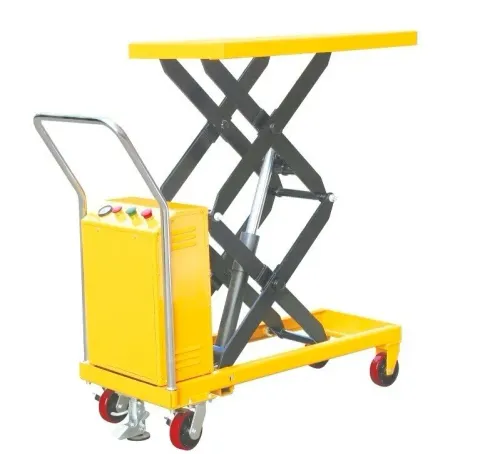
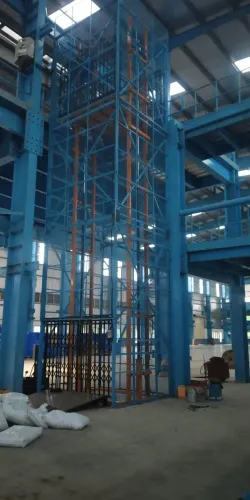
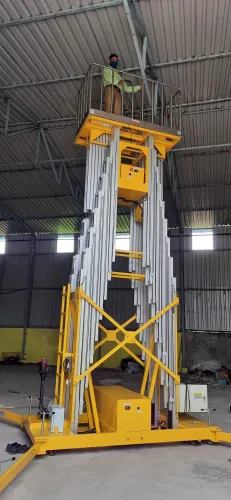
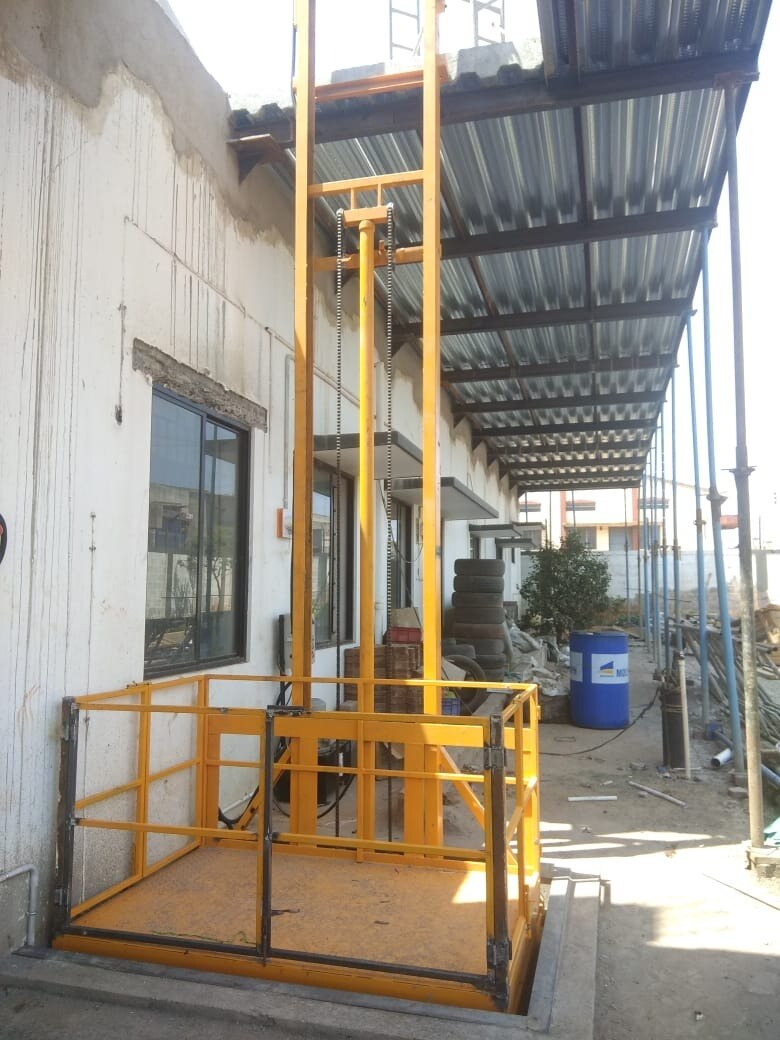
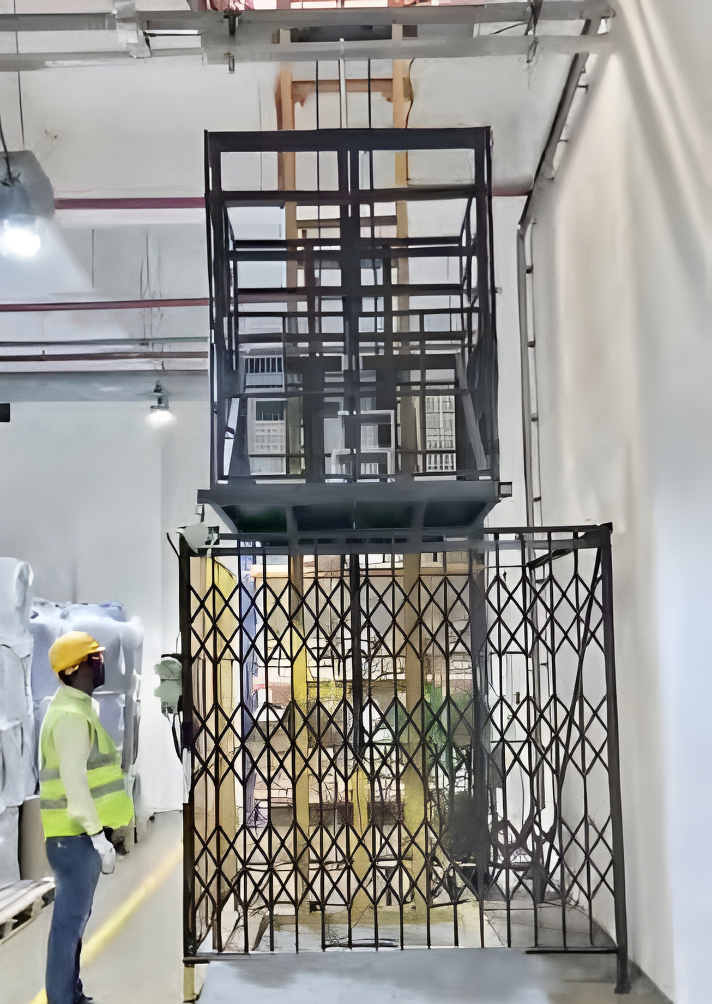 | GOODS LIFTS Goods or Cargo or Luggage lifts are basically used in industry shop floors for safe, secure, convenient and fast methods to transport loads from... View product → |
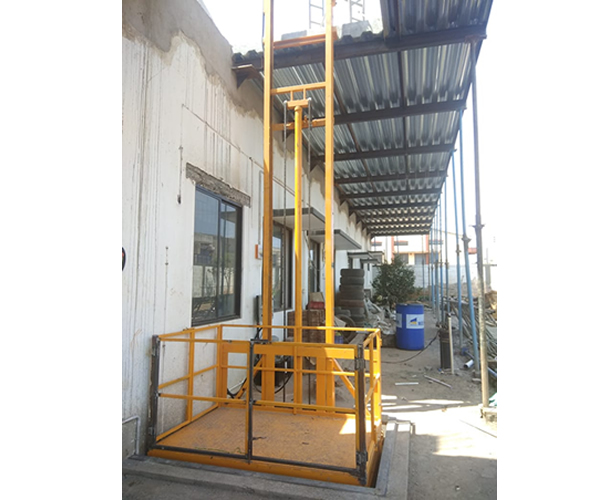 | GOODS LIFTS Goods or Cargo or Luggage lifts are basically used in industry shop floors for safe, secure, convenient and fast methods to transport loads from... View product → |
Frequently asked questions
What difference matters between a goods lift and a freight elevator?
Compare enclosure, rated load, platform dimensions, loading method, people-access policy, travel speed and duty cycle rather than relying on the name.
How should a factory specify its goods lift capacity?
Base the specification on the worst load case, including maximum weight, pallet or trolley dimensions, centre of gravity, loading impact and available headroom.
When does an electro-hydraulic goods lift suit a factory?
It suits a building and duty cycle when the required travel, lifting frequency, pit and overhead conditions, floor layout and maintenance access support hydraulic equipment.
What should a Pune factory request in a lift quotation?
Request the general-arrangement drawing, load and speed data, safety features, electrical requirements, approval documents, installation scope, warranty terms and service response plan.