Heavy use demands more than a visual pre-use check: wear, contamination, loose hardware and control faults can develop inside the mast system while the platform still appears operational. By following a defined isolation, inspection, cleaning, testing and recovery process, you can identify stop-use defects and return the AWP to service only when its condition matches the manufacturer’s limits.
Key takeaways
- Lower the platform, remove the key and isolate charging power before inspection.
- Clean both mast channels and inspect rollers, chains, fasteners and guards for damage.
- Check hydraulic leaks, battery condition, emergency stops and limit switches before testing.
- Tag out failed equipment and arrange qualified AWP breakdown recovery; never improvise a lift.
How do you isolate and inspect the AWP immediately after heavy use?
Place the AWP on firm, level ground with the platform fully lowered, remove the key and disconnect charging power. This isolation is the starting point for double mast AWP maintenance after heavy use.
1. Apply the battery isolator, secure moving parts and attach a tag or lockout device to prevent unauthorised operation. If you must work beneath a raised platform, install the maintenance props or blocking specified in the manual; never trust hydraulic pressure alone.
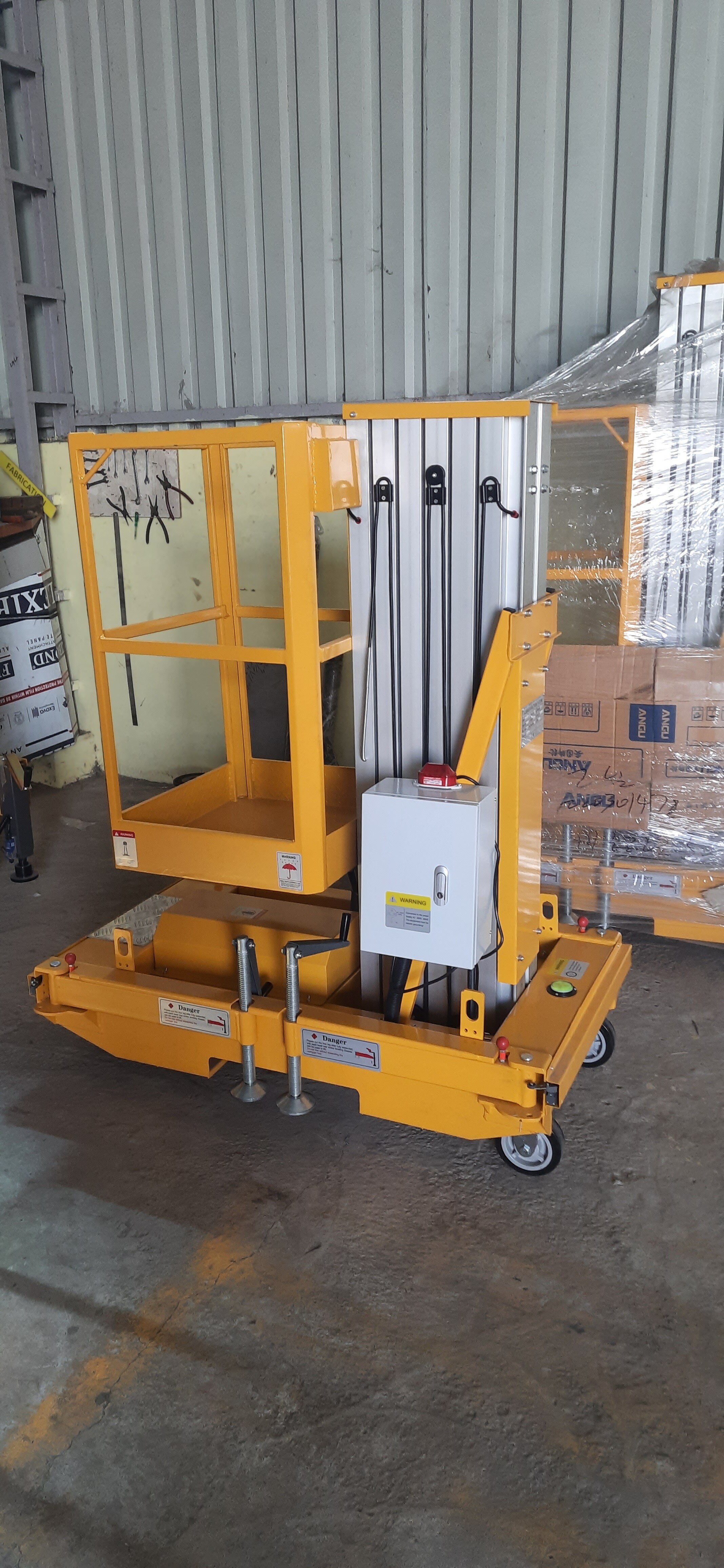
2. Follow one inspection route: platform deck, platform attachment, guardrails, entry gate and gate interlock; both mast sections, welds, fasteners, rollers or wear pads; chains or cables, anchorages and sheaves; then outriggers, wheels, brakes and chassis.
3. Stop use for a bent mast, cracked weld, damaged guardrail, missing or loose fastener, hydraulic or electrical leak, abnormal noise, uneven lifting, damaged tyre or wheel, failed gate latch or intermittent control. Record operating hours, defect location and photographs before dismantling anything.
4. Treat this daily heavy-use check as separate from planned servicing. Remove the AWP from service when a defect affects safe operation, and return it only after a qualified person repairs the fault and verifies the machine.
How should you clean, lubricate and inspect the two mast lifting systems?
Use the approved maintenance-manual method for each mast channel; do not treat double mast AWP servicing as a pressure-washing job.
1. Remove loose dust with a brush or controlled low-pressure air. Keep grit away from rollers, bearings, chains, limit switches, connectors and control boxes. Never pressure-wash the mast head, electrical components or battery compartment. Dry drain paths and check for trapped water before operating the lift.
2. With the platform isolated, lubricate only the points named in the manual. Apply the specified chain oil, grease or dry lubricant as a thin film. Keep lubricant off brake surfaces, traction wheels, sensors, limit switches, dry-running guide surfaces and electrical contacts.
3. Inspect chains or wire ropes for corrosion, broken strands, elongation, damaged anchor points, slack and unequal tension. Check sheaves for grooves, cracks and rough rotation. Examine rollers and wear pads for flat spots, cracks, missing shims, excessive clearance and metal-to-metal contact.
4. Raise and lower the platform at low speed during the approved functional check. Shut down for unequal mast extension, jerky travel, chain noise or platform skew. Do not adjust chain tension, roller clearance or mast synchronisation by guesswork; use the model-specific dimensions and sequence in the service manual.
What hydraulic, battery and electrical checks follow heavy operation?
Dark or milky oil, foam, visible particles, a rising filter differential-pressure indicator, sluggish lifting or a noisy pump are fault clues—not reasons to top up and continue.
1. On hydraulic models, inspect the pump, cylinder rod and seals, hoses, fittings, reservoir, lowering valve and hose-burst protection. Never find a leak with your hand; pressurised fluid can penetrate skin.
2. Before hose, cylinder or valve work, lower the platform, isolate the battery or other power source, relieve pressure as the manual directs and mechanically support the structure with the specified props or blocking. Use the specified oil grade, cleanliness requirement, sampling method and filter interval.
3. Treat fluid symptoms as evidence of contamination, water ingress, aeration or suction restriction. Do not approve double mast aerial work platform repair from a visual check alone.
4. On electric models, check battery state, terminals, connector housings, cable routing, charger operation and the battery compartment. Repeated deep discharge, heat, undercharging and storage at low charge shorten battery life. Check flooded-battery electrolyte only under the manufacturer’s procedure; never open a sealed battery.
5. Vent charging areas and control ignition sources because batteries can produce hydrogen. Test emergency stops, pendant controls, alarms, upper and lower limit switches, interlocks and insulation or ground-fault protection where fitted.
6. Do not invent electrical test values. Use the manual’s limits, and remove the AWP from service when any safety circuit operates intermittently.
Which tests and service intervals decide whether the lift returns to work?
Return to work only after the manufacturer’s functional test passes; double mast AWP maintenance after heavy use is not complete because the platform moves.
After repairs, test without improvising an overload. Verify:
- Smooth, even raising and lowering
- Controlled stopping, brakes and emergency lowering
- Emergency-stop operation, alarms and platform-gate interlocks
- Level or tilt protection, upper and lower limits, where fitted
Use a proof or load test only when the manufacturer specifies the method and rated load. An improvised overload can damage the mast or lifting circuit.
| Inspection | Maximum interval or trigger | Purpose |
|---|---|---|
| Daily or pre-shift | At least daily, before each shift, and after an occurrence affecting safe operation | Remove defective equipment from service |
| Frequent inspection | Three months or 150 operating hours, whichever comes first | Formal inspection under common ANSI A92 practice |
| Annual inspection | Every 12 months | Separate comprehensive inspection |
For U.S. worksites, OSHA requires inspection, maintenance and repair by a qualified person, with defective equipment removed from service. Severe-duty use or the manufacturer can shorten these intervals; daily checks do not replace formal double mast AWP servicing or the annual inspection.
Compare findings with the manual’s limits for roller clearance, chain or cable condition, hydraulic pressure, battery performance and structural wear. The qualified person must sign the record, name replaced parts and document the return-to-service decision. Keep fault codes, operating hours, load, position at failure and recent maintenance with it.
What is the safe response when a heavily used AWP breaks down?
Make the area safe before attempting awp breakdown recovery: stop nearby traffic, isolate the controls and establish a rescue plan for anyone on the platform. Prevent both ground and platform operation until the fault is understood.
1. Use the approved emergency-lowering system only when it can be operated safely. Never improvise a bypass, climb the mast or release a brake outside the manual’s procedure.
2. Do not tow, push or winch the machine automatically. The recovery instructions may specify brake release, wheel chocks, steering configuration, maximum speed and whether the disabled AWP must remain where it stopped.
3. Record the fault code, operating hours, battery state, platform position, load, unusual sounds, leaks, recent charging or servicing and every part replaced. This evidence helps distinguish a charger or control fault from recurring mast synchronisation, hydraulic contamination, battery deterioration or overload damage.
4. Arrange model-specific double mast aerial work platform repair when the cause is unclear. Aguatech Engineers Pvt.ltd. can help match recovery planning and documented service inspection to the manufacturer’s manual instead of applying a generic adjustment.
5. Keep the AWP out of service until a qualified person completes the repair and verifies emergency lowering, smooth raising and lowering, stopping, brakes, emergency-stop circuits and platform interlocks. A proof or load test is not a cure for uncertainty; use one only at the manufacturer’s specified rated load and method.
Record the written return-to-service decision before anyone operates the machine again.
Related product
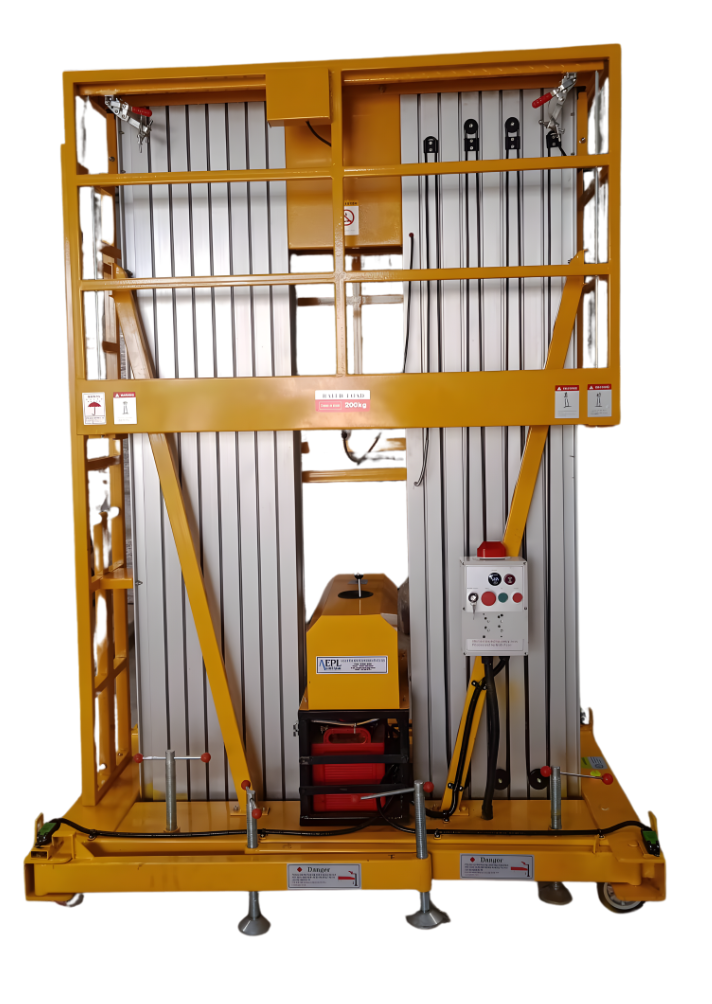 | Aerial Work Platform – Double Mast Aerial Work Platform – Double Mast A double mast aerial work platform is a high-stability, vertical lifting device utilizing two parallel aluminum or steel masts to elevate personnel... View product → |
Frequently asked questions
How do you isolate and inspect a double mast AWP after heavy use?
Park on firm, level ground, fully lower the platform, remove the key, disconnect charging power and apply site isolation procedures. Inspect the platform, guardrails, mast sections, base, wheels, fasteners and visible damage before cleaning or testing.
How should you service the two mast lifting systems?
Clean both mast channels and inspect each lifting system for debris, bent sections, worn rollers, loose fasteners, damaged chains or cables and uneven movement. Lubricate only the points and product specified by the manufacturer; keep braking and friction surfaces free of lubricant.
Which hydraulic, battery and electrical checks follow heavy operation?
Look for hydraulic oil leaks, damaged hoses, loose fittings and abnormal cylinder movement. Check battery charge, terminals, electrolyte only when the battery design requires it, charger connections, wiring, emergency-stop circuits, controls, alarms and limit switches.
What tests decide whether the AWP returns to work?
A qualified person should complete the manufacturer’s functional checks, including platform movement, emergency lowering, brakes, interlocks, alarms, overload protection and travel controls. Record defects and repairs, then return the machine to service only when every safety function passes.
What is the safe response when a heavily used AWP breaks down?
Stop movement, lower the platform through the normal emergency system when safe, isolate the machine and keep people clear. Tag it out, report the fault and use trained personnel for double mast aerial work platform repair or recovery; do not bypass interlocks or climb out at height.