
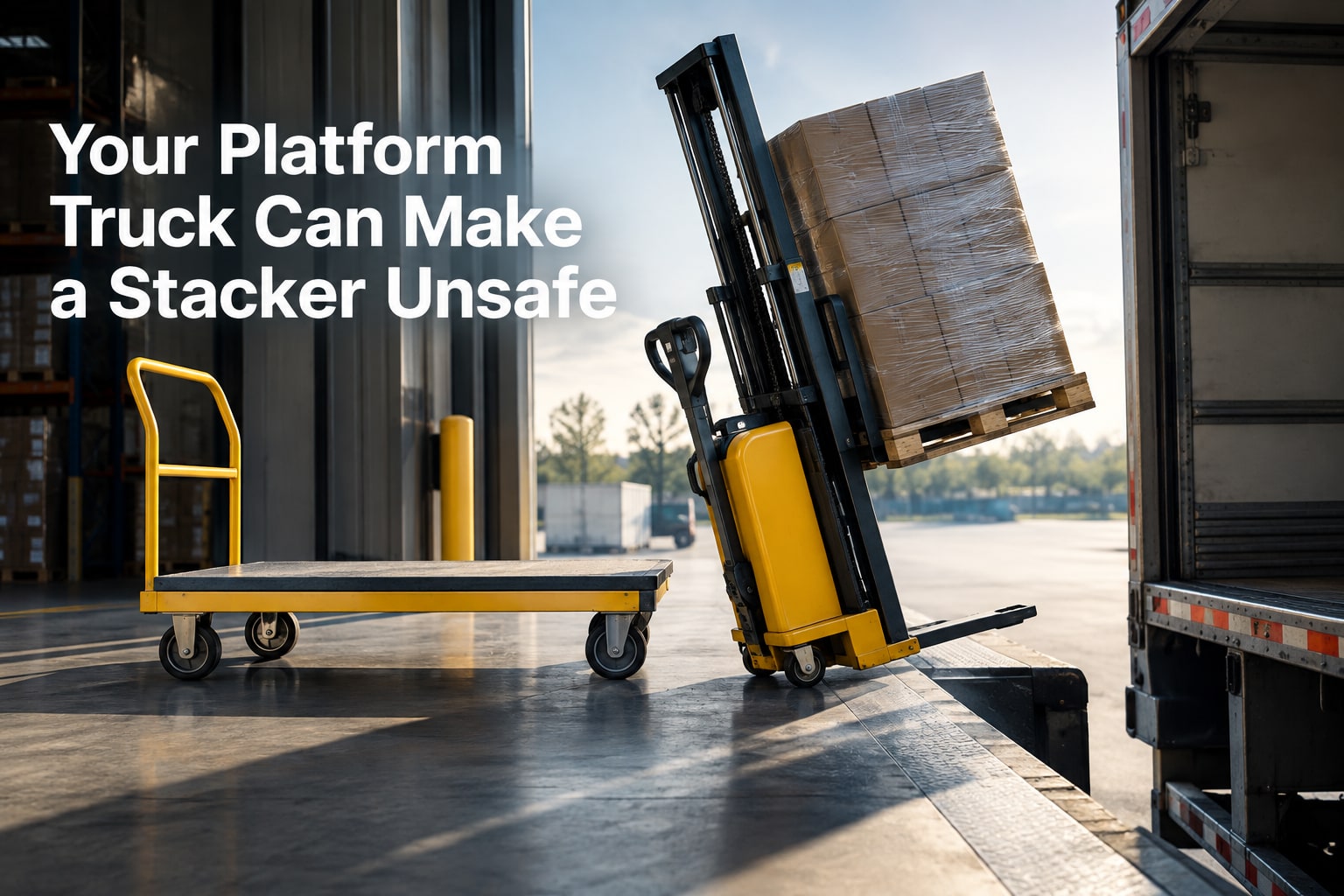
A manual stacker and a platform truck are often placed together at the same transfer point, but they control different risks: one lifts vertically and the other moves loads horizontally. By the end, you will know how to identify contact, rolling, stability and clearance failures, complete a controlled transfer, troubleshoot symptoms and specify compatible equipment.
Key takeaways
- Do not lift a pallet from a platform truck without verified fork entry and deck clearance.
- Measure deck height, fork length, load centre, aisle width, and rated capacity before pairing equipment.
- Lock casters, stabilise the truck, and keep people clear during every transfer.
- Choose a dock leveller, pallet truck, or powered stacker when transfer alignment fails.
Why a Platform Truck Creates Different Stacker Risks
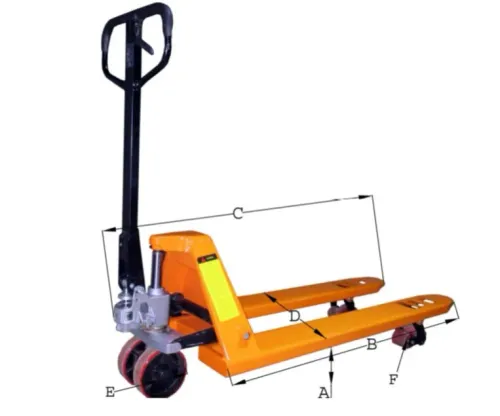
A flat-deck platform truck is for platform truck handling: horizontal movement on a fixed deck carried by swivel casters. It has no pallet-entry openings and no controlled vertical lift. A hand pallet truck uses forks and a hydraulic pump to raise a pallet slightly for travel.
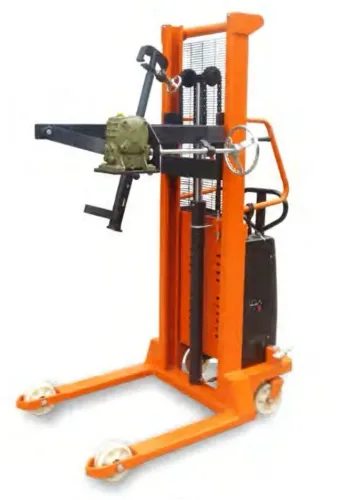
A manual stacker uses forks and a mast for controlled vertical lifting and short-distance positioning, not for towing, pushing or supporting another machine.
| Equipment | Primary function | Main limitation |
|---|---|---|
| Platform truck | Horizontal movement on a flat deck | No pallet entry or controlled lifting |
| Hand pallet truck | Short travel with a pallet slightly raised | Not designed for stacking |
| Manual stacker | Vertical lifting and short positioning | Not a towing, outrigger or work-platform device |
Working side by side creates failure points that do not exist during ordinary horizontal travel:
- Fork tips strike the platform-truck deck or frame when the approach is not square.
- Casters, wheels and handles interfere with the stacker wheels or forks.
- A pallet shifts during an unstable transfer because the deck moves or the forks engage only partly.
- A person’s foot becomes trapped between the two units.
- The stacker mast collides with the truck frame during turning or alignment.
Keep the platform truck immobilised before transfer. A raised load beside it remains exposed to a sideways impact from a handle, caster or shifting load; that side load can destabilise the mast, bend components or move the pallet off the forks.
Do not treat the truck as a temporary outrigger, counterweight or work platform, and do not tow it with the stacker. Do not mechanically couple the machines unless the manufacturer has designed and rated the connection. Horizontal truck handling and vertical lifting are separate operations.
The Safe Transfer Sequence From Truck to Stacker and Back
A safe transfer keeps the platform truck stationary, lifts only enough to clear its deck, and moves the load away before raising it.
1. Select a level, unobstructed surface. Mark the manual stacker operating zone and platform truck staging zone, leaving the stacker’s turning envelope and a clear aisle. Keep your feet outside the space between the two units.
2. Position the platform truck square to the stacker. Engage its brake where fitted. Add wheel chocks or a positive restraint when a caster could move because of a slope, threshold, lateral impact or brake limitations.
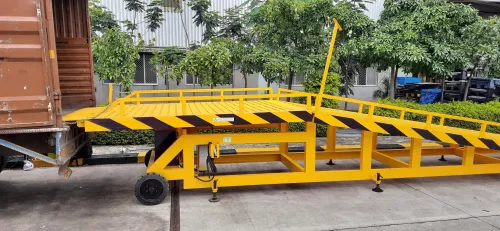
3. If the route crosses a dockboard, inspect the board for damage, secure it against movement, and verify its rated capacity, width and slope for the loaded equipment. Do not transfer across an unsecured or overloaded dockboard.
4. Inspect the pallet or skid, deckboards, wrap and load centre. Reject broken boards, loose wrap, overhanging cargo or a visibly offset load before blaming equipment for problems.
5. Approach squarely with forks low and correctly spaced. Confirm that both forks can enter fully without striking the truck deck or catching a deckboard. Centre the load over the forks.
6. Lift only enough to clear the truck deck, then move straight away. Keep the load low, maintain visibility or use a spotter, and never raise beside the truck.
7. For return transfer, approach squarely, align the load with the truck-deck centre, and lower until the deck supports the full load. Confirm the forks are clear before withdrawing.
8. Keep transfers off slopes. If unavoidable, follow the manufacturer’s gradient limit, control from the uphill side where specified, and never turn across a slope with a raised load. This sequence prevents manual stacker platform truck problems.
The Measurements That Decide Whether the Pair Is Compatible
Two rated capacities cannot be added: the platform truck supports the load only through its deck and casters, while the stacker supports it through forks, wheels and a mast. Compatibility depends on geometry, load position and floor conditions, not the sum of two nameplate figures.
1. Measure the platform truck: deck height, edge design, deck width, load dimensions, pallet or skid openings, and every wheel and caster location.
2. Measure the stacker: fork length, minimum fork-entry clearance, fork spacing, overall width, wheelbase, turning radius, mast height, collapsed height and available overhead clearance.
3. Read the capacity plate or load chart at the actual load-centre distance, lift height and attachment configuration. A quoted 1-ton or 1.5-ton rating is not a universal safe load.
An offset load, partial fork engagement or forward projection moves the centre of gravity away from the stacker. Raising the load increases instability further, so a load within the nominal rating can still tip or overload the mast.
Check floor flatness, load-bearing capacity, gradients, thresholds, potholes, drains and expansion joints. Verify the dock plate for concentrated stacker-wheel loads; a plate suitable for a hand trolley may fail under small load wheels.
A buyer specifying a manual stacker in Pune must state duty cycle, handling frequency, wheel material, brake requirements, aisle space, service response and spare-parts support—not capacity alone.
Manual Stacker Troubleshooting at the Transfer Point
Manual stacker troubleshooting starts at the transfer point, not at the hydraulic pump. Match each symptom to a physical cause before operating again.
1. If forks do not enter squarely, stop and check truck alignment, fork spacing, minimum entry clearance, broken deckboards, loose wrap and overhanging cargo.
2. If the platform truck rolls during pickup, inspect its brake, chocks, floor gradient, caster orientation and threshold. Do not rely on a parking brake alone.
3. If the load shifts during elevation, lower it immediately. Inspect pallet condition, load-centre placement, partial fork engagement and offset loading.
4. If the stacker shows hydraulic drift, uncontrolled lowering or leakage, isolate it for competent repair. Do not keep pumping, add oil without finding the leak or fit a stronger spring.
5. Uneven fork height indicates possible bent forks, carriage damage, unequal chain tension or hydraulic faults. Remove the machine from service until checked.
6. Hard steering requires inspection of wheels, bearings, floor resistance and overload. A threshold, pothole or uneven surface can stop load wheels abruptly.
7. If mast travel is blocked, remove the obstruction and inspect for bent components before retrying. Never force the mast through resistance.
8. If clearance beside the truck is insufficient, create physical segregation, provide a wider route or select different equipment.
Treat hydraulic leaks, defective brakes, damaged wheels, bent forks and loose fasteners as stop-use conditions. Record the fault and follow the manufacturer’s repair instructions before returning the stacker to work.
When to Choose Different Equipment for the Loading Point
Use the combined arrangement only for infrequent transfers on a level, clear floor, where the load can be centred and fully engaged and the lift and travel stay within the capacity chart and operating envelope.
Stop treating it as suitable when the platform truck is being used for repeated vertical lifts, high stacking, pallet storage or ramp work.
| Option | Best fit | Choose a different option when |
|---|---|---|
| Manual stacker beside platform truck | Occasional, short-distance transfer between a restrained truck and a low or moderate lift point | Travel is long, lifts are frequent, visibility is blocked, or the floor has gradients and obstacles |
| Powered stacker or pallet truck | Repeated handling, longer travel and higher daily duty cycles | The route lacks charging, maintenance support or adequate aisle clearance |
| Reach truck or other purpose-built machine | High rack positions and planned pallet storage | The load, aisle width, floor condition or capacity chart does not match the machine |
For warehouse handling equipment in Pune, compare lift frequency, travel distance, floor flatness, thresholds, gradients, wheel dimensions, aisle width and service response—not nominal capacity alone. A manual stacker becomes inefficient on long routes, steep gradients and high rack positions.
Keep the loading point physically segregated. Mark the stacker zone, platform-truck staging zone, clear aisle and turning envelope; do not rely on two operators to watch each other. On a slope, verify the manufacturer’s permitted gradient, control from the uphill side where specified and never turn with a raised load.
Aguatech Engineers Pvt.ltd. can be included in a comparison when its dimensions, capacity chart and service coverage are checked against the site specification.
Related product
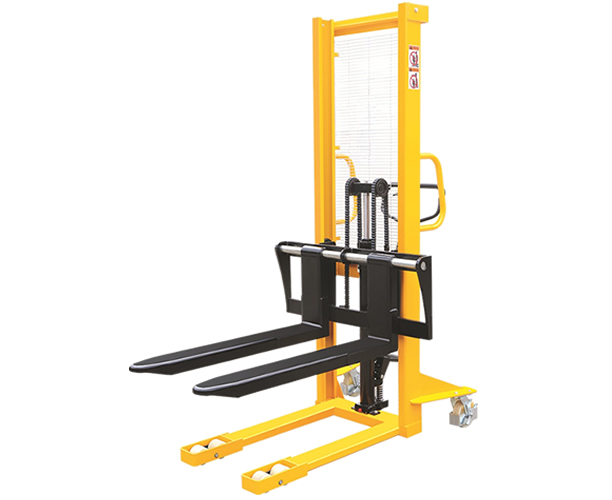 | STACKERS Manual Stackers are the most commonly used equipment in a workshop, warehouse or factory and most economical way of providing highest safety and most... View product → |
Frequently asked questions
Why does a platform truck create different manual stacker risks?
A platform truck has a flat deck, swivel casters, no pallet-entry openings, and no controlled vertical lift. The stacker must approach and align with the load without relying on pallet-truck fork entry.
What measurements decide whether a manual stacker and platform truck are compatible?
Check the truck deck height, pallet height, fork-entry clearance, fork length, load centre, maximum load, aisle width, and available turning space against the stacker specification.
What is the safe transfer sequence from a platform truck to a manual stacker?
Park on a level surface, apply caster brakes, align the stacker, verify fork clearance, keep people outside the transfer zone, lift only after the load is stable, and reverse slowly.
How do you troubleshoot a manual stacker at the transfer point?
Stop if the forks do not enter squarely, the deck rolls, the pallet binds, the load exceeds capacity, or the stacker loses stability. Recheck measurements and equipment condition before continuing.
When should you choose different equipment for the loading point?
Choose different equipment when the truck cannot be immobilised, the deck and forks cannot align, the load needs controlled height adjustment, or the transfer requires excessive pushing, pulling, or manual handling.