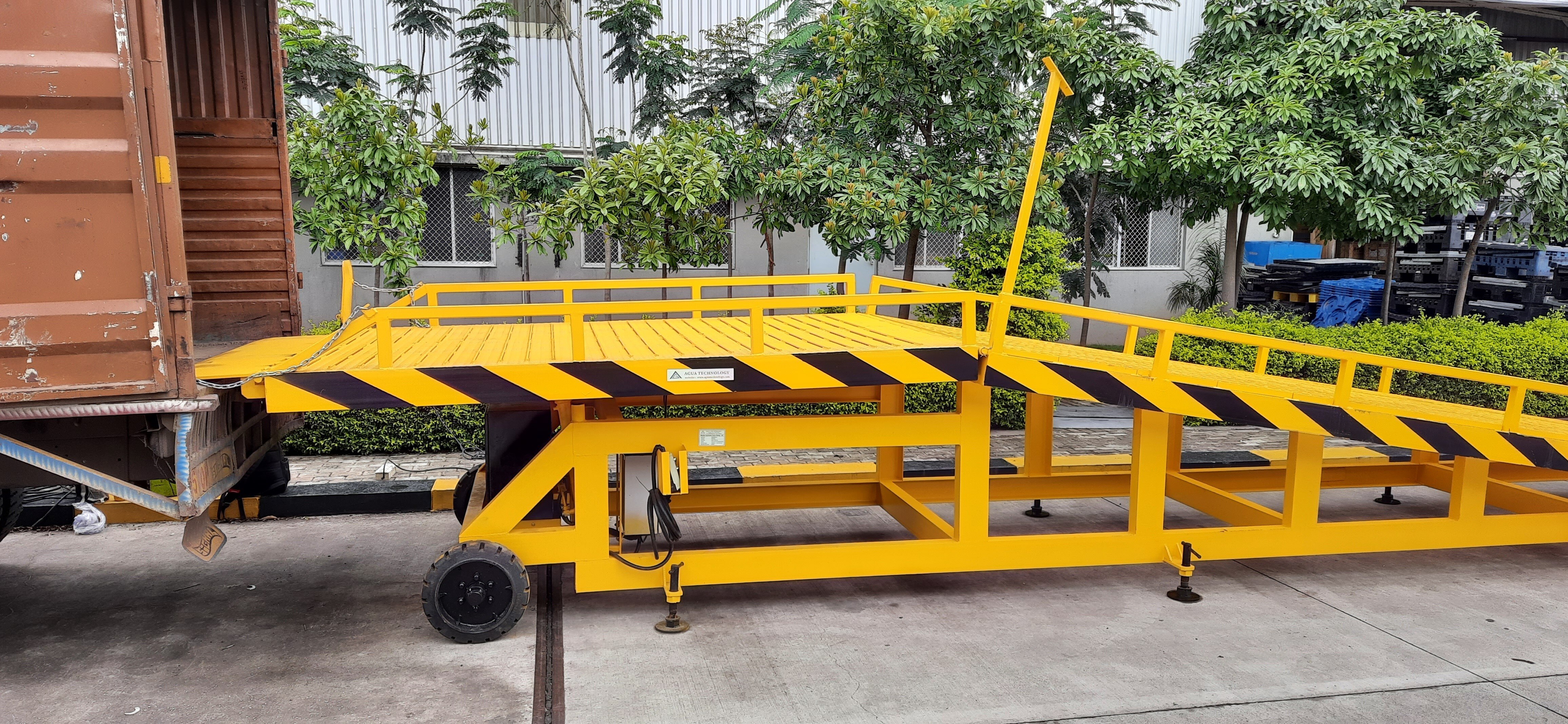
The right choice depends on your truck-bed heights, forklift load case, yard geometry, traffic frequency and ability to secure a movable structure—not simply on whether you need loading access. By the end, you can compare a mobile ramp with a permanent dock, dock leveller, fixed ramp or mobile lift and prepare the measurements and supplier documents needed for a safe decision.
Key takeaways
- Measure every truck bed height and the yard’s available ramp run.
- Specify wheel loads, not only total rated capacity.
- Document loading sequence, vehicle restraint and pedestrian controls.
- Compare Pune suppliers against a written acceptance checklist.
Start with the access problem, not the ramp catalogue
A factory needs a mobile hydraulic ramp when trucks must load at ground level, the vehicle mix changes, and building a permanent dock is too costly or slow. It suits sites with several loading points, rented premises, seasonal dispatch peaks, or container and trailer access in the yard.
| Option | Makes more sense when | Main limitation |
|---|---|---|
| Permanent dock | One loading face handles predictable daily traffic | Requires construction, space and fixed vehicle alignment |
| Dock leveller | A raised dock already exists and truck-bed heights vary | Does not solve ground-to-truck access |
| Fixed steel ramp | One route and one height will remain unchanged | Cannot move between doors or truck types |
| Forklift ramp | Light, occasional transfers use a suitable forklift | The ramp may not suit loaded forklift traffic or repeated cycles |
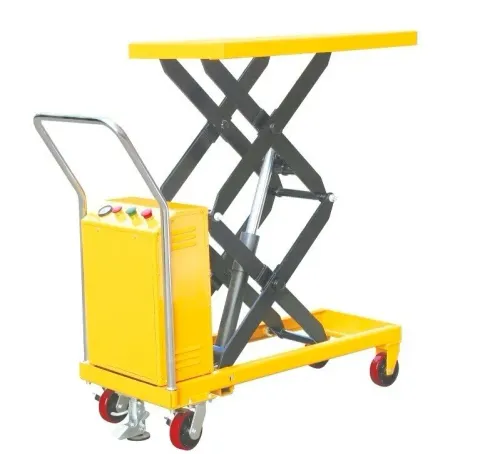
| Mobile scissor lift | You need a platform that raises loads vertically beside a vehicle | It does not provide a long drive-over transition |
| Mobile hydraulic ramp | Yard-level loading must serve multiple vehicles and locations | It needs towing space, parking supports and controlled positioning |
Choose a mobile hydraulic dock ramp for manufacturing factories in Pune when the apron can carry its wheel reactions and the ramp can move without blocking fire lanes, pedestrians or adjacent doors. Confirm the tow point, turning radius, transport weight and storage footprint before comparing prices.
For a mobile dock ramp for factories in Pune, reject the concept if trucks cannot align safely, the yard slope leaves insufficient running length, or operators need a fixed dock face for continuous high-volume flow. A site survey and written truck-height schedule will expose those failures before purchase.
Check truck heights, slope and yard geometry before asking for a quote
A single mobile loading ramp for factory trucks works only if its usable height range matches every vehicle that will cross it. Measure the yard-to-floor height at the rear loading point, not the nominal truck model height; suspension, tyre pressure and payload can change that dimension.
| Vehicle or feature | Record before quoting | Why it matters |
|---|---|---|
| Rigid truck | Empty and loaded bed height, tailboard dimensions | A low bed can create excessive slope, poor lip engagement or chassis contact |
| Trailer or container chassis | Coupling height, rear overhang and floor height | The ramp transition must clear the chassis and reach the container or trailer floor |
| Forklift traffic | Loaded weight, wheelbase, tyre type and manufacturer gradeability | These determine traction, clearance, braking and the actual climb requirement |
| Yard | Ramp length, width, turning radius, approach angle and available straight run | A ramp that fits the height can still block turning movements or leave unsafe side clearance |
Give the supplier a height schedule covering the highest and lowest truck, plus the height difference between pavement and vehicle floor. Include the maximum gross forklift weight, axle and individual wheel loads, tyre dimensions, mast height, load-centre distance and daily crossing frequency.
Do not select a length by applying 1:12 automatically; that ratio comes from accessible-route design, not a universal industrial rule. Check the forklift manufacturer’s gradeability with the intended load, then verify ramp slope, upper and lower transition geometry, usable deck length and ground clearance.
Reject one-ramp proposals that omit tow-truck clearance, rear-door or tailboard interference, or the turning space needed to align squarely. Ask for drawings showing the lowest and highest operating positions.
Define the operating sequence and the site controls
A mobile hydraulic dock ramp for factories in Pune should move only on a firm, level apron that carries its wheel reactions without sinking or cracking. Keep fire lanes, pedestrian routes and adjacent dock doors clear, and check the tow point, turning radius, parking supports and storage footprint before deployment.
1. Inspect the ramp, hydraulic hoses, tyres, handrails, edge protection and deck for damage. Confirm the truck bed height matches the ramp’s adjustment range.
2. Tow the ramp squarely to the vehicle, keeping people outside the travel path. Align its centreline with the cargo opening and leave enough clearance for the forklift’s turning movement.
3. Set the truck’s parking brake, stop the engine if the loading procedure requires it, and fit wheel chocks or engage a trailer restraint. Do not rely on the ramp’s hydraulic circuit to immobilise the vehicle.
4. Raise the ramp hydraulically until the lip or bridge plate lands fully on the truck bed. Insert the specified mechanical pins, chains or anti-slip devices; hydraulic lifting alone is not a positive connection.
5. Check that the deck is stable, the transition has no dangerous gap, and the forklift’s route is unobstructed. Drive slowly, with no pedestrians beneath or beside the ramp.
6. Remove the load, lower the ramp clear of the vehicle, release the mechanical connection, and tow it to its designated parking area.
Require the supplier to identify the applicable risk assessment, testing method and statutory requirements; EN 1398 is not automatic compliance for a mobile yard ramp.
Read capacity as a wheel-load and failure-case specification
An 8-ton rating is meaningless unless it states what reaches the deck. Count the forklift, operator, pallet and goods, then check the resulting gross vehicle weight against individual axle and wheel loads, not only the combined total.
Ask the supplier to document:
- Maximum gross vehicle weight and wheel load used for the rating
- Wheelbase, tyre type, track width and traffic frequency
- Maximum allowable deck and lip deflection
- Forklift impact or dynamic factor at the upper lip and lower transition
- Lip thickness, weld details and fatigue-design basis
- Ramp self-weight and wheel reactions imposed on the apron
- Cylinder force, stability and locking calculations throughout the full stroke
A stationary, evenly spread load does not represent a forklift entering the ramp. A concentrated wheel load at the lip can produce higher stress and deflection; excessive movement can damage welds, shift the truck interface or unsettle the operator.
Require a defined failure case: hydraulic hose or power failure must not cause uncontrolled descent, and the ramp must remain supported at its worst cylinder angle and maximum working height.
For outdoor Pune use, specify protected hose routing, drip-free fittings, corrosion protection, water-shedding electrical enclosures and drainage that prevents standing water under the deck. Confirm the apron can carry the ramp’s wheel reactions after rain, and inspect for soft asphalt or settlement before each deployment.
A hydraulic dock ramp for manufacturers is suitable only when these load cases, environmental conditions and limits appear in the acceptance documents.
Compare Pune buying options using a written acceptance checklist
A standard ramp is quickest to compare, but a custom unit earns its cost when truck-bed heights, wheel loads or turning space fall outside the catalogue range. Hire or lease a ramp for a shutdown, seasonal peak or trial; buying is usually easier to justify when the same loading points operate year-round.
| Option | Compare | Best fit |
|---|---|---|
| Standard | Fixed dimensions, delivery time and rated load | Repeated traffic within stated limits |
| Custom | Site survey, engineering and longer lead time | Nonstandard height, truck mix or yard geometry |
| Hired | Short commitment; inspect condition and maintenance records | Temporary capacity or emergency replacement |
| Leased | Scheduled payments and defined return terms | Extended use without immediate ownership |
For dock ramp buying options in Pune, make the supplier quote the whole operating cost: transport or towing, commissioning, training, hydraulic servicing, breakdown response, spares, insurance and end-of-term charges. A quotation from Aguatech Engineers Pvt.ltd. deserves the same written comparison as any other offer.
Before approval, attach this acceptance checklist to the purchase order:
- Document truck-height range, deck width and length, approach angle, gross forklift weight, axle and wheel loads, tyre type, wheelbase and traffic frequency.
- Confirm pavement wheel reactions, tow-point strength, turning radius, transport weight, parking supports, storage footprint and fire-route clearance.
- State delivery, positioning, immobilisation and commissioning tests, including trailer brakes, chocks or positive restraint.
- Require drawings, hydraulic-failure safeguards, deflection limits, test records, risk assessment and identified standards. EN 1398 is not automatic compliance for a mobile yard ramp.
- Record training, warranty exclusions, preventive-maintenance intervals and Pune spare-parts response time.
Related product
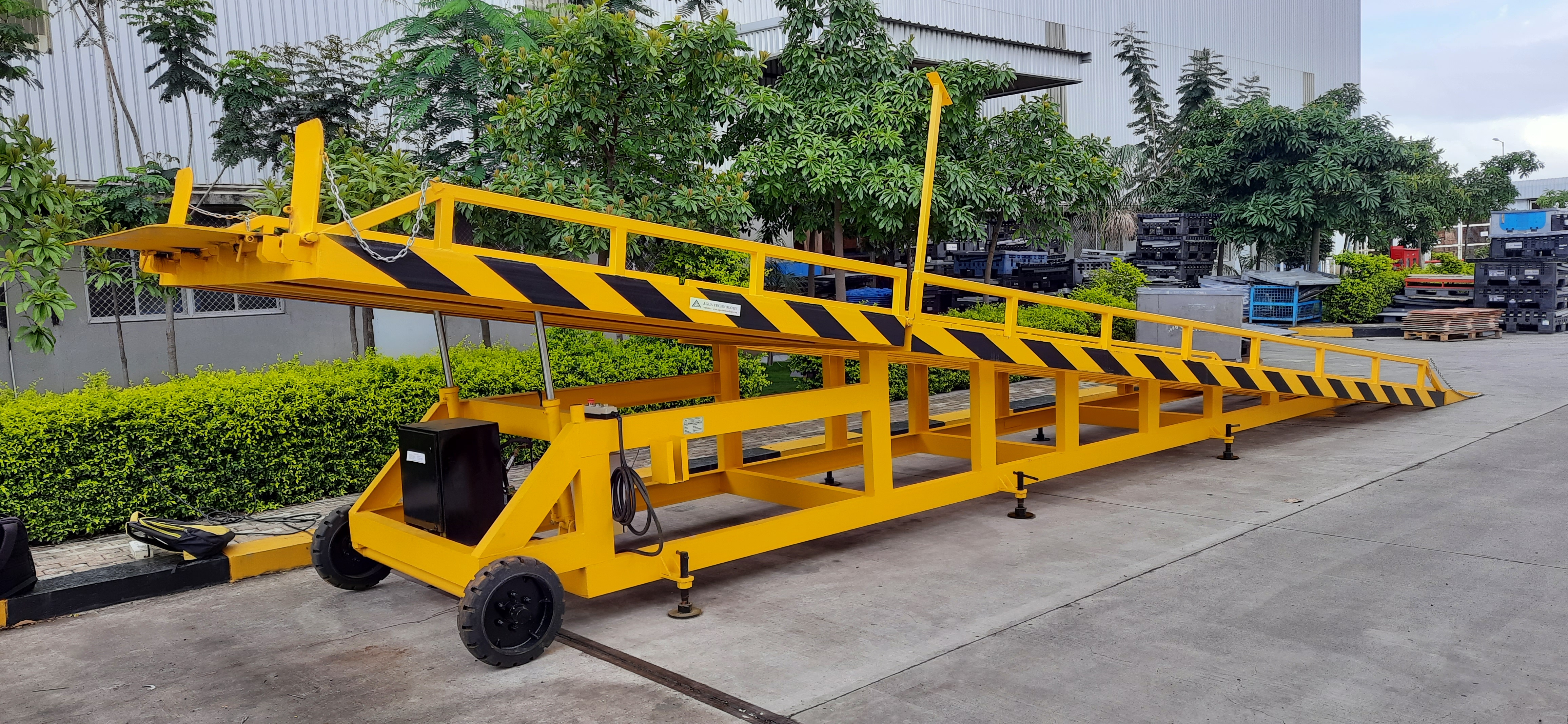 | LOADING/UNLOADING PLATFORMS OR DOCKS A loading/unloading dock is typically an elevated opening (or openings) in a building's sidewall where shipments are sorted and staged for loading... View product → |
Frequently asked questions
When is a mobile hydraulic dock ramp suitable for a factory?
It suits factories loading trucks at ground level when vehicle heights vary, loading points change, or a permanent dock is impractical. It is useful for rented premises, seasonal dispatch peaks and yard access to containers or trailers.
What should you check before requesting a ramp quote?
Record the minimum and maximum truck-bed heights, required platform height, available yard length, turning space, approach angle, drainage and the ramp’s operating position. These measurements determine slope and whether trucks can align safely.
What operating controls should a mobile hydraulic dock ramp include?
Define the loading sequence, truck positioning, wheel chocks or vehicle restraints, ramp deployment, pedestrian segregation, communication signals, inspection points and emergency lowering procedure before installation.
How should you compare mobile dock ramp buying options in Pune?
Use a written checklist covering working capacity, individual wheel loads, hydraulic components, safety stops, surface finish, controls, documentation, testing, installation, operator training, warranty and service response.