Moving a scissor lift safely is a route-planning task, not simply a matter of driving from one bay to another. By the end, you will know how to inspect the machine, assess Pune factory and warehouse routes, control travel around people and obstacles, and compare mobility limits before selecting equipment.
Key takeaways
- Start every travel cycle with the platform fully lowered.
- Survey route width, overhead clearance, floor condition and traffic before driving.
- Travel raised only when the manufacturer permits it for that machine and surface.
- Use a boom lift instead when you need outreach beyond the machine footprint.
What happens during a normal travel cycle
A normal travel cycle starts with the platform fully lowered and the machine parked on a checked route. Walk the route, confirm clearance, inspect the surface, and check battery or fuel status before entering the platform and closing the gate. Do not push or tow an occupied lift.
- Turn on the key switch and check that the emergency stop is released.
- Select travel rather than raise, confirm the parking brake has released, and hold the dead-man control.
- Sound the horn, check for people and vehicles, then select forward or reverse.
- Steer at walking speed through doorways, aisles and crossings, keeping materials inside the guardrails.
- Stop on level ground at the next work area, release the travel control and apply the parking brake.
- Deploy stabilisers if fitted and required by the model. Raise the platform only when the manual permits elevation there.
A tilt alarm, pothole-protection sensor or travel interlock can limit speed or stop the machine. Do not defeat it; lower the platform and reposition the lift. For self propelled scissor lift worksite use in Pune, record ramp angle, cross-slope and floor transitions instead of treating a gradeability figure as permission to elevate.
Electric traction avoids indoor exhaust, but repeated ramps and acceleration reduce battery endurance. Check charger access against the shift plan.
How to survey a Pune route before driving
Measure the complete path, not just the ramp, before approving a lift. Record doorway and aisle widths, turning space, overhead clearance, ramp angle, cross-slope, floor transitions, dock edges and the floor’s rated load capacity. A lift’s gradeability rating describes climbing ability while stowed; it does not authorise elevation on that slope.
- Check the narrowest doorway against the machine’s stowed width, turning radius and guardrail clearance.
- Measure expansion joints, kerbs, drain covers and threshold height; a wheel can drop into a gap that looks insignificant on foot.
- Confirm the floor supports concentrated wheel loads, not only the total machine weight.
- Inspect potholes, polished surfaces, soft shoulders and standing water after rain.
- Check battery charge or fuel, parking-brake operation, horn, emergency stop, tilt alarm and pothole protection before departure.
| Route feature | Measurement or condition to record | Why it can stop travel |
|---|---|---|
| Ramp | Angle, length and cross-slope | The machine may climb while lowered but require level ground before elevation |
| Door or aisle | Narrowest width plus turning clearance | Steering geometry can prevent a straight or angled passage |
| Floor transition | Height, gap and edge shape | A wheel may lose traction or strike the chassis |
| Outdoor surface | Drainage, mud, wind exposure and bearing capacity | Monsoon water can reduce braking and leave an indoor model stuck |
For mobile scissor lift applications in Pune, compare these measurements with the manual’s travel limits, not a brochure’s platform height. A self propelled scissor lift for applications in Pune needs tyre and ground-clearance choices suited to every route between planned work areas.
When the platform can travel raised
An elevated platform changes travel from routine relocation into a restricted manoeuvre. Many machines permit it only at reduced speed; some prohibit elevated travel altogether. The operating manual controls the decision, not the machine’s general category.
Before moving with the platform raised, confirm:
- The manual permits travel at that platform height.
- The travel-speed limit and maximum permitted gradient are not exceeded.
- The floor is firm, level enough for elevated travel and free of potholes, debris and sudden edges.
- Wind remains below the machine’s stated limit, including gusts around open doors or building corners.
- Turning space is clear; sharp steering inputs increase the risk of instability.
- No overhead beam, sprinkler, cable tray or doorway can strike the platform.
A lift’s gradeability rating does not authorise elevated travel on a ramp. That figure usually describes climbing ability while stowed; a machine may climb the gradient yet require lowering and repositioning before elevation. Record ramp angle, cross-slope and transitions for self propelled scissor lift worksite use in Pune.
Keep the platform lowered for long relocations, ramps, uneven floors and exposed outdoor routes unless the manual expressly allows otherwise. An electric model also uses more battery during raised travel, acceleration and climbing than during stationary work, so include charge level, charger location and shift duration in the movement plan.
Stop on level ground before raising further.
How to manage traffic, weather and building transitions
Treat every transition as a separate movement plan: pedestrians, vehicles, rain, ramps and dock edges can change traction, clearance and stopping distance within metres.
1. Separate the lift from people and vehicles with a spotter, cones or barriers. Use the horn at blind corners and crossings, keep pedestrians out of the turning path, and stop if a vehicle enters the route. Never carry a passenger on the deck or tow the lift while occupied.
2. Recheck outdoor routes after rain. Monsoon water, mud and polished wet floors reduce tyre grip and braking, while standing water can conceal potholes, drain covers and soft shoulders. Remove water where possible and do not choose the machine solely from its dry-surface gradeability figure.
3. Treat a ramp’s angle, cross-slope and top and bottom transitions as separate limits. Keep the platform lowered unless the manufacturer permits elevated travel, follow the model’s slope limit, and stop before a dock edge.
A dock leveller, bridge plate, ramp or building lift must be rated for wheel loads, axle loads, dimensions and dynamic effects; pallet-truck capacity is not enough.
4. For mobile scissor lift applications in Pune, stop on level ground before crossing between buildings or changing operators. Check battery or fuel isolation, parking brake, wheel chocks and tie-down points before loading onto a carrier. Specify deck capacity, loading method and road transport compliance; the lift is not a road vehicle.
5. Compare travel speed, turning radius and ground clearance against the route before purchase. For a self propelled scissor lift for applications in Pune, include wet traction, aisle width and service access in that comparison.
Which mobile access machine fits the route
Platform height alone can select the wrong machine. Compare the route, duty cycle and surface conditions for a self propelled scissor lift for applications in Pune before comparing catalogue heights.
| Option | Route strengths | Buying checks | Reject it when |
|---|---|---|---|
| Self-propelled scissor lift | Level factory floors, repeated travel between nearby work areas, vertical work | Stowed and elevated speed, turning radius, minimum aisle width, wheel loads, ground clearance, battery endurance and service access | The route has rough ground, severe slopes or outdoor wind beyond the machine rating |
| Boom lift | Reaches over machinery, racks and obstacles; handles uneven access better | Tail swing, turning radius, outreach, outrigger footprint, wind rating and ground bearing pressure | You need compact aisle travel with people working directly below the platform |
| Towable or traction high-lift | Occasional maintenance access where a powered machine is not needed continuously | Towing route, setup space, levelling time, stabilisers and transport arrangements | Crews must move quickly between many work areas |
| Forklift or lift table | Moves pallets or raises loads at a fixed point | Load centre, rated capacity, aisle width and whether people are permitted at height | The task requires personnel access without an approved work platform |
For a self propelled lift for factories in Pune, electric traction suits indoor noise and ventilation limits, but charger location, supply, shift length and ramp travel determine usable runtime. Monsoon mud, polished wet floors, drain covers and soft shoulders demand an after-rain route check; dry-surface gradeability is not permission to elevate on a slope.
Aguatech Engineers Pvt.ltd. can help compare a proposed route against wheel loads, transitions and service access rather than quoting platform height alone.
Related product
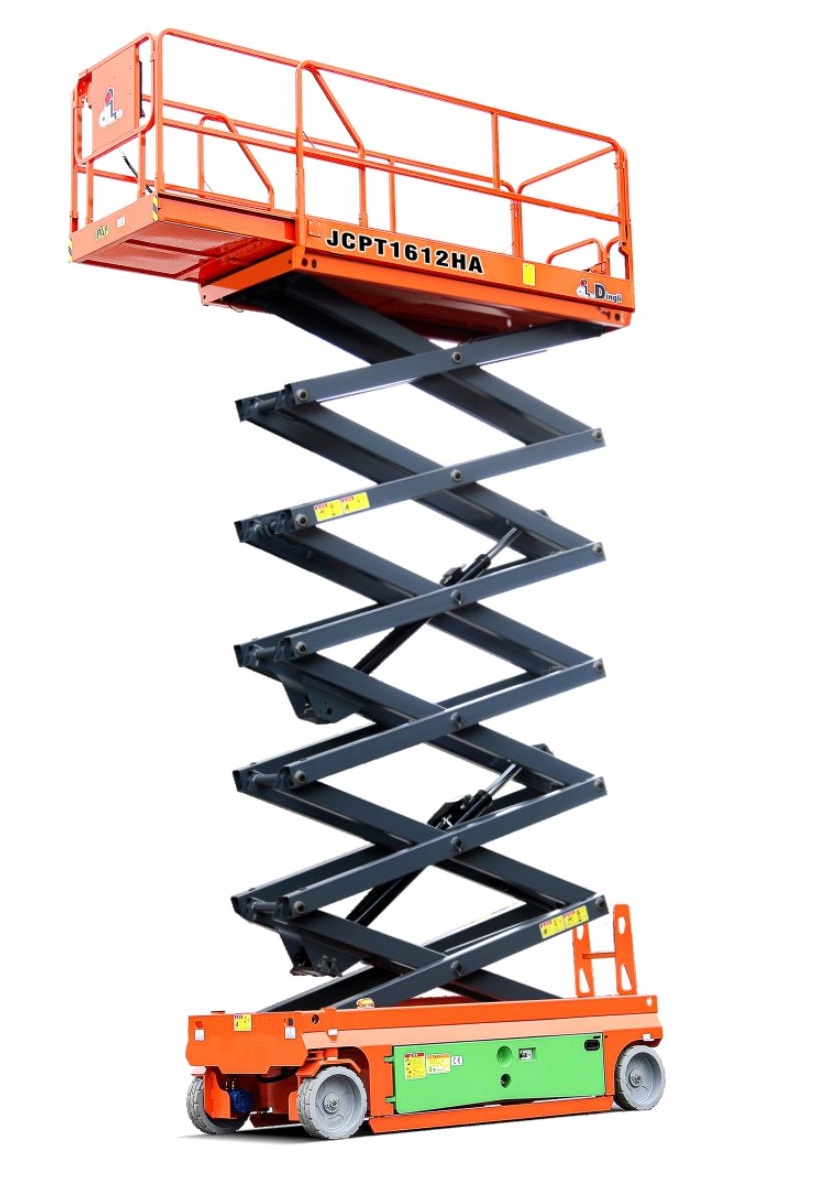 | Self-Propelled Scissor Lift A self-propelled scissor lift is a motorized aerial work platform used for vertical lifting, allowing operators to drive, steer, and elevate the... View product → |
Frequently asked questions
What happens during a normal self-propelled scissor lift travel cycle?
Lower the platform, park on a checked route, inspect clearances and surface condition, check battery or fuel status, enter through the gate, close it, and drive at controlled speed. Never push or tow an occupied lift.
How do you survey a Pune route before driving a scissor lift?
Measure doorway and aisle widths, check overhead obstructions, inspect ramps and floor loading, identify potholes or wet areas, and separate the route from pedestrians, forklifts and vehicles.
When can a scissor lift travel with the platform raised?
Travel raised only when the manufacturer permits it for the specific model, height, surface and slope. Follow the operating manual and site risk assessment rather than assuming every lift supports raised travel.
How should operators manage traffic, weather and building transitions?
Use a spotter at blind corners, establish exclusion zones, slow at thresholds and ramps, stop for poor visibility or slippery surfaces, and confirm that outdoor travel is allowed in the wind conditions stated by the manufacturer.