
A machine that will not move, loses pulling power, or spins one wheel is not automatically suffering from a failed motor. By separating safety cut-outs, terrain and load conditions, electrical faults, hydraulic faults, and mechanical damage, you can decide when to lower the platform, stop work, test further, or call for service.
Key takeaways
- Treat travel loss at height as a safety cut-out until controls and limits are checked.
- Check ground, load, height, and tire contact before testing motors or hydraulics.
- Isolate electrical, hydraulic, and directional faults in a controlled sequence.
- Stop diagnosis when movement creates a stability, collision, or crushing hazard.
Start by separating a traction fault from a safety cut-out
Travel that stops only after the platform rises points first to an intentional safety cut-out, not lost traction. A traction fault usually produces weak movement, wheel spin, jerking, or audible motor effort while the travel command remains active.
- No drive when raised: check the machine’s raised-height travel limit, platform or chassis tilt sensor, pothole protection, oscillating-axle lock, guardrail and gate switches, overload sensing, and emergency-stop buttons.
- No drive at every height: check battery state, controller fault codes, brake release, directional controls, wiring connectors, and hydraulic pressure.
- Drive returns after lowering: treat the result as an interlock condition until the operator manual confirms the permitted elevated-drive height, grade, side slope, load, and wind limit.
- One wheel spins while the other carries the machine: inspect tire contact, axle articulation, and ground condition before condemning a hydraulic motor or differential.
For high raised scissor traction troubleshooting, change one condition at a time: platform lowered versus raised, level ground versus slope, unloaded versus rated load, and cold versus warmed hydraulics. Keep personnel out of the elevated travel path.
If you are selecting a high raised scissor traction rough terrain scissor lift for problems, demand a route trial at the intended working heights rather than relying on a similar model’s settings.
Check the ground, height, load, and tire contact before blaming the drive system
One wheel spins when a cross-slope, rut, or soft depression unloads that tire. The machine then loses grip even though the hydraulic motor may be healthy. Loose gravel, mud, oil, wet concrete, worn lugs, or an overloaded platform can produce the same symptom.
Use the exact operator manual for elevated-drive height, maximum grade, side-slope limit, rated platform load, wind limit, and tilt interlock. Similar-looking machines can disable travel at different heights or stop when the chassis exceeds its permitted angle.
- Park on firm, level ground and lower the platform. Check for ruts, soft shoulders, debris, oil, and standing water before testing travel.
- Compare tire pressures, tread, diameter, and type on both sides. Check foam-filled tires for damage; a mismatched replacement can shift wheel loading and cause traction scissor lift problems.
- Repeat the comparison unloaded and at the permitted load, then with the platform lowered and raised. Do not drive raised on a slope unless the manual permits it.
- Compare level ground with the suspect slope, and cold hydraulic operation with warmed fluid. If travel fails only when raised or tilted, check the height and tilt interlocks before blaming a drive motor.
Stop testing if wheel spin, brake release, or instability worsens. Never add load or steer sharply to force movement.
Use a controlled sequence to isolate electrical, hydraulic, and directional faults
Before opening a panel or replacing a part, use high raised scissor traction troubleshooting as a controlled comparison. Follow the exact operator manual for raised-travel height, grade, side-slope, load, and wind limits.
1. Record the symptom with the platform lowered, machine unloaded, and wheels on level ground. Confirm battery charge, charger status, emergency-stop release, key-switch position, and any controller fault code.
2. Inspect without disassembly. Look for hydraulic leaks, damaged hoses, loose battery terminals, blown fuses, disconnected wiring connectors, tyre damage, poor tyre contact, and a brake that does not release.
3. Repeat the test only when the manual permits it: compare lowered versus raised, level ground versus slope, unloaded versus rated load, and cold versus warmed hydraulic oil. Change one condition at a time.
4. Compare forward and reverse. Weak movement in both directions points toward charge pressure, pump output, or relief-valve issues. Weakness in one direction points more strongly toward the directional valve, joystick command, brake-release circuit, wiring, or one wheel-motor circuit.
5. Test hydraulic pressure only at the manufacturer’s specified ports and pressures. Do not adjust a relief valve from guesswork.
6. If a tilt alarm, pothole system, or raised-height cut-out appears, lower the platform and investigate the sensor, mounting, surface, and interlock. Never bypass it to restore travel.
Inspect the components that turn drive power into safe movement
A dragging brake can feel like weak traction. During industrial scissor lift maintenance, inspect the complete drive path rather than replacing a motor on the first symptom.
| Component | Inspect | What a fault can cause |
|---|---|---|
| Tires | Tread, cuts, pressure, embedded debris, uneven loading and contact | Wheel spin, poor grip or sudden recovery of traction |
| Brakes | Mechanical drag and full release; verify release pressure or electrical release | No-drive, overheating final drives and weak movement |
| Wheel motors and final drives | Mounting bolts, leaks, abnormal noise and temperature | Jerky travel, low torque or one-sided drive |
| Hoses and fittings | Abrasion, crushed sections, loose fittings and hydraulic leakage | Slow or weak movement; pressure testing is required |
| Wiring and battery connections | Terminals, fuses, relays, connectors, chafing and voltage sag | Intermittent drive or a drive circuit that works in one direction |
| Steering and axle | Linkage, cylinders, pins, axle articulation and alignment | Scrubbing tires, unexpected steering or instability |
| Controls and safety devices | Joystick command, emergency stop, key switch, alarms, interlocks and fault codes | Intentional travel cut-out mistaken for traction loss |
Compare forward and reverse response before opening panels. A fault in both directions points toward charge pressure, pump output or relief settings; one-direction weakness points toward a directional valve, command circuit or brake-release circuit. Follow the manufacturer’s pressure-test procedure, and verify emergency lowering before returning the lift to service.
Stop work when diagnosis creates a greater stability or crushing hazard
Never bypass an interlock, force a brake release, or continue travelling with a raised platform when traction, steering, or stability is uncertain. A safety cut-out is not a fault to defeat; it may be preventing movement beyond the machine’s permitted height, tilt, load, or wind limit.
Stop on firm, level ground if you can do so without worsening the hazard, lower the platform using the manufacturer’s emergency-lowering procedure, isolate the machine, remove the key, and keep people outside the crushing zone.
- Do not drive on a slope to “test” a brake, spinning tire, steering fault, or intermittent cut-out.
- Do not place hands, feet, tools, or your body beneath a raised platform, scissor pack, tire, axle, or chassis.
- Do not jack, prop, disconnect a brake, remove a wheel, or open hydraulic lines without the manual’s securing and isolation procedure.
- Do not climb over guardrails or use the platform to reach a failed steering or tire component.
Call qualified service personnel when the platform cannot be lowered safely or the machine cannot be secured.
Specify the route and service support before choosing a machine for Pune conditions
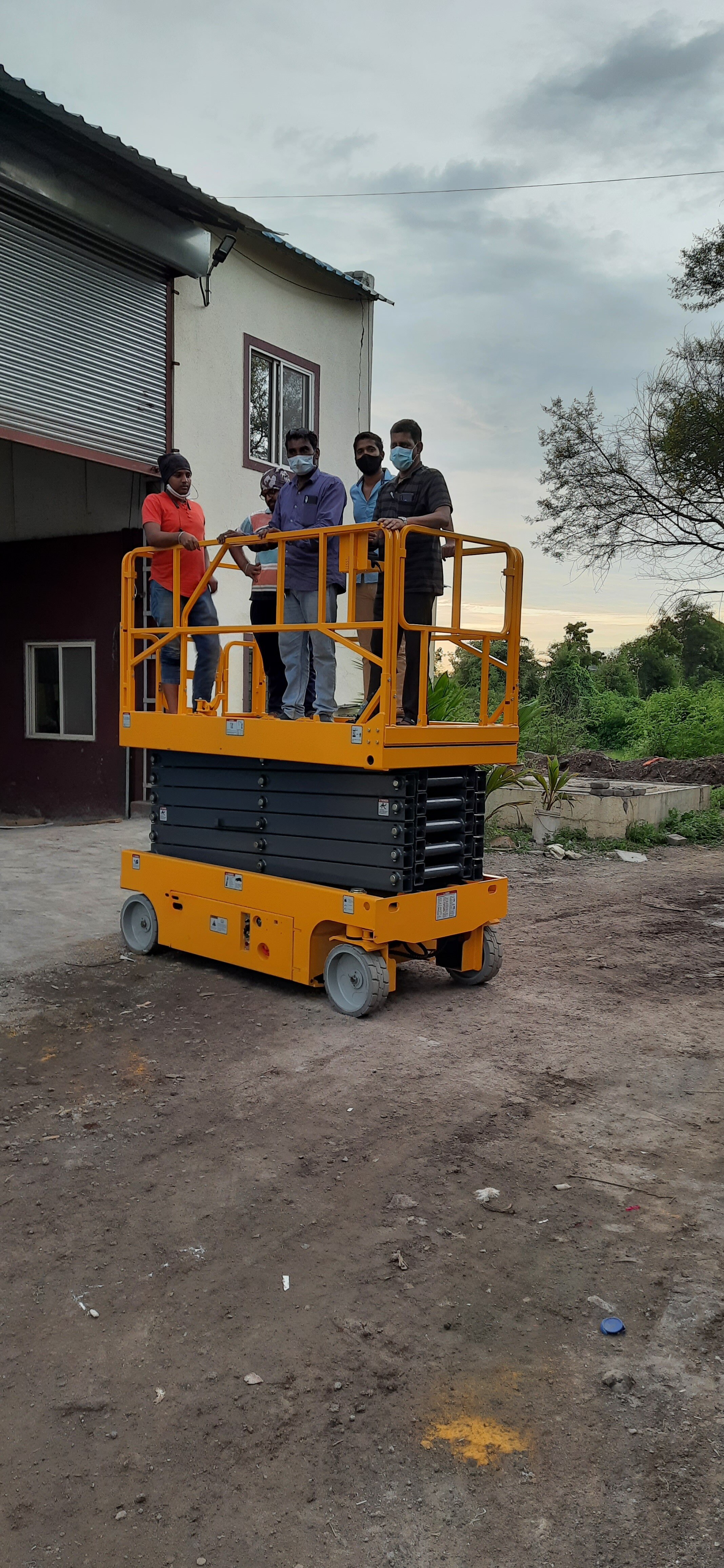
A rough terrain scissor lift in Pune needs a route trial, not a paper comparison of maximum grade. Drive the intended path with the platform lowered and at the highest permitted travel height, recording soil condition, cross-slope, ramp angle, rut depth, drainage transitions, debris, and loading-dock approach.
A wheel that spins after entering a depression may have lost ground contact rather than suffered a failed motor.
| Route feature | Acceptance check | Record or reject |
|---|---|---|
| Monsoon soil | Test after wetting and after compaction; check wheel sinkage and steering control | Reject any route that creates axle grounding or uncontrolled slip |
| Ramps | Measure grade and test straight and turning travel | Use the exact manual limit, not a generic grade claim |
| Debris and ruts | Run over the actual material-handling path with pothole protection engaged | Remove obstacles that disturb tire contact |
| Loading dock | Cross the uneven transition at both travel heights | Stop if leveling, tilt alarm, or drive cutout activates |
Before purchase, require the route report, operator manual, service intervals, fault-code support, and a written list of locally stocked tires, hoses, filters, sensors, and drive parts. Confirm who will diagnose hydraulic charge pressure, motor leakage, voltage sag, and tilt-sensor faults. Aguatech Engineers Pvt.ltd.
should be asked for the same route-test evidence and Pune service response time as every competing supplier.
Related product
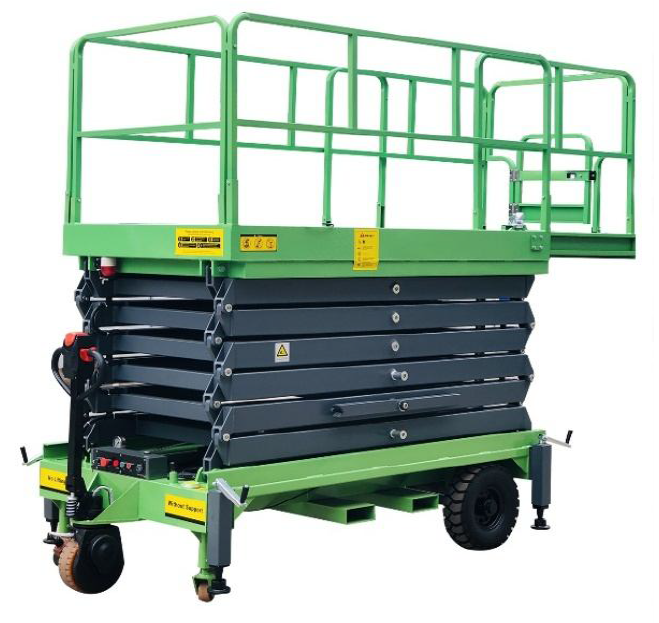 | HIGHLIFT MAINTAINANCE PLATFORM High Raised Scissor - Traction These are perhaps a revolutionary kind of equipment to be designed which almost replaced the conventional ladders which have their own limitations... View product → |
Frequently asked questions
How can you distinguish a traction fault from a safety cut-out?
A travel stop that occurs after platform elevation points to an intentional safety cut-out. A traction fault produces weak movement, wheel spin, jerking, or audible motor effort while the travel command remains active.
What should you check before blaming the drive system?
Check ground slope and softness, platform height, machine load, tire contact, wheel damage, and obstructions around the chassis.
How should you isolate electrical, hydraulic, and directional faults?
Use a controlled sequence: confirm the operating mode and safety inputs, inspect power and fault indications, test directional commands, then examine hydraulic pressure and drive components.
When should you stop troubleshooting a rough-terrain scissor lift?
Stop when testing could cause an unexpected movement, overturning, collision, dropped load, or crushing injury. Secure the machine and use qualified service support.