
A powered scissor lift can move between a warehouse floor, loading apron and dock approach, but traction drive alone does not make it suitable for ramps, vehicle traffic or dock gaps. By the end, you will have a practical specification and acceptance checklist covering height, load, gradient, floor conditions, battery use and safe separation from moving vehicles.
Key takeaways
- Confirm whether the task needs personnel access, pallet handling, or vehicle loading.
- Specify platform size, working height, rated load, deck height, and approach clearance.
- Check traction, gradient limits, braking, wheel load, and stability on the actual approach.
- Test the configured lift with representative loads and Pune loading-bay conditions.
Is a traction scissor lift suitable for the loading-bay task?
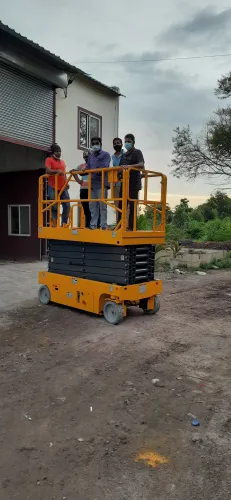
A traction scissor lift is suitable when the job requires elevated personnel access, maintenance, pallet handling at a height mismatch, or repeated repositioning between work areas. It is not automatically suitable for loading or unloading a vehicle.
| Configuration | What it means | Best fit |
|---|---|---|
| Traction | Self-propelled machine with powered drive wheels | Moving between bays or work areas |
| Towable | Lift moved by a separate towing vehicle | Occasional access from fixed locations |
| Fixed electro-hydraulic | Lift anchored at one loading position | Repeated transfers at one dock |
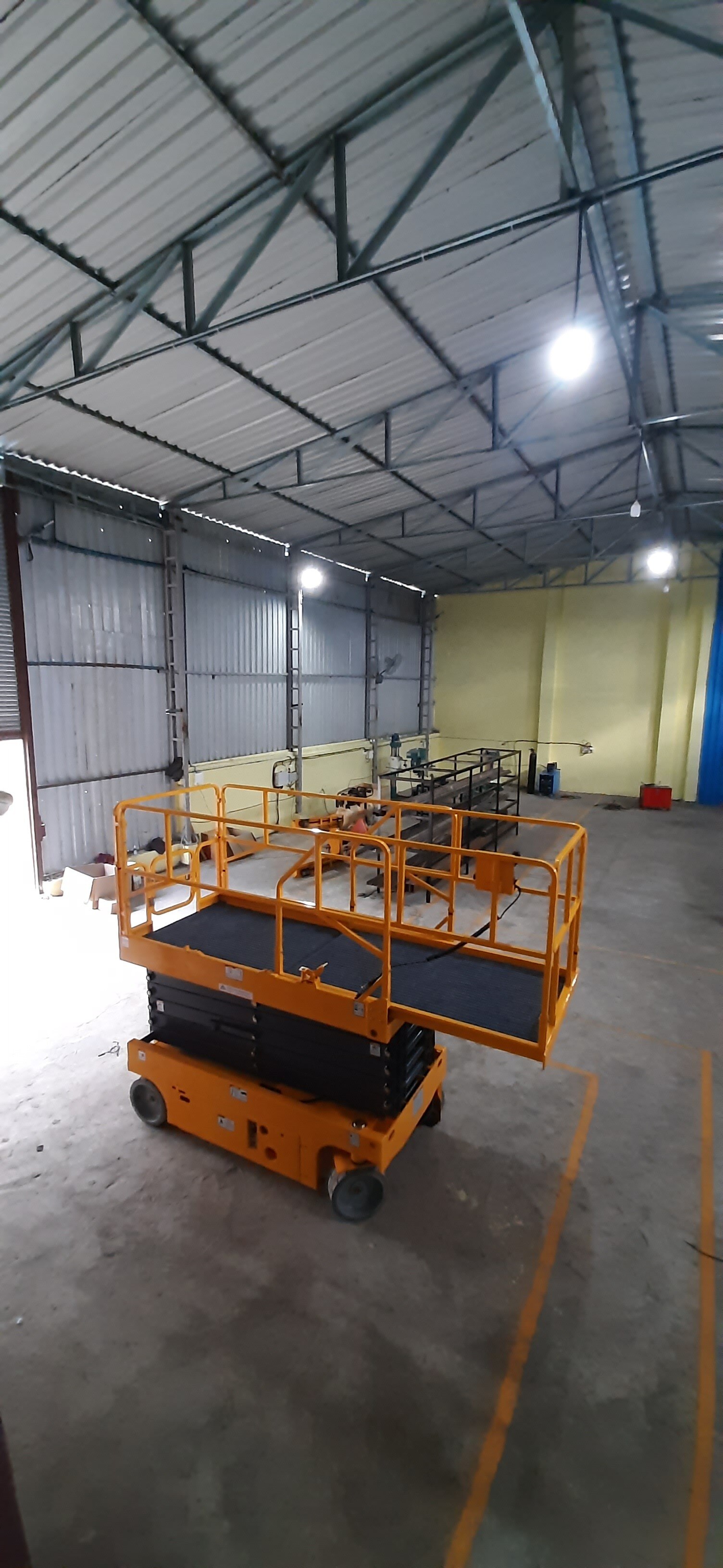
Onboard drive earns its added complexity when operators must relocate the lift between bays, maintenance points, or staging areas. Compare the manufacturer’s gradeability with the actual ramp gradient, payload, floor condition, and tyre type; drive power alone does not prove safe ramp travel.
A scissor lift must not replace a dock leveller or dock board. A vehicle crossing a dock gap needs a secured bridge rated for combined wheel loads and impact effects. The lift platform’s safe working load is not a rating for bridging a dock opening, crossing a dock edge, or entering a vehicle.
For a high raised scissor lift for traction in Pune, define the job before comparing models: access, maintenance, pallet positioning, height correction, or vehicle loading. Keep the lift clear before truck movement, and use traffic separation around reversing vehicles, pedestrians, dock edges, and overhead doors. A flashing beacon does not prevent collision or edge departure.
Which dimensions and loads must you specify before comparing machines?
Specify the complete operating envelope before comparing machines: maximum platform height and lowered height, deck capacities, platform size, access route, floor loads, duty cycle and charging access.
| Measure | Record | Check against |
|---|---|---|
| Maximum height and lowered height | Required working level and entry height | Truck bed, trailer floor, dock edge or mezzanine |
| Main-deck and extension-deck safe working load | Separate ratings | Operator, tools, materials and extension load |
| Platform, pallet or cage dimensions | Length, width and loaded footprint | No gap, collision or operator overreach |
| Doorway width, overhead clearance and dock-edge setback | Narrowest doorway, highest obstruction and edge distance | Entire route and working position |
| Turning radius, ground clearance and duty cycle | Tightest turn, obstacles, shifts and cycles per hour | Bay layout, ramps and daily demand |
| Gross weight, maximum wheel load and axle load | Loaded machine figures | Slab, apron and floor-loading limits |
| Battery and charging access | Runtime, charger location and ventilation | Available charging space and power supply |
The published safe working load is not free payload: it includes the operator, tools, materials and anything placed on the extension deck. Request the gross machine weight, maximum wheel load and axle load for loading bay equipment in Pune; a slab that carries static storage can crack under concentrated tyre forces during braking or turning.
Match the platform to the actual truck, trailer, dock or mezzanine interface. A machine that reaches the height can still leave a gap or force an unsafe reach.
Do not combine headline figures without written conditions. Maximum height, maximum capacity, travel speed and gradeability may apply at different loads, platform positions or surfaces; ask which limits can operate simultaneously.
What traction and stability details matter on a Pune loading approach?
A ramp percentage alone cannot prove that a traction scissor lift in Pune will climb safely. Estimate tractive-force demand from machine mass × gravity × grade, then add rolling resistance and acceleration demand; wet dust, oil, smooth concrete and worn tyres reduce wheel force.
Request these values in writing:
- Drive-wheel arrangement, steering method, turning radius, braking system, parking brake or wheel chocks, emergency stop, alarm, maximum travel speed and ground clearance.
- Maximum grade with the platform lowered and maximum grade with the platform elevated.
- Tyre type, rated payload, and the required surface condition for each gradeability figure.
| Gradeability figure | Use it to assess | Do not assume |
|---|---|---|
| Lowered platform | Ramp travel and positioning | It permits elevated travel |
| Elevated platform | Only operation expressly allowed by the manufacturer | It matches the lowered-platform grade |
| Actual ramp gradient | Compare against the quoted condition, payload, tyre and surface | Motor power proves traction |
Check the ramp at full payload, not an empty demonstration. A high raised scissor lift for traction in Pune can require level ground for lifting, and fitted stabilisers or outriggers must be fully deployed before operation. Do not move an elevated platform when the manufacturer prohibits it.
Separate the lift from reversing trucks, dock edges, pedestrians, overhead doors and other mobile equipment with barriers, marked routes and a spotter where required. An alarm cannot prevent a collision or edge departure. Confirm the machine’s level-ground requirement, stopping distance and clearance before approving the approach.
How should you test the lift in Pune’s real loading-bay conditions?
A pass/fail trial starts on the actual route, not a showroom floor. Drive over uneven concrete, drainage channels, dock lips, smooth aprons, oil or packaging debris, wet monsoon surfaces and the actual ramp.
Record lift height, payload, ramp gradient, surface condition, stopping distance, turning clearance, battery state of charge, and whether the platform is lowered or raised. Repeat ramp starts, wet-floor braking, steering and emergency stopping under the intended load.
Verify the guardrails, entrance gate or chain, toe boards where required, emergency lowering, emergency stop, pothole protection, tilt or grade alarms and interlocks. A missing function is a failed acceptance item, not an accessory to add later.
Confirm the stated indoor or outdoor wind limit at the tested platform height. Traction drive and weather-resistant paint do not establish outdoor approval.
Compare battery arrangements before approving loading bay equipment in Pune:
| Option | Charging and safety checks | Acceptance questions |
|---|---|---|
| Lead-acid | Charging space, hydrogen ventilation, electrolyte control and charging discipline | Is the charger compatible, and who handles watering, spill response and servicing? |
| Lithium-ion | Compatible charger, thermal protection and approved charging location | Is opportunity charging allowed, and is local service support available? |
The battery choice affects traction and bay availability. Test with the proposed charger and a realistic state of charge; a machine that performs well at full charge can lose stopping or ramp performance before the shift ends.
What should you ask a supplier before approving the configuration?
Approve a traction scissor lift in Pune only after the supplier defines the machine’s operating envelope in writing. Ask whether the proposed configuration is for an indoor slab, external apron or rough-terrain yard; solid non-marking tyres suited to a warehouse floor are not evidence of safe performance on broken paving or wet monsoon surfaces.
1. Request written values for platform height, lowered height, safe working load, extension capacity, platform dimensions, gross weight, maximum wheel load and axle load.
2. Request travel speed, turning radius, ground clearance, tyre specification, braking method, lowered gradeability and elevated gradeability. Confirm which payload and platform position apply to each figure; maximum height and maximum capacity do not automatically permit travel or ramp climbing together.
3. Record the wind limit, indoor or outdoor approval, battery runtime under the stated duty cycle, battery type, charger rating, charging location, ventilation requirements and charging time.
4. Require a witnessed site trial that reproduces the bay’s floor, ramp gradient, payload, drainage channels or dock lip, traffic controls and stopping area. Record lift height, payload, surface condition, stopping distance, turning clearance, battery state of charge, and whether the platform is lowered or raised.
5. Ask who will support emergency lowering, emergency-stop and braking checks, interlocks, alarms, tyre replacement and scheduled inspections after installation. Get response times, inspection intervals and service records in the quotation.
Include Aguatech Engineers Pvt.ltd. in the comparison as a Pune-based supplier, but choose loading bay equipment in Pune on documented limits and a witnessed test, not brand familiarity.
Related products
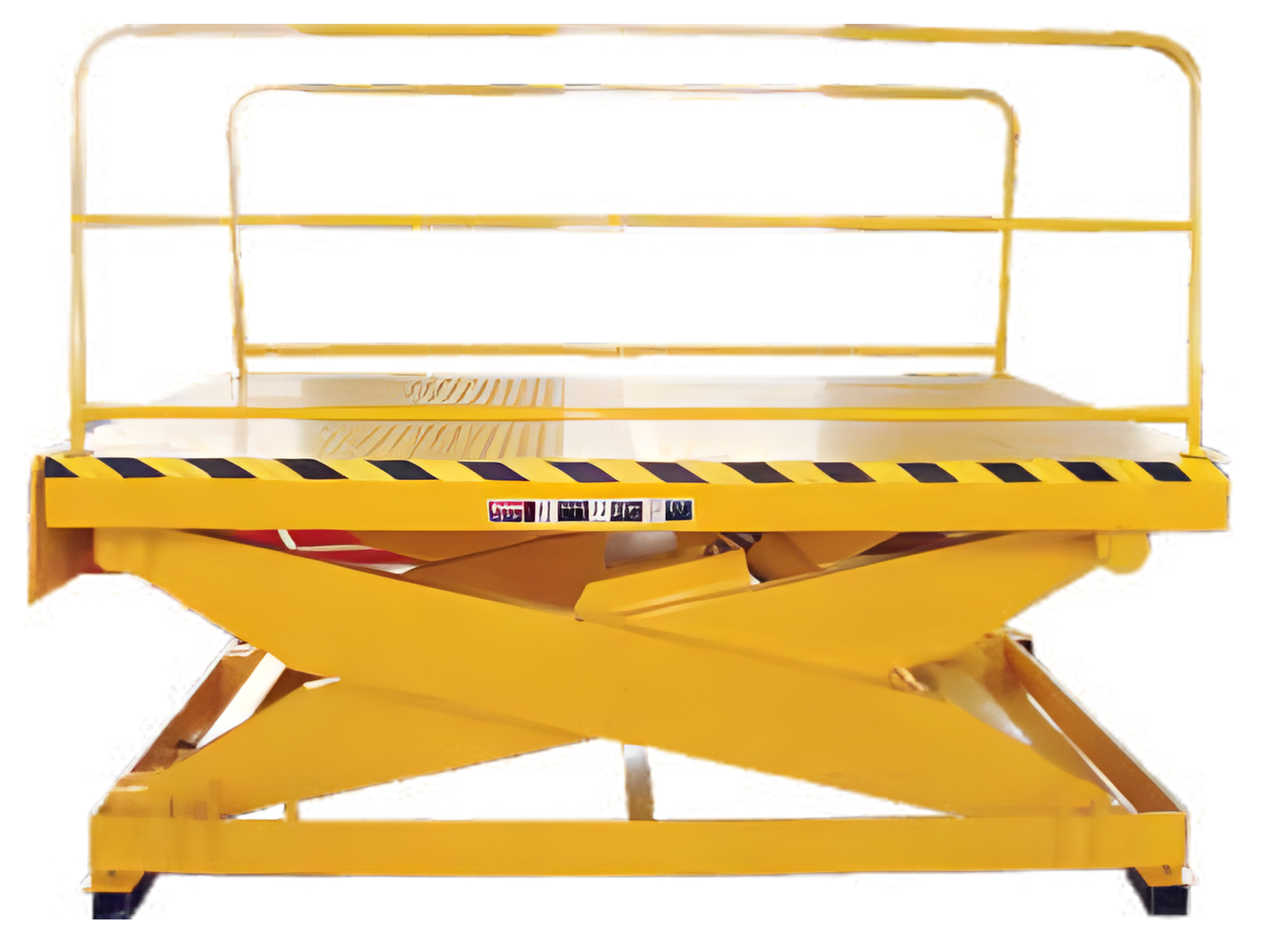 | LOADING/UNLOADING PLATFORMS OR DOCKS Electro-Hydraulic Scissor Lifts A loading/unloading dock is typically an elevated opening (or openings) in a building's sidewall where shipments are sorted and staged for loading... View product → |
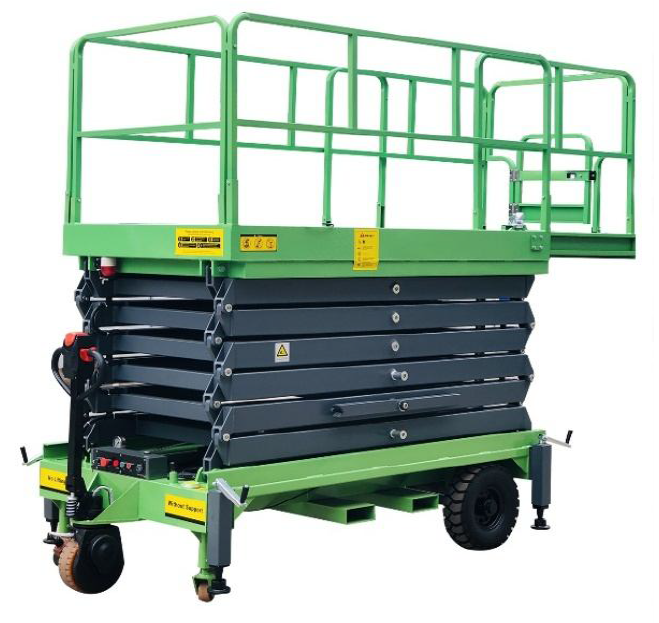 | HIGHLIFT MAINTAINANCE PLATFORM High Raised Scissor - Traction These are perhaps a revolutionary kind of equipment to be designed which almost replaced the conventional ladders which have their own limitations... View product → |
Frequently asked questions
Is a traction scissor lift suitable for loading-bay work?
It suits elevated personnel access, maintenance, height mismatches, and repeated repositioning. It is not automatically suitable for loading or unloading vehicles.
Which dimensions and loads must you specify before comparing machines?
Specify working height, lowered and raised platform dimensions, rated load, point loads, deck height, doorway clearance, turning space, and approach width.
What traction and stability details matter on a Pune loading approach?
Check gradient capability, drive and braking performance, wheel loads, ground condition, ramp transitions, clearance, and stability with the intended load.
How should you test the lift in real loading-bay conditions?
Test it on the actual route with representative loads, ramp transitions, turning movements, braking stops, loading-bay clearances, and repeated repositioning.
What should you ask a supplier before approving the configuration?
Request rated-load charts, dimensions, gradient limits, wheel loads, braking details, safety features, maintenance requirements, test records, and operator instructions.