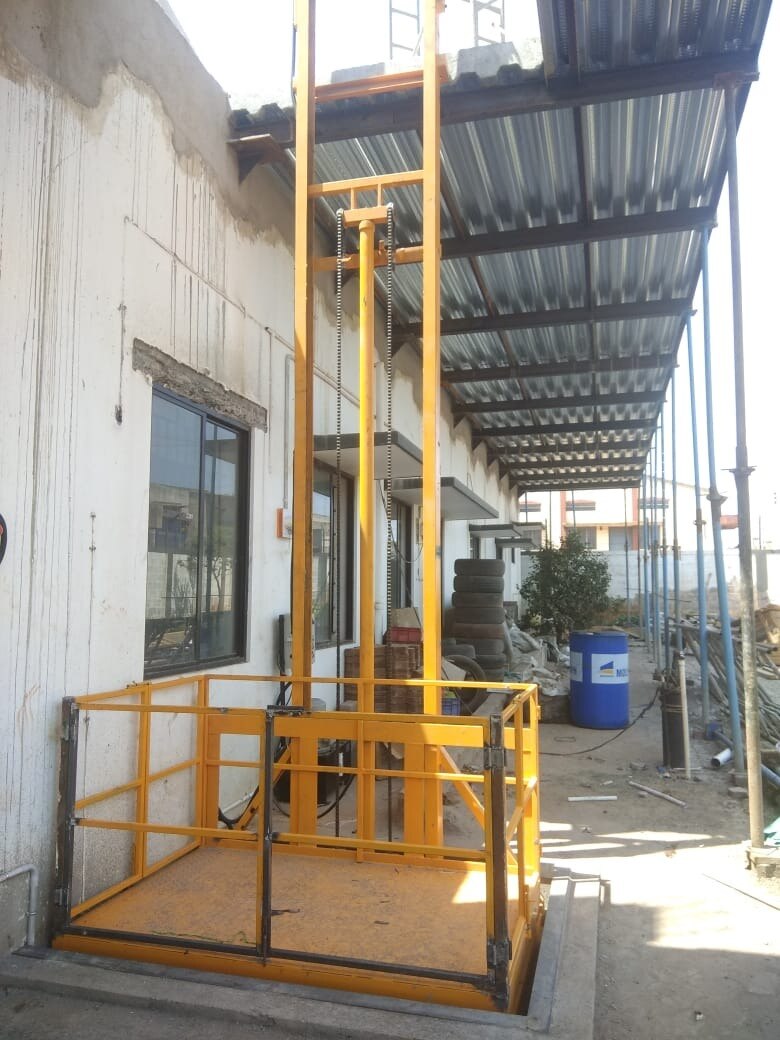
A goods lift that stops level, travels unevenly, or refuses to run may have a control, hydraulic, loading, or building-movement fault. Use a safe fault-finding sequence to separate operator-correctable conditions from technician work, record useful measurements, and decide when the lift must remain out of service.
Key takeaways
- Remove the load and verify capacity, gates, emergency stop, isolator, and fault code.
- Compare slow movement, drift, noise, and stoppage with hydraulic or electrical causes.
- Check whether floor movement comes from loading, traffic, structure, or the lift system.
- Give technicians fault codes, timings, photos, load details, and recent site changes.
Start with the load, gates, safety circuit, and controller
Before calling a technician, remove the load, confirm it is within the rated capacity, and check that every landing gate and car gate is fully closed. Confirm the emergency stop is released, the isolator is on, and the controller shows a specific fault code rather than a blank display.
Never bridge an interlock, overload switch, pressure switch, limit switch, or safety circuit.
- Check the platform for an obstructing pallet, shifted load, damaged toe guard, or object caught at the sill.
- Inspect landing doors, sills, guides, and barriers for forklift impact, rubbing, or misalignment. A bent sill can cause an interlock fault without a lift-system failure.
- Look at the hydraulic power pack without opening it: note low oil, foaming, visible hose or fitting leakage, unusual pump noise, and a motor that hums without movement.
- Record whether the fault occurs unloaded, loaded, at one floor, or at every floor. Note travel time, stopping error, vibration, drift, and the controller code.
- Compare the car floor with each landing. A changing sill gap, poor levelling, or rubbing after slab work, rack installation, or monsoon rain points to building or shaft movement; do not adjust valves first.
For goods lift problems warehouse in pune, give the technician the rated load, platform size, stops, drive type, duty cycle, supply voltage, oil-change date, and fault history. The technician must test pressure, leakage, interlocks, brakes, and rated-load stopping before return to service.
Match the symptom to the hydraulic or electrical cause
A platform that will not rise points first to a dead motor circuit, missing phase, low oil level, suction restriction, pump failure, or a relief valve opening too early. Identify the cause from the symptom, then confirm it with measurements; do not keep resetting an overload.
- Will not descend: check the lowering valve, solenoid, controller output, obstruction, and excessive load. A stuck valve leaves the pump running while the platform stays high.
- Slow or uneven travel: compare hydraulic pressure, oil temperature, travel time, and oil level. Cold, incorrect-viscosity oil, air, a restricted strainer, worn pump, or cylinder-seal leakage can reduce speed.
- Drifts while stopped: perform a pressure-hold or drift test with the car safely supported. Separate cylinder bypass, check-valve leakage, lowering-valve leakage, hose leakage, and thermal expansion.
- Motor hums without movement: investigate a missing phase, incorrect rotation, seized pump, loose terminal, or locked mechanical component.
- Motor overheats or overloads: measure all three motor-terminal currents while lifting the normal load. Phase imbalance, an undersized feeder, loose terminals, and voltage drop are common electro hydraulic goods lift issues in Pune.
- Oil appears at a hose, fitting, cylinder seal, or power pack: stop operation and depressurise before repair; adding oil does not fix a pressure leak.
- Gate or door will not unlock: inspect the interlock circuit and alignment, never bypass it.
- Power-loss entrapment: test the emergency lowering or manual-release system under controlled conditions.
Log pressure, current, oil temperature, fault codes, cycle time, and loaded versus unloaded results by date. This evidence makes goods lift problems warehouse in Pune easier to distinguish from control, hydraulic, and supply faults.
Separate floor movement from lift-system failure
A repeated landing error is not automatically a controller fault: floor or shaft movement can bind guide shoes, shift rails, and change stopping accuracy.
Good goods lift troubleshooting for warehouses in Pune starts by comparing the lift unloaded and at rated load, then checking whether the error follows one landing, one travel direction, or the building itself.
- Car-floor elevation at every landing
- Sill-to-sill gaps
- Guide-rail plumb
- Rail-bracket tightness and damage
- Door and gate clearances
Log these readings by date, alongside:
- Starting and running motor current
- Hydraulic pressure and oil temperature
- Travel time
- Stopping error at each floor
- Fault codes
- Unloaded and loaded results
A change after monsoon drainage work, slab repairs, rack installation, or increased duty points toward site movement rather than repeated valve or controller adjustment. If nearby racks or foundations moved and the fault remains concentrated at one landing, arrange a structural survey before altering lift settings.
Uneven pallets can imitate settlement. Compare a centred test load with an eccentric load within the rated capacity and specified load-centre limit; a side-loaded platform can increase guide-shoe friction and stop differently in each direction.
For one-way travel faults, a technician must verify the directional solenoid, coil voltage, valve-spool movement, limit input, and controller output before replacing a valve block.
Account for loading errors, monsoon moisture, and warehouse traffic
A lift that passes an empty run can still fault repeatedly because the site is changing its alignment, load balance, or electrical supply. For goods lift problems warehouse in Pune, inspect these conditions before adjusting valves or door operators: monsoon moisture, forklift impacts, rack work, slab movement, and increased duty cycle.
| Condition | Recurring effect | Evidence to compare |
|---|---|---|
| Uneven pallet loading | Platform deflection, guide-shoe friction, and different stopping levels by travel direction | Centred versus eccentric test load, within the rated load and specified load-centre limit |
| Monsoon moisture | Wet sills, corroded contacts, slippery floors, and water entering pits or control enclosures | Door clearances, interlock condition, pit dampness, and faults by date |
| Forklift traffic | Bent sills, shifted door frames, damaged guides, toe guards, and barriers | Sill-to-sill gaps, door alignment, rubbing marks, and impact damage |
| Slab or rack work | Changed shaft alignment, rail stress, and landing-level errors | Car-floor elevation, rail plumb, bracket condition, and stopping error at every floor |
| Feeder or duty-cycle change | Voltage drop, phase imbalance, overheating, and overload trips | Motor-terminal voltage and three-phase current while lifting the normal load |
Trend travel time, hydraulic pressure, oil temperature, fault codes, and unloaded-versus-loaded stopping results by date. Compare the trend with monsoon periods, construction, rack installation, or higher traffic; a single pass/fail inspection can hide the trigger.
After work on rails, doors, interlocks, brakes, protection devices, valves, or supports, require a documented safety and functional test. An empty-car run does not prove safe stopping at rated load.
Give the technician usable evidence before approving a repair
A repair request should include the lift’s rated load, platform dimensions, travel, number of stops, hydraulic or electric drive, duty cycles per hour, ambient temperature, supply voltage, last oil change, and any recent slab, rack, or building work.
These details make goods lift repair questions in Pune answerable; without them, a replacement valve, controller, cylinder, or guide component may not fit.
For goods lift troubleshooting for warehouses in Pune, send dated measurements rather than “it is slow”:
- Record car-floor elevation, stopping error at every landing, sill-to-sill gaps, door clearances, guide-rail plumb, and rail-bracket condition with the car unloaded and at rated load.
- Measure motor-terminal voltage and all three phase currents while lifting the normal load. Note phase imbalance, voltage drop, contactor chatter, and overload trips.
- Log hydraulic pressure, oil temperature, travel time, fault codes, starting and running current, leakage, and drift after each visit.
- Compare a centred test load with an eccentric load, staying within the rated load and specified load-centre limit.
Aguatech Engineers Pvt.ltd. can use this record to distinguish differential settlement, rail friction, electrical supply faults, and hydraulic faults before a component is changed.
After work on rails, doors, interlocks, brakes, overspeed or slack-rope protection, valves, or supports, document empty and rated-load runs, stopping accuracy at every floor, door and safety-circuit operation, emergency stop, overload response, power-loss recovery, and leak checks. Do not return the lift to service after only an empty-car pass.
Related product
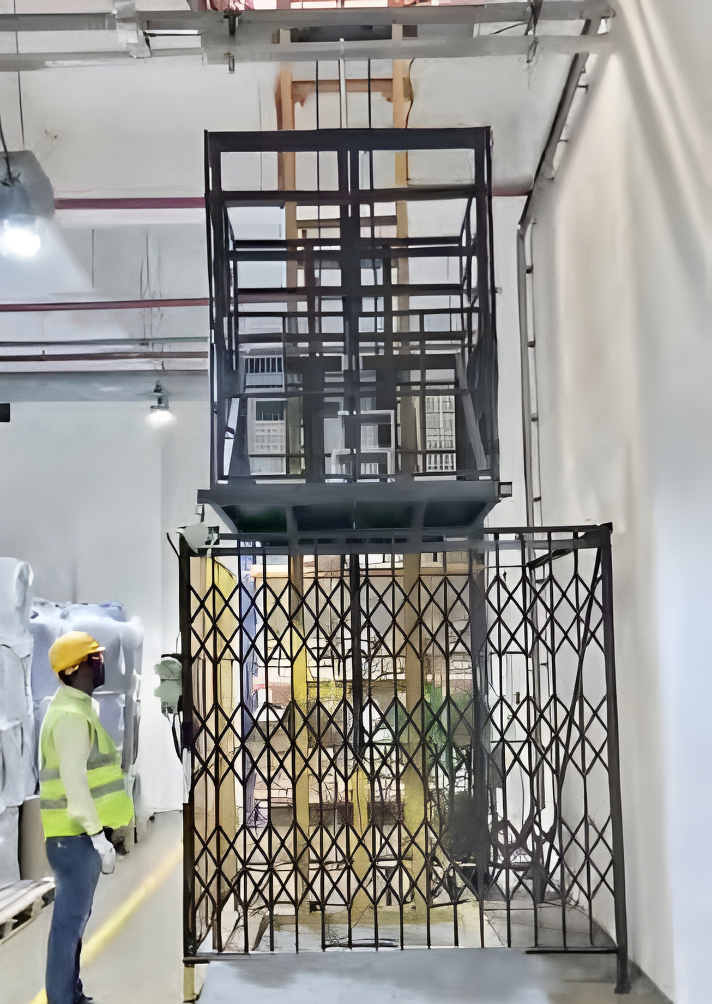 | GOODS LIFTS Goods or Cargo or Luggage lifts are basically used in industry shop floors for safe, secure, convenient and fast methods to transport loads from... View product → |
Frequently asked questions
What should you check first when a goods lift stops?
Remove the load, confirm the rated capacity, check every landing and car gate, release the emergency stop, verify the isolator, and record any controller fault code.
How do you distinguish hydraulic and electrical goods lift faults?
Slow or drifting movement points toward hydraulic oil, valves, seals, or cylinder issues; a blank display, failed interlock, loose connection, or fault code points toward the electrical control or safety circuit.
When is floor movement not a goods lift-system failure?
Investigate loading impact, uneven pallets, floor settlement, warehouse traffic, and guide or building conditions before replacing lift components.
What evidence should you give a goods lift repair technician?
Provide the fault code, exact time, load weight and position, gate status, photographs or video, oil observations, recent maintenance, monsoon moisture exposure, and nearby traffic or construction changes.