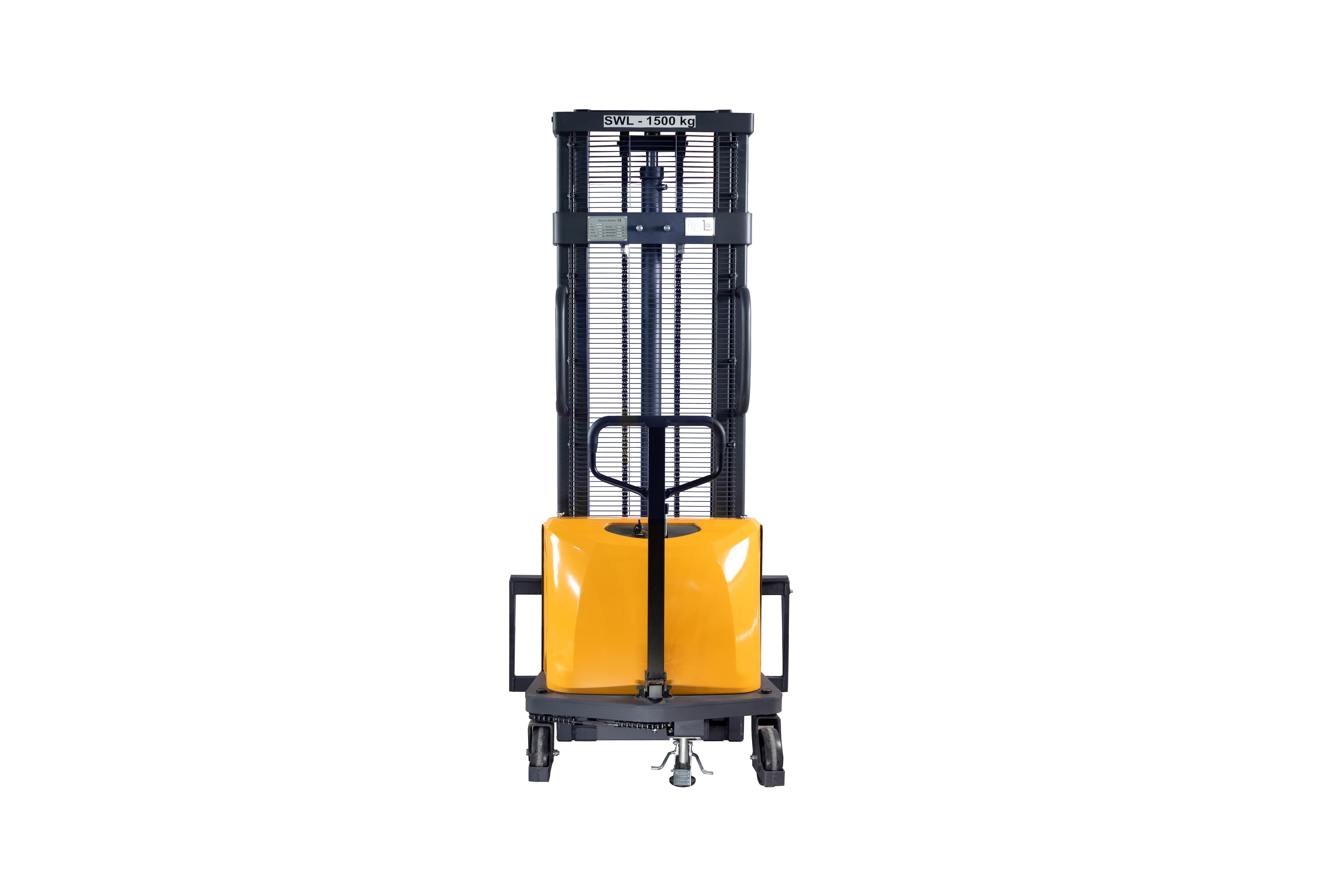
The right machine depends on more than maximum lift height: pallet load centre, residual capacity, aisle geometry, floor condition, duty cycle and battery arrangements determine whether the truck will work safely and economically. By the end, you will be able to measure your site, compare machine types, calculate the required specification and test a supplier’s claims before purchase.
Key takeaways
- Choose an electric stacker for short travel and moderate rack heights.
- Choose a reach truck for narrow aisles and frequent high-level pallet moves.
- Measure aisle width, rack height, pallet size and floor condition first.
- Compare battery runtime, shift demand, safety records and service support before ordering.
Choose the machine by aisle, travel and storage pattern
Choose an electric stacker for short travel, low-to-moderate throughput and moderate rack heights; choose a reach truck when narrow aisles, frequent pallet movements and high rack utilisation justify its higher cost.
The electric stacker or reach stacker for storage in Pune decision depends on residual capacity at the required lift height, not the nameplate rating alone.
| Option | Lift and capacity | Aisle, travel and cost |
|---|---|---|
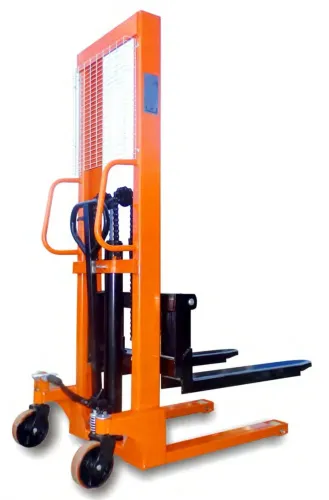
| Walk-behind electric stacker | Low-to-medium lift; compact rated capacity, with reduced residual capacity at height | Tight turning radius, slow travel; lowest purchase and maintenance cost |
| Platform or rider stacker | Medium lift and capacity; operator rides for longer routes | Faster travel and greater comfort; suits repetitive horizontal movement |
| Electric reach stacker | High lift; extending carriage places pallets while the truck stays outside the rack | Narrower rack aisles; higher cost and more complex battery, mast and reach systems |
| Reach truck | High-level selective-rack work; residual capacity falls with lift, load centre and reach | Fast, stable high-bay handling; highest purchase and operating cost |
A stacker comparison for warehouses should also separate “electric reach stacker” from a container reach stacker. The former is an indoor warehouse truck; the latter is a large machine for ISO containers, not pallet racks.
Use these selection rules:
- Choose a walk-behind model for occasional stacking near receiving or dispatch.
- Choose a platform or rider model when travel distance and cycle frequency make walking the bottleneck.
- Choose a reach truck for dense, high-bay storage where aisle space or floor area limits pallet positions.
- Reject a basic stacker if lower residual capacity creates extra aisles, double-handling or a second truck.
Measure the rack, pallet and floor before comparing specifications
A truck fits only when its loaded dimensions, turning path and residual capacity match your measured rack and floor—not when its headline 1.5-tonne rating looks sufficient. Use this stacker comparison for warehouses before requesting prices.
1. Measure each pallet’s length, width, height and actual weight, including uneven or off-centre loads. Record the load centre from the fork face; a 1.5-tonne truck may lift less at a 600 mm load centre or near maximum mast height.
2. Measure floor-to-beam heights for every storage level, the top-of-rack height and the building’s clear ceiling height. Add the mast’s lowered height, raised height and required overhead clearance; sprinklers, lights and door lintels can stop a truck before it reaches the rack.
3. Measure the rack opening, beam depth and upright spacing, then confirm the fork length and reach stroke place the pallet fully on the beams without striking the rear frame. Ask for a residual-capacity chart showing your load centre at each required lift height.
4. Measure the narrowest loaded aisle, rack-end turning space, dock level, ramps and doorways. Compare these figures with the truck’s right-angle stack, turning radius, overall length and required clearance, not only the manufacturer’s stated aisle width.
5. Inspect cracks, joints, potholes, slopes and floor levelness along the complete route. Mark columns, fire equipment, pedestrian crossings and blind corners, then confirm wheel loads, braking and stability on those surfaces.
For an electric reach stacker in Pune, specify “warehouse reach truck” in the quotation; “container reach stacker” describes a different machine entirely. Reject any proposal that omits a site-specific capacity chart or aisle calculation.
Match throughput, battery operation and total cost to the shifts
Compare pallets handled per shift, not rated capacity or lift height alone. Record average and peak travel cycles, lift frequency, distance per cycle and waiting time at racks. A 1.5-tonne truck does not lift 1.5 tonnes to its maximum height when load centre and residual capacity reduce the safe limit.
| Option | Best workload | Cost and battery implication |
|---|---|---|
| Walk-behind electric stacker | Short travel, low-to-medium throughput, lower lifts | Lowest purchase and maintenance cost; charge during planned breaks |
| Platform or rider stacker | Longer travel and heavier daily movement | Higher purchase cost, but more truck time per shift |
| Reach truck | Frequent pallet movements, narrow aisles and high rack utilisation | Highest acquisition and service cost; justifiable when extra pallet positions offset it |
For an electric stacker in Pune, obtain battery voltage and capacity, charger input, full-charge time, permitted opportunity-charging method and battery-change procedure. Compare usable truck hours per shift and energy cost per handled pallet; ampere-hours alone do not show whether an unplanned change will stop work.
The electric stacker benefits are strongest in a low-to-moderate-throughput warehouse with short paths and moderate rack heights. Include these costs before choosing:
- Extra aisles or lower rack positions caused by limited residual capacity
- Double-handling and waiting during charging
- Battery replacement, charger installation, maintenance and operator time
- Cost per pallet position and cost per handled pallet
A reach truck wins when added vertical density and narrow-aisle access outweigh its higher operating cost. Otherwise, a walkie or rider stacker can deliver the lower total cost.
Account for Pune conditions, safety controls and Indian records
Specify the operating environment, not just the lifting capacity. For an electric stacker in Pune, record the warehouse temperature range, monsoon humidity, dust exposure, floor drainage, lighting and ventilation. Require the supplier to state the permitted ambient conditions, battery-charging ventilation, charger protection and floor gradient.
Do not approve operation where water, oil or uneven concrete can destabilise a raised load.
Build these controls into the purchase specification:
- Mark pedestrian lanes, crossing points, blind corners, rack ends and emergency exits on the site plan.
- Require speed limits, warning lights, horn, reversing alarm, visibility aids and a load-height visibility procedure.
- Fit rack-end guards and define the minimum clearance from columns, sprinklers, doors and dock edges.
- Specify emergency lowering, parking with forks lowered, key control, isolation and charging procedures.
- State the exact truck type: “warehouse reach truck” for pallet racks, not the ambiguous phrase “electric reach stacker in Pune,” which can be confused with a container machine.
- Require type-specific operator training, practical assessment, pedestrian rules, battery handling and a written authorisation list.
Keep an Indian compliance file for each truck. Include the manufacturer’s manual, serial number, rated-load and residual-capacity chart, commissioning report, load-test or inspection certificate, charger and battery documents, preventive-maintenance log, daily pre-use checklists, defect closures, training assessments and accident records.
Have your safety officer map these records to the Factories Act, 1948, Maharashtra safety rules and any applicable Occupational Safety, Health and Working Conditions requirements. Ask for revisions whenever the mast, attachment, battery or rack layout changes.
Run a site trial and question the supplier before placing the order
Run the proposed truck through your actual storage route before signing: pick a pallet, travel from dock to rack, turn at the aisle end, lift to the highest beam, place it, retrieve it and park it. Repeat with the battery partly discharged and with the load centre you use, not an empty test pallet.
| Check during the trial | Electric stacker | Reach truck |
|---|---|---|
| Aisle and turning | Confirm pedestrian clearance and stable steering | Confirm reach extension, mast visibility and turning clearance |
| High-level placement | Check residual capacity at each beam height | Check residual capacity with the mast extended |
| Floor and traffic | Test joints, slopes, dock transitions and blind corners | Test the same route with raised-load visibility |
| Ownership risk | Compare charging time and simpler servicing | Compare battery, mast, tyre and electronic-system servicing |
Do not accept “1.5 tonnes” as proof of performance. Ask for the residual-capacity chart showing load centre, lift height and mast configuration, plus a written list of options: side-shift, fork dimensions, battery, charger, platform, camera and emergency lowering.
Ask the supplier for service-response time in Pune, spare-parts lead times, technician coverage, operator training, battery warranty, truck warranty, exclusions and the cost of scheduled maintenance. Put every promise in the quotation.
Ask Aguatech Engineers Pvt.ltd. to record the trial results against your route and pallet specification, rather than presenting generic electric warehouse stacker benefits. Reject any supplier who will not identify whether the quotation means a warehouse reach truck or a container reach stacker.
Related products
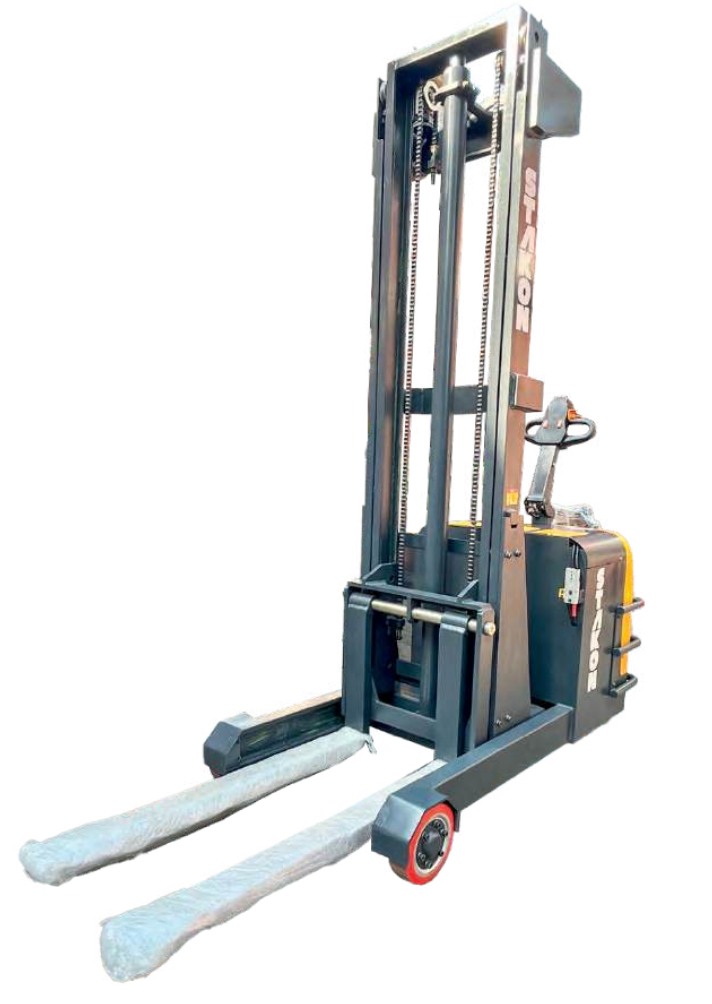 | STACKERS This can be termed as the larger version of an Electric Stacker and is designed for specific application. View product → |
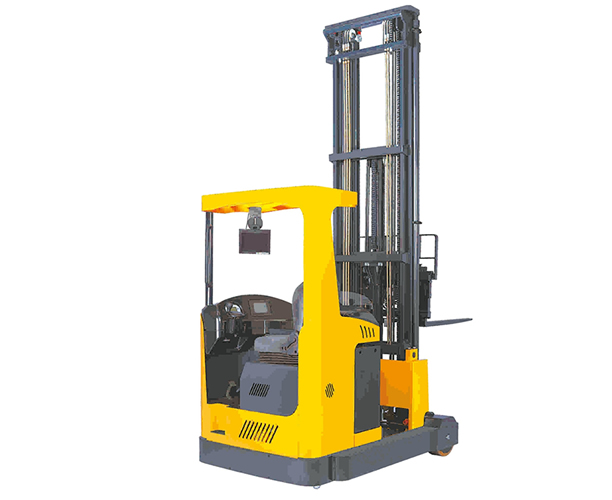 | REACH TRUCK This is again the larger version of an Electric Reach Stacker and is designed to work in narrow aisles. View product → |
Frequently asked questions
When should you choose an electric stacker instead of a reach truck?
Choose an electric stacker for short travel, low-to-moderate throughput and moderate rack heights. It suits storage areas where you do not need frequent high-level pallet retrieval in narrow aisles.
When is an electric reach truck the better choice?
Choose an electric reach truck when narrow aisles, frequent pallet movements and high rack utilisation justify its higher purchase and operating cost.
What should you measure before comparing warehouse stackers?
Measure the narrowest aisle, rack beam height, pallet dimensions and load weight, turning space, floor levelness, door clearances and charging area.
What should Pune warehouses check before buying an electric stacker?
Check battery performance for the planned shifts, ventilation and charging arrangements, operator safety controls, service response, and the supplier’s Indian compliance and maintenance records.
How can you test a stacker or reach truck before placing an order?
Run a site trial using your actual pallets, rack locations, floor conditions and shift pattern. Ask the supplier to document capacity at lift height, battery runtime, turning clearance, training and service commitments.
Related products
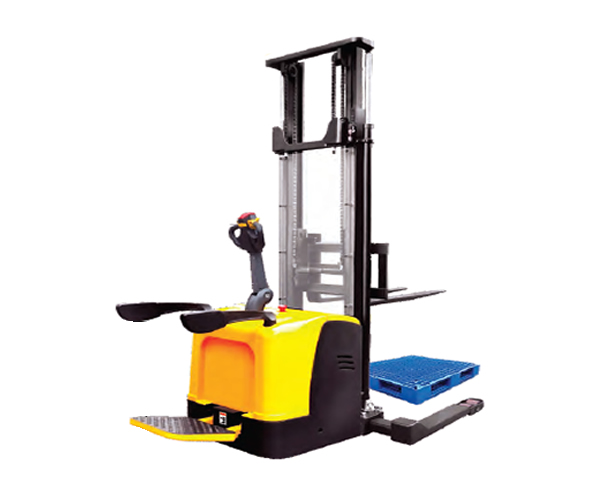 | STACKERS An electric stacker, is a power propelled equipment for lifting and loading pallets. View product → |
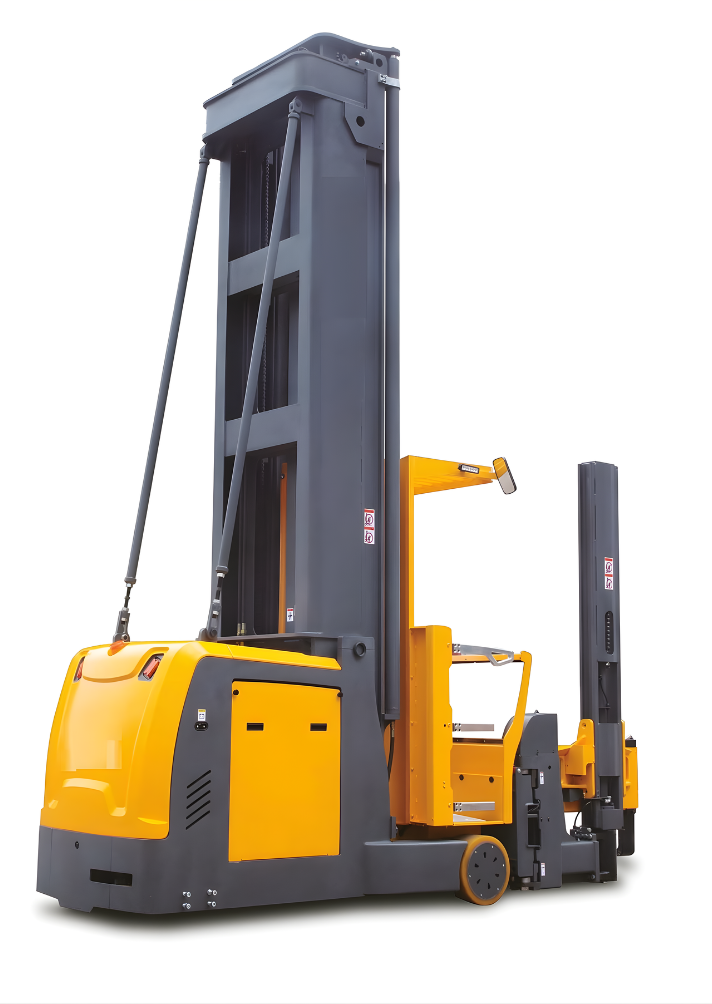 | Narrow Aisle Reach Trucks A narrow aisle reach truck is an electric warehouse vehicle designed for high-density storage, operating in aisle widths often less than 12 feet,... View product → |
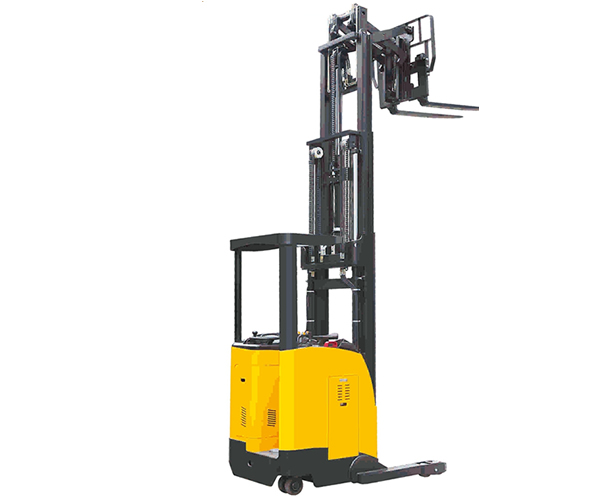 | REACH TRUCK be used i.e. for lifting, lowering, transporting of generally heavy palletized loads for primarily indoor use in factories and warehouses. View product → |