
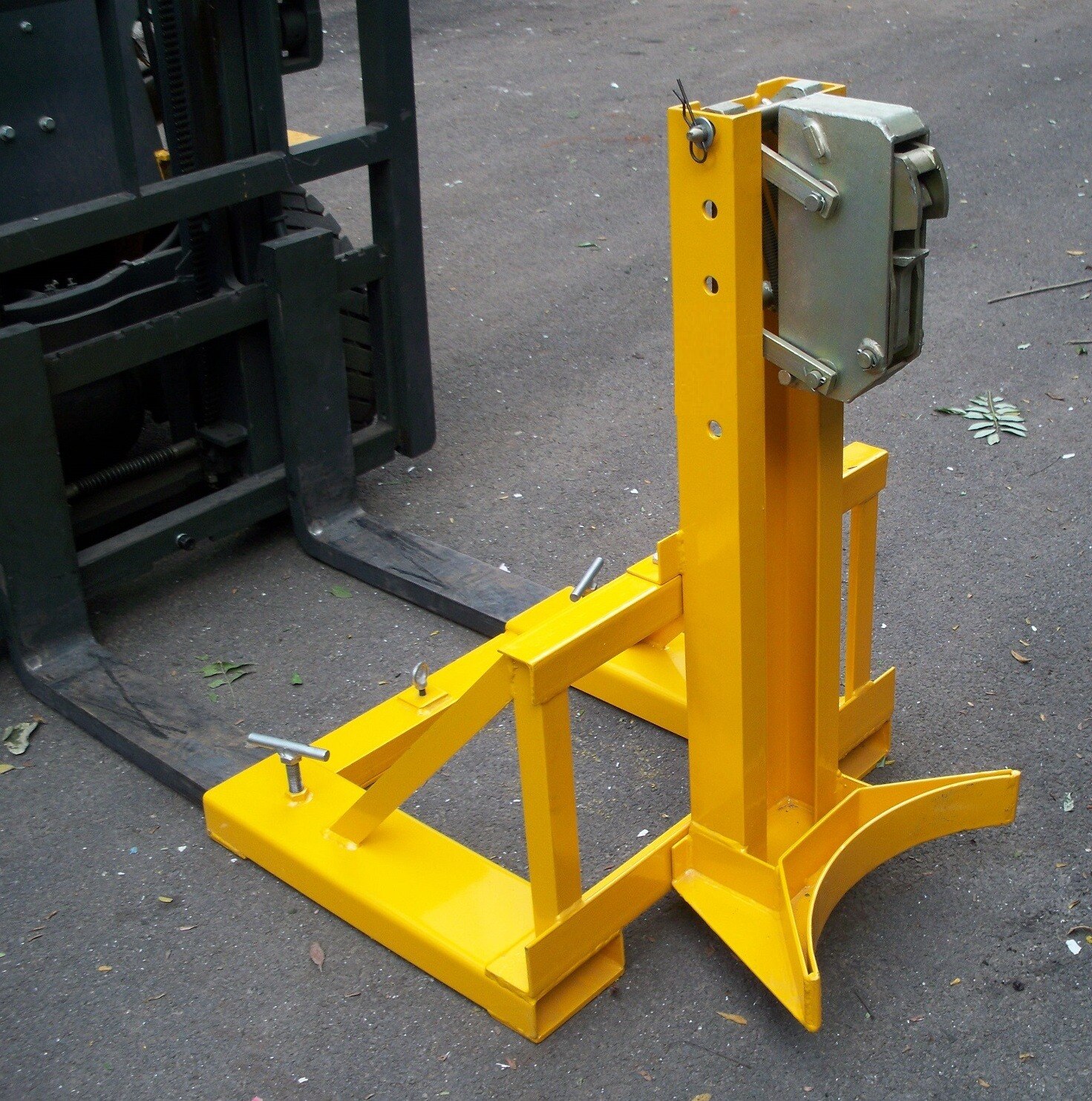
A drum grab is safe only when its mounting interface, residual capacity and gripping method match the platform truck and the drum being moved. By the end, you will be able to specify the carrier, verify drum compatibility, plan the loading sequence and reject a purchase that lacks the drawings, ratings or safeguards needed for your site.
Key takeaways
- Use only a manufacturer-designed mounting plate, hook, pin, or quick-coupler.
- Confirm drum diameter, rim shape, weight, and material before selecting the grip.
- Check platform truck capacity, wheel position, mast geometry, and load balance.
- Request attachment drawings, capacity ratings, compatibility details, and service terms.
How the Attachment Connects to a Platform Truck
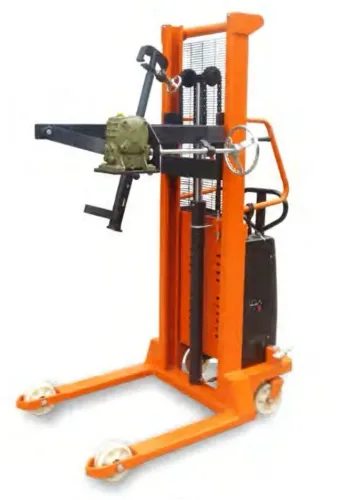
A drum grab attachment platform truck is safe only when the grab connects through a manufacturer-designed mounting plate, hook, pin connection or quick-coupler made for that truck. A forklift clamp cannot be assumed to fit a hand-operated or powered platform truck; forced or partial seating can let the attachment detach under load.
| Carrier | Compatibility check |
|---|---|
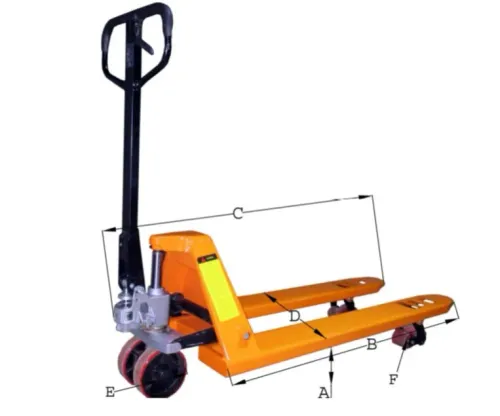
| Hand platform truck | Use only a mechanically mounted grab if the lift mechanism and frame are rated for the combined load. |
| Powered platform truck | Check hydraulic or electric lift geometry, travel controls and braking with the attachment fitted. |
| Forklift, crane or hoist | Treat it as a different configuration, requiring separate load-centre and stability calculations. |
Before approval, obtain the interface drawing, attachment weight, mounting-point dimensions, locking arrangement and proof or inspection documentation. The connection must block partial seating. Before lifting, the operator must confirm the lock visually and by the specified mechanical check.
- Approach the drum squarely.
- Position the platform truck drum grab at the specified engagement height.
- Engage the approved drum feature.
- Verify full closure, seating and lock engagement.
- Lift only enough to clear the deck.
- Travel slowly with the drum controlled.
- Place the drum, lower it fully, confirm that its weight is supported and release only after the load is stable.
Which Drums the Grip Can Hold
A compatible drum grab is defined by the actual drum’s material, dimensions, weight, construction and handling direction—not by a catalogue photograph. Before you buy drum grab attachment equipment, require the supplier to complete this table with rated limits for your drums.
| Material | Outside diameter | Overall height | Tare weight | Gross or tare-plus-content weight | Construction | Orientation | Permitted grip |
|---|---|---|---|---|---|---|---|
| Steel | State minimum and maximum | State minimum and maximum | State range | State maximum | Closed-head or open-head | Vertical or horizontal | Top chime, rolling hoop or specified feature |
| Plastic | State minimum and maximum | State minimum and maximum | State range | State maximum | Closed-head or open-head | Vertical or horizontal | Manufacturer-approved rim or sidewall feature |
| Fibre | State minimum and maximum | State minimum and maximum | State range | State maximum | Closed-head or open-head | Vertical or horizontal | Manufacturer-approved rim or other feature |
Ask whether the jaws engage the top chime, rolling hoop, sidewall or another named surface. Positive chime or rim engagement is not lifting by a bung, lid, loose strap or damaged edge.
Steel drums usually offer a more predictable gripping rim than thin-wall plastic or fibre drums, but the supplier must state the permitted material and wall condition.
Reject leaking drums, crushed or torn rims, heavily corroded drums, open-head drums with damaged covers and containers with distorted grip surfaces. Do not apply a full 210-litre steel-drum rating to a 60-litre, partially filled or plastic drum. Demand separate limits by size, material, engagement condition and orientation.
Vertical lifting does not provide controlled pouring or horizontal rotation; that requires a rated rotator or tilting mechanism.
Platform Truck Capacity, Geometry and Stability
The truck remains safe only if its residual capacity covers the combined working load. Add the attachment, drum contents and every other carried item; do not use the truck’s empty rated capacity.
Check the rating at the actual load centre and lift height, because the grab moves the drum’s centre of gravity forward and increases overturning moment.
Specify the platform truck’s:
- Deck length and width, wheel count and layout
- Steering-wheel or caster arrangement, turning radius and ground clearance
- Maximum lifting height and attachment mounting-point dimensions
- Deck, mast or lift-frame rating, brake capacity and attachment locking method
Confirm that the deck, lift structure and brakes withstand the offset load, not merely the drum’s static weight.
The acceptance test must cover travelling, not just lifting while stationary. A partially filled drum can shift its liquid mass during acceleration, braking, turning or threshold crossing. Define the test speed, turning radius, raised height and any secondary retaining feature.
- Immobilise the truck and control wheel rollback before dock loading.
- Use a bridging plate rated for the combined truck, attachment, operator and drum load.
- Check dock-edge clearance, plate support and overturn risk before crossing.
- Repeat the test with the specified drum fill level and route.
A platform truck that holds the drum safely at rest is not automatically stable in motion. Reject the combination if the drum swings, the wheels unload, the brakes cannot stop progressively, or the truck approaches the dock edge with an unsafe margin.
The Loading Sequence and Pre-Use Checks
Stop the job for any structural defect, failed lock, damaged drum rim, leak or load movement. A sound grab cannot compensate for an unsafe gripping surface.
1. Inspect the grab before each use. Look for cracks, bent arms, sharp or worn gripping faces, distorted hooks, loose pins, damaged welds, hydraulic leaks and missing retainers. Operate the mechanism empty and confirm that it closes and locks consistently.
2. Inspect the drum chime or rim. Reject the drum if the gripping area is crushed, torn, heavily corroded or contaminated. Do not grip a bung, lid, loose strap or damaged edge unless the attachment is specifically rated for that feature.
3. Position the platform truck square to the drum, leaving enough space to turn without contacting racks, vehicles or dock edges. Lower the attachment to the specified engagement height and close it fully on the approved chime, rim, rolling hoop or other gripping feature.
4. Check visible seating, the lock indication and the drum’s balance. Lift only enough to clear the deck. Stop immediately if the drum tilts, shifts, leaks or fails to seat fully.
5. Travel at the speed set in the risk assessment. Keep the drum low, brake progressively and avoid sharp turns, ramps and thresholds unless the approved route includes them. At a dock, use the specified immobilisation and rated bridging arrangements.
6. Set the drum on its designated dock, vehicle, pallet or floor surface. Lower until its weight is supported, confirm stability, then open the grab. For hazardous contents, use the safety data sheet to define spill containment, ventilation, ignition control, static discharge and chemical compatibility measures.
What to Request When Comparing Local Options
Do not compare drum loading equipment in Pune by price: a powered platform truck with a drum grab, drum stacker, forklift-mounted handler and stationary dock aid solve different movement problems.
| Product | Travel control | Lift and orientation | Space and training |
|---|---|---|---|
| Powered platform truck with drum grab | Powered travel and braking | Specified lift height; usually vertical handling | Aisle and route limits; truck-operator training |
| Drum stacker | Travel varies by model | Higher stacking lift; some models tilt | Wider stability envelope; stacker training |
| Forklift-mounted handler | Forklift controls and mast | Forklift load-centre limits; vertical or rotating models | Larger aisle; licensed forklift operator |
| Stationary dock aid | No independent travel | Fixed placement height; orientation is equipment-specific | Least route flexibility; fixed-point procedures |
For a drum grab attachment in Pune, request documents that prove compatibility rather than accepting a catalogue photograph. Ask for:
- Dimensional drawing, attachment weight, mounting-lock details and residual-capacity calculation
- Drum compatibility table covering diameter, height, steel, plastic and fibre construction, closed- or open-head design, gross weight and vertical or horizontal handling
- Rated-load marking, operating instructions, test or inspection records, maintenance schedule, spare-parts list and local service response
- An acceptance demonstration with your largest gross-weight drum, smallest approved drum and any partially filled drum handled in production
- Confirmation of load-centre calculation, placement height, dock or ramp route and the inspection, proof-testing and maintenance requirements for the load-engaging device
Ask which edition of ASME B30.20 applies and which Indian legal requirements govern the equipment. Aguatech Engineers Pvt.ltd. should be compared with other suppliers only after these records and site conditions match.
Related products
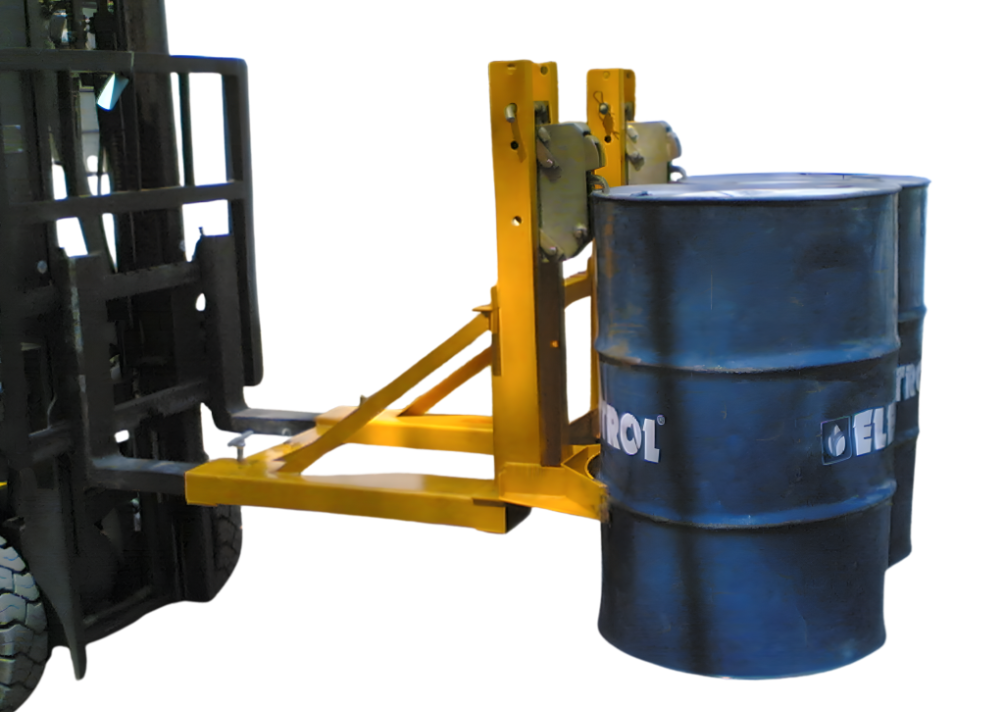 | DRUM HANDLING EQUIPMENT As the name indicates, most establishments have to handle drums/barrels of different sizes and materials on daily and/or regular basis. View product → |
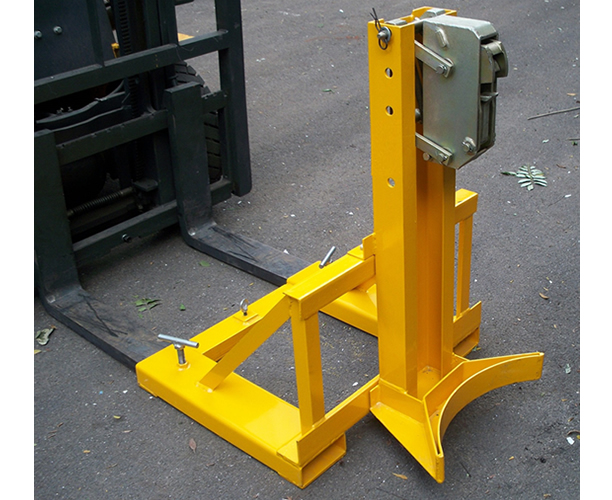 | DRUM HANDLING EQUIPMENT As the name indicates, most establishments have to handle drums/barrels of different sizes and materials on daily and/or regular basis. View product → |
Frequently asked questions
How does a drum grab attachment connect to a platform truck?
It connects through a manufacturer-designed mounting plate, hook, pin connection, or quick-coupler made for the specific truck. Do not force a forklift clamp onto a platform truck.
Which drums can a platform truck drum grab hold?
Check the attachment’s rated drum diameter, rim or chime profile, material, and maximum load. A grip designed for one steel drum may not safely hold a plastic or open-head drum.
What must you check before loading a drum onto a platform truck?
Inspect the connection, locking pins, jaws, wheels, brakes, frame, and drum condition. Confirm the truck capacity, keep the drum centred, and test the grip before travelling.
What should you request when comparing drum grab attachments in Pune?
Request a compatibility drawing, rated capacity, supported drum specifications, mounting details, operating instructions, inspection requirements, warranty, and after-sales service terms.