
The right machine depends on more than maximum height: floor condition, doorway width, platform load, turning space and the need for lateral access can change the answer. By the end, you will be able to compare both machine types, calculate the working envelope and identify the site and safety checks required before hiring or buying.
Key takeaways
- Choose a double mast platform for compact, near-vertical indoor access.
- Choose a rough terrain scissor lift for broad decks and uneven outdoor ground.
- Subtract workers, tools and materials from rated platform capacity.
- Confirm controls, emergency lowering and supplier documents before hiring or buying.
Compare the access envelope before comparing maximum height
Reach, load and route decide the better machine before maximum height does. A Double Mast Aerial Work Platform suits compact, near-vertical work above a prepared floor. A Rough Terrain Scissor Lift suits a broad deck, several workers and heavier tools on uneven outdoor ground; neither replaces a boom where the work point is offset.
| Machine | Access envelope | Manoeuvrability and setup | Best fit |
|---|---|---|---|
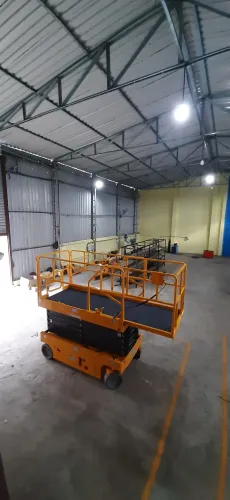
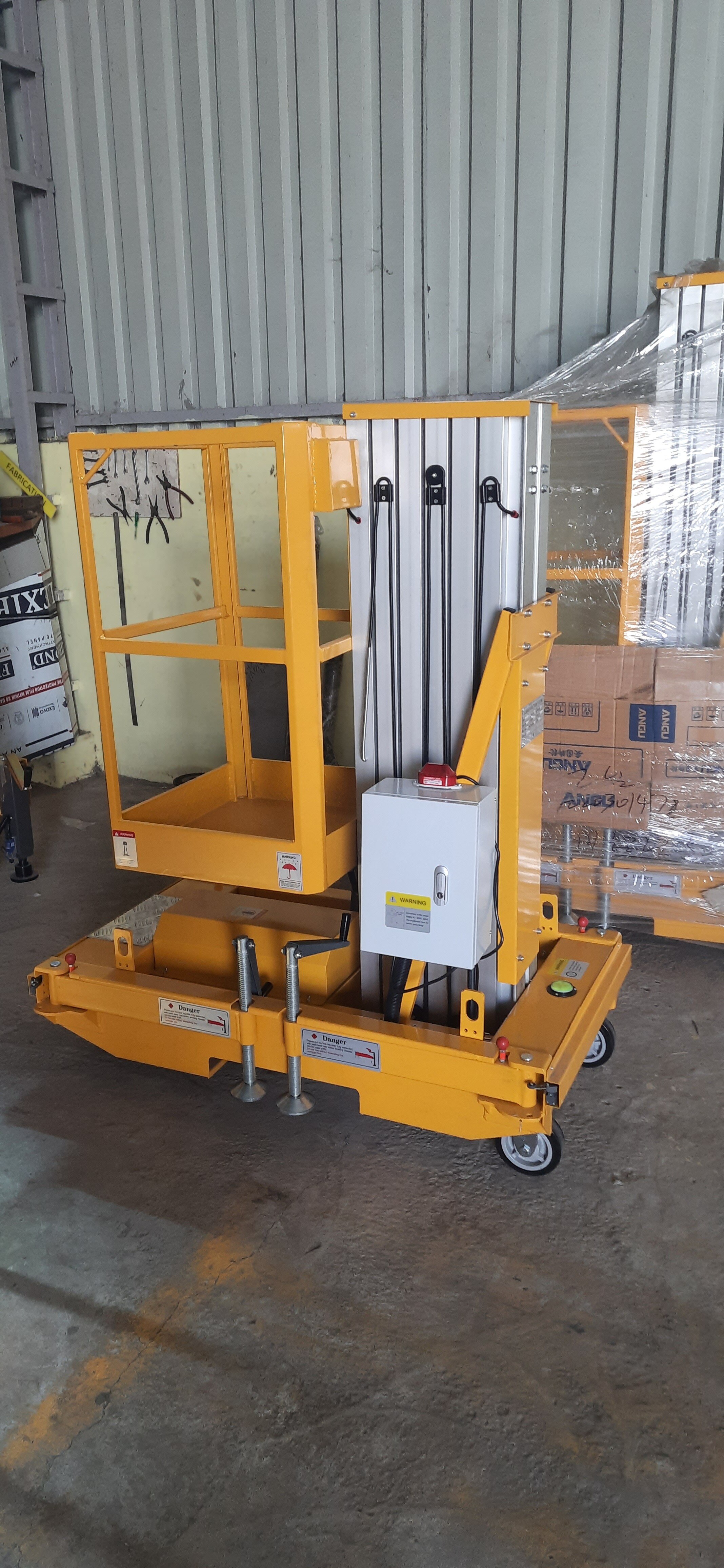
| Double mast aerial work platform | Vertical reach; little or no horizontal outreach; smaller platform and lower capacity | Compact footprint, tight turning radius, low floor loading, faster indoor setup; slower travel and less ground clearance | Warehouses, factories, aisles and work directly above the machine |
| Rough terrain scissor lift | Greater vertical reach, larger deck and higher platform capacity; no boom-style outreach | Four-wheel drive, rough-terrain tyres, oscillating axle and levelling outriggers support uneven ground; wider turning radius, slower transport and longer setup | Construction sites, outdoor maintenance and multiple-person tasks |
| Boom-type platform | Vertical reach plus substantial horizontal outreach over obstacles; capacity changes with outreach | More complex positioning and larger exclusion zone; setup depends on stabilisation and terrain | Work beside structures, above machinery or beyond a roof edge |
This elevated access comparison should include platform size, rated load, travel speed, turning radius and setup time, not just height. A rough-terrain model that lacks four-wheel drive, rough-terrain tyres, axle articulation or outriggers is not proven suitable for rough ground.
Ask for platform height and working height separately. Maximum working height includes the operator’s reach above the platform, so identical headline heights can describe different usable access envelopes. Also check doorway width, gate width, ramp gradient, floor loading and recovery access before selecting the taller machine.
Check whether the machine and site are genuinely suited to each other
A machine that clears the required height is still unsuitable if the route cannot carry, turn or recover it. For an aerial work platform in Pune, inspect the complete journey from unloading point to the work face, not just the final operating position.
- Measure every gate, doorway, aisle, corridor and turn, then compare each dimension with the machine’s transport width, length, height and turning radius. A rough-terrain scissor lift can reach an outdoor work area yet fail at a warehouse entrance.
- Check the floor’s rated load and point loading. Double-mast platforms usually suit prepared concrete floors and narrow indoor routes because they have a smaller footprint and lower floor loading; never assume a slab, mezzanine or loading dock can support either machine.
- Check ground bearing capacity where a rough terrain scissor lift will travel or set up. Soft soil, recently backfilled ground, paving blocks and slab edges can collapse under wheel or outrigger reactions; use load-spreading mats or choose another machine when the assessment fails.
- Confirm the ramp gradient, surface grip, cross-slope and drainage. Four-wheel drive, rough-terrain tyres, an oscillating axle and levelling outriggers improve mobility and setup, but they do not make an unsafe slope safe.
- Verify lift-gate or freight-elevator capacity, cabin dimensions and ramp clearance before transport. Include the machine’s total weight, batteries or fuel, and delivery vehicle.
- Plan unloading and recovery after rain. A route that worked when dry can become impassable, trapping the machine away from the work area. A mast lift remains the better choice when the task is indoors, compact and directly above the machine.
Calculate working height, obstruction clearance and usable platform load
A quoted 10 m platform height does not mean a 10 m working height. Calculate working height as platform height plus the operator reach used in the supplier’s specification, then compare that figure with the highest point you must reach. Record both figures in the quotation.
Map the envelope before choosing a machine:
- Measure the floor position, required platform height and the highest obstruction, including beams, pipes, sprinklers, doors and cable trays.
- Confirm the machine can travel vertically to the work point without the guardrails, mast, deck, worker or tools contacting an obstruction.
- Add the required clearance demanded by the site risk assessment; do not treat the guardrail as clearance from an overhead hazard.
- Measure horizontal offset separately. A double mast aerial work platform works principally above its footprint, so it cannot replace a boom where the task is beyond an obstruction.
- Check the manual for maximum slope, wind, indoor or outdoor use, travel restrictions at height and any outreach limit.
Calculate usable platform load as:
Rated platform capacity − combined weight of people − tools − materials = remaining capacity.
Use the rating for the exact deck position. An extension deck can have a lower limit than the main platform, and the total must never exceed either limit. Include batteries, welding leads and temporary fixtures if they travel on the platform.
In an elevated access comparison, a larger rough-terrain deck is useful only when its load chart still covers the planned crew and materials.
Choose by application: warehouse, factory, construction site or narrow access route
Select a compact double-mast platform when the job is directly above a prepared floor and the route is narrow; choose a rough-terrain scissor lift when a broad deck, several workers or heavy tools must travel across uneven outdoor ground. Choose a boom-type machine when the work point is beyond the chassis or above an obstruction.
Height alone does not decide it.
| Option | Reach pattern | Best application | Main trade-off |
|---|---|---|---|
| Double mast | Primarily vertical, with little lateral movement | Warehouses, factories and narrow access routes | Compact footprint and low floor loading, but smaller deck and limited capacity |
| Rough-terrain scissor | Vertical lifting from a broad deck | Construction sites and uneven outdoor ground | Four-wheel drive, rough-terrain tyres, oscillating axles or outriggers improve access, but transport and indoor entry are harder |
| Boom-type platform | Vertical lift plus horizontal outreach | Work over machinery, racks, roofs or obstacles | Reaches offset work points, but needs more clearance and a larger operating envelope |
For a double mast aerial work platform or rough terrain scissor lift in Pune, measure doorway and gate width, turning radius, ramp gradient, floor or slab loading, lift capacity, transport dimensions and the unloading route. A rough-terrain machine that reaches the work zone can still fail at a warehouse door or become unrecoverable after rain.
When assessing an aerial work platform in Pune, ask Aguatech Engineers Pvt.ltd. to state the actual deck load, transport width, power source, gradeability and recovery method rather than relying on height alone.
Related products
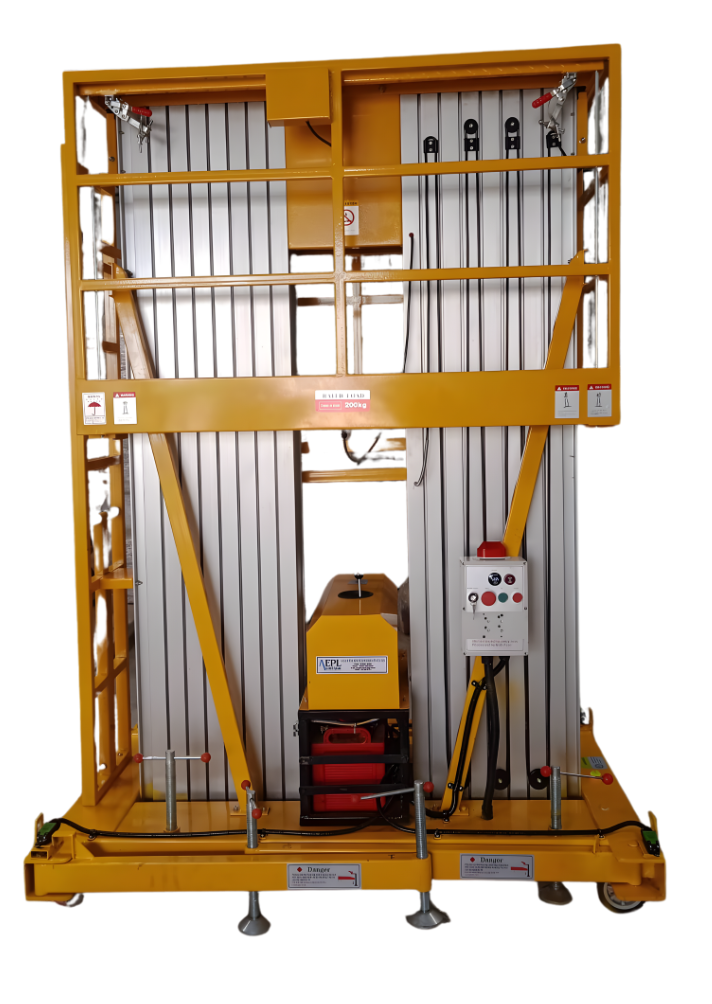 | Aerial Work Platform – Double Mast Aerial Work Platform – Double Mast A double mast aerial work platform is a high-stability, vertical lifting device utilizing two parallel aluminum or steel masts to elevate personnel... View product → |
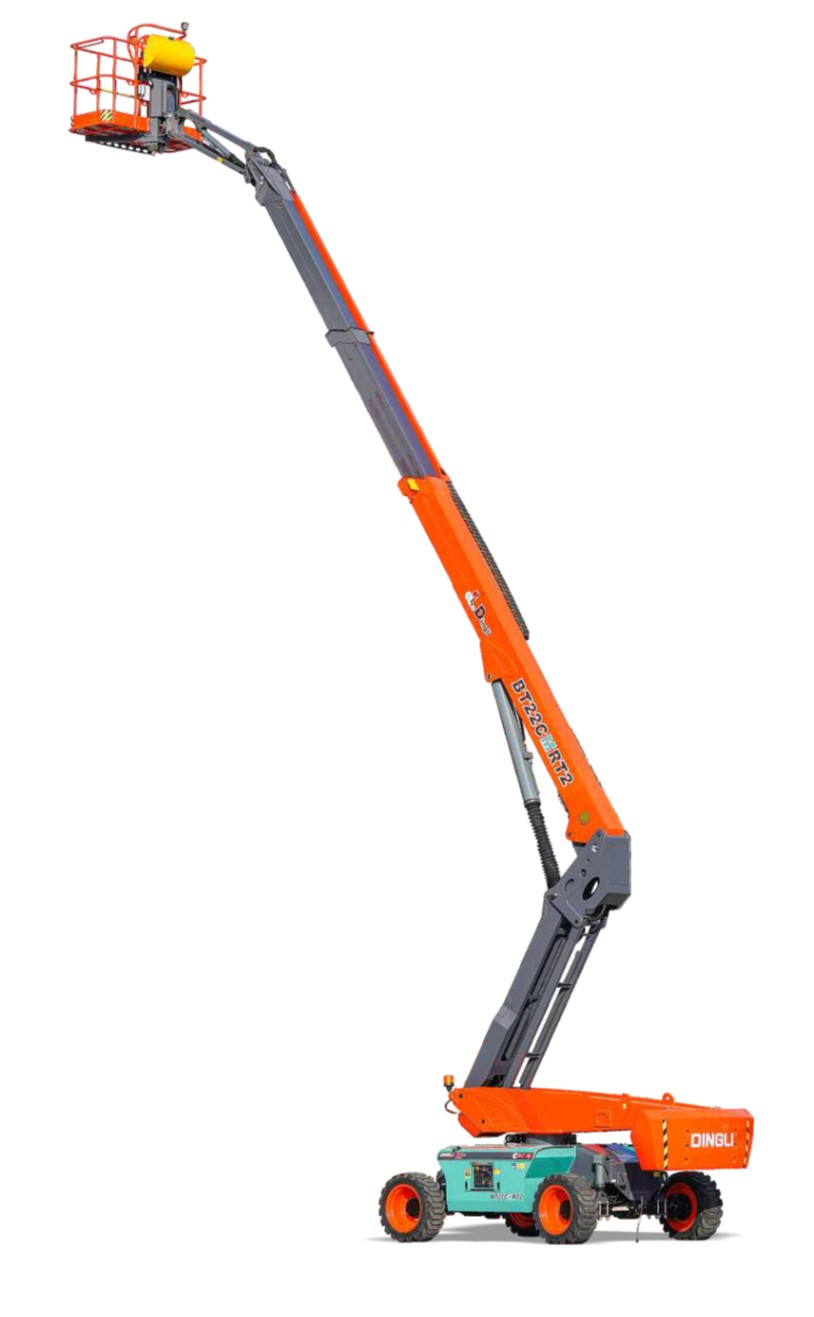 | Telescopic Boom Lift A telescopic boom lift is a mobile elevated work platform featuring a straight, hydraulic telescoping arm that extends directly outward and upward,... View product → |
Verify operating controls, rescue arrangements and supplier documentation
Before anyone raises a platform, make the rescue method work on the ground—not only on paper. This applies whether you are hiring an aerial work platform in Pune for indoor maintenance or sending a rough terrain scissor lift onto a construction site.
1. Run every normal control from the platform and ground station. Check drive, steering, lift, lower, brakes, alarms, emergency stop buttons and interlocks. Confirm the platform stops when a gate opens or a control is released.
2. Test emergency lowering with the normal power isolated, following the manufacturer’s procedure. Confirm the platform descends smoothly and that the ground operator can reach and operate the valve, hand pump or backup system. A dead battery must not leave an injured worker suspended.
3. Inspect the rescue arrangement before work starts. Name the ground rescuer, confirm access to the controls and keys, establish radio or voice communication, and identify the emergency number and site access route. Do not rely on climbing the scissor structure or jumping to a roof.
4. Match the machine plate and manual to the planned job. Record rated platform capacity, maximum occupants, working height, allowable slope, wind limit, tyre or outrigger requirements and prohibited uses. Keep people, tools and materials within that configuration; never use the lift as a crane, forklift or bridge.
5. Request the operator manual, pre-use inspection form, maintenance history, load chart, electrical or fuel requirements and current examination records. Reject a machine with unreadable plates, missing instructions, failed alarms or undocumented repairs. Ensure the operator and ground personnel have site-specific training before raising the deck.
Frequently asked questions
How do you compare a double mast aerial work platform with a rough terrain scissor lift?
Compare the access envelope first: vertical reach, platform size, lateral reach, obstruction clearance, route width and ground conditions. A double mast platform suits near-vertical work on prepared floors, while a rough terrain scissor lift suits broad-deck work outdoors on uneven ground.
How do you calculate usable platform load and working height?
Add the weight of every worker, tool and material, then keep the total within the machine’s rated platform capacity. Working height combines the platform floor height with the operator’s required reach, while overhead beams, pipes and ceilings reduce usable clearance.
Which machine suits a warehouse, factory or construction site?
Use a double mast platform for compact indoor routes and routine vertical access. Use a rough terrain scissor lift for construction sites, outdoor maintenance and tasks needing several workers, heavier tools or a larger deck. Choose neither for work that requires significant horizontal or offset reach.
What operating and supplier documents should you verify?
Check the operating manual, rated capacity chart, inspection and maintenance records, emergency-lowering procedure, rescue plan, operator training evidence and machine identification details. Confirm that the controls and recovery arrangements match the site and task.