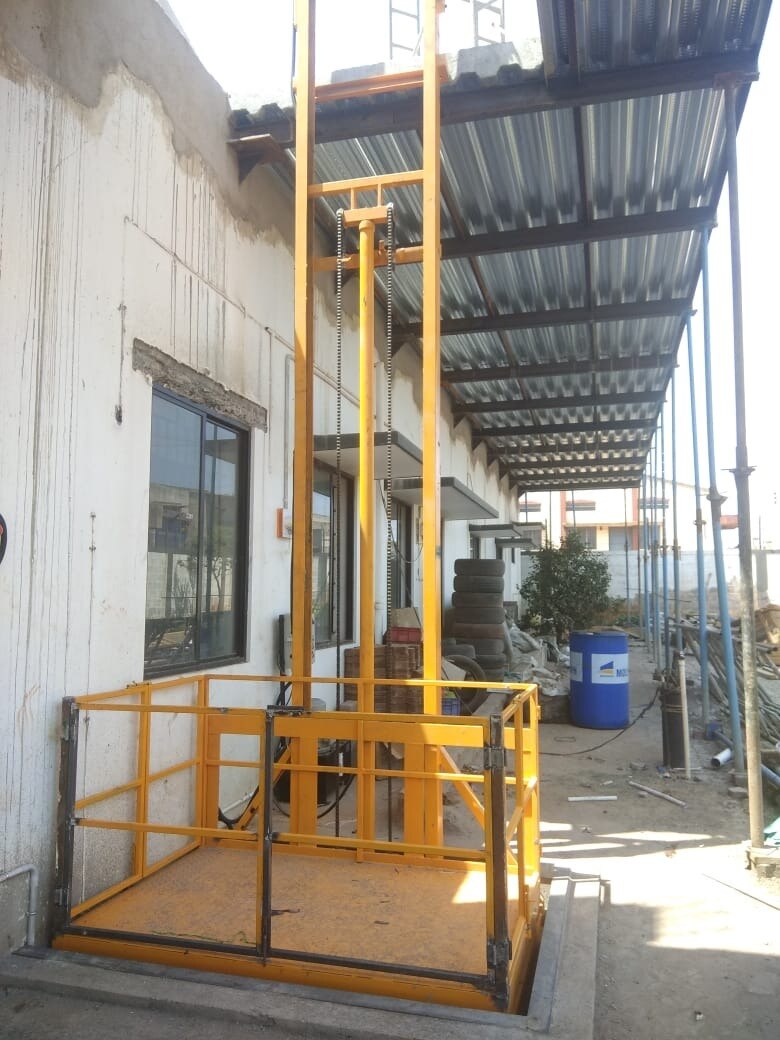
A lift can meet its rated load and still fail to move materials reliably when trip frequency, landing layout, load position, hydraulic performance and floor-to-floor coordination are mismatched. You will be able to separate capacity and throughput limits from mechanical faults, then specify the checks needed to restore dependable transfer across every landing.
Key takeaways
- Calculate goods, pallet, platform and impact loads before comparing nameplate capacity.
- Check off-centre loads, point loading and forklift entry at every landing.
- Use symptoms to test oil level, valves, switches, sensors and electrical controls.
- Trace floor-specific faults through landing gates, interlocks and control circuits.
Start with the movement calculation, not the nameplate
Calculate the workload before reading the nameplate. Load per trip equals goods plus pallet or stillage plus platform or cage; then check off-centre placement, concentrated point loads and the impact of forklift entry.
A 1,000 kg goods load does not become safe if the pallet weighs 80 kg, the cage 220 kg and a forklift strikes the threshold. Raising the rated capacity alone will not solve goods lift for multi floor movement problems when guides, structure, hydraulics, landings or loading methods remain unsuitable.
Calculate one complete cycle as:
- Travel time: floor-to-floor distance divided by ascent speed, plus descent time.
- Handling time: door opening, loading, unloading and door closing.
- Return time: empty-return travel when the lift goes back for another call.
- Delay time: queueing, intermediate-floor calls and call-priority conflicts.
For example, five-minute travel and handling repeated across four floors can create a queue even when each individual lift run appears acceptable. Several floors compete for one platform, producing peak-period queues and a single-lift bottleneck.
| Rated capacity | Safe working load for the complete lift |
|---|---|
| Maximum stated load under specified conditions | Lower governing limit after considering platform, structure, guides, hydraulic components, gates, point loads and loading method |
| Not permission to exceed the stated loading arrangement | Use this limit for the actual pallet, stillage, cage and impact condition |
A compliant mechanism can still fail the required workload if waiting time overheats the pump or operators bypass safe loading rules.
Find failures at the load and landing interface
A pallet can weigh less than the rated load and still create goods lift material transfer issues. Off-centre placement or forklift impact twists the platform frame, increases guide friction and produces rattling, poor levelling and gate misalignment.
1. Centre every pallet or stillage on the platform. Keep all goods inside the platform or cage, prevent overhang, distribute point loads, and secure unstable items with suitable restraints.
2. Keep people off the platform unless the lift is specifically designed, safeguarded and approved for passenger use. A goods-only lift lacks the controls, guarding and emergency arrangements expected of a passenger lift.
3. Inspect each landing before service. Check the floor is level, the threshold height has not changed, the sill is undamaged, and the door and gate opening is wide enough for the pallet truck or forklift.
4. Check the complete route, not just the lifting mechanism. Confirm pit and overhead clearances, shaft guarding, approach space and turning room. A tight approach encourages impact loading and makes a safe crossing impossible.
Clear the receiving floor before travel begins; a blocked landing forces operators to wait at the threshold or unload unsafely. Assess the door, gate, threshold and approach arrangement at every floor, because settlement, repairs or resurfacing at one landing can make a smoothly travelling platform unsafe to enter or leave.
Use a symptom-led electro-hydraulic troubleshooting sequence
A lift that becomes slow, noisy, weak or unreliable needs electro-hydraulic goods lift troubleshooting in a fixed order. Record the symptom, the load, the direction of travel and the affected landing before adjusting anything; otherwise, goods lift problems at one floor can be mistaken for a hydraulic failure.
- Confirm whether the fault affects ascent, descent, levelling, one landing or every landing. Remove the load and secure the platform before inspection.
- Check every emergency stop, gate and door interlock, control fuse and supply voltage. Never fit a larger fuse or bypass an interlock.
- Inspect the reservoir level, oil condition and all external joints, hoses, cylinder seals and fittings for leakage. Low or aerated oil can make the pump noisy and ineffective.
- Listen while the lift runs: distinguish motor starting, pump engagement, cavitation, grinding and abnormal vibration. A running motor does not prove that the pump is producing flow.
- Test hydraulic pressure against the specified setting, confirm valve movement, inspect hose condition, check cylinder holding for drift and verify platform alignment against the landing. Do not raise the relief setting to force movement.
Slow ascent points to low pump flow, cold or contaminated oil, suction restriction or a passing relief valve. A running motor with no lift points to aerated or low oil, pump damage or a valve fault. Drift at rest indicates internal leakage. Jerky travel indicates air, wrong-viscosity oil, sticking valves, guide friction or uneven loading.
Overheating indicates relief or closed-centre flow; repeated trips indicate overload, thermal or electrical faults.
Trace floor-specific faults through gates and control circuits
A lift can serve one landing and refuse another because every additional floor adds a landing gate, lock, position sensor, call circuit, limit switch and interlock path. One open gate, failed limit switch, inaccurate stopping position or broken signal can inhibit travel only at that floor.
Trace the affected landing before replacing hydraulic parts. Use this checklist:
- Confirm the failed call, then inspect the gate, lock, sill, position sensor and limit-switch status at that landing. A platform stopping short can leave the interlock open even when the lift appears level.
- If the lift will not rise, check supply voltage, control fuses, motor and pump operation, oil level, pressure and directional-valve movement. Low oil, aerated oil, a passing relief valve or a valve that has not shifted fully can stop ascent.
- If it will not descend, inspect the lowering solenoid, lowering-flow-control valve, counterbalance valve, obstruction and active gate or overspeed safety circuit. Do not treat this as the same fault as failed ascent.
- Review call prioritisation and destination control. Empty-return trips, conflicting floor calls and peak-period queues can make normal equipment a bottleneck, creating goods lift problems without a mechanical failure.
- Never force a valve or bridge a safety contact. That defeats the protection system and can permit movement with an open gate, failed lock or unsafe stopping position.
Specify the complete installation and duty cycle before repair or replacement
Do not approve a larger motor or replacement lift until the installation and duty cycle have been reviewed as one system. Confirm the rated capacity and safe working load for the complete lift, including platform, structure, hydraulic components, loading method, pallet weight, point loads and impact from forklift entry.
- Record trips per hour, floor-to-floor travel, intermediate-floor calls, loading and unloading time, waiting time, empty returns and peak-period queues.
- Inspect every landing gate, shaft guard, structural support, platform guide, threshold and access clearance. Check that approach space and turning room do not force off-centre loading or impacts.
- Verify hose-burst or pipe-rupture protection, load-control devices, emergency-stop circuits, gate interlocks, control logic and maintenance access.
- Calculate motor and pump duty from the complete sequence, not only the lifting motion. A hydraulic lift can overheat during repeated normal-looking calls when a closed-centre circuit, blocked flow path or relief valve converts pressure into heat; waiting and loading time count.
- Document inspection and thorough-examination intervals required by the applicable jurisdiction, risk assessment and examination scheme. In the UK, LOLER commonly sets 12 months for goods-lifting equipment unless the examination scheme specifies another interval.
A goods lift is not a passenger lift. People must not ride unless it was specifically designed, safeguarded and approved for passengers.
When comparing redesigns or suppliers, request a floor-by-floor interface drawing, load assumptions, control sequence and fault-response procedure. Aguatech Engineers Pvt.ltd. can be assessed alongside other engineering suppliers against that complete-system evidence.
Related products
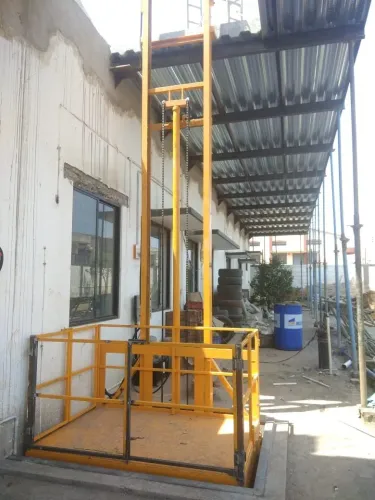
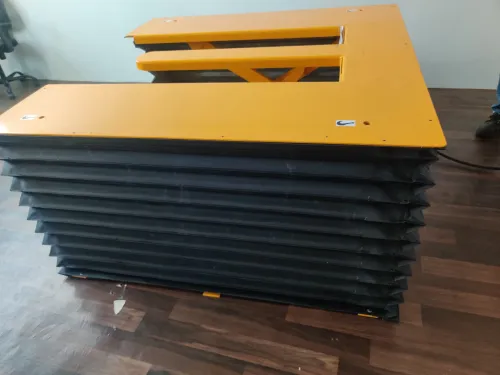
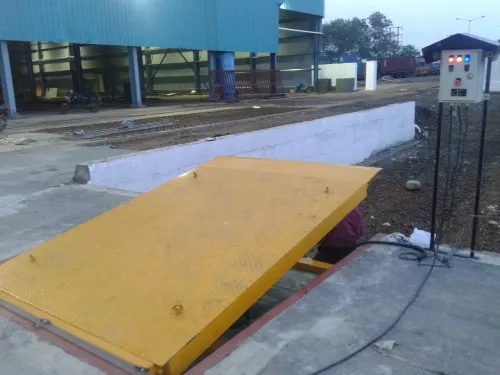
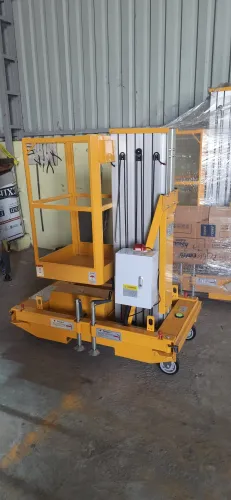
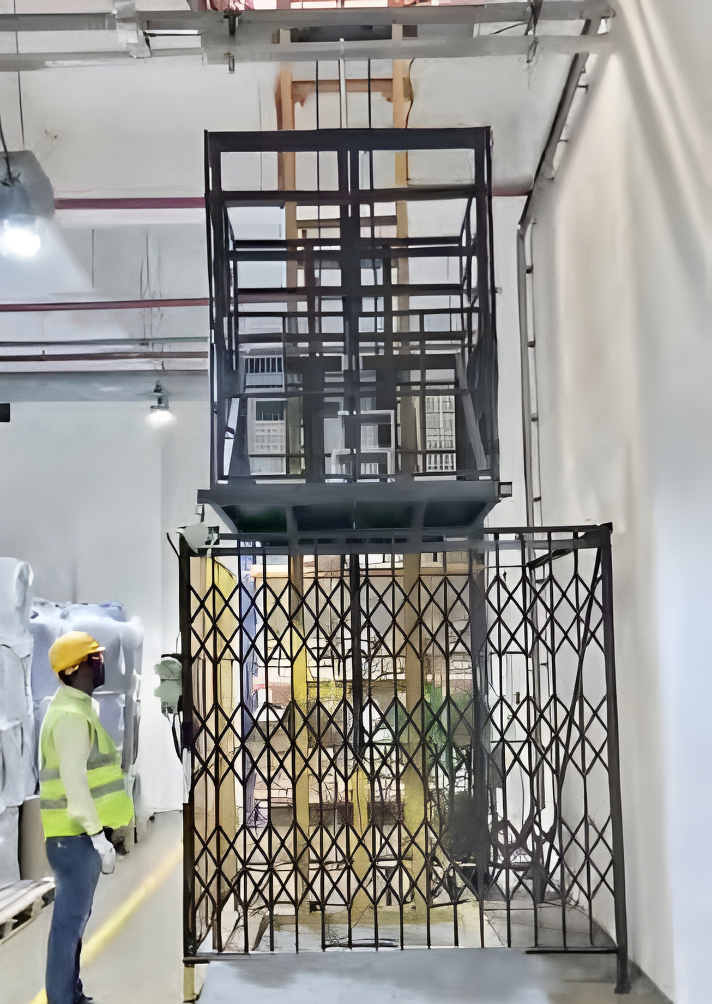 | GOODS LIFTS Goods or Cargo or Luggage lifts are basically used in industry shop floors for safe, secure, convenient and fast methods to transport loads from... View product → |
 | GOODS LIFTS Goods or Cargo or Luggage lifts are basically used in industry shop floors for safe, secure, convenient and fast methods to transport loads from... View product → |
Frequently asked questions
How do you calculate the workload for a multi-floor goods lift?
Add the goods, pallet or stillage, and platform or cage weights, then check off-centre placement, concentrated point loads and forklift-entry impact.
What should you check at the load and landing interface?
Inspect pallet alignment, floor clearance, landing thresholds, gate operation, wheel loads and any obstruction that transfers impact into the lift.
What is a practical electro-hydraulic goods lift troubleshooting sequence?
Start with the symptom, then check supply power, emergency stops, oil level, leaks, hydraulic pressure, valves, hoses, limit switches and safety interlocks.
Why does a goods lift fail at only one floor?
Trace that floor's landing gate, gate switch, interlock, call station, limit sensor and control-circuit wiring for misalignment, damage or loss of continuity.