
The right truck depends on the heaviest load at its real centre of gravity, the height and distance you must move it, and the surfaces, aisles and charging conditions around your plant. By the end, you will have a specification method, comparison checklist and supplier brief that distinguish a suitable electric truck from an under-capacity or impractical one.
Key takeaways
- Check rated capacity at your actual load centre and lift height.
- Measure aisle width, mast clearance, turning space and attachment dimensions.
- Choose electric, reach or combustion power from your duty cycle and ventilation needs.
- Compare battery life, maintenance, proof documents and site-control requirements.
Start with the real load, not the truck’s headline capacity
A 2,000 kg forklift does not automatically lift a 2,000 kg engineering load. Its rated capacity applies at a specified load centre, mast height and attachment configuration; move the centre of gravity forward and the permitted load falls. Measure from the fork heel to the load’s centre of gravity, including any overhang.
Establish the minimum capacity from the worst real load, not the average pallet:
- Record the mass of the heaviest die, steel component, casting, motor housing, crate or bin.
- Measure length, width, height and the distance from the fork face to the load centre.
- Include the attachment, pallet, stillage and any load that sits unevenly or off-centre.
- Specify the required lift height and mast type, because capacity can reduce as the forks rise.
- Check the manufacturer’s capacity plate for that exact load centre, mast height and attachment.
- Add a controlled operating margin only after the truck supplier confirms the derating; do not treat a larger nominal class as a substitute for analysis.
For many Pune engineering plants, a 2.0–3.5 tonne counterbalanced electric truck is a sensible screening range, not a final answer. Press-shop dies, coils and long fabricated parts can demand a greater load centre, higher rated capacity or a purpose-designed attachment.
Ask for a stability and capacity calculation before choosing an electric forklift truck for engineering operations in Pune. The same method applies to an electric forklift for engineering industry use: select against the worst configuration, then verify floor loading, handling frequency and operator controls.
Calculate the aisle, lift and attachment requirements at the facility
Measure the narrowest travel point, the actual load, and the highest fork position before accepting a quotation. A manufacturer’s minimum turning radius is not a warehouse aisle width; it excludes the pallet overhang, turning method, mast configuration and your pedestrian-clearance rule.
Record these measurements for every load family:
- Pallet or stillage length and width, including load overhang on all sides
- Heaviest load and its centre of gravity, measured from the fork face
- Narrowest aisle, doorway, column gap, dock approach and turning area
- Required stacking aisle width from the truck’s technical drawing for your load and attachment
- Highest rack beam, fork elevation, ceiling obstruction and sprinkler clearance
- Floor slope, joints, potholes and outdoor surface sections along the route
- Attachment width, weight, forward projection and rotation or clamping range
Then request a truck layout drawing showing the calculated right-angle stacking aisle, turning radius and clearance at each constriction. Test the longest and least balanced load, not only a standard pallet.
A 2,000 kg rating does not prove the truck can lift 2,000 kg at your required height. Check the capacity plate for residual capacity at the specified mast height, load centre and attachment; a sideshifter, rotator, clamp or extended forks can reduce it further.
Include charging access and battery-change space when assessing electric forklift truck benefits, because a blocked route or battery-change delay can erase the productivity gain.
Choose between counterbalance, reach and combustion-powered trucks
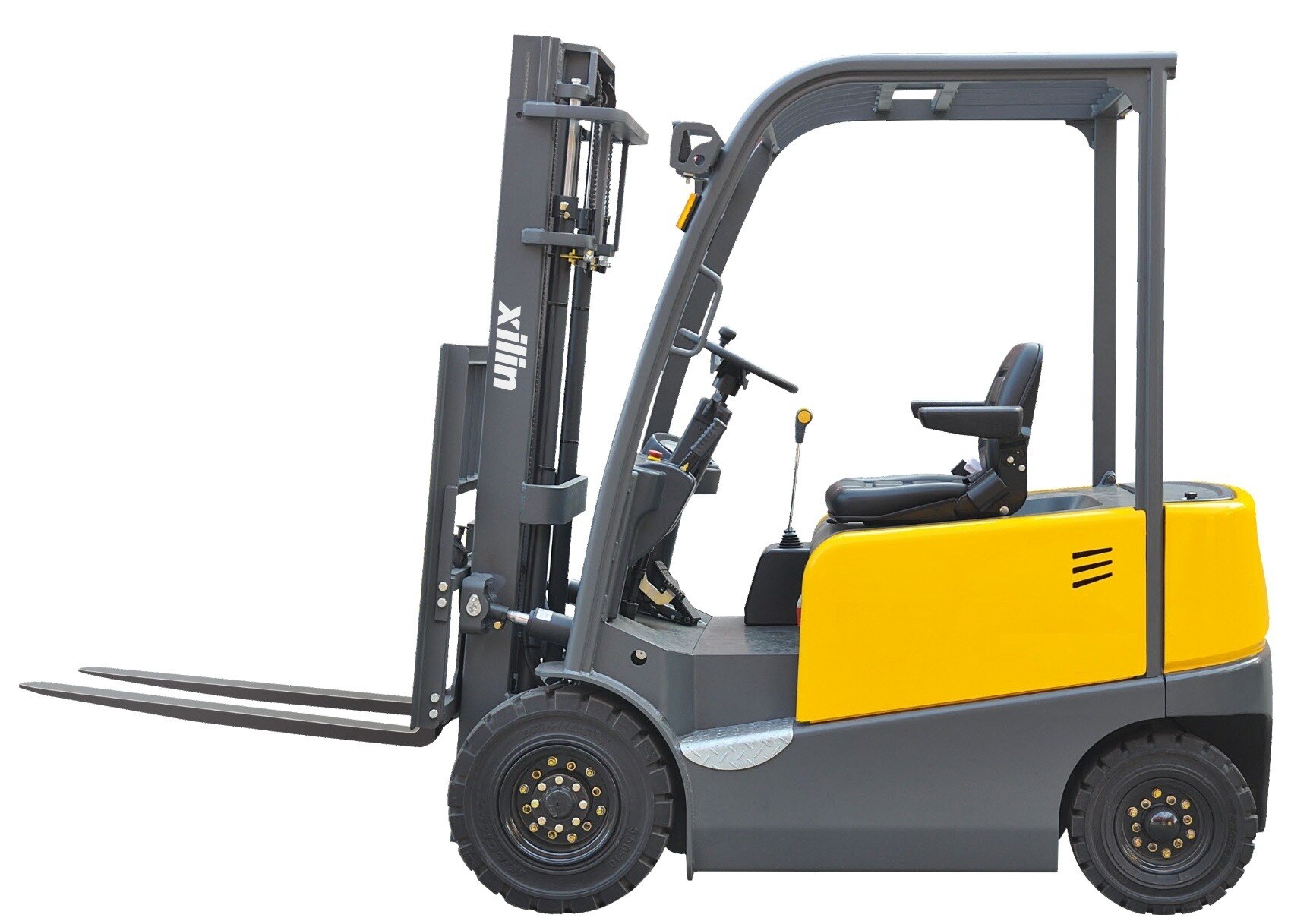
Use a counterbalance electric truck for production-line feeding, mixed pallet movement and most loading-dock work. It carries the load in front of the mast, so it handles crates, bins, dies and uneven engineering loads better than a reach truck.
A 2.0–3.5 tonne range is only a screening point: verify the actual load centre, attachment and lift height on the capacity plate.
| Option | Best fit | Main limitation |
|---|---|---|
| Counterbalance electric | Production feeding, pallet transfer and indoor-outdoor dock routes | Needs wider aisles and suitable tyres for dock plates, dust and wet paving |
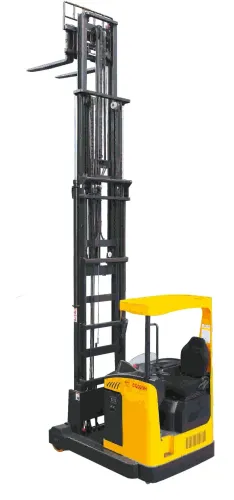
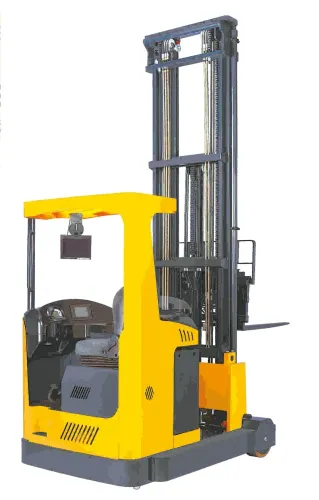
| Reach or narrow-aisle reach | Rack storage and high lifts in restricted aisles | Poorer choice for long loads, rough yards and frequent dock travel |
| Electric pallet truck | Short, level pallet moves between staging and line-side locations | No elevated racking and limited performance on ramps or broken floors |
| Diesel or LPG counterbalance | Heavy outdoor work, long travel and rough loading yards | Exhaust, noise and emissions make it unsuitable for enclosed production areas |
For rack storage, choose a reach truck only after checking pallet depth, mast height, turning method and pedestrian-clearance rules. The quoted turning radius alone does not prove aisle fit.
For an electric forklift truck in Pune moving between a shop floor and monsoon-exposed dock, specify wet-surface braking, traction, underbody clearance and ingress protection in the acceptance test; coolant, swarf and abrasive dust can defeat a truck chosen solely by motor power.
Match the battery and tyres to Pune’s duty cycle and weather
An electric forklift truck suits Pune operations when the shift has predictable indoor travel, planned charging time and a dry, reasonably smooth floor. The main electric forklift truck benefits are no local exhaust, lower noise, controllable acceleration and potentially lower energy and routine-maintenance costs.
Compare usable energy and charging opportunity, not only ampere-hours. Lead-acid batteries suit scheduled shifts with time for charging and cooling, but require watering, battery handling and a ventilated charging area because charging produces hydrogen.
Lithium-ion batteries support opportunity charging during breaks, avoid watering and reduce battery-change downtime, but the truck, charger and electrical installation cost more. Continuous ramp travel, repeated high lifts, high hydraulic demand, cold-store work or no charging window can exhaust either system before the shift ends.
Treat charging as facility work: provide impact protection, electrical isolation, no-smoking controls and ventilation suited to the battery technology. A cheap truck becomes expensive if it waits for a battery change or shares one charger across overlapping shifts.
Choose tyres for the route:
- Cushion or solid tyres suit smooth indoor concrete and resist punctures, but transmit shocks on broken floors.
- Pneumatic tyres suit uneven outdoor yards and dock approaches, but punctures and wet-surface grip become operating risks.
- Non-marking compounds protect finished floors, while standard compounds usually tolerate harsher industrial surfaces better.
Pune’s monsoon exposes leaks, standing water and slippery ramps; summer heat increases battery and tyre stress. Specify sealed electrical components, drainage, speed controls and a tyre tread that matches the wet route. Keep combustion power for prolonged outdoor duty, severe floors or work where charging downtime cannot be accepted.
Compare proposals by operating cost, proof documents and site controls
Compare total cost per operating hour, not the invoice alone. Include the truck, battery and charger, electricity, tyres, planned maintenance, operator training, downtime, battery replacement and residual value. A cheaper lead-acid option can cost more after battery watering, change-out labour and charging-room requirements.
| Proposal item | Accept only when | Cost or safety warning |
|---|---|---|
| Capacity evidence | The plate states load centre, mast height and attachment configuration for your actual load | A 2,000 kg rating does not mean 2,000 kg at an extended load centre |
| Energy plan | Usable energy covers the shift, with charging or battery-change time documented | Ampere-hours alone hide ramp, lift-height and hydraulic demand |
| Maintenance offer | It names service intervals, response time, parts coverage and battery warranty | Unpriced downtime becomes the operating cost |
| Site acceptance | It tests braking, traction, insulation, underbody clearance and wet-surface control | Monsoon water, coolant, swarf and dust can defeat an indoor specification |
For an industrial electric forklift in Pune, require commissioning records, operator training attendance and a written procedure covering speed, ramps, intersections, reversing, parking, charging and pre-use inspection. Electric drive removes exhaust, not crush, tip-over, falling-load or dock-edge hazards.
Ask Aguatech Engineers Pvt.ltd. or any bidder to provide the capacity calculation, battery-charger compatibility, inspection checklist and acceptance-test results before handover. Reject the proposal if the supplier cannot show who controls pedestrian segregation, dock edges and daily defect reporting.
Related product
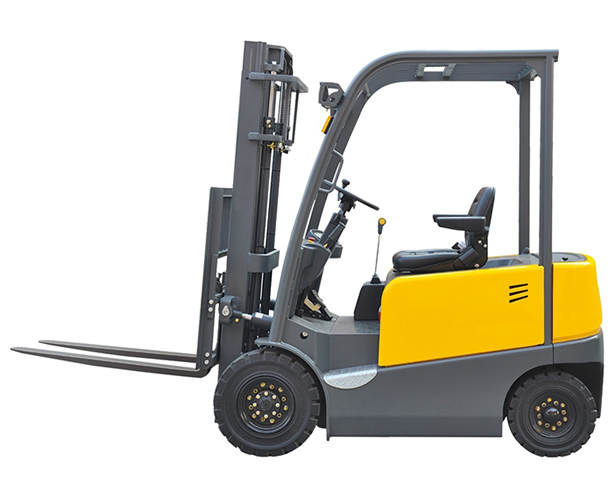 | ELECTRIC FORKLIFT TRUCK Electric Forklift Trucks are used where Stackers and Reach Trucks cannot be used i.e. View product → |
Frequently asked questions
Why does a 2,000 kg forklift not always lift a 2,000 kg engineering load?
Rated capacity applies to a specified load centre, lift height and attachment. A forward load centre, overhang or attachment reduces the permitted capacity.
What measurements should you take before choosing an electric forklift?
Record the load weight, load-centre distance, maximum lift height, lowest overhead clearance, narrowest aisle, turning space and attachment dimensions.
When should you choose a counterbalance, reach or combustion-powered forklift?
Choose a counterbalance truck for open handling areas, a reach truck for racking and narrow aisles, and combustion power when outdoor conditions, gradients or long intensive shifts exceed electric capability.
How should you compare forklift proposals for Pune operations?
Compare total operating cost, battery and tyre suitability, maintenance terms, capacity charts, inspection records, operator controls, training and required supplier documents.