

A goods lift earns its place when repeated vertical handling consumes labour, damages stock, restricts storage or creates a persistent loading bottleneck. By measuring your trips, loads, building constraints and five- to ten-year costs, you can decide whether a lift beats a trolley, ramp, forklift, layout change or external hoist.
Key takeaways
- Record 10 working days of trips, delays, damage and labour before choosing a lift.
- Compare a goods lift with ramps, conveyors, forklifts and process changes.
- Specify capacity, platform size, travel height and duty cycle from actual loads.
- Calculate civil work, electrical supply, maintenance and downtime in the installed cost.
Start with the bottleneck, not the lift’s rated capacity
Count the bottleneck before you count kilograms. To decide “is a goods lift worth it for small businesses in Nagpur,” record every material movement between floors, mezzanines and loading levels for 10 working days; include trips, waiting time, people involved, damage and missed dispatches.
1. Record the daily load count, floor-to-floor height, heaviest and usual load, pallet or crate dimensions, travel distance and available approach space. A 1,000 kg lift is useless if a pallet cannot enter or turn without manual restacking.
2. Calculate the handling cost: minutes saved per trip × trips per day × working days × fully loaded labour cost. Add avoided breakage, rented storage and overtime, but exclude benefits you cannot measure.
3. Estimate the years of use and compare the annual benefit with equipment, installation, shaft or pit work, electrical connection, maintenance, inspections, energy, financing and downtime.
4. Ask a structural engineer or supplier to inspect slab and foundation capacity, pit depth, headroom, shaft alignment, landing openings, drainage, fire separation, installation access and concentrated pallet-wheel loads.
The goods lift benefits for small business become persuasive when repeated lifting consumes labour every day, not when the equipment has a high rated capacity. If trips are infrequent, test a hand trolley, pallet truck with ramp, storage-layout change or external hoist before requesting quotations.
A supplier should price the design against your actual duty cycle: trips per hour, operating hours, load distribution and landing accuracy.
Compare vertical lifting with cheaper handling options
A goods lift for small warehouse operations should be compared first with the cheapest method that can handle the same daily loads safely: stairs with a hand trolley, a pallet truck over a suitable ramp, a forklift or reach truck, an external hoist, or a storage-layout change. Compare like with like, not purchase prices alone.
| Option | Best fit | Main drawback |
|---|---|---|
| Stairs and hand trolley | Light cartons, few trips and short vertical movement | Slow, tiring and unsuitable for fragile or palletised goods |
| Pallet truck and ramp | Ground-to-mezzanine movement where a gradual ramp fits | Consumes floor area and makes heavy loads harder to control |
| Forklift or reach truck | Frequent pallet movement with aisles and trained operators | Adds vehicle, battery, turning-space and maintenance costs |
| External hoist | Occasional lifting where an internal shaft is impractical | Adds weather exposure, transfer time and load restrictions |
| Layout change | Moving fast-selling stock onto one level | Does not solve a genuine multi-floor process |
Compare each option using daily trips, load weight, pallet or trolley dimensions, floor-to-floor height, loading time, labour minutes, product damage, space consumed and expected five- to ten-year use. A ramp can beat a lift at low volume, but its footprint can remove valuable storage space.
Choose a goods lift when repeated vertical trips continue after layout changes, the cheaper method needs extra staff or causes damage, and the building can accommodate the equipment safely. Keep people off a goods-only platform unless its design and approval expressly permit passenger travel.
Specify the lift around the real load and duty cycle
A 1,000 kg rating is meaningless if your pallet cannot enter the cabin or the lift overheats after repeated trips. Specify the equipment from the heaviest starting load, load distribution, pallet or trolley dimensions, travel height, trips per hour and operating hours per day. These details determine the motor, cooling, brakes, controls and maintenance interval.
| Operating pattern | Capacity and duty specification | Dimension and control priority |
|---|---|---|
| Light shop-floor use | Rated load above the heaviest routine load, with stated trips per hour | Clear platform and door sized for the trolley; simple hold-to-run controls |
| Daily warehouse use | Duty-rated motor and brake for repeated cycles, including peak-hour traffic | Turning space at each landing; automatic levelling and controls at every served floor |
| Uneven or fragile loads | Account for off-centre loading and point loads, not just total weight | Guarding, smooth starts and stops, accurate landing position |
Ask the supplier to state the following in the quotation:
- Safe working load, clear platform size, door opening, pit or overhead requirements and landing approach space.
- Landing-door interlocks, overload protection, emergency stops, upper and lower limits, brake performance, guarding and anti-fall protection where applicable.
- Emergency lowering during a power cut. If goods movement must continue, size the generator or UPS for motor starting current, drive type and controls; prohibit automatic restart unless the risk assessment permits it.
- Marking and operating rules that forbid passengers unless the equipment is specifically designed, approved and protected for personnel travel.
These goods lift benefits for small business—less carrying time, fewer damaged goods and more usable storage—only materialise when the specification matches daily work.
Build the Nagpur investment case from total installed cost
Payback depends on total installed cost, not the quoted lift price. For a goods lift investment in Nagpur, calculate annual benefit as labour hours saved multiplied by fully loaded labour cost, then add avoided product damage, rental and space costs. Compare that figure with the five- to ten-year cost of ownership.
- Include the lift, shaft or enclosure, pit, foundation, slab strengthening, landing openings, fire separation, drainage and installation access.
- Add electrical connection, control-panel protection, power backup, commissioning tests, statutory inspections and approval fees.
- Allow for preventive maintenance, hydraulic oil or rope replacement, energy, operator time, financing, call-outs, spare parts and downtime.
A site survey can overturn an apparently affordable goods lift for SME use. Check foundation and slab capacity, pit depth, headroom, shaft alignment, landing access and whether floors can carry concentrated pallet or wheel loads. A retrofit that needs major civil work can cost more than the lifting equipment.
Nagpur conditions belong in the calculation. Provide ventilation and heat dissipation for the power unit and control panel during hot summers; protect the pit and electrical enclosures against monsoon water and dust. Decide whether you need emergency lowering only or continued movement during outages, because a generator or UPS must handle motor-starting current and controls.
Low daily trip frequency weakens the business case. Count expected trips, floor-to-floor height, load weight, pallet dimensions and years of use; a lift that saves little labour will not repay expensive civil work and slow local service.
Turn a feasible design into a dependable loading process
A low quotation is not an affordable goods lift for SME use if civil work, downtime and maintenance are missing. Approve the design only after the supplier converts the site survey and operating assumptions into documents you can check.
1. Request a signed layout showing foundation and slab capacity, pit depth, headroom, shaft alignment, landing openings, fire separation, drainage, installation access and concentrated pallet or wheel loads.
2. Match the rated load and platform dimensions to your heaviest pallet, its centre of gravity and the trolley used at each landing. Confirm dock plates or level transitions, load-centering rules, door interlocks, wheel restraints and controls.
3. State whether workers will ride with loads. A goods-only platform must be marked and managed as goods-only; personnel use requires the correct enclosure, controls, protection systems and statutory approval.
4. Ask how the power unit and control panel will handle Nagpur’s summer heat, dust and monsoon water. Require details for ventilation, hydraulic-oil temperature, electrical enclosure protection, pit drainage, sealing and preventive maintenance.
5. Obtain commissioning records, maximum safe working-load marking, test certificates, operating instructions, training, spare-parts support, response times and the schedule for competent-person examination. For a factory, check Section 28 of the Factories Act, 1948 and Maharashtra inspection requirements before commissioning.
Aguatech Engineers Pvt.ltd. can be one supplier to ask for a quote that separates equipment, civil, electrical, installation, inspection and maintenance costs. That separation makes the goods lift investment in Nagpur easier to compare with its labour savings and recurring loading risks.
Related products
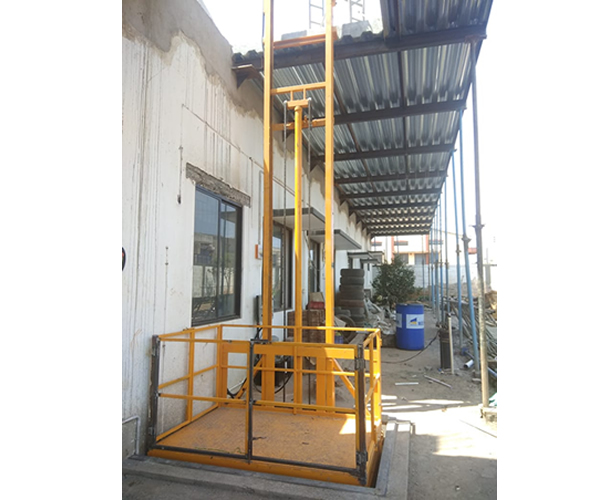 | GOODS LIFTS Goods or Cargo or Luggage lifts are basically used in industry shop floors for safe, secure, convenient and fast methods to transport loads from... View product → |
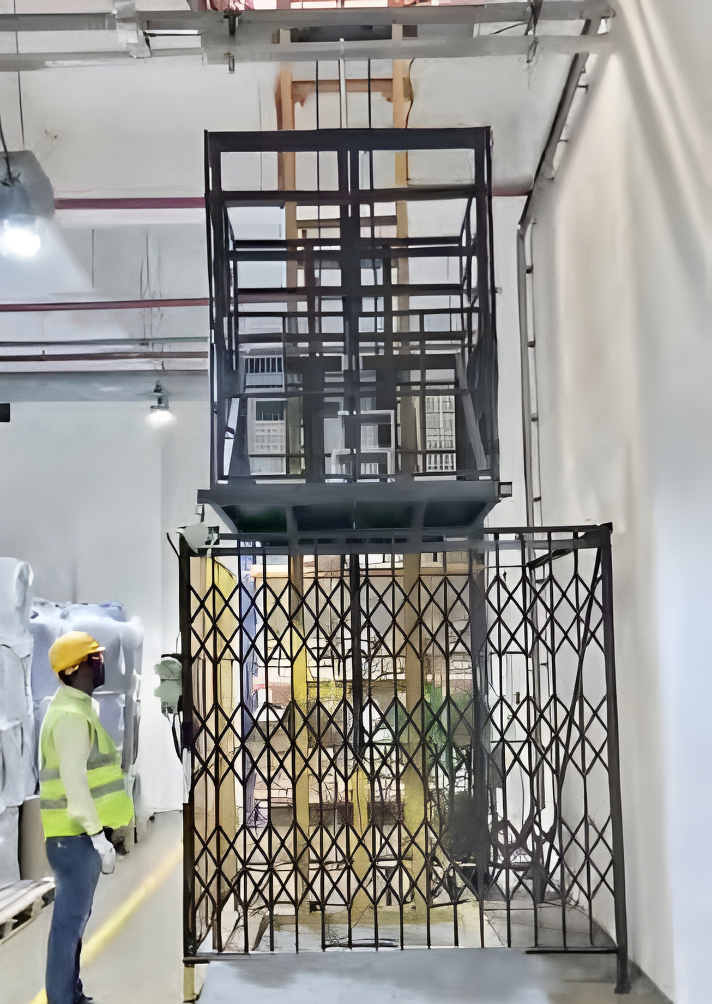 | GOODS LIFTS Goods or Cargo or Luggage lifts are basically used in industry shop floors for safe, secure, convenient and fast methods to transport loads from... View product → |
Frequently asked questions
How can a small Nagpur business tell whether a goods lift is worthwhile?
Record every inter-floor movement for 10 working days, then compare labour, waiting time, damage and missed dispatches with the lift’s total installed cost.
What should a business compare with a goods lift?
Compare vertical lifting with ramps, conveyors, forklifts, pallet trucks, shelving changes and improved dispatch processes before committing to equipment.
How should you specify a goods lift for a small warehouse?
Base the specification on the real load, pallet or trolley dimensions, travel height, trips per hour, operating hours and required safety controls.
What belongs in a Nagpur goods lift investment calculation?
Include the lift, structure, civil work, electrical changes, permits, installation, maintenance, operator training, downtime and recurring operating costs.