Rain changes more than visibility: saturated soil, flooded edges, slippery surfaces, wind and water ingress can make a lift unsafe even when the machine starts normally. By the end, you will know how to assess a Kolhapur worksite, apply the manufacturer’s limits, inspect a wet machine and decide when to stop, isolate or seek technical support.
Key takeaways
- Stop for excessive wind, lightning, thunderstorms or poor visibility.
- Inspect ground stability, drainage, mud, flooding and hidden voids before driving.
- Dry electrical connections and isolate equipment after abnormal water ingress.
- Use manufacturer limits, suitable ground support and a post-rain inspection checklist.
Set the stop-work rule before the rain arrives
Set the stop-work rule before rain reaches the platform: stop when wind exceeds the lift manufacturer’s rated limit, lightning or a severe thunderstorm threatens, or the operator cannot see edges, pedestrians, overhead obstructions and signals clearly. A metal lift is not lightning protection; leave the platform and move to a suitable building or enclosed vehicle.
Use the manufacturer’s manual and your site risk assessment, not an invented rainfall or wind threshold. Stop on any surface that is not firm, level and capable of supporting the machine, including waterlogged soil, muddy shoulders, filled trenches, recently backfilled ground, drainage edges and runoff-undermined concrete.
| Work area | Stop-work trigger | Required decision |
|---|---|---|
| Open yard | Lightning, severe thunderstorm, wind above the rated limit, poor visibility or softened ground | Lower the platform and leave the area |
| Covered loading bay | Wind-driven rain, slippery floor, blocked drainage or inadequate visibility | Stop movement and correct the hazard |
| Indoor floor | Water ingress, standing water, electrical exposure or an unsafe slope | Isolate the area and inspect before use |
For a scissor lift for monsoon conditions in Kolhapur, recheck after intense rain, flooding, relocation or a long downpour. “Rain has stopped” is not a clearance: saturated ground can lose bearing capacity hours later. These scissor lift weather conditions require a documented restart decision.
Check Kolhapur ground conditions, not just the weather forecast
Rainwater can leave a yard looking level while softening the soil beneath a wheel. For scissor lift outdoor use in Kolhapur, position the machine only on firm, level, load-bearing ground; OSHA requires mobile elevating work platforms to stand on surfaces capable of supporting them.
Saturated soil, filled trenches, recently backfilled areas and drainage channels can collapse under wheel loads.
Before positioning, walk the travel route and work area. Use this checklist:
- Look for mud, ponding, potholes, hidden depressions, open drains and exposed or undermined edges near loading docks.
- Identify covers, underground voids, trenches and recently excavated ground that rainwater could weaken.
- Check the model’s permitted slope, wheel-load, ground-clearance and levelling limits; platform height and rated capacity do not make an inclined or soft surface safe.
- Keep wheels away from shoulders, drain edges and waterlogged ground. Do not use timber, loose blocks or other improvised packing under wheels or outriggers.
- Recheck the setup after intense rain, flooding, relocation or several days of wet weather.
A covered bay is not automatically safe: runoff can collect at its entrance, and slippery concrete can affect positioning. For a scissor lift for monsoon conditions in Kolhapur, follow the manufacturer’s limits and the site risk assessment rather than relying on a clear forecast or a dry-looking surface.
Inspect the lift after rain, flooding or abnormal water ingress
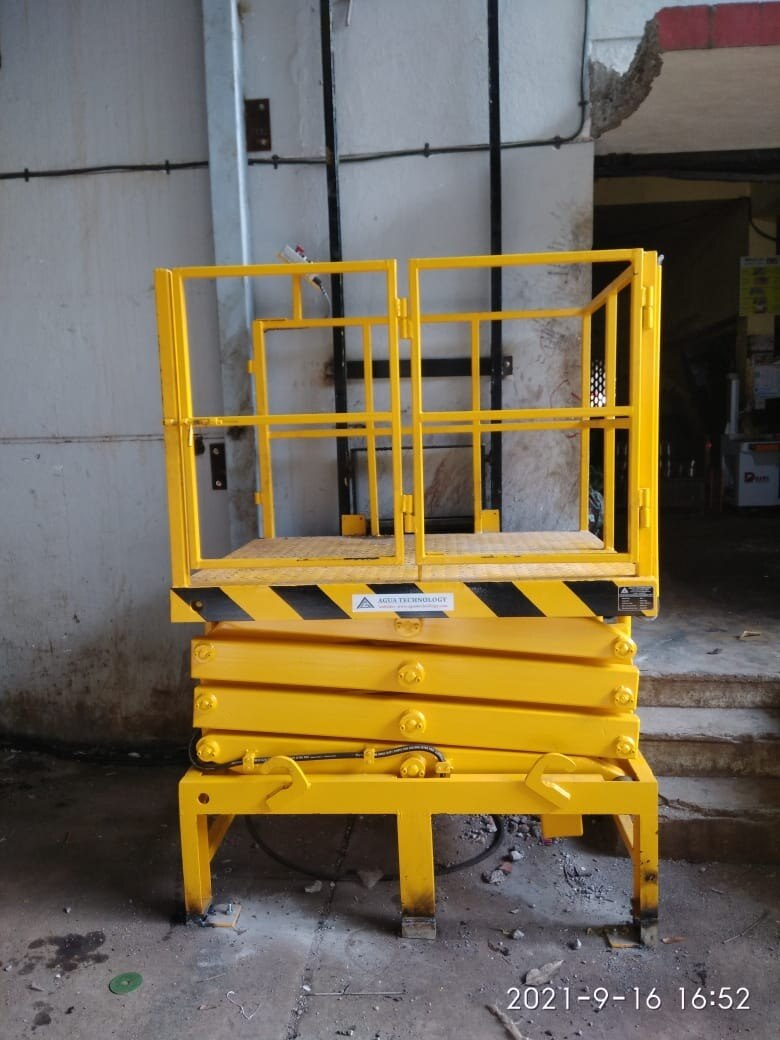
Before returning a rain-exposed scissor lift to service, isolate it and complete a documented inspection; drying the platform is not enough. Treat scissor lift rain precautions as a return-to-service procedure after heavy rain, flooding or water entering any enclosure.
1. Inspect structural welds, guardrails, platform gates and fasteners for cracks, distortion, corrosion or looseness.
2. Check tyres, wheels, pothole-protection devices and undercarriage parts for mud, trapped water, impact damage or blocked movement.
3. Examine the platform controls, ground controls, emergency-stop circuits, alarms and safety interlocks. Erratic response or a fault indication means stop.
4. Test emergency lowering according to the manufacturer’s instructions. Confirm that the platform descends smoothly and the control returns to neutral.
5. Inspect hydraulic hoses, cylinders, fittings and reservoirs for leaks, cloudy oil or water contamination. Do not operate a contaminated system.
6. Open the battery compartment only as instructed and look for standing water, corrosion, damaged insulation or loose terminals.
7. Inspect charging connectors, charger housings and extension leads for moisture or damage. Keep wet equipment isolated.
8. Check the machine’s travel and work area again for standing water, exposed drains, softened ground, potholes or displaced covers.
Do not charge or operate the lift if water has reached electrical components, controls or charging equipment. Remove it from service for examination by a qualified, competent person; a dry exterior does not prove internal safety.
Control slipping, visibility, wind and lightning during operation
Stop movement when rain prevents you from seeing the travel path, platform edge or overhead clearance continuously. Establish an exclusion zone, and use a trained spotter where the operator cannot maintain that view; the spotter helps, but the operator remains responsible for clearance.
Use these scissor lift rain precautions during a wet shift:
- Wear slip-resistant footwear and keep the platform floor, steps and handholds free of mud, oil and standing water. Maintain three points of contact while entering or leaving.
- Keep the gate closed and do not carry loose sheets, panels or other materials that wind can catch.
- Stop if water on the lens, glare or heavy rainfall obscures hand signals, people or obstructions. Do not rely on a spotter you cannot see or hear clearly.
- Check the data plate and operator manual for the machine’s wind rating. A 28-mph (about 45 km/h) limit applies to many outdoor models, not every lift; gusts and wind funnelling between buildings count.
Treat covered loading bays differently from exposed yards, but do not assume a roof removes every hazard. Stop for lightning or a severe thunderstorm and move to a suitable building or enclosed vehicle; the metal lift and elevated platform offer no lightning protection.
Reassess scissor lift weather conditions after gusts, visibility loss or changing rain intensity.
Handle charging, electrical moisture and hydraulic contamination safely
A wet electrical component is not safe because it looks dry. Stop charging when water reaches any charging equipment, isolate the supply, and keep the lift out of service until a qualified person completes an inspection.
- Use only the dry charging location, earthing arrangement, ingress protection and battery settings specified by the manufacturer.
- Do not reconnect a waterlogged charger, extension lead or battery connector.
- Do not open or test an energized enclosure; label damaged equipment clearly.
- Keep connectors covered and dry between use and charging.
Treat scissor lift weather conditions as an equipment-limit issue, not a judgement based on appearance. Scissor lift rain precautions include stopping during lightning; the metal structure and elevated platform provide no lightning protection, so retreat to a suitable building or enclosed vehicle.
For a hydraulic lift exposed to heavy rain or flooding, check the oil level and condition, cylinder rods, hose fittings, reservoir breather, hoses and corrosion at the manual’s inspection interval. Cloudy oil, a changed level or a leak requires removal from service.
Never search for a pinhole leak with your hands; use cardboard or an approved method and arrange qualified repair.
Prepare the right machine and ground-support plan for wet sites
Obtain equipment advice before scissor lift outdoor use in Kolhapur when the yard has saturated soil, standing water, sloping access, drainage edges, filled trenches or recently backfilled ground. A level appearance does not prove adequate bearing capacity.
1. Walk the travel route and work position after cumulative rainfall, not only during a shower. Mark potholes, open drains, soft shoulders, underground voids and covers that could shift.
2. Ask for site-preparation support when the ground cannot meet the lift’s specified wheel loads, point loads, slope limits and ground clearance. Steel plates, mats or a compacted platform need verification against sliding, rocking, steps and dynamic loading.
3. Recheck the setup after intense rain, flooding, excavation or relocation. Runoff can undermine a hardstand at its edge.
4. Before choosing a scissor lift for monsoon conditions in Kolhapur, give the supplier the surface condition, access route, working height, load, wind exposure and indoor or outdoor location. Aguatech Engineers Pvt.ltd. can use those details to assess whether a standard machine or a site-specific arrangement fits.
Stop and obtain qualified advice if any limit is unknown.
Related products
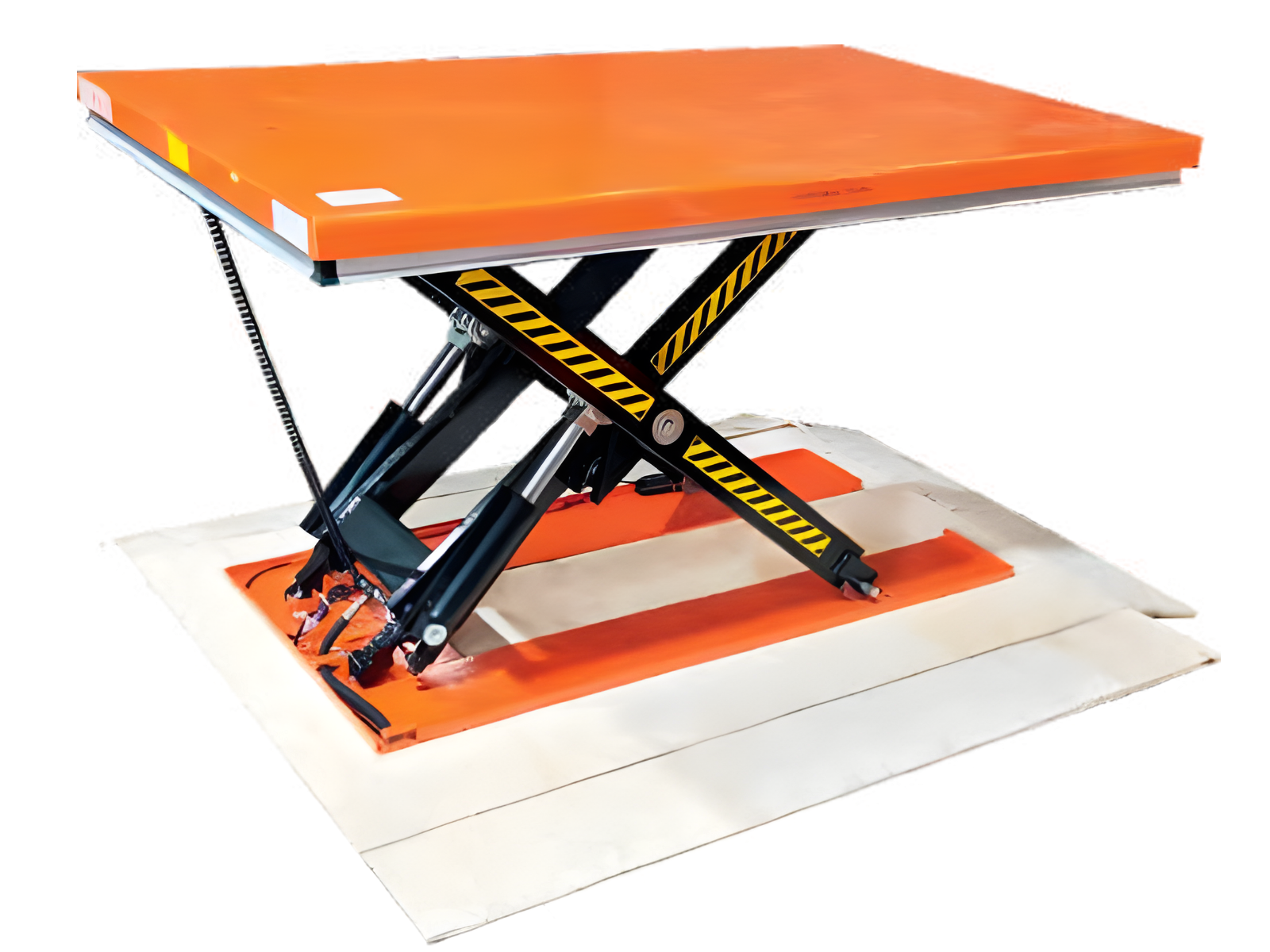 | Low Profile Scissor Lift The low-profile electric/hydraulic scissor lift table loads and unloads skids with a pallet truck without the need for a pit when using the optional... View product → |
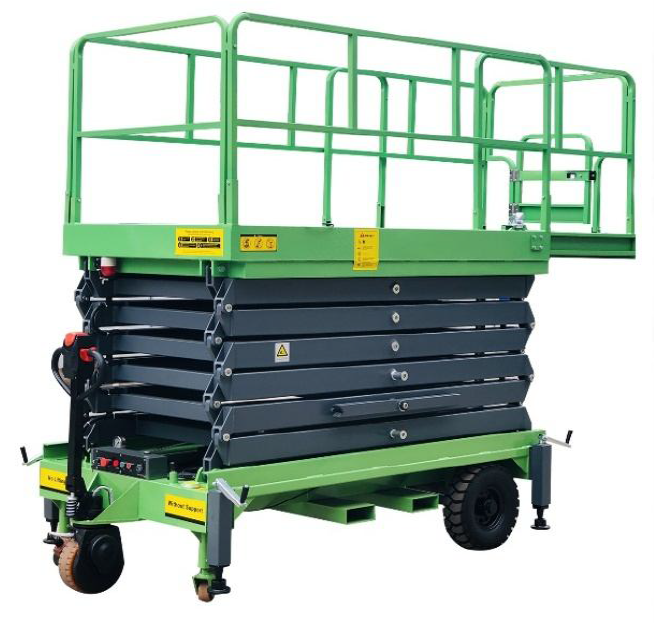 | HIGHLIFT MAINTAINANCE PLATFORM High Raised Scissor - Traction These are perhaps a revolutionary kind of equipment to be designed which almost replaced the conventional ladders which have their own limitations... View product → |
Frequently asked questions
When should you stop operating a scissor lift during rain?
Stop when wind exceeds the manufacturer’s rated limit, lightning or a severe thunderstorm threatens, or visibility prevents you from seeing edges, pedestrians, overhead obstructions or signals clearly. Leave the platform during lightning because the lift is not lightning protection.
What ground conditions should you check before using a scissor lift in Kolhapur?
Check for mud, standing water, flooding, soft soil, blocked drainage, washouts, hidden voids and changes in ground level. Confirm that the surface can support the machine and that slopes remain within the manufacturer’s limits.
What should you inspect after rain, flooding or water ingress?
Inspect the platform, controls, emergency stop, tyres, brakes, guardrails, batteries, electrical connectors, wiring, hydraulic hoses and structural components. Isolate the lift and obtain competent inspection before use if water reached electrical or hydraulic systems.
How can you reduce slipping, visibility and electrical risks in wet weather?
Keep the platform and access steps free of oil, mud and standing water, improve lighting and communication, maintain clear sightlines, stop during lightning and severe storms, and keep charging equipment dry and isolated from rain.
Related products
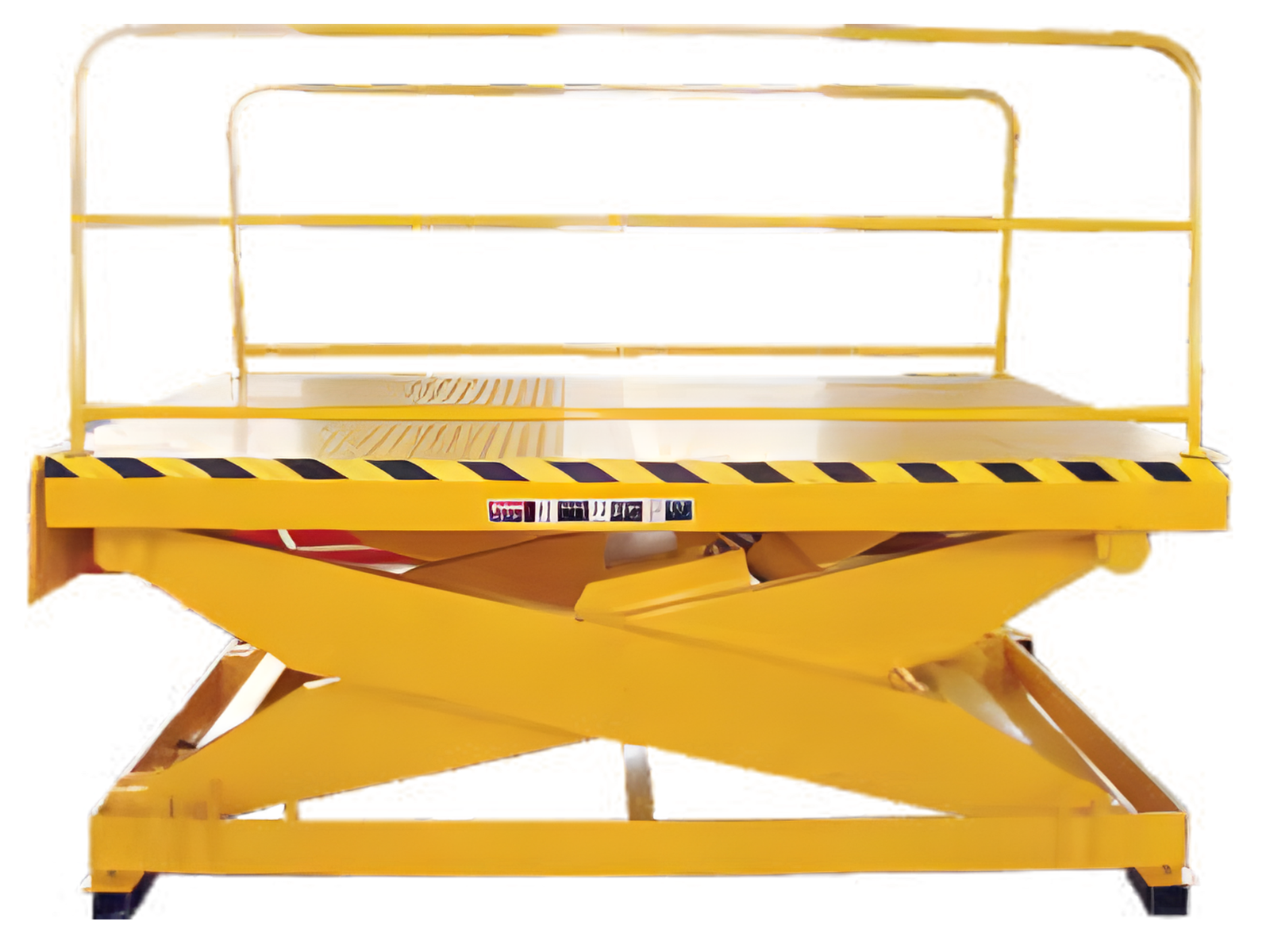 | LOADING/UNLOADING PLATFORMS OR DOCKS Electro-Hydraulic Scissor Lifts A loading/unloading dock is typically an elevated opening (or openings) in a building's sidewall where shipments are sorted and staged for loading... View product → |
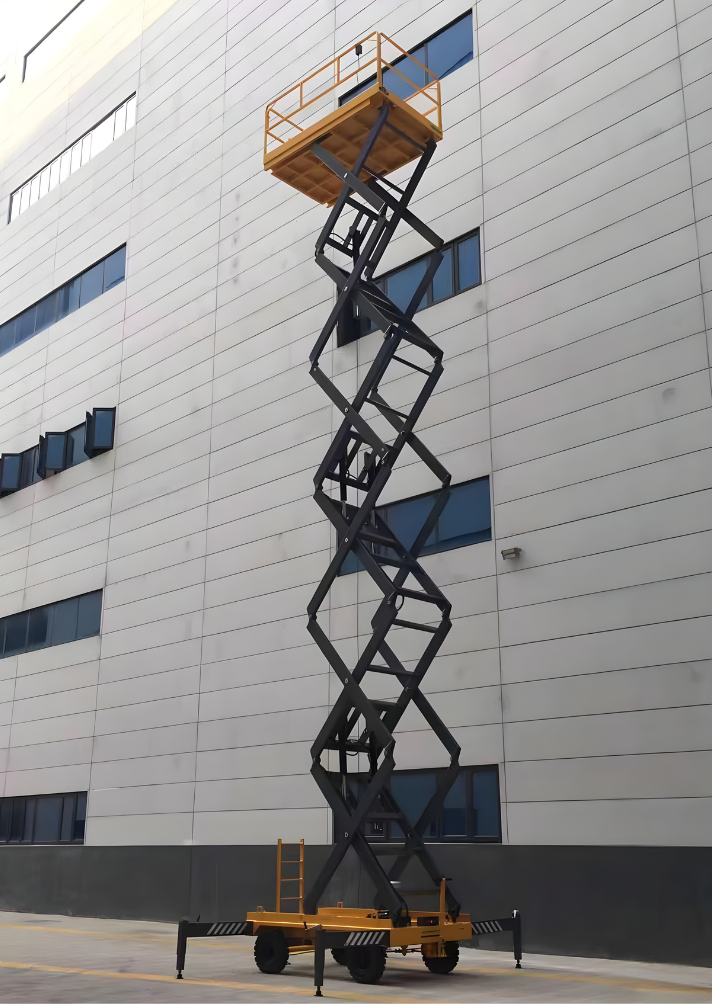 | HIGHLIFT MAINTAINANCE PLATFORM These are perhaps a revolutionary kind of equipment to be designed which almost replaced the conventional ladders which have their own limitations... View product → |
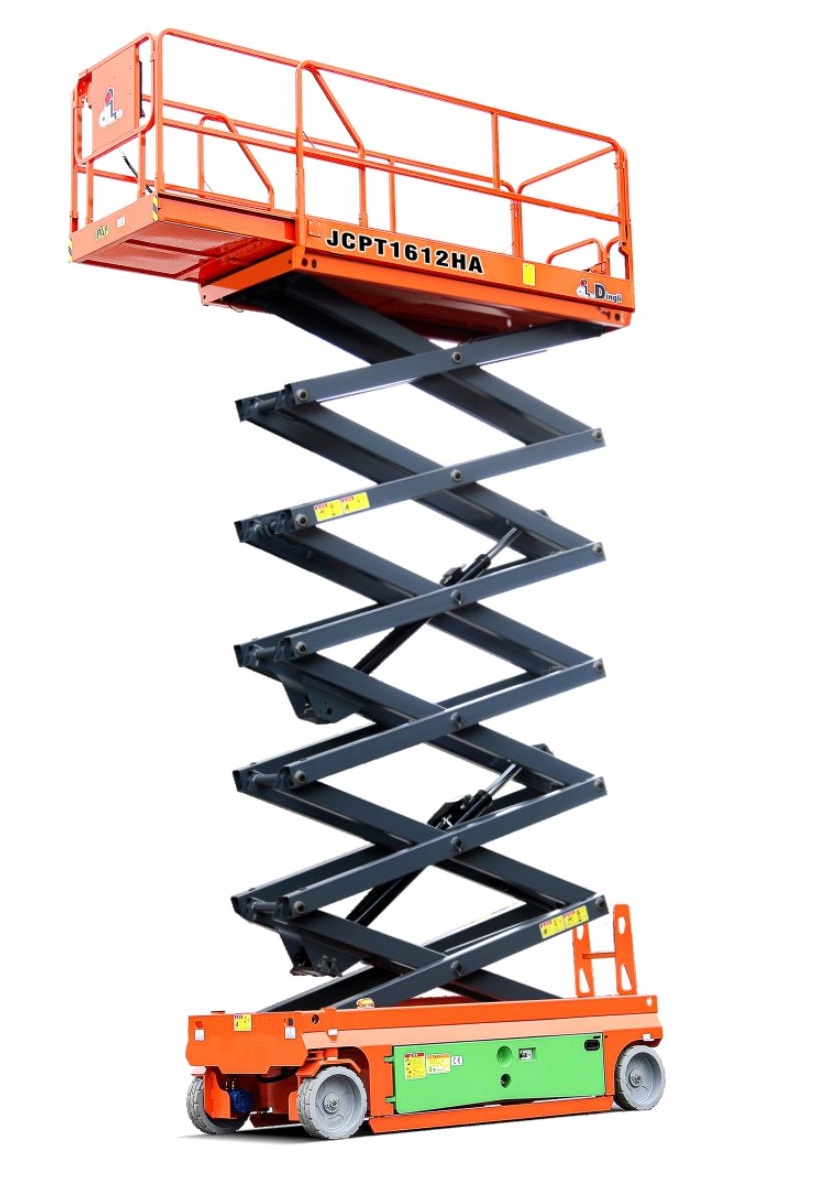 | Self-Propelled Scissor Lift A self-propelled scissor lift is a motorized aerial work platform used for vertical lifting, allowing operators to drive, steer, and elevate the... View product → |
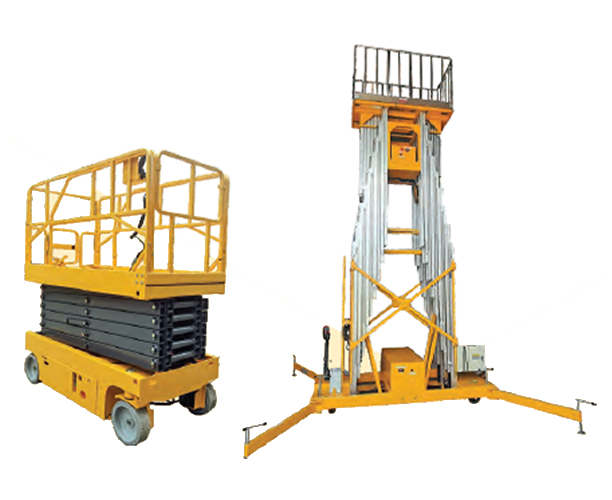 | HIGHLIFT MAINTAINANCE PLATFORM HIGHLIFT MAINTAINANCE PLATFORM These are perhaps a revolutionary kind of equipment to be designed which almost replaced the conventional ladders which have their own limitations... View product → |