A drum grab and a drum shifter are not interchangeable: one mainly lifts and transports, while the other adds controlled rotation, tilting or dispensing. By comparing the drum, carrier, route, daily workload and service requirements, you can choose equipment that fits your Kolhapur workplace rather than paying for functions you will not use.
Key takeaways
- Choose a drum grab for lifting and transport without controlled pouring.
- Choose a drum shifter when rotation, tilting or emptying is essential.
- Measure aisles, ramps, doorways and floor conditions before selecting equipment.
- Compare loading, securing, moving, rotating and unloading—not just purchase price.
Drum grab versus drum shifter: which job must the equipment perform?
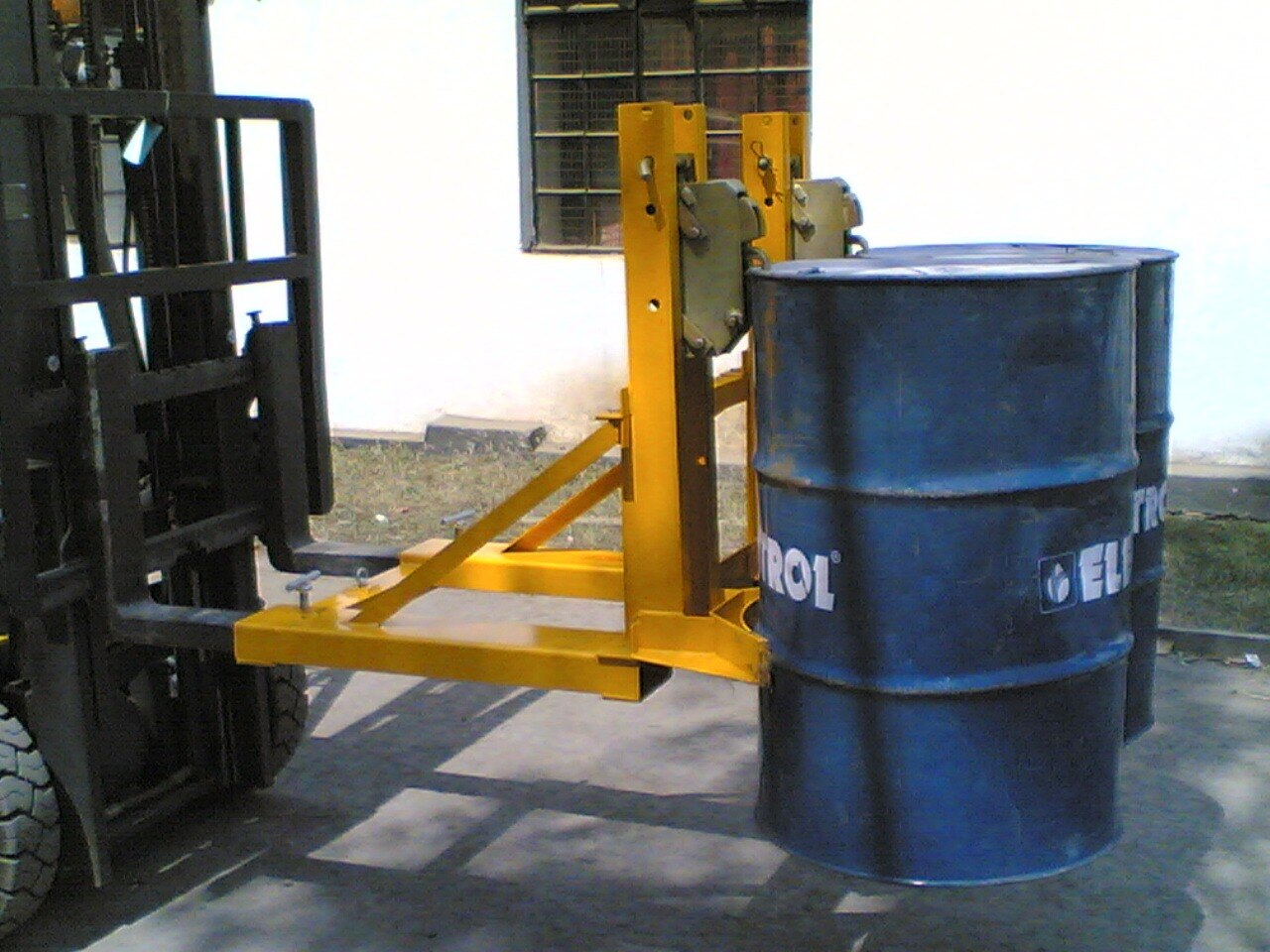
The drum grab versus drum shifter decision depends on whether you only lift and transport drums or must control their rotation and emptying. A drum grab usually clamps or hooks onto the drum rim and attaches to a forklift or hoist. It suits lifting drums from pallets and moving them between storage locations.
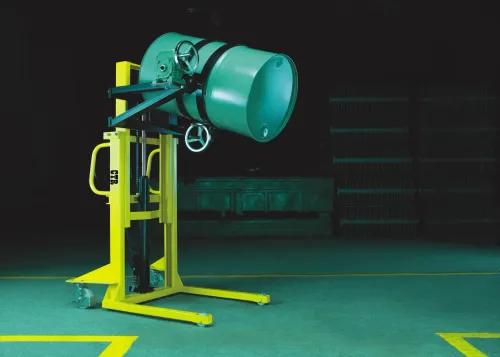
A drum shifter uses a cradle, clamp or rotator to secure, turn, tilt or position a drum for dispensing, decanting, bung alignment or emptying.
| Option | Main action | Best use |
|---|---|---|
| Drum grab | Grips the rim and lifts the drum | Pallet-to-pallet movement and storage transfer |
| Drum shifter | Secures, rotates, tilts or positions the drum | Pouring, dispensing, decanting and controlled emptying |
Choose a grab for straightforward pallet-to-pallet movement. Choose a shifter when operators must rotate the drum, pour its contents, align a bung or place the drum precisely. A lifting grab is not a pouring or tilting device unless its specification expressly confirms that function.
A grab becomes the wrong choice when drums require frequent rotation, precise placement or reduced manual tipping. Using it for those tasks can leave operators balancing, rolling or tipping a loaded drum by hand, increasing spill and handling risk.
Check the equipment’s stated function, drum compatibility and rated load before assuming that any rim-gripping attachment can perform a shifter’s work.
Match the grab or shifter to the drum, load and lifting carrier
Approve the grab or shifter only after matching it to the actual drum, gross load and lifting carrier. A device built for a standard 210-litre steel drum may not grip a tapered plastic drum or a fibre drum with a different rim.
Record these drum details before requesting a quotation:
- Material: steel, plastic or fibre
- Head: open-head or closed-head
- Outside diameter, height and gross mass
- Base shape, rim or chime design, and closure type
Specify the maximum safe working load from the heaviest lifted combination: drum, product, closure, pallet or cradle, and attachment components. Product density controls the load case; a litre rating does not.
For a drum grab, confirm forklift or hoist attachment points, rated capacity, durable capacity marking, the changed load centre and whether carrier modification is needed. Adding an attachment changes the forklift’s effective capacity, so its nominal rating cannot simply be reused.
For a shifter, require the clamp range, maximum drum diameter and height, residual load at maximum forward reach, rotation angle and speed, stopping or locking positions, and retention during power loss. “360-degree rotation” is incomplete without those conditions.
For a drum grab for small business in Kolhapur, put every measurement and rating on the quotation, drawing and commissioning record. Reject equipment that relies on “standard drum” without defining the rim, dimensions and gross load.
Check the Kolhapur route before choosing drum handling equipment
A lifting-capacity rating does not prove that a machine can complete your handling cycle. For drum handling equipment in Kolhapur, survey the route before selecting a grab or shifter, then operate the shifter by loading the drum squarely, engaging the clamp or cradle, confirming the lock and travelling slowly across uneven floors.
Keep the drum within its permitted position, align it with the pallet and unload without striking racks, doors or dock edges.
Record these site dimensions:
- Aisle width and turning radius, including the machine’s full turning envelope
- Doorway width and height
- Floor transitions, ramps, potholes and dock height
- Mast clearance, fork length, drum projection and rack clearances
- Travel distance from pickup point to the final pallet position
A machine with adequate lifting capacity can still fail if its mast, forks, drum projection or turning envelope blocks a narrow route. These measurements form the essential site survey.
| Decision factor | What to check | Why it changes the choice |
|---|---|---|
| Staffing | Operators available for loading, guiding and unloading | A shifter may reduce manual tipping but still need a trained operator |
| Daily drum quantity | Drums moved per shift or day | Frequent movement can justify faster, controlled handling |
| Carrier access | Forklift or hoist location, attachment clearance and route | No usable access point can make the selected machine impractical |
| Final placement | Pallet height, rack clearance and dock edge | Poor alignment causes impacts, unstable loads and damaged drums |
Compare the full handling cycle with cheaper alternatives
A grab or shifter earns its cost when loading, travel, positioning, rotation and empty return consume more labour than the purchase price suggests.
Use the full cycle: once you handle more than 10 drums a day or move them beyond roughly 20 metres each way, reduced repositioning, spill exposure and operator effort deserve a cost comparison.
| Option | Loading and travel | Positioning, rotation and return | Operator requirement |
|---|---|---|---|
| Manual rolling | Lowest equipment cost; slow loading and risky travel | Poor control on slopes, ramps, uneven floors and crowded aisles; return is manual | Two people may be needed for control |
| Drum trolley or dolly | Suits a light, stable drum over a short, level route | Limited precise placement; no automatic rotation or dispensing | Usually one operator, with extra effort at thresholds |
| Pallet truck | Moves a palletised load efficiently | Does not grip, rotate or dispense an individual drum; empty return is separate | One operator |
| Drum grab | Fast forklift or hoist loading and point-to-point travel | Lifts and positions; does not pour or rotate unless specified | One trained operator |
| Drum stacker-cum-tilter | Loads, raises and travels a drum | Adds height adjustment and controlled tipping, but takes more space | One operator |
| Drum shifter | Secures the drum during travel | Rotates, aligns, dispenses or empties it, reducing manual repositioning | One operator |
For drum grab or drum shifter for small businesses in Kolhapur, choose the simpler grab for repeated forklift transport. Choose the shifter when rotation is routine. Reject either option without a suitable forklift or hoist point, adequate headroom, stable floors, compatible rims and sufficient aisle width.
Frequent precise positioning also favours a shifter; regular rotation makes a grab the wrong choice.
Specify safety, service and commissioning before you place the order
Before signing the order, require a capacity plate, serial number, dimensional drawings, inspection instructions and a commissioning or load-test record. For drum handling equipment in Kolhapur, also obtain a stated breakdown response time and a replacement-parts trail for seals and pins.
- For a grab, inspect jaws or hooks, pins, welds, locking devices and visible deformation before each shift. Reject incomplete rim engagement, damaged rims, load swing or incorrect mast tilt; these faults can release a drum during travel.
- For a shifter, specify guarding around clamp, cradle, chain and rotator pinch points, a marked exclusion zone and controls that prevent unintended rotation.
- Write the drum material, product compatibility, spill-containment method and acceptable rim condition into the specification.
Hydraulic and battery-electric versions create different maintenance risks.
| Option | Main checks | Failure or downtime risk |
|---|---|---|
| Hydraulic | Hose, seal and coupling condition; oil containment; intermittent duty | Oil release or uncontrolled movement after a hose or seal failure |
| Battery-electric | Charging point, duty cycle, charger location and battery replacement | Lost operating time or weak rotation from poor charging and battery maintenance |
If drums contain flammable liquids, state the hazardous-area classification, bonding or grounding method and ignition-control suitability. Do not treat a standard electric unit as explosion-protected.
For a drum grab for small business in Kolhapur, Aguatech Engineers Pvt.ltd. can add value when it records site measurements, drum specifications, carrier rating, service response and parts availability in writing. That paperwork prevents a custom attachment from becoming an unidentifiable maintenance liability.
Related products
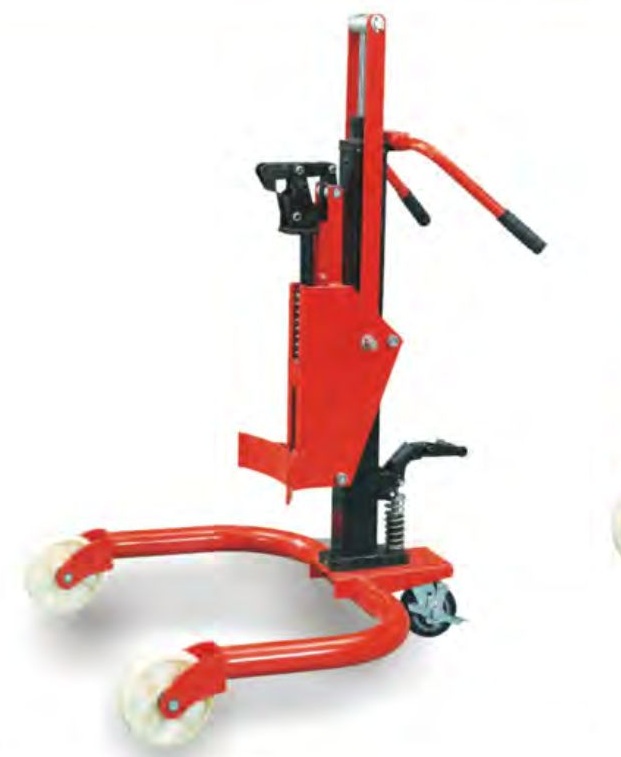 | DRUM HANDLING EQUIPMENT As the name indicates, most establishments have to handle drums/barrels of different sizes and materials on daily and/or regular basis. View product → |
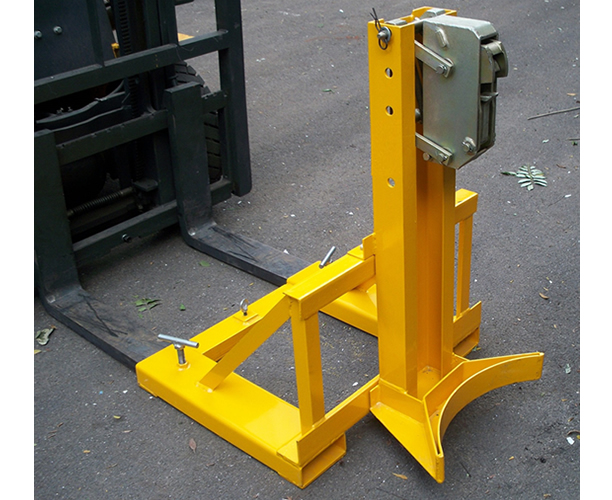 | DRUM HANDLING EQUIPMENT As the name indicates, most establishments have to handle drums/barrels of different sizes and materials on daily and/or regular basis. View product → |
Frequently asked questions
What is the difference between a drum grab and a drum shifter?
A drum grab lifts and transports a drum, while a drum shifter also controls rotation, tilting or emptying when the task requires it.
How do I match drum handling equipment to my forklift or hoist?
Check the drum material, diameter, height, filled weight and rim design against the attachment capacity and the lifting carrier’s rated load centre.
What should Kolhapur businesses measure before buying drum handling equipment?
Measure aisle width, doorway clearance, turning space, ramps, floor condition, storage height and the route between pickup and discharge points.
What should I confirm before ordering a drum grab or drum shifter?
Confirm rated capacity, drum compatibility, guarding, operator controls, inspection records, commissioning, spare parts and service response.
Related products
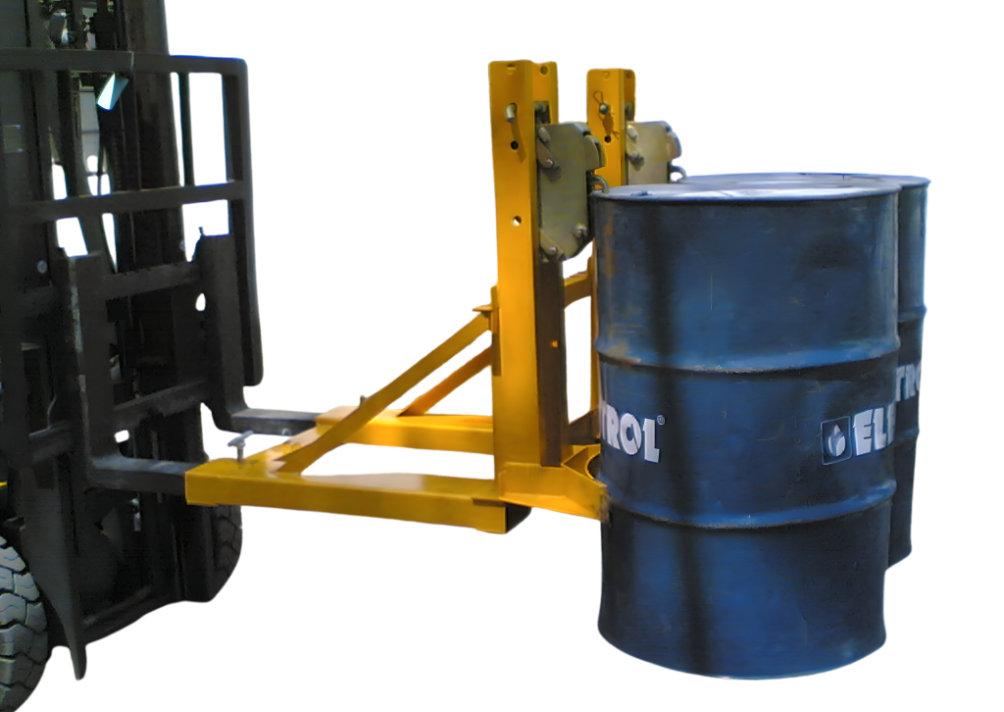 | DRUM HANDLING EQUIPMENT As the name indicates, most establishments have to handle drums/barrels of different sizes and materials on daily and/or regular basis. View product → |
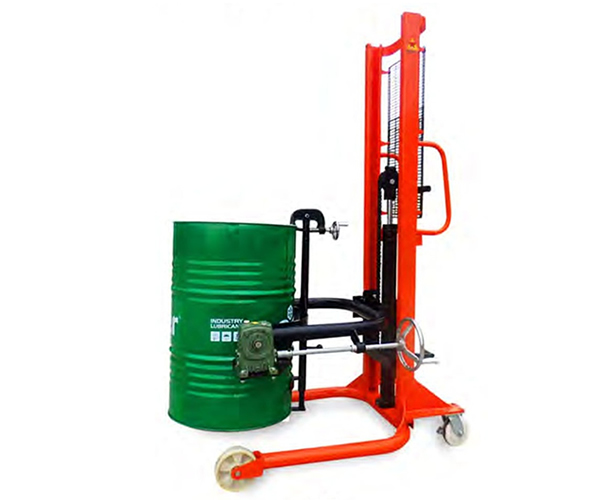 | DRUM HANDLING EQUIPMENT DRUM/BARREL STACKER-CUM-TILTER As the name indicates, most establishments have to handle drums/barrels of different sizes and materials on daily and/or regular basis. View product → |